
Within a very short time Laughton had appeared in The Old Dark House, The Sign of the Cross (both 1932, in the latter as a pouty Nero), and The Island of Lost Souls (1932, as the evil Dr. Moreau). He also had a memorable cameo appearance in a vignette in Paramount's all-star If I Had a Million (1932), as the man who gives his boss the razzberry. Laughton was subsequently counted on to bring a patina of real English class to the literary adaptations MGM essayed in the early to mid 1930s. Of course, he brought a lot more than just that, delivering bravura performances as Captain Bligh in Mutiny on the Bounty (an Oscar-nominated turn), and Javert in Les Miserables both made in 1935. (He was replaced, however, in the role of Micawber in David Copperfield by W. C. Fields.) He also showed off his comic skills as a deferential British butler transplanted to the American West in Ruggles of Red Gap (1935). His recitation of the Gettysburg Address was particularly memorable.
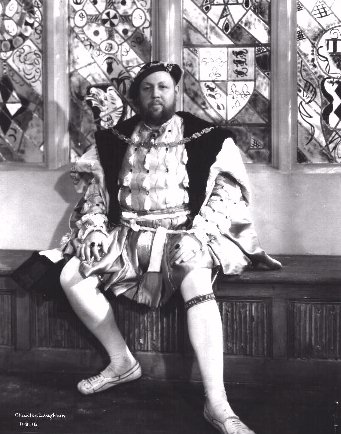
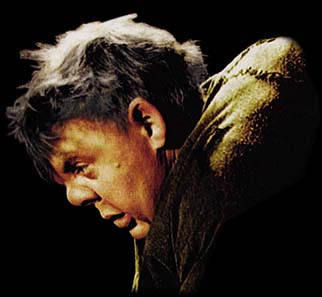
Laughton bounced back and forth between Britain and America during the 1930s, working in two memorable movies directed by Alexander Korda: The Private Life of Henry VIII (1933, for which he won a Best Actor Oscar) and Rembrandt (1936). He showed his lighter side, as a street entertainer or "busker," in Sidewalks of London (1938, original British title, St. Martin's Lane). Back in Hollywood, his poignant turn as Quasimodo in 1939's The Hunchback of Notre Dame-smothered as he was under heavy makeup-won Laughton more critical acclaim. He worked steadily in Hollywood during World War 2, being especially memorable in The Canterville Ghost (1944) and Captain Kidd (1945). He wasn't always successful at restraining his urge to chew the scenery, but he was capable of subtle, understated performances when he had good scripts and good directors. He was very effective in The Big Clock (1948), a thriller that casts him as a publishing magnate with a horrible secret, played French detective hero Maigret in The Man on the Eiffel Tower (1950), and tackled Henry VIII again in Young Bess (1953).
In 1955 Laughton directed his only film, the strange and beautiful Night of the Hunter written by James Agee and starring Robert Mitchum and Lillian Gish. Although well received (it's considered a minor classic today), this thriller did not lead to any more directing assignments and Laughton continued acting; his last few films feature some of his best characterizations, including an eccentric lawyer in Witness for the Prosecution (1957, Oscar-nominated) and a corrupt Roman senator in Spartacus (1960). His last film was Advise and Consent (1962).
OTHER FILMS INCLUDE: 1933: White Woman 1938: The Beachcomber 1939: Ja- maica Inn 1940: They Knew What They Wanted 1941: It Started With Eve 1942: Stand By for Action, Tales of Manhattan, The Tuttles of Tahiti 1943: Forever and a Day, The Man From Down Under, This Land Is Mine 1944: The Suspect 1946: Because of Him 1947: The Paradine Case 1948: Arch of Triumph 1949: The Bribe 1951:The Blue Veil, The Strange Door 1952:Abbott and Costello Meet Captain Kidd, O. Henry's Full House 1953: Salome 1954:Hobson's Choice
Personal Quotes:
"Method actors give you a photograph. Real actors give you an oil painting." Laughton was a real actor.
As King "Henry the VIII"
As Quasimodo from "Hunchback of Notre Dame"
Later,
Kenaz

