
BTK serial killer Dennis Rader was ordered to serve 10 consecutive life terms Thursday at a hearing that allowed family members to unleash decades of pent-up anger at the man who stabbed and strangled their loved ones while terrorizing the Wichita area starting in the 1970s.
"This man needs to be thrown in a deep, dark hole and left to rot. He should never, ever see the light of day ... On the day he dies, Nancy and all of his victims will be waiting with God and watching him as he burns in hell."
A sentiment offered by Beverly Plapp, sister of victim Nancy Fox, and shared by any person with a soul.
Rader could only offer the ramblings of a sick mind, as he quoted the bible during his half hour speech, in which he apologized to his family and victims and thanked the police and then offered.
"A dark side is there, but now I think light is beginning to shine," Rader said, his voice choking at times. "Hopefully someday God will accept me."
I don't think so. Mr. Rader likes to quote the bible, maybe he could try this one on for size,
"And I say also unto thee, That thou art Peter, and upon this rock I will build my church; and the gates of hell shall not prevail against it" (Mathew 16:18)"
RIP, to all those all the angels killed by this darkest of evils and may they be reincarnated to once again fill their love ones lives with joy.
Peace,
Kenaz
Thursday, August 18, 2005


Finally Some Good News For The Tiger Cats
Tim Cheatwood, recently cut by the NFL's Houston Texans, will be re-joining the Hamilton Tiger Cats.
A 6-foot-4, 258-pound defensive end, Cheatwod registered a CFL-best 14 sacks for the Ticats last season before trying his luck south of the border this year.
Losing Cheatwood and Joe Montford, who ranked second in the league with 13 sacks last year, has been, to say the least devastating to the Tiget Cats this year.
Hamilton, mired in a seven-game winless skid, are in B.C. this week for a game Friday night and the 27 year-old Cheatwood will be in uniform for the game.
Now if the Cats can get some help on offense.
Courtesy of TSN.
A 6-foot-4, 258-pound defensive end, Cheatwod registered a CFL-best 14 sacks for the Ticats last season before trying his luck south of the border this year.
Losing Cheatwood and Joe Montford, who ranked second in the league with 13 sacks last year, has been, to say the least devastating to the Tiget Cats this year.
Hamilton, mired in a seven-game winless skid, are in B.C. this week for a game Friday night and the 27 year-old Cheatwood will be in uniform for the game.
Now if the Cats can get some help on offense.
Courtesy of TSN.
Favourite Quote From "The Tao of Pooh"
"When you wake up in the morning, Pooh," said Piglet at last, "what's the first thing you say to yourself?"
"What's for breakfast? said Pooh. "What do you say, Piglet?"
"I say, I wonder what's going to happen exciting today?" said Piglet.
Pooh nodded thoughtfully.
"It's the same thing," he said.
"What's for breakfast? said Pooh. "What do you say, Piglet?"
"I say, I wonder what's going to happen exciting today?" said Piglet.
Pooh nodded thoughtfully.
"It's the same thing," he said.
The Tao of Pooh
Winnie the Pooh has a certain way about him, a way of doing things which has made him the world's most beloved bear. And Pooh's Way, as Benjamin Hoff brilliantly demonstrates, seems strangely close to the ancient Chinese principles of Taoism. The 'Tao of Pooh' explains Taoism by Winnie the Pooh and explaines Winnie the Pooh by Taoism. It makes you understand what A.A. Milne probably meant when he said he didn't write the Pooh-books for children in the first place.
Over the centuries Taoism classic teachings were developed and divided into philosophical, monastic, and folk religious forms. All of these could be included under the general heading of Taoism. But the basic Taoism is simply a particular way of appreciating, learning from, and working with whatever happens in everyday life. From the Taoist point of view, the natural result of this harmonious way of living is happiness.
One of the basic principles of Taoism is P'U, the Uncarved Block. The essence of the Uncarved Block is that things in their original simplicity contain their own natural power, power that is easily spoiled and lost when that simplicity is changed. This principle applies not only to things, but to people as well. Or Bears. Which brings us to Pooh, the very Epitome of the Uncarved Block. When you discard arrogance, complexity, and a few, other things that get in the way, sooner or later you will discover that simple, childlike, and mysterious secret known to those of the Uncarved Block: Life is Fun. Along with that comes the ability to do things spontaneously and have them work, odd as that may appear to others at times. As Piglet put it in 'Winnie-the-Pooh', "Pooh hasn't much Brain, but he never comes to any harm. He does silly things and they turn out right."
Owl instead, is the opposite of Pooh, the Knowledge for the sake of Appearing Wise, the one who studies Knowledge for the sake of Knowledge, and who keeps what he learns to himself or to his own small group, rather than working for the enlightenment of others. That way, the scholars can appear Superior, and will not likely be suspected of Not Knowing Something. After all, from the scholarly point of view, it's practically a crime not to know everything. But sometimes the knowledge of the scholar is a bit hard to understand because it doesn't seem to match up with our own experience of things. Isn't the knowledge that comes from experience more valuable than the knowledge that doesn't?
While Owl's little routine is that of Knowledge for the sake of Appearing Wise, Eeyore's is that of Knowledge for the sake of Complaining About Something and Rabbit's is that of Knowledge of Being Clever. As anyone who doesn't have it can see, the Eeyore Attitude gets in the way of things like wisdom and happiness, and pretty much prevents any sort of real Accomplishment in life. Cleverness, after all, has its limitations. Its mechanical judgments and clever remarks tend to prove inaccurate with passing time, because it doesn't look very deeply into things to begin with. The thing that makes someone truly different -unique, in fact- is something that Cleverness cannot really understand.
"A fish can't whistle and neither can I." There's nothing wrong with not being able to whistle, especially if you're a fish. But there can be lots of things wrong with blindly trying to do what you aren't designed for. Unfortunately, some people aren't so wise, and end up causing big trouble for themselves and others. The wise know their limitations; the foolish do not. To demonstrate what we mean, we can think of no one better than Tigger, who doesn't know his limitations ('Tiggers can do everything'), which brings him in lots of trouble. Piglet instead knows his limitations and that's what makes him sometimes more braver than you would expect from such a small animal. So, the first thing we need to do is recognize and trust our own Inner Nature, and not lose sight of it. Inside the Bouncy Tigger is the Rescuer who knows the Way, and in each of us is something Special, and that we need to keep:
"Tigger is all right really," said Piglet lazily.
"Of course he is," said Christopher Robin.
"Everybody is really," said Pooh. "That's what I think," said Pooh.
"But I don't suppose I'm right," he said.
"Of course you are," said Christopher Robin.
This text is taken from 'The Tao of Pooh' by Benjamin Hoff, published by Mandarin Paperbacks. Also published by Mandarin Paperbacks and written by Benjamin Hoff; 'The Te of Piglet'.
In this second book he makes the explicit statement that it isn't a sequel to his first book, but rather a companion. The book is based around two topics, the concept of Te, the Chinese word meaning 'power' or 'virtue' and Piglet, of the Winnie the Pooh books. In his first book, he brings out the essential tenets and perspectives of Taoism, in terms accessible to Westerners. In his second book, he elucidates the Taoist concept of 'Virtue - of the small'; though, he also uses it as an opportunity to elaborate on his introduction to Taoism. It is written with many embedded stories from the A.A. Milne Winnie the Pooh books, both for entertainment and because they serve as very useful tools for explaining Taoism -most Chinese stories are rather inaccessible to Westerners.
In The Te of Piglet, Piglet is shown to possess great power -a common interpretation of the word Te, which more commonly means Virtue-, not only because he is small, but, also, because he has a great heart or, to use a Taoist/Chinese word, Tz'u. The book goes through the other characters— Tigger, Owl, Rabbit, Eeyore, and Pooh—to show the various aspects of our humanity that Taoism says gets in the way of living in harmony with the Tao.
Over the centuries Taoism classic teachings were developed and divided into philosophical, monastic, and folk religious forms. All of these could be included under the general heading of Taoism. But the basic Taoism is simply a particular way of appreciating, learning from, and working with whatever happens in everyday life. From the Taoist point of view, the natural result of this harmonious way of living is happiness.
One of the basic principles of Taoism is P'U, the Uncarved Block. The essence of the Uncarved Block is that things in their original simplicity contain their own natural power, power that is easily spoiled and lost when that simplicity is changed. This principle applies not only to things, but to people as well. Or Bears. Which brings us to Pooh, the very Epitome of the Uncarved Block. When you discard arrogance, complexity, and a few, other things that get in the way, sooner or later you will discover that simple, childlike, and mysterious secret known to those of the Uncarved Block: Life is Fun. Along with that comes the ability to do things spontaneously and have them work, odd as that may appear to others at times. As Piglet put it in 'Winnie-the-Pooh', "Pooh hasn't much Brain, but he never comes to any harm. He does silly things and they turn out right."
Owl instead, is the opposite of Pooh, the Knowledge for the sake of Appearing Wise, the one who studies Knowledge for the sake of Knowledge, and who keeps what he learns to himself or to his own small group, rather than working for the enlightenment of others. That way, the scholars can appear Superior, and will not likely be suspected of Not Knowing Something. After all, from the scholarly point of view, it's practically a crime not to know everything. But sometimes the knowledge of the scholar is a bit hard to understand because it doesn't seem to match up with our own experience of things. Isn't the knowledge that comes from experience more valuable than the knowledge that doesn't?
While Owl's little routine is that of Knowledge for the sake of Appearing Wise, Eeyore's is that of Knowledge for the sake of Complaining About Something and Rabbit's is that of Knowledge of Being Clever. As anyone who doesn't have it can see, the Eeyore Attitude gets in the way of things like wisdom and happiness, and pretty much prevents any sort of real Accomplishment in life. Cleverness, after all, has its limitations. Its mechanical judgments and clever remarks tend to prove inaccurate with passing time, because it doesn't look very deeply into things to begin with. The thing that makes someone truly different -unique, in fact- is something that Cleverness cannot really understand.
"A fish can't whistle and neither can I." There's nothing wrong with not being able to whistle, especially if you're a fish. But there can be lots of things wrong with blindly trying to do what you aren't designed for. Unfortunately, some people aren't so wise, and end up causing big trouble for themselves and others. The wise know their limitations; the foolish do not. To demonstrate what we mean, we can think of no one better than Tigger, who doesn't know his limitations ('Tiggers can do everything'), which brings him in lots of trouble. Piglet instead knows his limitations and that's what makes him sometimes more braver than you would expect from such a small animal. So, the first thing we need to do is recognize and trust our own Inner Nature, and not lose sight of it. Inside the Bouncy Tigger is the Rescuer who knows the Way, and in each of us is something Special, and that we need to keep:
"Tigger is all right really," said Piglet lazily.
"Of course he is," said Christopher Robin.
"Everybody is really," said Pooh. "That's what I think," said Pooh.
"But I don't suppose I'm right," he said.
"Of course you are," said Christopher Robin.
This text is taken from 'The Tao of Pooh' by Benjamin Hoff, published by Mandarin Paperbacks. Also published by Mandarin Paperbacks and written by Benjamin Hoff; 'The Te of Piglet'.
In this second book he makes the explicit statement that it isn't a sequel to his first book, but rather a companion. The book is based around two topics, the concept of Te, the Chinese word meaning 'power' or 'virtue' and Piglet, of the Winnie the Pooh books. In his first book, he brings out the essential tenets and perspectives of Taoism, in terms accessible to Westerners. In his second book, he elucidates the Taoist concept of 'Virtue - of the small'; though, he also uses it as an opportunity to elaborate on his introduction to Taoism. It is written with many embedded stories from the A.A. Milne Winnie the Pooh books, both for entertainment and because they serve as very useful tools for explaining Taoism -most Chinese stories are rather inaccessible to Westerners.
In The Te of Piglet, Piglet is shown to possess great power -a common interpretation of the word Te, which more commonly means Virtue-, not only because he is small, but, also, because he has a great heart or, to use a Taoist/Chinese word, Tz'u. The book goes through the other characters— Tigger, Owl, Rabbit, Eeyore, and Pooh—to show the various aspects of our humanity that Taoism says gets in the way of living in harmony with the Tao.
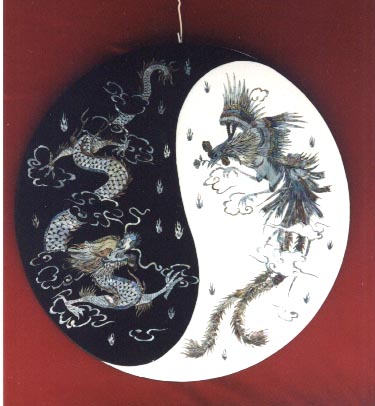

HOW TO USE THE FIVE ELEMENTS OF FENG SHUI TO CREATE HARMONY IN YOUR HOME
Here in an overview of the "Five Elements" that make up the principle of "Feng Shui" and how you can incorporate them into your home to make it a "Zen" or harmonius place.
First the "Five Elements"
Are the natural forces of Fire and Water, which one brought together in a unity of opposites. Both forces are purifying as well as protective. Connected with the cosmic powers of the sun and moon. Where they are truly combined. Fire(as the sun) is usually male and water(as the moon) female.
Water-Yin Value
Always in motion. Changes colour in the light of the stars, reflects the world of man, "speaks" with murmering and roaring, brings new life to dried out vegitation, refreshes men and animals, the tired and the ill and heals. Because it dissolves earth it is also suitable for purifying the soul. Water also demonstrates destructive forces.
Fire-Yang Value
Considered to be a personified animated or living power it moves violently, devours and becomes hungrier, it spread fast into a giant blaze and is red like human blood and warm like the human body. I makes the plants that it has devoured suitable for fertilizing the earth, it shines brightly in the night and by transference may have "eternal life" or by rekindling can be made into a "perpetual fire".
It's chief functions are similar to water, to purify and to ward off evil. Fire is believed to have heavenly origins.
Earth and Wood-Yin Value of Water
Metal-Yang Value of Fire
Here is where and how you can use the elements in your home to trigger the maximum amount of Reflection, Serenity and Creativity that you can.
Entrance Ways
It is important that the flow of Chi from the front to the back of your home is not hindered. It is also best to have it flow through in a meandering path and not a direct line. Entrance ways off the street or through your garden to the front door will determine the qualities of Chi that flow into your home. Therefore it is important to use curved pathways or garden beds. Breaking up the direction of pavers to allow curved lines will also help. A birdbath, fountain or a small pond along the way will bring balance and improve the qualities of Chi.
Too large a doorway will allow Chi to escape from your home. If this is a problem for you it can be easily counteracted by placing Windchimes outside the door. This will also discourage Sha (negative energy) from entering your home. Too small a doorway will not allow enough Chi to enter the home, but placing a mirror on either side of the door or on a wall opposite the door will help to fix the problem.
If the back door can be seen from the front door, Chi can flow straight through your home without circulating. Placing a large potted plant or a screen in between the two will break up the straight lines and help to deflect Chi.
The entrance hall is most auspicious in terms of Feng Shui as it is the place where one might pause upon entering or leaving the home, thus being energized by the Chi that flows through it. Entrance halls that have no windows or doors leading from them or are enclosed in some way can cause Chi to stagnate. Again mirrors or a ceiling fan or maybe a small water fountain will solve this problem.
Stairways
Poorly positioned stairways can cause problems in the way they defect Chi. A stairway directly opposite the front door will allow most of the Chi to rush through and up to the next level causing the ground floor to starve. Mirrors, Windchimes, potted plants and screens are all effective ways of slowing down the movement of Chi in this case.
If you have an open stairway that uses risers as opposed to filled in steps it will not allow enough Chi to flow to the next floor. Placing plants beneath the stairs will help to deflect Chi upwards, thus allowing the flow to continue. A skylight over the stairs will also help improve the situation.
Stairways that curve along their path are obviously ideal, but what can be done to help if there is too sharp a bend. Again we solve this dilemma with the use of mirrors, plants or Windchimes.
Lounge Room
The lounge room is the place reserved for relaxation, conversation, interaction and relationships. It is therefore considered in Feng Shui terms to be the heart of the home.
The lounge room should be in the south side of the home or should face south. West is also a good outlook and it should have a pleasant view. If the view from your lounge room has harsh lines or angles such as a neighbouring home or a city skyline, try breaking the lines up with large plants.
Your lounge room should be square or rectangular in shape and the furniture should be placed so as to break opposing straight lines. This will allow Chi to flow gently through a room. Alcoves and dead areas can be broken up with the placement of plants, large items of furniture or fish tanks.
Flat ceilings are best for promoting the flow of Chi. If, however, you have a sloped ceiling or exposed beams you should use Windchimes or bamboo flutes as a remedy.
Many lounge rooms are adjacent to dining rooms or kitchens and in these cases it is best to have a visual barrier placed between them such as a screen or large plants. If you have doors in between, try to keep them closed.
Seating in your lounge room should be placed in a way that breaks up direct pathways. Avoid placing the back of a lounge chair or settee directly toward a wall. This will break the lines and secret arrows which produce Sha energy. There should also be an even number of seats in the room. The most comfortable seat in the room should be reserved for a guest and should never have its back facing a door. The lounge room should have an open and inviting feel to it. Avoid overcrowding the room with furniture. If necessary remove the least used items in the room to achieve this feeling. An area that has stagnant Chi is best remedied with an aquarium or a television. The placement of flowers or potted plants are also effective enhancers for these areas.
Colour your room wisely. Don't use harsh colours or colours that oppose the furniture or artwork. Where possible derive the colours from your artwork to help create a harmony between the two. Soft pastels are always good. Before making a final decision on colour, check the symbolic definition for them. e.g. Yellow = authority, White = purity, Green = longevity, Blue = heavenly blessings, Red = happiness.
Dining Room
The ideal shape for your table is the octagon of the eight sided Bagwa. However tables of this shape are difficult to come by and not always practical. A round table is said by some experts to be "as good" symbolising earth and stability. If your table is rectangular or square, the placing of an octagonal centre piece or place mats is good Feng Shui.To enhance your health, wealth and happiness place the Three Star Gods over looking your dining table
When arranging furniture in the dining room ensure that chairs do not restrict doorways. There should be ample space for guests to walk around the table without having to manoeuvre around chairs or other furniture.
There should be an even number of dining chairs and remember to seat an honoured guest facing the doorway. Dining chairs with a horseshoe shaped back are ideal Feng Shui as this shape represents the "Dragon embracing the Tiger".
If your dining room has no windows a chandelier or a ceiling fan will assist the flow of Chi. Always use soft even lighting in the dining room as well as soft colours such as shades of green or yellow.
Kitchen
The Chinese believe malevolent spirits come from the North and so Good Feng Shui dictates that your Kitchen should NOT face this direction as it may increase the chance of mishaps. The use of crystals or Windchimes hanging from windows or doorways facing this direction is an effective cure.
The kitchen sink represents water and your stove represents fire. Ideally these two elements should not be side-by-side. The stove should be positioned so as to avoid the cook standing with their back to a doorway. A mirror or any highly reflective kitchen appliance placed above the stove will counteract this problem by providing reflection so that the cook can not be taken by surprise. Good lighting and ventilation by the stove will reduce the influence of Sha.
White is the preferred colour for kitchens. It symbolises purity and therefore promotes good health from well prepared (pure) food. Cutlery should not be stored in a stagnant area as the negative influence on sharp object will serve to cut your health. Place them in a drawer nearest to the doorway or window.
A toilet next to a kitchen produces Sha (negative energy). Keeping the door closed and the toilet lid down will help as will the placement of a Bagwa on the toilet door.
Bedroom
Adults will benefit more from a bedroom facing west into gentle rays of the setting sun, where as children will reap the rewards of the bedroom facing east toward the invigorating morning rays. Those with no children should decide which is best for themselves, be it a deeper more relaxing sleep (west) or the vitality and motivation of morning (east).
The bed should not be placed so that the occupants feet face a doorway. This is the way the deceased are carried from a room. Neither should your bed directly face a window as the glare attracts Sha energy. A Windchimes or Bagwa will remedy this situation.
No more than two mirrors should be placed in a bedroom as this will excite Chi and avoid placing a mirror at the foot of the bed or opposite a window. A bedroom beside the living room is good Feng Shui and in the case of a two-storey home directly above a lounge room.
Remember this is a room for relaxation the colours you choose should be peaceful and tranquil. Too vibrant a colour will excite Chi making it difficult to rest. This also applies to the lighting in your bedroom. Try lowering the wattage of the globes used in this room.
Bathroom
The bathroom facing north is ideal as this direction is associated with water. The colours Blue and Black are favoured here for their significance to water also. North is also associated with malevolent spirits and therefore subject to mishap. Great care should be taken to ensure the safety of children and the elderly for this reason. Sharp objects and non-slip surfaces are things to consider as are the proximity of water to electrical outlets.
Bathrooms and toilets are used for hygiene. These rooms can actually pollute Chi and so we encourage the speedy flow of Chi here. The aim is to wash away the pollution and replace the Chi as quickly as possible. Breezy windows, mirrors and Feng Shui crystals will assist the flow of Chi. Keep the toilet door closed and the lid down also place a Bagwa Mirror (Octagonal) on the door.
Since we are encouraging the flow of Chi in this area we need to be careful not to drain Chi from a wealth area such as a home office or study nearby.
Ensure that from the bath or shower the door can be seen, a carefully placed mirror can help prevent the bather from being taken by surprise.
Study
It is important to keep this room tidy and uncluttered as failing to do so will produce Sha. As this is a room where we require creativity and contemplation we must do all we can to produce Chi. It is helpful to have an area with no shelving where a comfortable high-backed chair can be placed for quite contemplation. The Chinese refer to this area as the Ming T'ang. Placing a picture symbolising water behind the chair will help encourage the flow of creative energy.
Place the desk so that the window is to the left of the seating position and so that the door can be seen from the desk. Do not allow the occupants back to face the door. If there is no window available put a mirror in its place.
Take care to remedy the view of threatening elements from the window with Windchimes or plants. Cactus and Bamboo are plants grown in very harsh conditions and symbolise good fortune, thus making them ideal for placement in the home office, study or wealth area. Any sharp leaved plants are good Feng Shui in this area as they are believed to deter harmful influences.
This and more can be found at: http://www.all-about-feng-shui.info/free-feng-shui-tips-for-homes.html
First the "Five Elements"
Are the natural forces of Fire and Water, which one brought together in a unity of opposites. Both forces are purifying as well as protective. Connected with the cosmic powers of the sun and moon. Where they are truly combined. Fire(as the sun) is usually male and water(as the moon) female.
Water-Yin Value
Always in motion. Changes colour in the light of the stars, reflects the world of man, "speaks" with murmering and roaring, brings new life to dried out vegitation, refreshes men and animals, the tired and the ill and heals. Because it dissolves earth it is also suitable for purifying the soul. Water also demonstrates destructive forces.
Fire-Yang Value
Considered to be a personified animated or living power it moves violently, devours and becomes hungrier, it spread fast into a giant blaze and is red like human blood and warm like the human body. I makes the plants that it has devoured suitable for fertilizing the earth, it shines brightly in the night and by transference may have "eternal life" or by rekindling can be made into a "perpetual fire".
It's chief functions are similar to water, to purify and to ward off evil. Fire is believed to have heavenly origins.
Earth and Wood-Yin Value of Water
Metal-Yang Value of Fire
Here is where and how you can use the elements in your home to trigger the maximum amount of Reflection, Serenity and Creativity that you can.
Entrance Ways
It is important that the flow of Chi from the front to the back of your home is not hindered. It is also best to have it flow through in a meandering path and not a direct line. Entrance ways off the street or through your garden to the front door will determine the qualities of Chi that flow into your home. Therefore it is important to use curved pathways or garden beds. Breaking up the direction of pavers to allow curved lines will also help. A birdbath, fountain or a small pond along the way will bring balance and improve the qualities of Chi.
Too large a doorway will allow Chi to escape from your home. If this is a problem for you it can be easily counteracted by placing Windchimes outside the door. This will also discourage Sha (negative energy) from entering your home. Too small a doorway will not allow enough Chi to enter the home, but placing a mirror on either side of the door or on a wall opposite the door will help to fix the problem.
If the back door can be seen from the front door, Chi can flow straight through your home without circulating. Placing a large potted plant or a screen in between the two will break up the straight lines and help to deflect Chi.
The entrance hall is most auspicious in terms of Feng Shui as it is the place where one might pause upon entering or leaving the home, thus being energized by the Chi that flows through it. Entrance halls that have no windows or doors leading from them or are enclosed in some way can cause Chi to stagnate. Again mirrors or a ceiling fan or maybe a small water fountain will solve this problem.
Stairways
Poorly positioned stairways can cause problems in the way they defect Chi. A stairway directly opposite the front door will allow most of the Chi to rush through and up to the next level causing the ground floor to starve. Mirrors, Windchimes, potted plants and screens are all effective ways of slowing down the movement of Chi in this case.
If you have an open stairway that uses risers as opposed to filled in steps it will not allow enough Chi to flow to the next floor. Placing plants beneath the stairs will help to deflect Chi upwards, thus allowing the flow to continue. A skylight over the stairs will also help improve the situation.
Stairways that curve along their path are obviously ideal, but what can be done to help if there is too sharp a bend. Again we solve this dilemma with the use of mirrors, plants or Windchimes.
Lounge Room
The lounge room is the place reserved for relaxation, conversation, interaction and relationships. It is therefore considered in Feng Shui terms to be the heart of the home.
The lounge room should be in the south side of the home or should face south. West is also a good outlook and it should have a pleasant view. If the view from your lounge room has harsh lines or angles such as a neighbouring home or a city skyline, try breaking the lines up with large plants.
Your lounge room should be square or rectangular in shape and the furniture should be placed so as to break opposing straight lines. This will allow Chi to flow gently through a room. Alcoves and dead areas can be broken up with the placement of plants, large items of furniture or fish tanks.
Flat ceilings are best for promoting the flow of Chi. If, however, you have a sloped ceiling or exposed beams you should use Windchimes or bamboo flutes as a remedy.
Many lounge rooms are adjacent to dining rooms or kitchens and in these cases it is best to have a visual barrier placed between them such as a screen or large plants. If you have doors in between, try to keep them closed.
Seating in your lounge room should be placed in a way that breaks up direct pathways. Avoid placing the back of a lounge chair or settee directly toward a wall. This will break the lines and secret arrows which produce Sha energy. There should also be an even number of seats in the room. The most comfortable seat in the room should be reserved for a guest and should never have its back facing a door. The lounge room should have an open and inviting feel to it. Avoid overcrowding the room with furniture. If necessary remove the least used items in the room to achieve this feeling. An area that has stagnant Chi is best remedied with an aquarium or a television. The placement of flowers or potted plants are also effective enhancers for these areas.
Colour your room wisely. Don't use harsh colours or colours that oppose the furniture or artwork. Where possible derive the colours from your artwork to help create a harmony between the two. Soft pastels are always good. Before making a final decision on colour, check the symbolic definition for them. e.g. Yellow = authority, White = purity, Green = longevity, Blue = heavenly blessings, Red = happiness.
Dining Room
The ideal shape for your table is the octagon of the eight sided Bagwa. However tables of this shape are difficult to come by and not always practical. A round table is said by some experts to be "as good" symbolising earth and stability. If your table is rectangular or square, the placing of an octagonal centre piece or place mats is good Feng Shui.To enhance your health, wealth and happiness place the Three Star Gods over looking your dining table
When arranging furniture in the dining room ensure that chairs do not restrict doorways. There should be ample space for guests to walk around the table without having to manoeuvre around chairs or other furniture.
There should be an even number of dining chairs and remember to seat an honoured guest facing the doorway. Dining chairs with a horseshoe shaped back are ideal Feng Shui as this shape represents the "Dragon embracing the Tiger".
If your dining room has no windows a chandelier or a ceiling fan will assist the flow of Chi. Always use soft even lighting in the dining room as well as soft colours such as shades of green or yellow.
Kitchen
The Chinese believe malevolent spirits come from the North and so Good Feng Shui dictates that your Kitchen should NOT face this direction as it may increase the chance of mishaps. The use of crystals or Windchimes hanging from windows or doorways facing this direction is an effective cure.
The kitchen sink represents water and your stove represents fire. Ideally these two elements should not be side-by-side. The stove should be positioned so as to avoid the cook standing with their back to a doorway. A mirror or any highly reflective kitchen appliance placed above the stove will counteract this problem by providing reflection so that the cook can not be taken by surprise. Good lighting and ventilation by the stove will reduce the influence of Sha.
White is the preferred colour for kitchens. It symbolises purity and therefore promotes good health from well prepared (pure) food. Cutlery should not be stored in a stagnant area as the negative influence on sharp object will serve to cut your health. Place them in a drawer nearest to the doorway or window.
A toilet next to a kitchen produces Sha (negative energy). Keeping the door closed and the toilet lid down will help as will the placement of a Bagwa on the toilet door.
Bedroom
Adults will benefit more from a bedroom facing west into gentle rays of the setting sun, where as children will reap the rewards of the bedroom facing east toward the invigorating morning rays. Those with no children should decide which is best for themselves, be it a deeper more relaxing sleep (west) or the vitality and motivation of morning (east).
The bed should not be placed so that the occupants feet face a doorway. This is the way the deceased are carried from a room. Neither should your bed directly face a window as the glare attracts Sha energy. A Windchimes or Bagwa will remedy this situation.
No more than two mirrors should be placed in a bedroom as this will excite Chi and avoid placing a mirror at the foot of the bed or opposite a window. A bedroom beside the living room is good Feng Shui and in the case of a two-storey home directly above a lounge room.
Remember this is a room for relaxation the colours you choose should be peaceful and tranquil. Too vibrant a colour will excite Chi making it difficult to rest. This also applies to the lighting in your bedroom. Try lowering the wattage of the globes used in this room.
Bathroom
The bathroom facing north is ideal as this direction is associated with water. The colours Blue and Black are favoured here for their significance to water also. North is also associated with malevolent spirits and therefore subject to mishap. Great care should be taken to ensure the safety of children and the elderly for this reason. Sharp objects and non-slip surfaces are things to consider as are the proximity of water to electrical outlets.
Bathrooms and toilets are used for hygiene. These rooms can actually pollute Chi and so we encourage the speedy flow of Chi here. The aim is to wash away the pollution and replace the Chi as quickly as possible. Breezy windows, mirrors and Feng Shui crystals will assist the flow of Chi. Keep the toilet door closed and the lid down also place a Bagwa Mirror (Octagonal) on the door.
Since we are encouraging the flow of Chi in this area we need to be careful not to drain Chi from a wealth area such as a home office or study nearby.
Ensure that from the bath or shower the door can be seen, a carefully placed mirror can help prevent the bather from being taken by surprise.
Study
It is important to keep this room tidy and uncluttered as failing to do so will produce Sha. As this is a room where we require creativity and contemplation we must do all we can to produce Chi. It is helpful to have an area with no shelving where a comfortable high-backed chair can be placed for quite contemplation. The Chinese refer to this area as the Ming T'ang. Placing a picture symbolising water behind the chair will help encourage the flow of creative energy.
Place the desk so that the window is to the left of the seating position and so that the door can be seen from the desk. Do not allow the occupants back to face the door. If there is no window available put a mirror in its place.
Take care to remedy the view of threatening elements from the window with Windchimes or plants. Cactus and Bamboo are plants grown in very harsh conditions and symbolise good fortune, thus making them ideal for placement in the home office, study or wealth area. Any sharp leaved plants are good Feng Shui in this area as they are believed to deter harmful influences.
This and more can be found at: http://www.all-about-feng-shui.info/free-feng-shui-tips-for-homes.html
ORIGINS OF "CHI" AND IT'S RELATIONSHIP TO THE CONCEPTS OF "YIN AND YANG"
Lets start with a few basic definitions.
Chi-short form of the Chinese concept of Tai Chi- meaning "Great Ultimate".
Tai Chi- The book of Changes or the "I Ching" defines Tai Chi as "The external source and cause of reality". Simply put, every source of matter in the cosmos is effected by two primary energies.
Yin- The passive
Yang- The active
I Ching- One of the five Chinese classics of Confucianism. Origionally used for divination, popularity and influence grew due to a system of cosmology that saw man and nature as a single system.
The uniqueness of the "I Ching" consists in its presentation of 64 symbolic hexagrams that if properly understood and interpreted are said to contain profound meanings applicable to daily life. The hexagrams are formed by joining in pairs, one above the other, eight basic trigrams. each trigram has a name, a root meaning and a symbol meaning.
Wen Wang- (12th century) Is generally credited with having formed the hexagrams.
The hexagrams are created in one of several ways. the hexagram is built up from the bottom, line by line, by successive lots. Solid lines have the number nine, broken lines have the number six. Solid lines represent "Yang" (the cosmic male principle), while broken lines represent "Yin" (the female, cosmic principle).
Individual lines of a hexagram have been compared to single notes of music. Though each note has a quality and significance itself, its truest significance depends on its place in a musical score. since the same principle applies to individual lines of a hexagon, the "I Ching" text explains each line seperately, then gives an overall interpretation of the unit. The text is often cryptic and though provoking, allowing a wide range of intpretatio amongst users.
Yin-Yang- The two complementary forces or principles, that make up all aspects and phenomena of life.
"Yin" is conceived from the earth, female, dark, passive and obsorbing, it is present in even numbers, in valleys and streams and is represented by the tiger, the colour orange and a broken line.
"Yang" is conceived the heavens, male, light, active and penetrating. It is present in odd numbers, in mountains and is represented by the dragon, the colour azure and an unbroken line.
The two are both said to proceed from the Supreme Ultimate (T'ai Chi). They interplay on one another (as one increases, the other decreases) being a description of the actual process of the universe. In harmony, the two depicted as the light and dark halves of a circle. The concept of Yin-Yang is associated in Chinese thought with the idea of five elements (Wu Hsing).
Neo-Confucian- Philosophers of the Sung Dynasty (A.D 960-1279) associated Tai-Chi with the concept of "Li" ("principle"); the supreme rational principle of the universe.
Li encompasses Chi(Virtual matter). Transformed through the Yin and Yang cycles of development into the "Five Elements" (wood, earth, fire, metal, water).
Neo-Confucianism- The NeoConfucian philosophy, in the narrow sense is traditionally traced through a line of thinkers, from Chou-Tan-I (1017-73), through Shao- Yung (1011-77), Chung Tsai (1020-77), brothers Ch'eng I (1033-1107) and Ch'eng Hao (1032-85) and finally the great Chu Hsi (1130-1200).
Chou Tan I and Shao-Yung regarded precursors of the Neo-Confucian movement than as its founders, both influenced by modes of thought that had been current in Taoist circles in late T'ang Dynasty and they concentrated on cosmic speculation.
Chang Tsai-Concerned with developing a meta physical system based on the complementary principles of Yin-Yang.
Ch'eng Brothers-Brought the movement to maturity by shifting emphasis from Cosmotology back to human affairs.
Chang Tsai-Concept of Chi (defined litterally as "Air")
Cheng I-Added the concept of Li(reason) to give understanding of both the world and the human mind. The philosophy became known as Li Hsueh (Study of Reason).
Ch'eng Hao-Developed the philosophy with a some what different emphasis, giving rise to the divergent branch of Neo-Confucism known as Hsin Hsueh (Study of Mind).
Chu Hsi-A century later, gave definitive form to the philosophical system. The basic concept of Li(reason).
Li is something inmaterial, immutable and inherent in all things. Gives them form and constitutes their essence. All things posses Li from their first movement of existance and nothing does not have Li. On the other hand Li can exist without things. Thus Li can exist without things but things cannot exist without Li. In the universe their exists an overall Li, which embraces and unites the Li of all things and is called the "T'ai Chi". Simply, "this is the highest of all, beyond which nothing can be". The relation between the T'ai Chi and Li is not that of whole and part.
Li-Constitutes only "a pure empty and vast world, without shape or faces"
Chi-Brings things into existance.
Hence both are necessary in every things existance. Chi bringing the two into being and Li making the thing what it is (the physical nature of a thing eg. man or bird). The Li has become known as human nature that is inherent in the individual. Li for all man is the same, it is the Chi that makes them different (a certain type of quality of man). The Chi in some individuals is clear and they are the excellors, while in some others is cloudy and they are the fools and knaves. On the basiss of this doctrine of Li and Chi, Chu Hsi presents the theory of human nature.
"On one hand, human nature is good because of the Li of humanity can be nothing but good. On the other hand evil exists because of the individuals physical nature or the kind of chi he receives."
The concept of T'ai Chi was underlined in the 11th century by Chou Tun I. Together with Yung, added a strong Taoist strain to the formulation of Neo-Confucism.
Tsai-First spoke of the concept of Chi. Stressing the complete unity of all things. The identification of man, heaven and earth.
In the direct line of Chu Hsi's mentors were the Cheng Brothers. Both made the concepto f Li prominent in their teachings, but also marked a doctorial rift within Neo-Confucism. The concepts at issue are those of Li(principle) and Hsin(mind).
Two Schools
Chu Hsi-(Li Hsuch)-Interpretation of Li and Hsin followed the teachings of Cheng I. His philosophy states "Mind is Li, inherent in things, there is no abstract, Li is eternal"
Lu Chiu-Yuan-(Hsin Hsueh)-Faithful to Ch'eng Hao. His philosophy states "The universe is the mind, the mind is the universe".
The difference is fundamental, Chu Hsi advocated a dualistic system based on the concept of Li and Chi. While Lu Chiu-Yuan advocated a monistic system of the mind, which controlled the universe including the Li.
Taoism and Confucianism
Confucianism is concerned with human society and the social responsibilities of its members. Taoism emphasises nature and what is natural and spontaneous in man. The two traditions "within society" and "beyond society" complement each other and balance.
Taoism- The idea of Yin and Yang. Yin and Yang literally mean "dark side" and "sunny side" of a hill. They are meantioned for the first time in the "Appended Explanations" or the Hsi Tz'u (4th century BC) an appendix to the I Ching.
In the Hsi Tz'u it describes how the one "Promordial Breath" split into the light Yang breath, which formed Heaven. The heavier Yin breath, formed Earth. The diversifications and interactions of Yin and Yang produced the Ten Thousand Beings.
"The warm breath of Yang accumulated to produce fire, the essence of which formed the sun. The cold breath of Yin accumulated to produce water, the essence of which became the moon."
Yin and Yang are often refered to as two breaths or "Chi". Chi means "air" or cosmic energy.
The Primordial Breath
Is a name of the chaos (state of unity) in which the original life force is not yet divided into the phases that the concepts of Yin and Yang describe. Every man has a portion of the primordial life force allotted to them at birth and their task is not to use it up foolishly, but rather strengthen it, control it and increase it in order to live out their full span of life. Another important set of notions associated with the school of Yin-Yang are the "Five Agents" or "phases" or "powers". They being water, fire, wood, metal and earth. They are also "breaths".
Sung Dynasty(960-1279AD)
Founded when Chao K'uang-Yin, the military inspector general of the Chau dynasty. Last of the "Five Dynasties", took control of the empire by coup. Followed Confucion principles; lived modestly.
Five Dynasties
Between the fall of the T'ang(AD907) and the founding of the Sung(960) when five would be dynasties followed on e another in quick succession in North China.
1. Later Liang- Established by rebel leader Chu Wen. Murdered by his own son in 912AD.
2.Later T'ang- Later Liang overthrown by one of its own generals. Li Ts'un-Lsu in 923AD.
3.Later Chin-Later T'ang terminated when one of its generals Shih Ching-T'ang, overthrew his master with the aid of the Khitan, a people from Inner Asia, when Shih Ching-T'angs son attempted to end the tribute payments to the Khitan in 946AD he was taken captive.
4.Later Han-947AD former Later Chin general Liu Chihyuan, pushed the Khitan back into Inner Asia. But his regime only lasted four years.
5. Later Chou-Another general overthrew the thrown. The emperor died leaving an infant son on the thrown. As a result another general, Chao K'uang-Yin seized the thrown, founding the more long-lived "Sung Dynasty, thus bringing the "Five Dynasties" period to an end.
This period was in which printing blocks were developed and the first complete printing of the "Confucian Classics" was developed.
Confucianism
Was the way of life from the 6th to the 5th century BC, followed by the Chinese people for more than two thousand years. Traditionally the substance of learning, a source of values and the social code as well as a religion and a philosophy. Confucianism affected the daily lives of Taoists, Buddhists and Christians alike, until the establishment of the Communist regime.
Confucius lived in an era of political violence and social digration. In China he attracted 3,000 students to his modes of thought and action concerning restoration of harmony and order. In the late Chou period Confucianism became one of the six major philosphical schools, along with Taoism and the school of Yin-Yang.
It was not until the Han Dynasty (206BC-AD220), that Confucionism was adopted by the state as orthodoxy. One of the six classical texts considered important during this period was the I Ching.
Excerpts courtesy ofthe Encyclopedia Brittanica.
Chi-short form of the Chinese concept of Tai Chi- meaning "Great Ultimate".
Tai Chi- The book of Changes or the "I Ching" defines Tai Chi as "The external source and cause of reality". Simply put, every source of matter in the cosmos is effected by two primary energies.
Yin- The passive
Yang- The active
I Ching- One of the five Chinese classics of Confucianism. Origionally used for divination, popularity and influence grew due to a system of cosmology that saw man and nature as a single system.
The uniqueness of the "I Ching" consists in its presentation of 64 symbolic hexagrams that if properly understood and interpreted are said to contain profound meanings applicable to daily life. The hexagrams are formed by joining in pairs, one above the other, eight basic trigrams. each trigram has a name, a root meaning and a symbol meaning.
Wen Wang- (12th century) Is generally credited with having formed the hexagrams.
The hexagrams are created in one of several ways. the hexagram is built up from the bottom, line by line, by successive lots. Solid lines have the number nine, broken lines have the number six. Solid lines represent "Yang" (the cosmic male principle), while broken lines represent "Yin" (the female, cosmic principle).
Individual lines of a hexagram have been compared to single notes of music. Though each note has a quality and significance itself, its truest significance depends on its place in a musical score. since the same principle applies to individual lines of a hexagon, the "I Ching" text explains each line seperately, then gives an overall interpretation of the unit. The text is often cryptic and though provoking, allowing a wide range of intpretatio amongst users.
Yin-Yang- The two complementary forces or principles, that make up all aspects and phenomena of life.
"Yin" is conceived from the earth, female, dark, passive and obsorbing, it is present in even numbers, in valleys and streams and is represented by the tiger, the colour orange and a broken line.
"Yang" is conceived the heavens, male, light, active and penetrating. It is present in odd numbers, in mountains and is represented by the dragon, the colour azure and an unbroken line.
The two are both said to proceed from the Supreme Ultimate (T'ai Chi). They interplay on one another (as one increases, the other decreases) being a description of the actual process of the universe. In harmony, the two depicted as the light and dark halves of a circle. The concept of Yin-Yang is associated in Chinese thought with the idea of five elements (Wu Hsing).
Neo-Confucian- Philosophers of the Sung Dynasty (A.D 960-1279) associated Tai-Chi with the concept of "Li" ("principle"); the supreme rational principle of the universe.
Li encompasses Chi(Virtual matter). Transformed through the Yin and Yang cycles of development into the "Five Elements" (wood, earth, fire, metal, water).
Neo-Confucianism- The NeoConfucian philosophy, in the narrow sense is traditionally traced through a line of thinkers, from Chou-Tan-I (1017-73), through Shao- Yung (1011-77), Chung Tsai (1020-77), brothers Ch'eng I (1033-1107) and Ch'eng Hao (1032-85) and finally the great Chu Hsi (1130-1200).
Chou Tan I and Shao-Yung regarded precursors of the Neo-Confucian movement than as its founders, both influenced by modes of thought that had been current in Taoist circles in late T'ang Dynasty and they concentrated on cosmic speculation.
Chang Tsai-Concerned with developing a meta physical system based on the complementary principles of Yin-Yang.
Ch'eng Brothers-Brought the movement to maturity by shifting emphasis from Cosmotology back to human affairs.
Chang Tsai-Concept of Chi (defined litterally as "Air")
Cheng I-Added the concept of Li(reason) to give understanding of both the world and the human mind. The philosophy became known as Li Hsueh (Study of Reason).
Ch'eng Hao-Developed the philosophy with a some what different emphasis, giving rise to the divergent branch of Neo-Confucism known as Hsin Hsueh (Study of Mind).
Chu Hsi-A century later, gave definitive form to the philosophical system. The basic concept of Li(reason).
Li is something inmaterial, immutable and inherent in all things. Gives them form and constitutes their essence. All things posses Li from their first movement of existance and nothing does not have Li. On the other hand Li can exist without things. Thus Li can exist without things but things cannot exist without Li. In the universe their exists an overall Li, which embraces and unites the Li of all things and is called the "T'ai Chi". Simply, "this is the highest of all, beyond which nothing can be". The relation between the T'ai Chi and Li is not that of whole and part.
Li-Constitutes only "a pure empty and vast world, without shape or faces"
Chi-Brings things into existance.
Hence both are necessary in every things existance. Chi bringing the two into being and Li making the thing what it is (the physical nature of a thing eg. man or bird). The Li has become known as human nature that is inherent in the individual. Li for all man is the same, it is the Chi that makes them different (a certain type of quality of man). The Chi in some individuals is clear and they are the excellors, while in some others is cloudy and they are the fools and knaves. On the basiss of this doctrine of Li and Chi, Chu Hsi presents the theory of human nature.
"On one hand, human nature is good because of the Li of humanity can be nothing but good. On the other hand evil exists because of the individuals physical nature or the kind of chi he receives."
The concept of T'ai Chi was underlined in the 11th century by Chou Tun I. Together with Yung, added a strong Taoist strain to the formulation of Neo-Confucism.
Tsai-First spoke of the concept of Chi. Stressing the complete unity of all things. The identification of man, heaven and earth.
In the direct line of Chu Hsi's mentors were the Cheng Brothers. Both made the concepto f Li prominent in their teachings, but also marked a doctorial rift within Neo-Confucism. The concepts at issue are those of Li(principle) and Hsin(mind).
Two Schools
Chu Hsi-(Li Hsuch)-Interpretation of Li and Hsin followed the teachings of Cheng I. His philosophy states "Mind is Li, inherent in things, there is no abstract, Li is eternal"
Lu Chiu-Yuan-(Hsin Hsueh)-Faithful to Ch'eng Hao. His philosophy states "The universe is the mind, the mind is the universe".
The difference is fundamental, Chu Hsi advocated a dualistic system based on the concept of Li and Chi. While Lu Chiu-Yuan advocated a monistic system of the mind, which controlled the universe including the Li.
Taoism and Confucianism
Confucianism is concerned with human society and the social responsibilities of its members. Taoism emphasises nature and what is natural and spontaneous in man. The two traditions "within society" and "beyond society" complement each other and balance.
Taoism- The idea of Yin and Yang. Yin and Yang literally mean "dark side" and "sunny side" of a hill. They are meantioned for the first time in the "Appended Explanations" or the Hsi Tz'u (4th century BC) an appendix to the I Ching.
In the Hsi Tz'u it describes how the one "Promordial Breath" split into the light Yang breath, which formed Heaven. The heavier Yin breath, formed Earth. The diversifications and interactions of Yin and Yang produced the Ten Thousand Beings.
"The warm breath of Yang accumulated to produce fire, the essence of which formed the sun. The cold breath of Yin accumulated to produce water, the essence of which became the moon."
Yin and Yang are often refered to as two breaths or "Chi". Chi means "air" or cosmic energy.
The Primordial Breath
Is a name of the chaos (state of unity) in which the original life force is not yet divided into the phases that the concepts of Yin and Yang describe. Every man has a portion of the primordial life force allotted to them at birth and their task is not to use it up foolishly, but rather strengthen it, control it and increase it in order to live out their full span of life. Another important set of notions associated with the school of Yin-Yang are the "Five Agents" or "phases" or "powers". They being water, fire, wood, metal and earth. They are also "breaths".
Sung Dynasty(960-1279AD)
Founded when Chao K'uang-Yin, the military inspector general of the Chau dynasty. Last of the "Five Dynasties", took control of the empire by coup. Followed Confucion principles; lived modestly.
Five Dynasties
Between the fall of the T'ang(AD907) and the founding of the Sung(960) when five would be dynasties followed on e another in quick succession in North China.
1. Later Liang- Established by rebel leader Chu Wen. Murdered by his own son in 912AD.
2.Later T'ang- Later Liang overthrown by one of its own generals. Li Ts'un-Lsu in 923AD.
3.Later Chin-Later T'ang terminated when one of its generals Shih Ching-T'ang, overthrew his master with the aid of the Khitan, a people from Inner Asia, when Shih Ching-T'angs son attempted to end the tribute payments to the Khitan in 946AD he was taken captive.
4.Later Han-947AD former Later Chin general Liu Chihyuan, pushed the Khitan back into Inner Asia. But his regime only lasted four years.
5. Later Chou-Another general overthrew the thrown. The emperor died leaving an infant son on the thrown. As a result another general, Chao K'uang-Yin seized the thrown, founding the more long-lived "Sung Dynasty, thus bringing the "Five Dynasties" period to an end.
This period was in which printing blocks were developed and the first complete printing of the "Confucian Classics" was developed.
Confucianism
Was the way of life from the 6th to the 5th century BC, followed by the Chinese people for more than two thousand years. Traditionally the substance of learning, a source of values and the social code as well as a religion and a philosophy. Confucianism affected the daily lives of Taoists, Buddhists and Christians alike, until the establishment of the Communist regime.
Confucius lived in an era of political violence and social digration. In China he attracted 3,000 students to his modes of thought and action concerning restoration of harmony and order. In the late Chou period Confucianism became one of the six major philosphical schools, along with Taoism and the school of Yin-Yang.
It was not until the Han Dynasty (206BC-AD220), that Confucionism was adopted by the state as orthodoxy. One of the six classical texts considered important during this period was the I Ching.
Excerpts courtesy ofthe Encyclopedia Brittanica.
Subscribe to:
Posts (Atom)