Perched on an 18th floor ledge of the Sheraton Hamilton hotel, he dodges "Madame X" as the screeching peregrine falcon circles and dives about his helmeted head.
And "Albion," "Webster" and "Sherman" -- cute, white, fluffy and just 25 days old -- try to sink their talons into his leather-gloved hands.
The young triplets waiting to fly from their Sheraton Hotel nest and other peregrines are coming off the province's endangered species list.
Peregrines have been on the list since 1973.
But nesting programs at urban highrise buildings in Hamilton and other cities have been so successful, the falcons will be delisted down a notch to only "threatened" next spring. This is the first time ever that has happened, usually we hear about another species being added.
Biologist's carried out the annual banding, weighing, sexing and health checkups of this year's brood in the Sheraton ledge nest.
A fourth unhatched egg belonging to "Madame X" and "Mr. E" was collected to be examined for contaminants.
The 36 chicks hatched or fostered and fledged at the Sheraton nest since 1995 boast a greater than 80 per cent survival rate compared to a 50 per cent rate for peregrines in the wild.
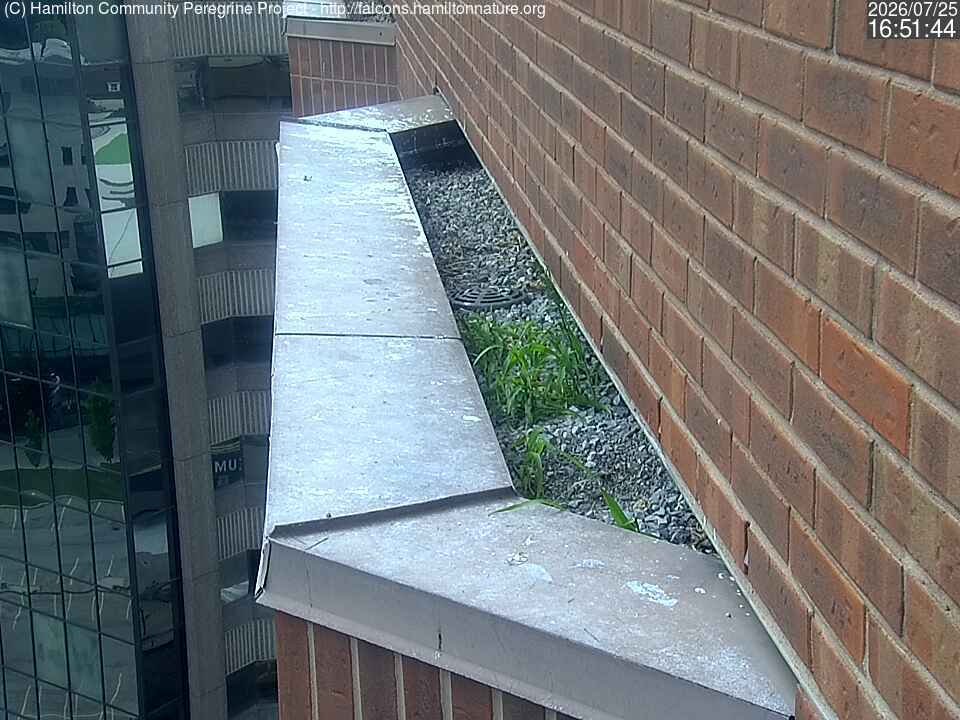
That's primarily because of the dedicated Peregrine Watch volunteers of the Hamilton Naturalists' Club which has a constant web camera
http://www.hamiltonnature.org/hamfalcam.html trained on the nest.
In the fledgling weeks ahead, as the chicks learn to fly, volunteers will wait below to rescue them as they fall or float to the ground.
This year's chicks are all female and their christening followed the tradition of using landmark Hamilton names.
It's the sixth year "Madame X" has nested at the Sheraton. "Mr. E" was her fourth mate in Hamilton.
She was named "Madame X" because, for some time, her origins, in Pennsylvania, were unknown.
The origins of "Mr. E," who was a new mate this year, will be known in a few days because binoculared volunteers caught sight of his leg band numbers for the first time.
Peregrine falcons disappeared in Ontario in the 1960s because of the effects of the pesticide DDT on the eggs and and young.
Captive breeding and release programs gradually increased the breeding pairs in the province to 56, mostly along cliff ledges in northern Ontario. Six years ago, there were only 23 pairs.
City buildings and urban sites in southern Ontario are home to 12 of the 56 pairs.
Bald eagles are also starting to make a comeback in southern Ontario.
There are two nesting pairs; one pair with triplets at Navy Island on the Niagara River and another with twin eaglets at Dunnville.
It's fun to walk downtown stairing at the highrise bank towers and then hear the distinctive cry of the falcons. It gives you a sense of pride too know your city cares.
Later,
Kenaz