
This episode of The Flintstones, entitled "Samantha", has Samantha and Darrin moving into the town of Bedrock...and our favorite witch twitching it up along the way. Elizabeth Montgomery and Dick York lent their voices for their counterparts in this episode. The episode is in three parts.
Later,
Kenaz
Friday, June 30, 2006


Thursday, June 29, 2006
hilarious house of frightenstein
SHOW A
This is a 60's-70's cult/camp classic, produced and shot at chch t.v. studios in hamilton ontario,canada, featuring bill van and vincent price!, billy van played most of the characters, such as grizelda, the librarian, the count wolfman, plus many others.....this t.v. show was a childrens comedy/horror educational, program..which quickley became a must see for the 60's drug culture, tons of 60's slang...plus super hippie[for the druggys]
AMOS MOSES 7parts
This is the hour long, laff-track free, Canadian cut of the classic LAUGH-IN styled kids monster-edu-comedy-psychedelic tour de force made in 1972. The opening titles featuring Vincent Price lead into the regular opening sequence where Igor and Count Frightenstein sing the Transyvanian National Anthem and give the premise for the whole thing. Igor lays a clunker on the Count to round it off.
Vincent Price introduces Zany Zoo with Bwana Clyve, who shows us his Rarey Bird (look close or you'll miss it - it's faster than the speed of sound!) and photos of cougars (or are they pumas?) and Gronk and The Wolfman share a riddle in the jungle. It's PEACHY-KEEN and APPLE-DANDY!
Vincent Price introduces The Oracle, who has a special greeting to people born under the sign of Libra and discusses Palmistry. Pay close attention to the mist in the crystal ball - cool! The Gorilla tries to hitch-hike. Beware of Bud-Dhu!
The Count and Gronk are busy learning "Everything You Ever Wanted To Know About Hovercrafts", the Maharishi makes a pronouncement, and Vincent Price introduces Grizelda - the Ghastley Gourmet who cobbles up her "Grand Ganges Slop Crumpets with Lava Oil Topping"
Super Hippy contemplates his geneology, Igor is pulled over by the Grammar Police and threatened by the Grammar Slammer Bammer, and Vincent Price introduces the Librarian who finds terrifying nuance in Mother Goose's "Cock A Doodle Doo" and "Little Jack Horner". Heavy!
Vincent Price introduces Doctor Pet Vet, who offers Igor two Mandarin Ducks named Irving and Henrietta, and The Count invents a Low-Cal Sandwich Maker.
Julius Sumner-Miller talks about cans and gravity, the Wolfman gets a flirty phone request for Amos Moses by Jerry Reed - triggering the psychedelic lightshow that wasn't in the American versions of the show. The ominous episode ender by Vincent Price used to weird me out as a kid and Igor has the final word after the credits roll.
Ain't No Mountain 5parts
The classic Canadian monster-vaudeville- psychedelic-educational-kids- show featuring VINCENT PRICE and the inimitable BILLY VAN. As usual, the episode fan-title comes from the song played in the Wolfman sequence, unseen in the United States. Also, being the Canadian edit there is no laff-track. This segment shows the standard opening: the singing of the Transylvanian National Anthem, Vincent Price introducing Bwana Clive Batty who shows us footage of a particularly unhappy looking zoo gorilla, and the Gorilla From The Jungle tries his hand at stand-up comedy.
Vincent Price introduces The Librarian who tries to terrify us with Aesop's Fables, Count Frightenstein invents and unleakable fountain pen with invisible ink, The Mahareshi makes a pronouncement, The Oracle offers his greetings to people born uner the sign of Aquarius and discusses the practice of burning candles for the dead while Bhu-Dhu makes turkey sounds, Igor shows his a bit of his ventriloquist act and The Wolfman spins "Westbound Number Nine" by the Flaming Embers - DIG IT
Super Hippy and Vincent Price introduce Grizelda who is brewing up her "Caracus Crab-Apples and Carribean Crab-Grass", The Gorilla shows us his butterfly net, The Count works a little on Brucie and gives Igor a dose of his Revitalising Formula, Doctor PetVet brings Igor a Blanding's semi-box turtle named Theodore (but The Sloth won't have any of it).
Vincent Price introduces Prof. Julius Sumner-Miller who shows us the "Cartesian Diver" and how to make one.
The Wolfman spins Diana Ross singing "Ain't No Mountain High Enough", and Vincent Price sends us home. Dr PetVet has the final word after the credits.
Later,
Kenaz
This is a 60's-70's cult/camp classic, produced and shot at chch t.v. studios in hamilton ontario,canada, featuring bill van and vincent price!, billy van played most of the characters, such as grizelda, the librarian, the count wolfman, plus many others.....this t.v. show was a childrens comedy/horror educational, program..which quickley became a must see for the 60's drug culture, tons of 60's slang...plus super hippie[for the druggys]
AMOS MOSES 7parts
This is the hour long, laff-track free, Canadian cut of the classic LAUGH-IN styled kids monster-edu-comedy-psychedelic tour de force made in 1972. The opening titles featuring Vincent Price lead into the regular opening sequence where Igor and Count Frightenstein sing the Transyvanian National Anthem and give the premise for the whole thing. Igor lays a clunker on the Count to round it off.
Vincent Price introduces Zany Zoo with Bwana Clyve, who shows us his Rarey Bird (look close or you'll miss it - it's faster than the speed of sound!) and photos of cougars (or are they pumas?) and Gronk and The Wolfman share a riddle in the jungle. It's PEACHY-KEEN and APPLE-DANDY!
Vincent Price introduces The Oracle, who has a special greeting to people born under the sign of Libra and discusses Palmistry. Pay close attention to the mist in the crystal ball - cool! The Gorilla tries to hitch-hike. Beware of Bud-Dhu!
The Count and Gronk are busy learning "Everything You Ever Wanted To Know About Hovercrafts", the Maharishi makes a pronouncement, and Vincent Price introduces Grizelda - the Ghastley Gourmet who cobbles up her "Grand Ganges Slop Crumpets with Lava Oil Topping"
Super Hippy contemplates his geneology, Igor is pulled over by the Grammar Police and threatened by the Grammar Slammer Bammer, and Vincent Price introduces the Librarian who finds terrifying nuance in Mother Goose's "Cock A Doodle Doo" and "Little Jack Horner". Heavy!
Vincent Price introduces Doctor Pet Vet, who offers Igor two Mandarin Ducks named Irving and Henrietta, and The Count invents a Low-Cal Sandwich Maker.
Julius Sumner-Miller talks about cans and gravity, the Wolfman gets a flirty phone request for Amos Moses by Jerry Reed - triggering the psychedelic lightshow that wasn't in the American versions of the show. The ominous episode ender by Vincent Price used to weird me out as a kid and Igor has the final word after the credits roll.
Ain't No Mountain 5parts
The classic Canadian monster-vaudeville- psychedelic-educational-kids- show featuring VINCENT PRICE and the inimitable BILLY VAN. As usual, the episode fan-title comes from the song played in the Wolfman sequence, unseen in the United States. Also, being the Canadian edit there is no laff-track. This segment shows the standard opening: the singing of the Transylvanian National Anthem, Vincent Price introducing Bwana Clive Batty who shows us footage of a particularly unhappy looking zoo gorilla, and the Gorilla From The Jungle tries his hand at stand-up comedy.
Vincent Price introduces The Librarian who tries to terrify us with Aesop's Fables, Count Frightenstein invents and unleakable fountain pen with invisible ink, The Mahareshi makes a pronouncement, The Oracle offers his greetings to people born uner the sign of Aquarius and discusses the practice of burning candles for the dead while Bhu-Dhu makes turkey sounds, Igor shows his a bit of his ventriloquist act and The Wolfman spins "Westbound Number Nine" by the Flaming Embers - DIG IT
Super Hippy and Vincent Price introduce Grizelda who is brewing up her "Caracus Crab-Apples and Carribean Crab-Grass", The Gorilla shows us his butterfly net, The Count works a little on Brucie and gives Igor a dose of his Revitalising Formula, Doctor PetVet brings Igor a Blanding's semi-box turtle named Theodore (but The Sloth won't have any of it).
Vincent Price introduces Prof. Julius Sumner-Miller who shows us the "Cartesian Diver" and how to make one.
The Wolfman spins Diana Ross singing "Ain't No Mountain High Enough", and Vincent Price sends us home. Dr PetVet has the final word after the credits.
Later,
Kenaz
Wednesday, June 28, 2006
A slab to go, please?
'Domino's delivery man transported pizza, corpses in same car'
From the April 27 post at 'The Smoking Gun' a Domino's delivery man used a car to transport corpses to funeral parlors when he wasn't using the vehicle to bring pies and Cheesy Bread to pizza customers. (Ewww!)
A Lower Southampton Township Police Department officer pulled over a 1993 Buick after noticing the vehicle did not have an inspection sticker. Additionally, William Bethel, 24, was driving with a suspended license, so cops informed him that the vehicle was going to be impounded.
According to the police report when officers began taking an inventory of the station wagon, they noticed a stretcher in the rear of the vehicle (along with rubbish and wet clothing) where "pizzas were sitting to be delivered." Asked about the items, Bethel explained that when he finished delivering Domino's pizzas, "he transports deceased bodies in the same vehicle for a funeral home." Incredibly! a police check with local health officials determined that the use of the car for stiffs and slices did not violate county ordinances. Bethel, who was not arrested, is facing $400 in fines for driving with a suspended license and operating a vehicle without an inspection certificate. The station wagon is registered to Carl Delia, owner of a so-called removal service that delivers dead bodies to Philadelphia-area funeral homes.
ABC's "Extreme" Exploitation
The first story left you grossed out, the next will leave you shaking your head. From the 'why I hate reality television' file or 'what the hell was she thinking?' file.
'WAKE UP! PEOPLE!'
Is the familiar rant screamed by the host of the hugely popular reality show. I think the producers are the ones who need to heed the advice.
Not content with humdrum stories of poverty, heartache, and distress, the producers of "Extreme Makeover: Home Edition" have compiled a creepy wish list of woe for the next season of the hit ABC television series.
In an e-mail forwarded earlier this month by an ABC employee to network affiliates, the program's casting agent details the exact kind of tragedies and rare illnesses being sought by the Top 20 show. Families featured on the program have their often ramshackle homes renovated for free by a platoon headed by handyman/heartthrob Ty Pennington.
The show is a, tug-on-your-heartstrings television, "Queen for a Day" with finish carpentry. Based on the ABC e-mail, it appears that victims of hate crimes and violent home invasions and families coping with the loss of a child killed by a drunk driver make for good television. And the show would also absolutely love to feature those battling skin cancer, Lou Gehrig's disease, and muscular dystrophy. Oh, and families with multiple children with Down Syndrome would be ideal, whether the kids are "either adopted or biological," the e-mail notes.
And, shooting the moon, the program's "family casting director," Charisse Simonian, would love to locate a kid suffering from Progeria, the rare condition that causes rapid aging in a child (for those unaware of Progeria, the ABC e-mail helpfully describes it as "aka 'little old man disease.'") As if that terrible affliction weren't enough, Simonian is also on the hunt for a child with congenital insensitivity to pain with anhidrosis. "This is where kids cannot feel any physical pain," she notes. But the hunt for a young victim--who will likely die before 30--will not be easy. "There are 17 known cases in US," she writes, before chirpily adding, "let me know if one is in your town!" Such spirit in the face of tragedy.
The March 10 correspondence was written by Phinel Petit-Frere, a network representative based in New York, who passed along the makeover show's wish list to network affiliates in the Southeast. The affiliates were requested to help in locating prospective families for the series, which finished eighth in last week's Nielsen ratings.
Later,
Kenaz
From the April 27 post at 'The Smoking Gun' a Domino's delivery man used a car to transport corpses to funeral parlors when he wasn't using the vehicle to bring pies and Cheesy Bread to pizza customers. (Ewww!)
A Lower Southampton Township Police Department officer pulled over a 1993 Buick after noticing the vehicle did not have an inspection sticker. Additionally, William Bethel, 24, was driving with a suspended license, so cops informed him that the vehicle was going to be impounded.
According to the police report when officers began taking an inventory of the station wagon, they noticed a stretcher in the rear of the vehicle (along with rubbish and wet clothing) where "pizzas were sitting to be delivered." Asked about the items, Bethel explained that when he finished delivering Domino's pizzas, "he transports deceased bodies in the same vehicle for a funeral home." Incredibly! a police check with local health officials determined that the use of the car for stiffs and slices did not violate county ordinances. Bethel, who was not arrested, is facing $400 in fines for driving with a suspended license and operating a vehicle without an inspection certificate. The station wagon is registered to Carl Delia, owner of a so-called removal service that delivers dead bodies to Philadelphia-area funeral homes.
ABC's "Extreme" Exploitation
The first story left you grossed out, the next will leave you shaking your head. From the 'why I hate reality television' file or 'what the hell was she thinking?' file.
'WAKE UP! PEOPLE!'
Is the familiar rant screamed by the host of the hugely popular reality show. I think the producers are the ones who need to heed the advice.
Not content with humdrum stories of poverty, heartache, and distress, the producers of "Extreme Makeover: Home Edition" have compiled a creepy wish list of woe for the next season of the hit ABC television series.
In an e-mail forwarded earlier this month by an ABC employee to network affiliates, the program's casting agent details the exact kind of tragedies and rare illnesses being sought by the Top 20 show. Families featured on the program have their often ramshackle homes renovated for free by a platoon headed by handyman/heartthrob Ty Pennington.
The show is a, tug-on-your-heartstrings television, "Queen for a Day" with finish carpentry. Based on the ABC e-mail, it appears that victims of hate crimes and violent home invasions and families coping with the loss of a child killed by a drunk driver make for good television. And the show would also absolutely love to feature those battling skin cancer, Lou Gehrig's disease, and muscular dystrophy. Oh, and families with multiple children with Down Syndrome would be ideal, whether the kids are "either adopted or biological," the e-mail notes.
And, shooting the moon, the program's "family casting director," Charisse Simonian, would love to locate a kid suffering from Progeria, the rare condition that causes rapid aging in a child (for those unaware of Progeria, the ABC e-mail helpfully describes it as "aka 'little old man disease.'") As if that terrible affliction weren't enough, Simonian is also on the hunt for a child with congenital insensitivity to pain with anhidrosis. "This is where kids cannot feel any physical pain," she notes. But the hunt for a young victim--who will likely die before 30--will not be easy. "There are 17 known cases in US," she writes, before chirpily adding, "let me know if one is in your town!" Such spirit in the face of tragedy.
The March 10 correspondence was written by Phinel Petit-Frere, a network representative based in New York, who passed along the makeover show's wish list to network affiliates in the Southeast. The affiliates were requested to help in locating prospective families for the series, which finished eighth in last week's Nielsen ratings.
Later,
Kenaz
Tuesday, June 27, 2006
Escape From Sobibor (1987)
Directed by Jack Gold
starring
Alan Arkin
Joanna Pacula
Rutger Hauer
Hartmut Becker
Jack Shepherd
There are those rare occasions in which real world events dictate the way its dramatic version needs to be made, no dressing-up. No melodrama, no adornment. You simply re-enact and point the camera. The burden of suspension of disbelief is no longer on the filmmaker, because these things happened. He simply tells the story, and plain simplicity is adequate, because the onus is now on the viewer to find a way to take what occurs on screen. If the Nazis had not existed, they would be completely unbelievable as fictitious villains; they were and are far beyond what any storyteller would craft from the whole cloth and ask his audience to accept.
Escape from Sobibor is a movie which portrays, in some small part, events whose monstrous enormity render all the words said about it trivial, but I will try to do this gem justice.
This movie concerns the Polishbased Nazi death camp of Sobibor, which was, on October 14, 1943, the site of the only successful camp revolt during World War 2. This information is given to us helpfully by narrator Howard K. Smith, who was a foreign correspondent during the war.
The camp at Sobibor is already well populated by the time our story opens, composed entirely of Jewish men and women whose trades have made them marginally valuable to their SS overseers. Leon (Alan Arkin) has somehow become a nominal leader, a man to whom almost every prisoner defers, though when a trio on gardening duty tell him their plan to escape today, Leon is powerless to stop them. He can only listen from afar to the gunshots as the three men make it past the barbed wire, and the explosions as they try to cross the minefield.
Working their trades for the Nazis is onerous enough, but the men of Sobibor have an even worse duty. They stand at the edge of the railroad and help the new arrivals off the train while Strauss plays gaily over the loudspeakers, remaining silent and downcast as men are separated from the women and children; as those with a useful skill such as seamstresses, shoemakers, tailors, and, in this case, goldsmiths, are called out; as those without any ability that the Nazis wish to exploit are calmly told that their stay in Sobibor will begin with a hot shower; as the lines of men and women march unsuspectingly to the showers which lead only to gas chambers and incinerators.
This latest trainload yields three seamstresses, Luka (Joanna Pacula), Bajle (Judith Sharp), and Naomi (Sara Sugarman); one shoemaker, Itzhak (Jack Shepherd), who anxiously waves goodbye to his wife and child as they are herded to the showers, and Schlomo (Simon Gregor) and hs younger brother Moses (Eli Nathenson), goldsmiths who bid their father and mother farewell in the same way.
Itzak finds out the truth that night, after learning his job duties, when he starts asking around for his family; Leon and his friend Samuel (Emil Wolk) tell him where the showers really lead. Schlomo and Moses have it even harder; Moses is ordered to pick up a gold coin from an SS officer who wants it worked into his whip handle, and in so doing enters the courtyard in which the newcomers are shepherded from the building in which they lose their possessions and come out naked, to the building from which they come out stacked carelessly on a cart.
The new women have no such attachments and no such revelation; but Naomi has managed to smuggle her baby into the sewing shed, and it isn't long before their SS overseer finds out. He is first in a generous mood, and intends to spare the woman's life as he takes the baby off to the showers; but when Naomi spits full in her face, he simply shoots first the mother and then the baby in the head, in the midst of the other seamstresses.
Leon has long entertained plans of escape, for maybe ten or twenty of the 600 prisoners. But the extent to which that plan would be disastrous is shown the following day, when two men bringing water for those on woodcutting detail manage to overpower their overseer and escape. The thirteen other woodcutters try to follow suit, but are caught by the barbed wire, and brought back to the camp center as an object lesson. There, they are sentenced to die. But not just them. Each of them is forced to choose another prisoner as their "partner in death," or else the officers will simply shoot 50 Jews at random.
Realizing that a similar toll will be exacted if he and his group escaped, Leon backs away from such small-scale plans. The only escape plan he will now support is one that frees all of the prisoners of Sobibor. All six hundred of them.
As they're beating their brains to come up with a plan that can get six hundred people past sixteen SS officers and 125 Ukrainian guards, the dynamic of the camp changes suddenly. A group of Russian solders is tossed into the camp, separated from their comrades-in-arms destined for a real P.O.W. camp because they're Jewish. Their leader is Lt. Sasha Pechersky, as played by Rutger Hauer-surprisingly good here, considering he hasn't a jewish bone in his body.
But he clicks immediately with Leon; Sasha will provide the tactical forethought and the muscle of his trained men, and Leon will provide the will and the drive among the prisoners. And the plan they eventually come up with is an audacious one: To have any chance of escape, they will have to quietly kill all sixteen SS officers within the space of one hour.
Schlomo and Bajle decide to gather them rosebuds while they may; Itzhak finds solace of a sort with a similarly-widowed prisoner. The most obviously cut subplot involves Sasha and Luka; to placate the guards' suspicion as to why Sasha hangs out around the Polish Jews' quarters every evening while planning, Leon assigns Luka to act as his "girlfriend." She takes to the role with great sincerity, and because Sasha is also playing along, he doesn't realize that Luka comes to inhabit her role more fully than he. It comes as a shock and a blow to her when she finds out that he's only been going through the motions with her, that he has a wife and child back home in Russia to whom he is very devoted.
I don't think it's any great spoiler to tell you how the escape turns out; thanks to the necessary logistical complexity of silently killing sixteen men in an hour, things go awry, and it's every man/woman for him/herself as they break down the gates and dash across the minefield, sporadically returning fire toward the disorganized Ukrainian guards. Of the 600 prisoners, the historical record shows that almost half died in the attempt.* But that means that more than 300 made it to the woods, to safety, leaving the soldiers behind them without leadership and with severed telephone lines. Leon's last charge to them before their mad dash is a familiar one: to "bear witness," to let the world know what had happened there.
Note* All in all, only approximately 50 Jewish prisoners who escaped Sobibor on 14 October 1943, survived the war. Following the revolt, the Nazis closed the extermination camp. Between spring 1942 and fall 1943, 250,000 Jews were murdered in Sobibor.
Click on the title link to read a transcript of an interview with Thomas (Toivi) Blatt is a Holocaust Survivor, Sobibor Camp Escapee, and Author of Sobibor: The Forgotten Revolt and From the Ashes of Sobibor.
Later,
Kenaz
starring
Alan Arkin
Joanna Pacula
Rutger Hauer
Hartmut Becker
Jack Shepherd
There are those rare occasions in which real world events dictate the way its dramatic version needs to be made, no dressing-up. No melodrama, no adornment. You simply re-enact and point the camera. The burden of suspension of disbelief is no longer on the filmmaker, because these things happened. He simply tells the story, and plain simplicity is adequate, because the onus is now on the viewer to find a way to take what occurs on screen. If the Nazis had not existed, they would be completely unbelievable as fictitious villains; they were and are far beyond what any storyteller would craft from the whole cloth and ask his audience to accept.
Escape from Sobibor is a movie which portrays, in some small part, events whose monstrous enormity render all the words said about it trivial, but I will try to do this gem justice.
This movie concerns the Polishbased Nazi death camp of Sobibor, which was, on October 14, 1943, the site of the only successful camp revolt during World War 2. This information is given to us helpfully by narrator Howard K. Smith, who was a foreign correspondent during the war.
The camp at Sobibor is already well populated by the time our story opens, composed entirely of Jewish men and women whose trades have made them marginally valuable to their SS overseers. Leon (Alan Arkin) has somehow become a nominal leader, a man to whom almost every prisoner defers, though when a trio on gardening duty tell him their plan to escape today, Leon is powerless to stop them. He can only listen from afar to the gunshots as the three men make it past the barbed wire, and the explosions as they try to cross the minefield.
Working their trades for the Nazis is onerous enough, but the men of Sobibor have an even worse duty. They stand at the edge of the railroad and help the new arrivals off the train while Strauss plays gaily over the loudspeakers, remaining silent and downcast as men are separated from the women and children; as those with a useful skill such as seamstresses, shoemakers, tailors, and, in this case, goldsmiths, are called out; as those without any ability that the Nazis wish to exploit are calmly told that their stay in Sobibor will begin with a hot shower; as the lines of men and women march unsuspectingly to the showers which lead only to gas chambers and incinerators.
This latest trainload yields three seamstresses, Luka (Joanna Pacula), Bajle (Judith Sharp), and Naomi (Sara Sugarman); one shoemaker, Itzhak (Jack Shepherd), who anxiously waves goodbye to his wife and child as they are herded to the showers, and Schlomo (Simon Gregor) and hs younger brother Moses (Eli Nathenson), goldsmiths who bid their father and mother farewell in the same way.
Itzak finds out the truth that night, after learning his job duties, when he starts asking around for his family; Leon and his friend Samuel (Emil Wolk) tell him where the showers really lead. Schlomo and Moses have it even harder; Moses is ordered to pick up a gold coin from an SS officer who wants it worked into his whip handle, and in so doing enters the courtyard in which the newcomers are shepherded from the building in which they lose their possessions and come out naked, to the building from which they come out stacked carelessly on a cart.
The new women have no such attachments and no such revelation; but Naomi has managed to smuggle her baby into the sewing shed, and it isn't long before their SS overseer finds out. He is first in a generous mood, and intends to spare the woman's life as he takes the baby off to the showers; but when Naomi spits full in her face, he simply shoots first the mother and then the baby in the head, in the midst of the other seamstresses.
Leon has long entertained plans of escape, for maybe ten or twenty of the 600 prisoners. But the extent to which that plan would be disastrous is shown the following day, when two men bringing water for those on woodcutting detail manage to overpower their overseer and escape. The thirteen other woodcutters try to follow suit, but are caught by the barbed wire, and brought back to the camp center as an object lesson. There, they are sentenced to die. But not just them. Each of them is forced to choose another prisoner as their "partner in death," or else the officers will simply shoot 50 Jews at random.
Realizing that a similar toll will be exacted if he and his group escaped, Leon backs away from such small-scale plans. The only escape plan he will now support is one that frees all of the prisoners of Sobibor. All six hundred of them.
As they're beating their brains to come up with a plan that can get six hundred people past sixteen SS officers and 125 Ukrainian guards, the dynamic of the camp changes suddenly. A group of Russian solders is tossed into the camp, separated from their comrades-in-arms destined for a real P.O.W. camp because they're Jewish. Their leader is Lt. Sasha Pechersky, as played by Rutger Hauer-surprisingly good here, considering he hasn't a jewish bone in his body.
But he clicks immediately with Leon; Sasha will provide the tactical forethought and the muscle of his trained men, and Leon will provide the will and the drive among the prisoners. And the plan they eventually come up with is an audacious one: To have any chance of escape, they will have to quietly kill all sixteen SS officers within the space of one hour.
Schlomo and Bajle decide to gather them rosebuds while they may; Itzhak finds solace of a sort with a similarly-widowed prisoner. The most obviously cut subplot involves Sasha and Luka; to placate the guards' suspicion as to why Sasha hangs out around the Polish Jews' quarters every evening while planning, Leon assigns Luka to act as his "girlfriend." She takes to the role with great sincerity, and because Sasha is also playing along, he doesn't realize that Luka comes to inhabit her role more fully than he. It comes as a shock and a blow to her when she finds out that he's only been going through the motions with her, that he has a wife and child back home in Russia to whom he is very devoted.
I don't think it's any great spoiler to tell you how the escape turns out; thanks to the necessary logistical complexity of silently killing sixteen men in an hour, things go awry, and it's every man/woman for him/herself as they break down the gates and dash across the minefield, sporadically returning fire toward the disorganized Ukrainian guards. Of the 600 prisoners, the historical record shows that almost half died in the attempt.* But that means that more than 300 made it to the woods, to safety, leaving the soldiers behind them without leadership and with severed telephone lines. Leon's last charge to them before their mad dash is a familiar one: to "bear witness," to let the world know what had happened there.
Note* All in all, only approximately 50 Jewish prisoners who escaped Sobibor on 14 October 1943, survived the war. Following the revolt, the Nazis closed the extermination camp. Between spring 1942 and fall 1943, 250,000 Jews were murdered in Sobibor.
Click on the title link to read a transcript of an interview with Thomas (Toivi) Blatt is a Holocaust Survivor, Sobibor Camp Escapee, and Author of Sobibor: The Forgotten Revolt and From the Ashes of Sobibor.
Later,
Kenaz
Sunday, June 18, 2006
Father's Day
DADDY'S HANDS
I remember daddy's hands folded silently in prayer
And reachin' out to hold me, when I had a nightmare
You could read quite a story in the callous' and lines
Years of work and worry had left their mark behind I remember daddy's hands how they held my mama tight
And patted my back for something done right
There are things that I'd forgotten that I loved about the man
But I'll always remember the love in daddy's hands Daddy's hands were soft and kind when I was cryin'
Daddy's hands were hard as steel when I'd done wrong
Daddy's hands weren't always gentle but I've come to understand
There was always love in daddy's hands. I remember daddy's hands workin' 'til they bled
Sacrifised unselfishly just to keep us all fed
If I could do things over, I'd live my life again
And never take for granted the love in daddy's hands
By Singer, Holly Dunn
A RENEWABLE SOURCE
Father's are a renewable source of memories. A source that fills us with a complex array of gratitude, sadness, disappointment, and awe. It is the same for all men, for there's no escaping these memories. They are deeply imbedded in us, and they impact us every day of our lives.
And whether you're trying to live up to your father's expectations, prove him wrong, or rid your memory of him, the memories of your father are eternal. Each memory demands its' own cost. And the more often you tap into your father's energy you will keep his memories closer to you.
As you age the memories of your father grow stronger. The wounds that haven't healed are poised to live on, in you and eventually your children. We all carry wounds from our father. We all feel the pain of not "measuring up" in some way. But whatever your wounds, it's important to remember this: What is not healed in you will show up in your children. It will show up no matter how hard you fight against it, and no matter how hard you try "not to be your father." It will show up, and transcend all your efforts to prevent it.
What's left to us is a simple choice. Would we like to live with these wounds, and transfer them to our sons and daughters, or would we like to explore them, and find a way to heal them? To truly understand the power of the memories is to watch the effects they have on others as you convey them. These memories can be triggered by the wounds from your childhood, or they can be triggered by forgiveness and love. And while the path to forgiveness can be difficult, it's worth every ounce of effort you give it. And most importantly, it is a gift to yourself, and the generations that follow you.
ILU
Three simple words can often be so hard. I know I didn't say these words to my Dad no where near enough. This didn't mean I was devoid of the emotion that this simple phrase conjours. On the contrary, for me action has always been more important than words. Action was the fuel that drove every memory of my father. Emotion drove the spark that ignited reaction. And so the cycle continued.
The problem begins when the fuel begins to thin, causing the mighty cogs to stall. Eventually the mighty engine stops. All because the fuel used wasn't rich enough in
"I Love You".
Please remember to tell your dad, that you love him everyday.
I miss you Dad,
Kendall
Saturday, June 17, 2006
100+ days of fear, anger in Caledonia
On October. 26, 2005 the first stone was cast when Six Nations Chief David General wrote to Henco Industries, warning of the dangers of developing the Douglas Creek Estates subdivision on native land. The warnings where ignored and on February 28, 2006 a small group of Six Nations protesters from the Grand River Territory reserve move onto the Caledonia construction site, erecting tents. Thus marking the beginning of a 100+ day seige in the small tranquill town of Caledonia.
The Six Nations protesters claim the land was stolen from them more than 200 years ago. They have been lied too, abused and used. But, please this does not give anyone the right to throw away all dignity and descend to a sub-human level.
"I urge Aboriginal people to maintain non-violent protest in the example of Ghandhi. However, I give my blessing to any Aboriginal person touched without their permission to respond in the appropriate manner, always and only in response to the choices made by individual police officers."
-a compassionate plea from Brendan Cross the former leader of The First Nations Party of Saskatchewan and a policy speechwriter for The First Peoples National Party of Canada
Here is my look at the crisis through the eyes of 100+ individuals captured in print, video and pictures. I hope this post delivers a balanced, educated view of the situation and is in no way meant to judge either side.


...The Ontario government has revealed it's buying out the developer whose housing complex has been hit by the demonstrators. The ongoing dispute about who owns the land where Henco Industries built its new homes has hit the company's finances hard.
The natives claim the land is theirs. The government maintains they surrendered it in the 1800s...(June 16)
...violent setback was symptomatic of what's been a stressful and exhausting ordeal for everyone involved, and tensions could easily explode again...
...Protesters say police were armed with M16 rifles, tear gas, pepper spray and Tasers, and subdued a number of people with shocks from the Tasers and pepper-spray. A spokeswoman for the protesters said one female protester was "beaten by five OPP officers." OPP would later deny that excessive force was used(April 20)...
...Sam George, whose brother Dudley was killed by an OPP sniper during a stand-off at Ipperwash Provincial Park, calls for calm and urges authorities to treat the protesters fairly(April 21)...
...3,000 Caledonia residents hold a rally in the evening, calling on authorities to end the standoff. Later that night, about 500 residents confront police and native protesters at the blockade(April 24)...
...Haldimand County Mayor Marie Trainer infuriates protesters when she tells CBC Newsworld that Caledonia residents "have to get to work to support their families. If they don't go to work, they don't get paid and if they don't get paid then they can't pay their mortgages and they lose their homes(April 25)...
...Vandals shut down a transformer station in Caledonia, cutting power to thousands of residents in surrounding Norfolk and Haldimand counties.
In the evening, the Emergency Response Team of the OPP arrives in riot gear to shore up the police barrier between the native and non-native protestors(May22)...
...Two revelations were experienced by Edwards right then-- the underlying racism First Nations people are forced to live with and the fact protesters thought they could rely on the power of the media to alleviate the pressures they were experiencing by the presence of the OPP.
As for the Ipperwash crisis and in part Sam George's demands for the truth, Edwards said he hopes for better treatment towards the protestors in Caledonia as a result of the growing awareness against racism.
...'We want to keep this moving forward and rebuild the trust,' says Six Nations Chief MacNaughton...
...two levels of government and the Six Nations are back at the table urging natives and Caledonia residents alike to remain calm as efforts continue to "rebuild trust"
... Strip away the land-claim issue, the barricades, the anger and the violence, and the conflict at Caledonia comes down to two sets of people living in the same place with totally different approaches to organizing their societies.
...The rule of law is a basic underpinning of a civilized and equitable society. It assumes an understanding of the need for everybody to obey the law. It's a principle that is suffering immense damage in Caledonia.
...two CH TV cameramen were injured, an elderly couple harassed in an Argyle Street parking lot and a vehicle belonging to the U.S. Bureau of Alcohol, Tobacco, Firearms and Explosives (ATF) was taken and allegedly driven at a police officer...
...When a group of people attack two members of the media in front of several police officers who refuse to render assistance and when other members of this same police group show up in full riot gear to confront restless residents, I lose faith in our elected representatives to come to grips with what is becoming anarchy.
The natives are flouting the law and thumbing their noses at authority...
...How can Kwinter, the Minister of Community Safety and Correctional Services, reasonably expect non-native citizens to practice restraint and tolerance, when the First Nations people have displayed anything but those qualities...
... Businesses and homeowners that have suffered the consequences of an aboriginal blockade in Caledonia, Ont., have no choice but to file a class-action lawsuit to recoup tens of millions of dollars in losses...
... Angry residents living next to the Douglas Creek Estates say they'll protect their homes and families if the OPP won't...
...There have been so many incidents escalating in intensity on an almost daily basis, but they are not producing a favourable result for anyone involved. Violence is increasing, tempers are reaching the boiling point, yet there is no resolution. Innocent people and their safety are being jeopardized...
...Ontario Provincial Police are trying to recover classified documents containing the identities of undercover officers and operational details concerning the native occupation...
...Ontario has slammed the door on Caledonia negotiations until natives clear their barricades and help police find six wanted men...
...Friday's incidents in Caledonia can only be interpreted as political correctness run amok. The facts reported in several media point either to a blatant disregard of the rule of law, or to fear of being labelled anti-native on the part of the Ontario Provincial Police...
...Caledonia might well be the Wild West...
...Time to return the land taken piecemeal from the natives...
...do something before the blood starts flowing...
... Renegades. Hotheads. Troublemakers. They exist in every situation, in every camp, in every faction. There's always someone who would rather throw a punch, or a brick, than not...
...For all of my 35 years (with the Hamilton Police Services), I followed Canadian police stories and cases from coast to coast and never have I heard of a case where Canadian police officers stood by and watched citizens being beaten by thugs. Yet it has now happened -- in Caledonia...
...On the first evening he spent at home during a two-week leave from his tour of duty in Afghanistan, Sgt. Daryl Shuch slept through the sounds of police helicopters and angry protesters.
He was tired after his 27-hour journey from Kandahar to Caledonia, Ont., and the turmoil outside his door barely registered compared to the battles he witnessed during his Canadian military service....
...The minister responsible for the OPP is defending the force's strategy in the Caledonia standoff, saying an aggressive OPP intervention would make the situation much worse....
...In a strange twist to the Caledonia standoff, natives protesters have come to the defence of the Ontario Provincial Police...
... One of the television cameramen who was beaten up during a scuffle with protesters Friday said he's seriously considering taking legal action against the Ontario Provincial Police for dereliction of duty...
... Several hundred angry Caledonia residents confronted OPP in full riot gear late last night as the standoff with native protesters grew progressively more tense throughout the evening...
...Ontario Premier Dalton McGuinty condemned the violence that saw two CH cameramen taken to hospital yesterday after a scrimmage with natives...
...We want to congratulate the people of Caledonia who came forward and formed their own barricade...
...The OPP officers assigned to the native standoff did little to bolster the confidence of the people they're supposed to protect by admitting they are concerned about their own safety...
... Federal cabinet minister and local MP Diane Finley is urging Queen's Park to send police into a housing site occupied by native protesters to clear them out in an effort to return the town to "normalcy."...
...The letter writer describes the native protests as justified and the counter-protests of the townsfolk as "racist-based."
Like perhaps most non-native Canadians, I agree with much of the natives' stand on land claims and other issues.
When the letter writer dismisses the reaction of the people of Caledonia as simple racism, I'm frankly not sure if she's taking a negotiating position or is truly sincere.
If sincere, I feel she, too, doesn't properly understand her neighbours. The natives made a classic mistake by using the townsfolk as "cannon fodder" in their dispute with the government...
... It's disturbing that Ontario Provincial Police officers on duty in Caledonia don't feel safe...
... OPP officers assigned to the native standoff in Caledonia say their bosses have put their public image ahead of officer safety and law and order...
...First Nations chiefs from across Ontario pledged their support to Caledonia protesters yesterday, and warned governments to expect more occupations if native land claims aren't settled...
...Caledonia: Idiot thinking at its worst...
...Prayer is most powerful ... It worked here' (May 25) and 'Let's Shake on It! Caledonia Impasse Ends; Natives, residents reopen Argyle St (May 24)...
...MAKE THEM GO; Lawyer urges judge to force end to standoff...
...Only in politics could history be of such fleeting importance. Only in politics could the party that so vigorously rejected calls for an inquiry into its own handling of a native standoff turn around and demand an inquiry into the Dalton McGuinty government's handling of a native issue that is still in the process of being resolved....
... The fragile peace in Caledonia was shattered last night with events apparently being sparked by an OPP cruiser taking a wrong turn...
... The citizens of Caledonia seem to take pride in making reference to welfare money given to people of the Six Nations. Based on these comments and the stigma they implied, one is forced to assume there are not, nor never have been, any residents of Caledonia who at some period of their lives have had to rely on welfare...
... I cannot understand how our prime ministers, both in the current situation in Caledonia and in the past at Ipperwash, did not consider a war in our own country to be their priority. If Stephen Harper wishes to be remembered as an outstanding prime minister, he should make the native Canadian problem his to be solved...
... The OPP has launched numerous criminal investigations relating to the occupation of Douglas Creek Estates, including activities on an adjacent hydro right of way and the blockade of a rail line...
... Ontario's Minister for Aboriginal Affairs says the province has done all it can to solve the problem in Caledonia and now it's time for Ottawa to step in...
Please see parts 2,3 and 4 for videos from Caledonia
The Six Nations protesters claim the land was stolen from them more than 200 years ago. They have been lied too, abused and used. But, please this does not give anyone the right to throw away all dignity and descend to a sub-human level.
"I urge Aboriginal people to maintain non-violent protest in the example of Ghandhi. However, I give my blessing to any Aboriginal person touched without their permission to respond in the appropriate manner, always and only in response to the choices made by individual police officers."
-a compassionate plea from Brendan Cross the former leader of The First Nations Party of Saskatchewan and a policy speechwriter for The First Peoples National Party of Canada
Here is my look at the crisis through the eyes of 100+ individuals captured in print, video and pictures. I hope this post delivers a balanced, educated view of the situation and is in no way meant to judge either side.


...The Ontario government has revealed it's buying out the developer whose housing complex has been hit by the demonstrators. The ongoing dispute about who owns the land where Henco Industries built its new homes has hit the company's finances hard.
The natives claim the land is theirs. The government maintains they surrendered it in the 1800s...(June 16)
...violent setback was symptomatic of what's been a stressful and exhausting ordeal for everyone involved, and tensions could easily explode again...
...Protesters say police were armed with M16 rifles, tear gas, pepper spray and Tasers, and subdued a number of people with shocks from the Tasers and pepper-spray. A spokeswoman for the protesters said one female protester was "beaten by five OPP officers." OPP would later deny that excessive force was used(April 20)...
...Sam George, whose brother Dudley was killed by an OPP sniper during a stand-off at Ipperwash Provincial Park, calls for calm and urges authorities to treat the protesters fairly(April 21)...
...3,000 Caledonia residents hold a rally in the evening, calling on authorities to end the standoff. Later that night, about 500 residents confront police and native protesters at the blockade(April 24)...
...Haldimand County Mayor Marie Trainer infuriates protesters when she tells CBC Newsworld that Caledonia residents "have to get to work to support their families. If they don't go to work, they don't get paid and if they don't get paid then they can't pay their mortgages and they lose their homes(April 25)...
...Vandals shut down a transformer station in Caledonia, cutting power to thousands of residents in surrounding Norfolk and Haldimand counties.
In the evening, the Emergency Response Team of the OPP arrives in riot gear to shore up the police barrier between the native and non-native protestors(May22)...
...Two revelations were experienced by Edwards right then-- the underlying racism First Nations people are forced to live with and the fact protesters thought they could rely on the power of the media to alleviate the pressures they were experiencing by the presence of the OPP.
As for the Ipperwash crisis and in part Sam George's demands for the truth, Edwards said he hopes for better treatment towards the protestors in Caledonia as a result of the growing awareness against racism.
...'We want to keep this moving forward and rebuild the trust,' says Six Nations Chief MacNaughton...
...two levels of government and the Six Nations are back at the table urging natives and Caledonia residents alike to remain calm as efforts continue to "rebuild trust"
... Strip away the land-claim issue, the barricades, the anger and the violence, and the conflict at Caledonia comes down to two sets of people living in the same place with totally different approaches to organizing their societies.
...The rule of law is a basic underpinning of a civilized and equitable society. It assumes an understanding of the need for everybody to obey the law. It's a principle that is suffering immense damage in Caledonia.
...two CH TV cameramen were injured, an elderly couple harassed in an Argyle Street parking lot and a vehicle belonging to the U.S. Bureau of Alcohol, Tobacco, Firearms and Explosives (ATF) was taken and allegedly driven at a police officer...
...When a group of people attack two members of the media in front of several police officers who refuse to render assistance and when other members of this same police group show up in full riot gear to confront restless residents, I lose faith in our elected representatives to come to grips with what is becoming anarchy.
The natives are flouting the law and thumbing their noses at authority...
...How can Kwinter, the Minister of Community Safety and Correctional Services, reasonably expect non-native citizens to practice restraint and tolerance, when the First Nations people have displayed anything but those qualities...
... Businesses and homeowners that have suffered the consequences of an aboriginal blockade in Caledonia, Ont., have no choice but to file a class-action lawsuit to recoup tens of millions of dollars in losses...
... Angry residents living next to the Douglas Creek Estates say they'll protect their homes and families if the OPP won't...
...There have been so many incidents escalating in intensity on an almost daily basis, but they are not producing a favourable result for anyone involved. Violence is increasing, tempers are reaching the boiling point, yet there is no resolution. Innocent people and their safety are being jeopardized...
...Ontario Provincial Police are trying to recover classified documents containing the identities of undercover officers and operational details concerning the native occupation...
...Ontario has slammed the door on Caledonia negotiations until natives clear their barricades and help police find six wanted men...
...Friday's incidents in Caledonia can only be interpreted as political correctness run amok. The facts reported in several media point either to a blatant disregard of the rule of law, or to fear of being labelled anti-native on the part of the Ontario Provincial Police...
...Caledonia might well be the Wild West...
...Time to return the land taken piecemeal from the natives...
...do something before the blood starts flowing...
... Renegades. Hotheads. Troublemakers. They exist in every situation, in every camp, in every faction. There's always someone who would rather throw a punch, or a brick, than not...
...For all of my 35 years (with the Hamilton Police Services), I followed Canadian police stories and cases from coast to coast and never have I heard of a case where Canadian police officers stood by and watched citizens being beaten by thugs. Yet it has now happened -- in Caledonia...
...On the first evening he spent at home during a two-week leave from his tour of duty in Afghanistan, Sgt. Daryl Shuch slept through the sounds of police helicopters and angry protesters.
He was tired after his 27-hour journey from Kandahar to Caledonia, Ont., and the turmoil outside his door barely registered compared to the battles he witnessed during his Canadian military service....
...The minister responsible for the OPP is defending the force's strategy in the Caledonia standoff, saying an aggressive OPP intervention would make the situation much worse....
...In a strange twist to the Caledonia standoff, natives protesters have come to the defence of the Ontario Provincial Police...
... One of the television cameramen who was beaten up during a scuffle with protesters Friday said he's seriously considering taking legal action against the Ontario Provincial Police for dereliction of duty...
... Several hundred angry Caledonia residents confronted OPP in full riot gear late last night as the standoff with native protesters grew progressively more tense throughout the evening...
...Ontario Premier Dalton McGuinty condemned the violence that saw two CH cameramen taken to hospital yesterday after a scrimmage with natives...
...We want to congratulate the people of Caledonia who came forward and formed their own barricade...
...The OPP officers assigned to the native standoff did little to bolster the confidence of the people they're supposed to protect by admitting they are concerned about their own safety...
... Federal cabinet minister and local MP Diane Finley is urging Queen's Park to send police into a housing site occupied by native protesters to clear them out in an effort to return the town to "normalcy."...
...The letter writer describes the native protests as justified and the counter-protests of the townsfolk as "racist-based."
Like perhaps most non-native Canadians, I agree with much of the natives' stand on land claims and other issues.
When the letter writer dismisses the reaction of the people of Caledonia as simple racism, I'm frankly not sure if she's taking a negotiating position or is truly sincere.
If sincere, I feel she, too, doesn't properly understand her neighbours. The natives made a classic mistake by using the townsfolk as "cannon fodder" in their dispute with the government...
... It's disturbing that Ontario Provincial Police officers on duty in Caledonia don't feel safe...
... OPP officers assigned to the native standoff in Caledonia say their bosses have put their public image ahead of officer safety and law and order...
...First Nations chiefs from across Ontario pledged their support to Caledonia protesters yesterday, and warned governments to expect more occupations if native land claims aren't settled...
...Caledonia: Idiot thinking at its worst...
...Prayer is most powerful ... It worked here' (May 25) and 'Let's Shake on It! Caledonia Impasse Ends; Natives, residents reopen Argyle St (May 24)...
...MAKE THEM GO; Lawyer urges judge to force end to standoff...
...Only in politics could history be of such fleeting importance. Only in politics could the party that so vigorously rejected calls for an inquiry into its own handling of a native standoff turn around and demand an inquiry into the Dalton McGuinty government's handling of a native issue that is still in the process of being resolved....
... The fragile peace in Caledonia was shattered last night with events apparently being sparked by an OPP cruiser taking a wrong turn...
... The citizens of Caledonia seem to take pride in making reference to welfare money given to people of the Six Nations. Based on these comments and the stigma they implied, one is forced to assume there are not, nor never have been, any residents of Caledonia who at some period of their lives have had to rely on welfare...
... I cannot understand how our prime ministers, both in the current situation in Caledonia and in the past at Ipperwash, did not consider a war in our own country to be their priority. If Stephen Harper wishes to be remembered as an outstanding prime minister, he should make the native Canadian problem his to be solved...
... The OPP has launched numerous criminal investigations relating to the occupation of Douglas Creek Estates, including activities on an adjacent hydro right of way and the blockade of a rail line...
... Ontario's Minister for Aboriginal Affairs says the province has done all it can to solve the problem in Caledonia and now it's time for Ottawa to step in...
Please see parts 2,3 and 4 for videos from Caledonia
100+ days of fear, anger in Caledonia Part 2
A group of local youth express their reasons for being at the protest against the Six Nations blockade.
Caledonia MPP Speaks
David Peterson talks with Caledonia Townspeople
This resident is critical of others protesting against the Six Nations.
Caledonia......... The Good Ol' Boys......
Lights go up at Caledonia Protest against Six Nations
Robin Williams is a member of Six Nations and gave the following interview on the topic of the current land occupation. She speaks about the situation of housing on the reserves, why protestors have taken back the land from Henco Industries and the importance of outside support.
This is an interview with Jaqueline House, a Cayuga member of the Turtle clan and a Six Nations spokesperson, about the blockade of the Douglas Creek Estates construction site in Caledonia.
Local intelligent Highschool Student on Six Nations Road Blockade - Caledonia
This is an interview with a long time Caledonia resident.
100+ days of fear, anger in Caledonia Part 3
"Custer" Caledonia Resident on Road Blockade
OPP Riot cops deployed in Caledonia
Another Caledonia Resident on Six Nations
Twas a small group, but even that never stopped them from forcing a Van off the road with an elderly Native woman inside, then shortly after a Native photographer was assaulted by a male resident. Is this ever going to end???
Caledonia Town Meeting April 24, 2006, Native's protest loudly.
A member of the Mohawk Warrior Society speaks about the Caledonia Standoff and the significance of the police assault and native response
This is an interview with Mike D. of OCAP who witnessed the police assault on the Six Nations camp at Caledonia on April 20th. Mike talks about how the police attacked the camp and were driven back.
This crowd of around 700 people gathered on Friday April 28th to demand the opening of highway 6 which has been blockaded since April 20th.
Jaqueline House on Indigenous Burial Grounds near Caledonia Blockade.She talks about the grave sites that have been found on the land that Six Nations people have reclaimed.
CUPW Worker's Speech in Support of Six Nations Blockade in Caledonia
100+ days of fear, anger in Caledonia Part 4
Taser used at Six Nations Standoff Caledonia
2nd Part of Jaqueline House's address to Six Nations Solidarity Demonstration.
A guyspeaking to the Aboriginal Canadians manning the barricades at the Six Nations land dispute.
.
Speech by "Chaos" an Ojibway supporter of Six Nations struggle in Caledonia.
Footage of Dump Trucks Building Six Nations Caledonia Blockade.
View of Caledonia Development Contested by Six Nations.
Jaqueline House speaks at Six Nations solidarity rally in Toronto.
The On Time Blues Band Dedicates a Song to the Six Nations Natives.
video from blockades in Caledonia.
Decisions being delved out in court. Present where, D. Doxtator (Six Nations Band Council Council)The Hennings, Counsel Bruder, and the ever loving Marie Trainor(Gagged Mayor of Caledonia.
Some footage of the repair work being done on the South end of Argyle St. Caledonia.
Another video from the blockades.
Yet another video from the blockades.
More Videos
CTV Toronto: Correspondents cover the protests
Later,
Kenaz
Friday, June 16, 2006
The world has gone to the dogs (and cats)
First there was music for your finicky feline. Now fido can dance the night away to his favourite tunes (assuming it can bark in Thai).

Five years ago http://www.catgalaxymedia.com/ started up, offering its listeners great programs such as Meow Mixing Monday, Wednesday Night Cat Attack, Thursday Night Purr Party, and the Friday Night Feline Frenzy. All 24/7.
I have to admit, I've tuned in and have to say, the eclectic program list is pretty good. But it's the program intros, seemingly produced by Icarus the American Short Hair, that will either intrigue you or send you off the deep end.

Now you dog lovers shouldn't feel left out. From Thailand comes a station that claims to be the first broadcaster that programs music specifically for a canine audience. Seriously though, the station does raise money for local animal shelters.
A Thai entrepreneur has launched an Internet radio station to put dogs in a better mood. Anupan Boonchuen, director of a dog-grooming school, said he launched http://dogradiothailand.com/ because he has seen music improve the mood of dogs he grooms. The programming on dogradiothailand.com is mainly Thai pop music, but Boonchuen plans to expand offerings in which the disc jockey will "talk to the dogs in Thai," and canine listeners will be encouraged to respond. "If we play a slow song, we may have the DJ howl," he said, "because dogs howl, too, when they hear sad sounds.
What's next, the all night Hampster wheel of music for all your nocturnal rodent pets or how about talk radio for your parrot (just no Howard Stern, please!)
Enjoy,
Kenaz

Five years ago http://www.catgalaxymedia.com/ started up, offering its listeners great programs such as Meow Mixing Monday, Wednesday Night Cat Attack, Thursday Night Purr Party, and the Friday Night Feline Frenzy. All 24/7.
I have to admit, I've tuned in and have to say, the eclectic program list is pretty good. But it's the program intros, seemingly produced by Icarus the American Short Hair, that will either intrigue you or send you off the deep end.

Now you dog lovers shouldn't feel left out. From Thailand comes a station that claims to be the first broadcaster that programs music specifically for a canine audience. Seriously though, the station does raise money for local animal shelters.
A Thai entrepreneur has launched an Internet radio station to put dogs in a better mood. Anupan Boonchuen, director of a dog-grooming school, said he launched http://dogradiothailand.com/ because he has seen music improve the mood of dogs he grooms. The programming on dogradiothailand.com is mainly Thai pop music, but Boonchuen plans to expand offerings in which the disc jockey will "talk to the dogs in Thai," and canine listeners will be encouraged to respond. "If we play a slow song, we may have the DJ howl," he said, "because dogs howl, too, when they hear sad sounds.
What's next, the all night Hampster wheel of music for all your nocturnal rodent pets or how about talk radio for your parrot (just no Howard Stern, please!)
Enjoy,
Kenaz
Tuesday, June 13, 2006
John Wayne
Born Marion Morrison, the son of pharmacist Clyde Morrison and his wife Mary. John Wayne is arguably the greatest motion picture star of all time.
Katherine Hepburn once remarked about the legend, "As an actor he has an extraordinary gift. A unique naturalness. A very subtle capacity to think and express and caress the camera - the audience. A secret between them." Legendary producer Hal Wallis was more concise, "No film actor had greater integrity or stature. He represented the American folk hero at his best."
 Stagecoach - 1939
 Wyoming Outlaw - 1939
 Conflict - 1936
 The Dawn Rider - 1935
 Westard Ho - 1935
 Randy Rides Alone - 1934
 Man From Monterey - 1933
 Men Are Like That - 1931
 The Big Trail - 1930
After making some 130 films, John Wayne graduated from B-movie actor to A-list action star with the release of Stagecoach in 1939, directed by the legendary John Ford. Over the next decade he went on to star in hits like Seven Sinners, Flying Tigers, Back to Bataan, They Were Expendable, Dakota, Fort Apache, Red River and Sands of Iwo Jima.
 Sands of Iwo Jima - 1949
 Wake of the Red Witch - 1949
 3 Godfathers - 1949
 She Wore A Yellow Ribbon - 1949
 Red River - 1948
 Fort Apache - 1948
 Angel and the Badman - 1947
 Dakota - 1945
 They Were Expendable - 1945
 Tall in the Saddle - 1944
 The Spoilers - 1942
 Lady for a Night - 1942
 Shepherd of the Hills - 1941
 The Long Voyage Home - 1940
John Wayne was the biggest box-office attraction in 1950, 1951 and the third most popular star of 1952. And no wonder, those three years brought Hondo, Flying Leathernecks, Operation Pacific, Rio Grande and other triumphs to the big screen.
By the mid-fifties, the number of actors under contract to the major studios fell by two thirds but Wayne was wisely co-producing his own films for Republic Pictures since 1946. To maximize his independence after the triumphant release of The Quiet Man (also directed by John Ford), Wayne left Republic in 1952 to start his own production company, Batjac.
 Rio Bravo - 1959
 The Horse Soldiers - 1959
 Barbarian And The Geisha - 1958
 The Wings of Eagles - 1957
 The Searchers - 1956
 The Conqueror - 1956
 The High and the Mighty - 1954
 Island In The Sky - 1953
 Hondo - 1953
 Trouble Along The Way - 1953
 The Quiet Man - 1952
 Flying Leathernecks - 1951
 Operation Pacific - 1951
 Rio Grande - 1950
At the same time, he was wrestling with a messy divorce trial attracting headlines across the nation. Chata Wayne, an earthy Latin drunkard, did everything she could to destroy her husband publicly, hurling unfounded allegations that he manhandled and beat her during drunken rages.
Duke denied it, emphatically saying, "In fact, I was woman-handled. On many occasions I had to protect myself from her temper."
Chata charged her husband with punching her in the nose and other acts of physical cruelty, accusing him of "clobbering" her in exotic locales all over the world. Wayne denied everything until the judge grew so sick of hearing their salacious accusations that he forced the couple's lawyers to come to terms with no further trial.
"Our marriage was like shaking two volatile chemicals in a jar," John Wayne admitted to the public.
Chata Wayne obtained her divorce and her big money settlement. She fled the country, only to be discovered dead a year later, broke and alone in a Mexico City hotel room, "surrounded by empty liquor bottles." Duke married his third and last wife actress Pilar Palette in 1954.
TELEVISION
Outside of minor cameos on shows like This Is Your Life in 1952 and Climax! in 1954, John Wayne avoided making many television appearances during the early-fifties; he had a film career with a remarkably consistent audience base and didn't see the need for small screen exposure. At least not at first.
Besides, John Wayne was already a major TV star by default. Local stations, desperate for any content to fill their days and nights, began running his 1930s and 1940s westerns because the major movie studios wouldn't license their product to TV. Republic, on the other hand, was eager to do so.
In 1953, John Wayne waded into the television pool with his first major guest role on The Milton Berle Show. It was not a happy experience. "The idea was that I keep sayin' 'I am not going to be one of these movie stars that goes on television just to get publicity for his latest movie,'" Wayne told TV Guide, "and then have this big electric sign on my back and every time I turn around I press the button in my pants and it flashes HONDO."
It got the desired laughs, but Wayne was left feeling foolish - because of that experience, he reasoned he "didn't belong in television." That didn't stop the networks from approaching Duke with series and anthology proposals. He turned them all down.
Wayne briefly considered starring in a western series for the fall of 1955 - playing Marshall Dillon on CBS's Gunsmoke. The network offered him a sweetheart deal with a two million dollar guarantee.
While it's true this radio to TV transplant would have been a sure thing for both parties, he opted instead to recommend one of his co-stars for the role - James Arness. To help launch the series, John Wayne filmed an introduction for the first episode.
Gunsmoke initiated a wave of 'adult' westerns on television and ran for twenty years in primetime. It's fortunate for moviegoers that he passed on the role, think of all the great films (like The Searchers in 1956) that wouldn't have been made had Wayne taken that role.
MAKING PEACE WITH TELEVISON
Recognizing the potential TV had to reach into middle America - and therefore boost his box office - Duke chose to kick off the 1955-56 season of I Love Lucy (his favorite TV show). In that famous two-part episode, Lucy steals John Wayne's footprints from the sidewalk in front of Grauman's Chinese Theater - giving Wayne a chance to plug his latest motion picture, Blood Alley, on the nation's top-rated program.
Next up on TV was a dramatic role on Screen Director's Playhouse airing December 7, 1955, directed and introduced by his mentor John Ford (who helmed many of Wayne's best films). The teleplay, entitled Rookie of the Year, was shot at the Hal Roach Studios with Duke as reporter Mike Cronin; the program also featured Ward Bond and son Patrick Wayne as a young baseball player.
Apart from reruns of his old movies, John Wayne appeared on the tube in commercials for Camel cigarettes in the mid-fifties, speaking highly of the product: "Mild and good tasting pack after pack. And I know, I've been smokin' 'em for twenty years."
Truth in advertising - at that time Wayne was a five pack-a-day smoker of unfiltered Camels and had been for over thirty years. He also advertised Gillete razors on screen with his son Patrick.
Duke was a presenter on the 30th and 31st Academy Award telecasts in 1958 and 1959 but by this point, his box office drawing power was in serious decline after years on top. With the exception of the brilliant Rio Bravo, it looked like John Wayne might be on his way out to pasture as the sixties unfolded.
John Wayne produced, directed and starred in the 1960 film that he intended to be his epic masterpiece - The Alamo.
Nearly a decade in the making, over budget and plagued with myriad production delays, Duke broke Hollywood rule number one and put up his own money - and every dollar he could borrow - to make the film. "I have everything I own in this picture - except my necktie."
His reasons for making The Alamo were heartfelt and patriotic, "This picture is America. I hope that seeing the battle of the Alamo will remind Americans that liberty and freedom don't come cheap. This picture, well, I guess making it has made me feel useful to my country."
This was similar to what Mel Gibson risked to make The Passion of the Christ in 2004.
This activity coincided with the discovery that the star had been ill advised (if not blatantly ripped off) by his financial advisor. John Wayne was very nearly broke.
"I suddenly found out after 25 years I was starting out all over again," Wayne confessed to The Saturday Evening Post. "I would just about break even if I sold everything right now."
The Alamo was the biggest budgeted movie of the day. The New York Times wrote, "Few Hollywood films, even the great biblical spectacles, have had such extensive preparation for production."
In an all-out effort to promote the film, John Wayne stepped up his TV appearances. In 1960, Wayne was seen in a TV documentary (The Spirit of the Alamo), poked fun at his rock solid image on The Jack Benny Show, and presented the Best Director award at the 32nd Annual Academy Awards.
The Alamo lost millions in its initial run but earned six Oscar nominations.
After his spectacular showing in The Searchers, Wayne's trusty costar / cohort Ward Bond (one of director John Ford's favorite supporting players) launched a hit western series of his own in 1957, Wagon Train.
 True Grit - 1969
 Hellfighters - 1969
 The Green Berets - 1968
 El Dorado - 1967
 Cast A Giant Shadow - 1966
 The Sons of Katie Elder - 1965
 McLintock! - 1963
 The Longest Day - 1962
 Hatari! - 1962
 The Man Who Shot Liberty Valance - 1962
 The Comancheros - 1961
 North to Alaska - 1960
John Ford despised television. He complained that Ward Bond was a "prostitute" for taking the series, openly ridiculing Wayne's idea to do a small part on Wagon Train in 1960 as "idiotic."
"I've given up on Bond, the big, ugly, stupid gorilla," Ford told stuntman "Bad Chuck" Roberson. "But I thought Mr. Wayne had a bit more intelligence."
That bluster didn't stop Ford from going along with Wayne to direct the Civil War themed episode of Wagon Train. In the storyline, entitled The Colter Craven Story, John Wayne (credited as Michael Morris, his real name) appeared briefly as Gen. William Tecumseh Sherman.
This would turn out to be the last ride for longtime friends Ward Bond (seen right), John Ford and John Wayne. Bond collapsed from a heart attack just days after the filming, midway through the 1960-61 season of Wagon Train.
In 1961, John Wayne was guest host of The Dick Powell Show for an episode called Third Side of the Coin.
Duke always preferred working with people he had a history with, especially on TV. Another example of this was Wayne's appearance on Alcoa Premiere's broadcast of The Flashing Spikes, a comedy costarring Jimmy Stewart, Harry Carey, Jr., and son Pat Wayne.
Again directed by John Ford, Wayne played a boisterous umpire in the small screen production about a scandal-plagued former Major League pitcher who mentors a rookie phenom. It aired in October, 1962.
John Wayne's box-office receipts might have been sagging in the early sixties, but many of his motion pictures continued to be genuinely exciting, even if it sometimes looked like they were edited with a tomahawk.
Thanks to the success of How the West Was Won in 1962 and McLintock in 1963, John Wayne was back on top - just in time to face his most serious crisis.
In the 1963 western comedy 'McLintock', John Wayne plays the role of cattle baron George Washington McLintock, which has been arguably proclaimed one of his finest movie performances.
When John Wayne starred in the comedy western, 'McLintock' he showed a comedic side many were skeptical of. But his comic timing in several scenes filled with slapstick humor proved he was capable of such a role.
In 1964, Duke was diagnosed with lung cancer; he was 57 years old.
In Hollywood, perception is everything - and at that time, lung cancer in any form was tantamount to a death sentence. That's why John Wayne tried to conceal the truth from the press at first; the official story was that he was in the hospital treating an old football injury.
After two six-hour operations that left him with a 28-inch gash across his chest, Doctors removed Wayne's left lung.
In a true act of bravery, Duke decided to come clean in an interview with journalists, announcing, "I've had lung cancer, the big C. But I've beaten the son of a bitch. Maybe I can give some poor bastard a little hope by being honest. I want people to know cancer can be licked." While this was far from certain, that statement served two goals - it got him back to work and gave hope to millions of Americans suffering with the same affliction.
"My advisors all told me that the public doesn't want its movie heroes associated with serious illness like cancer, that it destroys their image," Duke told the press. "Well, I don't care much about images, and, anyway, I would have thought there was a lot better image in the fact that John Wayne had cancer and licked it."
When reporters asked if he was up to resuming his line of work, he replied, "I'd better be. I didn't get famous for making drawing room comedies!"
Less that four months after the operation, still having considerable trouble breathing, John Wayne embarked on one of his most strenuous roles ever, gunfighter John Elder in The Sons of Katie Elder. It was a part that required Wayne to ride hard, fall off horses and repeatedly dive into frigid mountain waters.
"On location in Durango, Mexico, he amazed me," the film's producer Hal Wallis stated in his autobiography. "Even though he was functioning on one lung and had a terrible scar running down his back (sic), he showed no sign of illness or weakness. He did this own riding, roped in steers, rounded up cattle, and handled the fight scenes without a double. Only occasionally, in high country, was he short of breath."
Back at full strength, John Wayne resumed starring in one or two films a year for the rest of the decade but was reticent to do TV again until he appeared on the second episode of The Dean Martin Show in 1965.
He was reluctant to do the Martin show at first, but Duke and Dean had become close friends when they costarred in Rio Bravo and The Sons of Katie Elder. Needing to kick off his series with all the star power he could muster, Martin asked him to do the show as a favor.
Here's an exchange from that show:
Martin: "You know, one of the biggest kicks of my life was our first picture together."
Wayne: "Yeah, Rio Bravo. He played the part of a drunken sheriff who had lost his nerve - and during the picture I rehabilitated him."
Martin: "And I'll never forgive you for that."
The taping went so well it changed Wayne's viewpoint concerning television from that point forward. He even made time for two major sitcom appearances (on the highest-rated shows, of course) - starring as 'himself' on The Lucy Show in November, 1966 and on a very funny episode of The Beverly Hillbillies in 1967.
Merv Griffin traveled to the set of War Wagon in 1967 to film an interview with a drunken Duke down in Mexico. There was a lot of chatter about Wayne's hard drinking on location, but he played so many inebriated, debaucherous characters it hardly mattered if he was smashed or not.
"I drink for comradeship," Wayne stated plainly, "and when I drink for comradeship, I don't bother to keep count."
One of Wayne's most popular releases, Hondo (1953), was made into a one-hour weekly series in the fall of 1967 with Ralph Taeger starring as Cavalry scout Hondo Lane.
The series also featured Kathie Brown, Noah Berry, Jr. and Buddy Foster (Mayberry RFD). Michael Pate returned in the role he played in the original film, Chief Vittorio.
Hondo's dog Sam, who ended up on the wrong end of an Indian's lance in the movie, was resurrected in the TV version which was cancelled after only three months. Two episodes were edited together to make a feature film, Hondo and the Apaches.
By the mid-sixties, John Wayne had taught two generations of rednecks (and just plain folks) what it meant to be a man with his steely-eyed pronouncements, terse responses, rugged individualism and a tendency to play absentee fathers who kept their guns and dogs close at hand; men for whom a fist-fight seemed a reasonable way to get acquainted.
"When I started I knew I was no actor and I went to work on this Wayne thing," Duke told a reporter in 1962. "It was as deliberate and studied a projection as you'll ever see. I figured I needed a gimmick, so I dreamed up the drawl, the squint and a way of moving meant to suggest that I wasn't looking for trouble but would just as soon throw a bottle at your head as not. It was a hit-and-miss project for a while, but it began to develop."
Besides being serious about his craft, John Wayne was unapolgetically patriotic. "Sure I wave the American flag," he told the press in the mid-sixties. "Do you know a better flag to wave? Sure I love my country with all her faults. I'm not ashamed of that, never have been, never will be."
One of the sixties' most outspoken conservatives and a vocal proponent of the war in Vietnam, Wayne characterized his pro-war stance this way - "Nobody's enjoying this war but it happens to be necessary. We gave our word." His take on antiwar protesters could be harsh, "As far as I'm concerned, it wouldn't bother me a bit to pull the trigger on one of 'em."
Despite his hawkish position, John Wayne never served in the military. A lack of involvement in World War II was something that troubled him for years; Wayne intended to enlist but his career was on the rise in the early-forties, so he felt he wasn't able to join contemporaries Jimmy Stewart, John Ford, Robert Montgomery and other major Hollywood players who joined the armed forces.
On the other hand, Duke was politically involved in the film industry for decades, serving as president of the Motion Picture Alliance for the Preservation of American Ideals - trust me, this was no left-wing organization.
When fellow actor and friend Ronald Reagan was struggling in his bid for the California govenorship in 1966, Wayne was called on to voice his support, which he did gladly.
"Duke always said family came first, career second, and his interest in politics third," Pilar Wayne wrote in her book My life with The Duke. "In fact, although he loved the children and me, there were times when we couldn't compete with his career or his devotion to the Republican Party."
After Reagan's election, Duke was exiting a victory celebration when he was asked by police not to leave the building - a mob of 300 angry antiwar demonstrators were waiting outside. As you might expect, instead of cowering indoors, John Wayne confronted the demonstrators head on.
When protesters foolishly waved the Viet Cong flag under his nose, Wayne grew impatient. "Please don't do that fellows," Duke warned the assembled. "I've seen too many kids your age wounded or dead because of that flag. So I don't take too kindly to it."
The demonstrators persisted, so he chased a group of them down an alley - wouldn't you just love to have seen that?
Because of his high recognition factor, members of the Republican Party naturally approached Wayne to run for public office. "I can't afford the cut in pay," was his reply. "Besides, who in the world would vote for an actor?"
Eventually the press confronted the actor about rumors that he might run for higher office.
"Bullshit!" was his one word reply.
"C'mon Duke," one reporter persisted. "Are you going to run? Give us a useable quote."
"I just did. You can quote me. Bullshit!"
Like his on-screen characters, John Wayne was a gambler who loved a good card game or professional challenge (he once won the original Lassie in a poker game). In 1968, despite the fact he couldn't get any major studio to sign a distribution deal, Duke decided to direct, produce and star in the first motion picture with a pro-Vietnam war stance - The Green Berets. This was reminiscent of what he went through to get The Alamo made - once again out on a limb due to the courage of his convictions.
He appeared on nine episodes of Laugh-in (the number-one show in the nation) between March and September of 1968 to peak the public's interest in his latest project.
The Green Berets was released to vicious reviews overall - which may have reflected the public's growing hostility towards the war, but in all fairness, it was a pretty lousy movie. The critic for The New York Times wrote, "The Green Berets is a film so unspeakable, so stupid, so rotten and false in every detail that it passes through being fun, through being funny, through being camp, and becomes an invitation to grieve, not for our soldiers in Vietnam (the film could not be more false or do a greater disservice to them) but for what has happened to the fantasy-making apparatus in this country."
This time his gamble paid off - The Green Berets ended up one of the year's highest-grossing movies.
By 1969, Wayne was earning a million dollars a picture along with a third of the profits, so it was in his best interest to hit the TV talk show circuit with each new release.
Although he was unhappy with how his films looked on TV (the aspect ratio was wrong - the vistas that were so much a part of his movies were lost on a tiny square box), that didn't stop Wayne's films from easily garnering a 30-40 share whenever they were broadcast in primetime. It was one of the few surefire programming decisions a network could make. Three years after theatrical release, his movies hit TV as a big event, that's why the nets were paying over a million dollars an airing for the latest John Wayne release.
If John Wayne appeared on a television show, you could be sure his fans would tune in, huge ratings were assured. Using TV appearances as a means to promote his films was a sharp strategy, as a result he never wore out his welcome.
Since one of the costars of True Grit was Glen Campbell, it was only natural that John Wayne turned up on The Glen Campbell Goodtime Hour on February 19, 1969. Duke pulled out all the stops in the summer and fall of 1969 to push True Grit and bolster his Academy Award chances.
While filming True Grit, Duke was trying to keep weight off with drugs - uppers for the day, downers to sleep at night. Occasionally, he got the pills mixed up, and this led to problems on a Dean Martin Show taping in 1969. Instead of taking an upper before leaving for the filming, he took a downer - and was ready to crash by the time he arrived on the set.
"I can't do our skit," Wayne reportedly told Dean when it was time to preform. "I'm too doped up. Goddamn, I look half smashed!"
Naturally, Deano didn't have a problem with that. "Hell Duke, people think I do the show that way all the time!" The taping went on as scheduled.
In November, 1969 he dropped in on The Red Skelton Show to celebrate Duke's forty years in show biz and spoof a number of his best-known films, with Red playing the lead roles and Wayne as his sidekick. Appearances like this meant John Wayne was well on his way to becoming a television institution.
A short time later, Wayne filmed a public service message for the National Cancer Society. "Get a checkup," he challenged TV audiences. "Talk someone you like into getting a checkup. Nag someone you love into getting a checkup. And while you're at it, send a check to the American Cancer Society. It's great to be alive."
Because of this spot, ordinary Americans began making donations to the American Cancer Association in large numbers - and they're still giving because John Wayne made it mainstream.
"Even after losing one lung to cancer in 1964, he had not quit smoking," daughter Aissa Wayne wrote in her 1980 memoirs. "Oh, he stopped smoking Camels, but he started chewing tobacco, then he infrequently smoked cigars, then he was smoking cigars all the time."
John Wayne stepped up the pace of his TV appearances in the seventies to bolster the box-office receipts for his latest detective dramas and rope operas.
 The Shootist - 1976
 Rooster Cogburn - 1975
 Brannigan - 1975
 Cahill, United States Marshal - 1973
 The Cowboys - 1972
 Big Jake - 1971
 Chisum - 1970
On the program, Wayne gave Raquel lessons in gunfighting for a sequence shot on a western backlot, interspersed with clips from some of Duke's famous shootouts. They also toured the Our Little Brothers and Sisters Orphanage, a charity Wayne and his wife Pilar supported.
On the 42nd Annual Academy Awards telecast in 1970, John Wayne was presented with the Oscar for his portrayal of Rooster Cogburn in True Grit, his first and only win for Best Actor. He also presented the award for Best Cinematography on the telecast.
On November 29, 1970, Wayne was front and center for an NBC special sponsored by Budweiser. Swing Out, Sweet Land became one of the top-rated television events of all time, reaching into more than 30 million homes.
It was also the most expensive TV special to date, budgeted at a staggering $2 million. The 90-minute production was a Hollywood parade of stars - Red Skelton, Tom Smothers, Lorne Greene, Dean Martin, Bob Hope, Rowan & Martin and others lined up to praise the good old USA in historical sketches and patriotic songs.
In a segment starring John Wayne, Red Skelton and Tommy Smothers, conservative and liberal messages converged in a recitation of Benjamin Franklin's definition of what it is to be an American.
One can't help but think Franklin's words (on the importance of freedom of speech and the right to protest) might be considered too controversial for primetime today: "For, when dissent becomes a crime, hope becomes despair. Dissent, but dissent honorably," Franklin wrote. "Speak out for what you believe in at least as loudly as you speak against the system. For gentlemen, if ours is a generation to say democracy will not administer to the people, let it be a conscious decision arrived at only after every opportunity for man to rule himself has failed."
That same year, John Wayne appeared on the small screen in several TV documentaries including Harry Jackson: A Man and his Art (Jackson was known for his spectacular bronze sculptors of western scenes) and CBS's The American West of John Ford with Henry Fonda and James Stewart. On the latter, Wayne and Ford traveled to the Monument Valley, scene of some of their greatest triumphs, to film recreations of their unique working method.
Wayne appeared on another televised tribute to his favorite director in 1971, this time produced by the American Film Institute. Directed by John Ford was narrated by Orson Welles and directed by Peter Bogdanovich.
On a lighter note, Duke turned up on The Super Comedy Bowl (January 10, 1971) hosted by Lucille Ball and Everything You Always Wanted to Know About Jack Benny But Were Afraid to Ask (also in 1971) with George Burns and Lucille Ball.
He was the special guest on The Glen Campbell Show recorded September 2, 1971 at CBS Television City for airing September 14th. The highlight of the show was yet another riff on True Grit, along with a lighthearted filmed segment with the two costars touring the John Wayne Theater at Knotts Berry Farm, where Wayne's latest picture Big Jake had its premiere. Props and costumes from a lifetime of work were displayed there.
When asked by Campbell what his favorite project was, Duke replied, "Well, you like... each picture for... a different reason. But I think my favorite will always be the next one."
Naturally, Wayne was expected to participate in the silly comedic banter that was the backbone of TV variety shows:
Campbell: "Well, Duke, I can't tell you how flattered I am that you're here to do my opening show."
Wayne: "Well, I was happy to be here. I'm beginning to like TV. I want to thank you for going on that special for me this last year."
Campbell: "Hey, that was fantastic, and what a rating. I guess everyone in America was watching it that night- except for my family, of course."
Wayne: "Why, didn't they see it?"
Campbell: "Well, no. You see, it was on opposite my show, and there's a rule at my house, you know, when daddy's show's on, everybody watches daddy's show... or else."
Wayne: "That's funny, 'cause your kids wrote me a fan letter."
Campbell: "Well, two people definitely didn't see it then, my wife and I."
Wayne: "No? Well, she phoned me and said she liked it."
Campbell: "I guess I'm the only one that didn't see your special. I mean, I didn't see all of it. Aww, let's face it, I saw all of your special."
Wayne: "Glen, your mom and dad liked it too."
Campbell: "Well, it just goes to show you. You don't know what lonely is until you've been opposite a John Wayne special."
John Wayne sat down for an intimate, one-on-one interview with David Frost in 1972, on September 10, 1972. He was one of the presenters in a Salute to TV's 25th Anniversary where he told the story of getting Jim Arness the role of Matt Dillon on Gunsmoke, and he appeared on the '72-73 season opener of Laugh-in in a ridiculous bunny suit, filming segments over a two day period that would be spliced in at various times during the year.
By now, television was generating millions for Wayne and his company, Batjac - True Grit alone cost ABC over four million dollars for one primetime airing. Wayne did so much promotion around the film's release and at Academy Award time that when True Grit was first broadcast in 1972, nearly half the TVs in the nation were tuned in.
"I don't know if I love it or hate it," John Wayne said about television in 1972, "but there sure has never been any form of entertainment so... so... available to the human race with so little effort since they invented marital sex."
On New Year's Day 1973, Wayne served as Grand Marshal of the Tournament of Roses Parade. The theme was Hollywood and the movies.
Glen Campbell hosted John Wayne on an NBC special which explored The Musical West on March 8, 1974 along with Burl Ives and Michele Lee and Duke turned in a memorable performance on Maude (Maude Meets The Duke, September 9, 1974) where his conservative ideals clashed with the outspoken liberal Maude. It was a seminal television moment that Wayne played with relish.
Meanwhile, another of John Wayne's films was turned into a TV series for the fall of 1974 - The Cowboys. This time, there were four original cast members brought over from the film but the weekly TV western format was a relic of the past by the mid-seventies. The show was cancelled within a few months.
Perpetually on the promotion circuit, John Wayne joked around with Don Rickles' on his 1975 special. On the show, he tried to get Don to read a cue card he had prepared:
Wayne: "Read it, Don!"
Rickles: "OK, Duke. But gee whiz, you're not right for the jokes, Duke. Boy, anything you say. I don't want to upset you..."
Wayne: "Well then, go ahead and read it."
Rickles: "OK (reads) John Wayne's new picture, Branigan, which will soon be showing all over the country... wait a minute, this is no joke."
Wayne: "You bet your life it's no joke, it's bread and butter for me."
While filming a 1975 Bob Hope Special (where he played a western Archie Bunker in a skit, then complained about having to play Bob's father), Wayne, Bing Crosby and Bob Hope surprised Tonight Show guest host Don Rickles by walking out on stage unannounced, sending the shocked audience into hysterics.
In 1976, John Wayne dropped out of the box-office top ten for the first time in 25 years while at the same time generating tabloid headlines that screamed - 'John Wayne Madly In Love With His Secretary!' In fact, Wayne had spilt with his wife Pilar and was dating his much younger assistant, Pat Stacy.
His health failing, Wayne limited his TV appearances mostly to narrations and tributes like Chesty: A Tribute to a Legend, a 1976 documentary partially directed by John Ford (before he died in 1973), celebrating the life of General Lewis B. "Chesty" Puller, the most decorated man in the US Marines. He also released a patriotic recitation of The Pledge of Allegiance as a 45 single to celebrate the bicentennial.
ABC mounted an All-star Tribute to John Wayne with a litany of major celebrities saluting the legendary actor. Frank Sinatra, Maureen O'Hara, Glen Campbell, Jimmy Stewart, Ron Howard, Lee Marvin, Bob Hope and others gathered at the Warner Bros Burbank studio on November sixth to hear Wayne deliver a special message to his fans - "And to all you folks out there, I want to thank you for the last fifty years of my career. And I hope I can keep at it another fifty years - or at least until I can get it right."
As for what Duke thought of all of these trophies and tributes he claimed somewhat facetiously, "You can't eat awards. Nor, more to the point, drink 'em."
In 1976, John Wayne starred in his last motion picture. The plot closely mirrored his current situation - both he and his character in The Shootist were dying of cancer, only Wayne didn't know it yet. (Or maybe he did subconsciously - he insisted the screenwriter be more graphic about what would happen to his character when the cancer took over.)
To support The Shootist, Wayne was interviewed on Backlot USA, a 1976 summer show hosted by Dick Cavett, the Donahue show, and the film was the subject of an episode of NBC's Big Event. The movie stiffed at the box office despite excellent reviews.
More tribute show appearances followed like America Salutes Richard Rodgers: The Sound of His Music and CBS Salutes Lucy: The First 25 Years airing November 28, 1976. A few weeks later he traded jokes on Bob Hope's Comedy Christmas Special.
Although he actively supported Ronald Reagan's failed presidential bid in 1976, Duke paid a visit to the White House as a guest of President Jimmy Carter for his inauguration. "I'm pleased to be present and accounted for in this capital of freedom to witness history as it happens - to watch a common man accept the uncommon responsibility he won 'fair and square' by stating his case to the American people - not by bloodshed, beheadings, and riots at the palace gates. I know I'm a member of the loyal opposition - accent on the loyal. I'd have it no other way."
Putting partisan politics aside again, he adopted a controversial stance on the Panama Canal Treaty. He favored the turnover of the canal to the Panamanian people, an issue that Ronald Reagan used as a political wedge against the incumbent in his successful run for the presidency in 1979. As with Vietnam, it came down to the nation giving its word.
John Wayne filmed some TV commercials in the Monument Valley (site of Fort Apache and The Searchers) for a 1978 product launch - Datril 500 pain reliever. He didn't particularly enjoy the experience and offered up his own concept for a future campaign - "We'll show the meetings, the discussions with the attorneys and ad executives, all the chaos I went through. And then I'll step before the cameras and say, 'This really gives you a headache. Take Datril 500. It's strong medicine!'"
In August, 1978, Wayne rode up on horseback in full western garb to film the first of several 30-second commercials for Great Western Bank. Filmed in Grants Pass, Oregon, the spots were broadcast in the California TV market. A magnificent, full sized bronze statue of the actor still stands on Wilshire Boulevard in front of the bank's former Beverly Hills branch.
In 1978 a TV-movie, True Grit: A Further Adventure, aired with Warren Oates cast as Rooster Cogburn with Lee Meriwether (Time Tunnel) as Annie Sumner. This was a pilot for a weekly series that didn't sell, Wayne was not involved.
Duke delivered a testimonial for the American Film Institute Salute to Henry Fonda in 1978 then, after recovering from heart surgery, hosted General Electric's All-star Anniversary special, which featured luminaries like Jimmy Stewart, Lucille Ball, Penny Marshall and Bob Hope saluting the venerable corporation with a long history in broadcasting (GE owns NBC).
Henry Fonda also taped a segment for that special and candidly stated, "He seemed to be the same old Duke. He was thinner, which isn't bad except he hadn't got his clothes to fit his new weight yet, sort of loose at the collar. But he was in marvelous spirits."
Wayne was on hand to salute another network in 1978; on ABC's Silver Anniversary program, he looked back on the alphabet net's western series from the past twenty-five years and posed for an historic picture with the lead actors from Maverick, Kung Fu, Big Valley, Cheyenne, Rin Tin Tin and other shows.
Thanks in part to thirty years of constant TV exposure, John Wayne scored number one in the 1978 Performer Q rating which measures the popularity of well-known people.
THE END
On November, 4, 1978 Wayne filmed a Perry Como Christmas Special in historic Old Williamsburg. He was experiencing severe stomach problems throughout the shoot; after the holidays, doctors discovered cancer once again. The day before he was to undergo a major operation to remove his tumor-ridden stomach, John Wayne appeared on a Barbara Walters Special on March 13, 1979.
Walters had a habit of catching major celebrities for their last interviews. Duke touched briefly on his mortality, "Listen, I spoke to the man up there on many occasions and I have what I always had; deep faith that there is a Supreme Being. There has to be, you know; it's just to me, that's just a normal thing, to have that kind of faith. The fact that He's let me stick around a little longer, certainly goes great with me, and I want to hang around as long as I'm healthy and not in anybody's way."
Three months after the nine-hour operation, Duke made his last public appearance on the April 9, 1979 Oscar telecast. Before announcing the Best Picture winner, Duke spoke to the assembled, "Believe me when I tell you I'm mighty pleased that I can amble down here tonight. Oscar and I have something in common. Oscar first came to the Hollywood scene in 1928. So did I. We're both a little weather beaten, but we're still here and plan to be around a whole lot longer."
With that Oscar appearance and the Barbra Walters interview (recorded before the procedure but broadcast immediately after the awards show), the viewing public could believe that John Wayne was on his way to beating the 'Big C' one more time. It was not to be. Desperately ill at the Oscar ceremony, he barely made it through the experience.
He died just weeks later, on June 11, 1979.
John Wayne was eulogized by President Jimmy Carter. "He was bigger than life. In an age of few heroes, he was the genuine article. But he was more than a hero. He was a symbol of so many of the qualities that made America great. The ruggedness, the tough independence, the sense of personal courage - on and off screen - reflected the best of our national character."
Other video clips
A young John Wayne stars in the 1933 western Sagebrush Trail as John Brandt, a man wrongly accused of murder. After escaping the law, he infiltrates the gang of robbers he believes is responsible for the murder.
There's nothing quite like the 'Duke' John Wayne calling someone 'pilgrim'. In this clip from the 1963 westerb McLintock, hear the Duke use the classic line when confronting a trouble maker.
Trying to beat a gang of stagecoach robbers to the prize, John Brand played by legendary John Wayne comes up with a clever way of sneaking his way onto the coach in the 1933 western Sagebrush Trail.
Hailed as John Wayne's best early western, this 1947 feature pairs the Duke with sultry leading lady Gail Russel. In this film Wayne is an outlaw who gets turned from a life of evil by the beautiful Quaker girl, Russel.
A baby-faced, 26-year-old John Wayne stars in this 1934 feature. Wayne rides down the bad guy and tackles him off his horse in a dramatic chase typical of early westerns. Look for an appearance by Gabby Hayes as Dusty.
Back in the days when people actually went to movie theaters, other activities went on besides actually watching the film. This short was created to play in theatres where they were collecting for the Will Rogers fund, and is hosted/narrated by John Wayne and probably played before/with the trailers.
Dean Martin and John Wayne sing 'Everybody Loves Somebody'
Famous quotes from the Duke
'Duke' Trivia
His production company, Batjac, was originally to be called Batjak, after the shipping company owned by Luther Adler's character in the film Wake of the Red Witch (1948). A secretary's typo while she was drawing up the papers resulted in it being called Batjac, and Wayne, not wanting to hurt her feelings, kept her spelling of it.
He was offered the lead in The Dirty Dozen (1967), but went to star in and direct The Green Berets (1968) instead. The part was eventually given to Lee Marvin.
Upon being cast by Raoul Walsh in Fox's The Big Trail (1930) the studio decided his name had to be changed. Walsh said he was reading a biography on General "Mad" Anthony Wayne and suggested that name. The studio liked the last name but not the first and decided on "John Wayne" as the final rendition.
Arguably Wayne's worst film, The Conqueror (1956), in which he played Genghis Kahn, was based on a script that director Dick Powell had every intention of throwing into the wastebasket. According to Powell, when he had to leave his office at RKO for a few minutes during a story conferance, he returned to find a very enthused Wayne reading the script, which had been in a pile of possible scripts on Powell's desk, and insisting that this was the movie he wanted to make. As Powell himself summed it up, "Who am I to turn down John Wayne ?"
Just on his sheer popularity and his prominent political activism, the Republican party in 1968 supposedly asked him to run for President of the USA, even though he had no previous political experience. He turned them down because he did not believe America would take a movie star running for the President seriously. He did support Ronald Reagan's run for governor of California, though.
Eagerly sought the role of Gen. George S. Patton in Patton (1970), but was turned down by the producer.
During the filming of The Undefeated (1969), he fell from his horse and fractured three ribs. He couldn't work for almost two weeks. Then he tore a ligament in his shoulder and couldn't use one arm at all. The director, Andrew V. McLaglen, could only film him from an angle for the rest of the picture. His only concern throughout was not to disappoint his fans, despite being in terrible pain.
Regretted playing Temujin in The Conqueror (1956) so much that he visibly shuddered whenever anyone mentioned the film's name. He once remarked that the moral of the film was "not to make an ass of yourself trying to play parts you're not suited for."
He made several films early in his career as a "singing" cowboy. His singing voice was supplied by a singer hidden off camera.
In 1977 he had a script commissioned for a film called "Beau John" in which he would star with Ron Howard, but due to his declining health it never happened.
Of his many film roles, his personal favorite was that of Ethan Edwards from The Searchers (1956). Wayne even went so far as to name his son Ethan after that character.
Turned down the role of Marshal Dillon on "Gunsmoke" (1955) because he did not want to commit to a weekly TV series. He recommended his friend James Arness for the role, and gave the on camera introduction in the pilot episode.
He turned down Dirty Harry (1971) because he felt the role of Harry Callahan was too far removed from his screen image. When he saw the movie he realized it wasn't so different from the roles he had traditionally played, and made two cop dramas of his own, McQ (1974) and Brannigan (1975). Director Don Siegel later commented, "Wayne couldn't have played Harry. He was too old. He was too old to play McQ which was a poor rip-off of Dirty Harry."
Later,
Kenaz
Katherine Hepburn once remarked about the legend, "As an actor he has an extraordinary gift. A unique naturalness. A very subtle capacity to think and express and caress the camera - the audience. A secret between them." Legendary producer Hal Wallis was more concise, "No film actor had greater integrity or stature. He represented the American folk hero at his best."
 Stagecoach - 1939
 Wyoming Outlaw - 1939
 Conflict - 1936
 The Dawn Rider - 1935
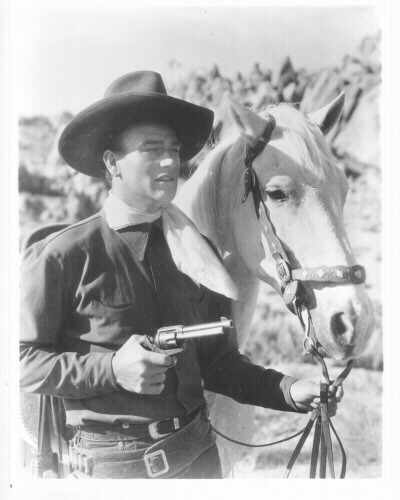 Westard Ho - 1935
 Randy Rides Alone - 1934
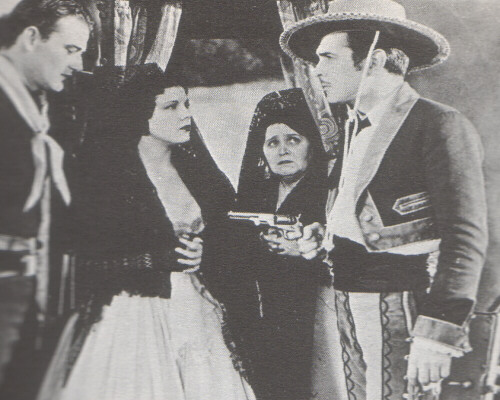 Man From Monterey - 1933
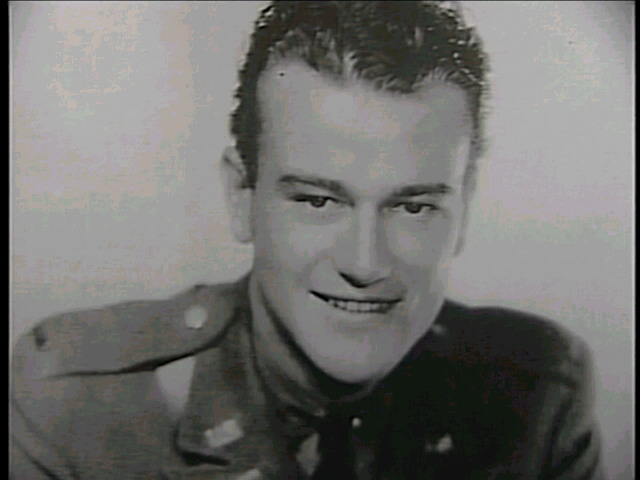 Men Are Like That - 1931
 The Big Trail - 1930
After making some 130 films, John Wayne graduated from B-movie actor to A-list action star with the release of Stagecoach in 1939, directed by the legendary John Ford. Over the next decade he went on to star in hits like Seven Sinners, Flying Tigers, Back to Bataan, They Were Expendable, Dakota, Fort Apache, Red River and Sands of Iwo Jima.
 Sands of Iwo Jima - 1949
 Wake of the Red Witch - 1949
 3 Godfathers - 1949
 She Wore A Yellow Ribbon - 1949
 Red River - 1948
 Fort Apache - 1948
 Angel and the Badman - 1947
 Dakota - 1945
 They Were Expendable - 1945
 Tall in the Saddle - 1944
 The Spoilers - 1942
 Lady for a Night - 1942
 Shepherd of the Hills - 1941
 The Long Voyage Home - 1940
John Wayne was the biggest box-office attraction in 1950, 1951 and the third most popular star of 1952. And no wonder, those three years brought Hondo, Flying Leathernecks, Operation Pacific, Rio Grande and other triumphs to the big screen.
By the mid-fifties, the number of actors under contract to the major studios fell by two thirds but Wayne was wisely co-producing his own films for Republic Pictures since 1946. To maximize his independence after the triumphant release of The Quiet Man (also directed by John Ford), Wayne left Republic in 1952 to start his own production company, Batjac.
 Rio Bravo - 1959
 The Horse Soldiers - 1959
 Barbarian And The Geisha - 1958
 The Wings of Eagles - 1957
 The Searchers - 1956
 The Conqueror - 1956
 The High and the Mighty - 1954
 Island In The Sky - 1953
 Hondo - 1953
 Trouble Along The Way - 1953
 The Quiet Man - 1952
 Flying Leathernecks - 1951
 Operation Pacific - 1951
 Rio Grande - 1950
At the same time, he was wrestling with a messy divorce trial attracting headlines across the nation. Chata Wayne, an earthy Latin drunkard, did everything she could to destroy her husband publicly, hurling unfounded allegations that he manhandled and beat her during drunken rages.
Duke denied it, emphatically saying, "In fact, I was woman-handled. On many occasions I had to protect myself from her temper."
Chata charged her husband with punching her in the nose and other acts of physical cruelty, accusing him of "clobbering" her in exotic locales all over the world. Wayne denied everything until the judge grew so sick of hearing their salacious accusations that he forced the couple's lawyers to come to terms with no further trial.
"Our marriage was like shaking two volatile chemicals in a jar," John Wayne admitted to the public.
Chata Wayne obtained her divorce and her big money settlement. She fled the country, only to be discovered dead a year later, broke and alone in a Mexico City hotel room, "surrounded by empty liquor bottles." Duke married his third and last wife actress Pilar Palette in 1954.
TELEVISION
Outside of minor cameos on shows like This Is Your Life in 1952 and Climax! in 1954, John Wayne avoided making many television appearances during the early-fifties; he had a film career with a remarkably consistent audience base and didn't see the need for small screen exposure. At least not at first.
Besides, John Wayne was already a major TV star by default. Local stations, desperate for any content to fill their days and nights, began running his 1930s and 1940s westerns because the major movie studios wouldn't license their product to TV. Republic, on the other hand, was eager to do so.
In 1953, John Wayne waded into the television pool with his first major guest role on The Milton Berle Show. It was not a happy experience. "The idea was that I keep sayin' 'I am not going to be one of these movie stars that goes on television just to get publicity for his latest movie,'" Wayne told TV Guide, "and then have this big electric sign on my back and every time I turn around I press the button in my pants and it flashes HONDO."
It got the desired laughs, but Wayne was left feeling foolish - because of that experience, he reasoned he "didn't belong in television." That didn't stop the networks from approaching Duke with series and anthology proposals. He turned them all down.
Wayne briefly considered starring in a western series for the fall of 1955 - playing Marshall Dillon on CBS's Gunsmoke. The network offered him a sweetheart deal with a two million dollar guarantee.
While it's true this radio to TV transplant would have been a sure thing for both parties, he opted instead to recommend one of his co-stars for the role - James Arness. To help launch the series, John Wayne filmed an introduction for the first episode.
Gunsmoke initiated a wave of 'adult' westerns on television and ran for twenty years in primetime. It's fortunate for moviegoers that he passed on the role, think of all the great films (like The Searchers in 1956) that wouldn't have been made had Wayne taken that role.
MAKING PEACE WITH TELEVISON
Recognizing the potential TV had to reach into middle America - and therefore boost his box office - Duke chose to kick off the 1955-56 season of I Love Lucy (his favorite TV show). In that famous two-part episode, Lucy steals John Wayne's footprints from the sidewalk in front of Grauman's Chinese Theater - giving Wayne a chance to plug his latest motion picture, Blood Alley, on the nation's top-rated program.
Next up on TV was a dramatic role on Screen Director's Playhouse airing December 7, 1955, directed and introduced by his mentor John Ford (who helmed many of Wayne's best films). The teleplay, entitled Rookie of the Year, was shot at the Hal Roach Studios with Duke as reporter Mike Cronin; the program also featured Ward Bond and son Patrick Wayne as a young baseball player.
Apart from reruns of his old movies, John Wayne appeared on the tube in commercials for Camel cigarettes in the mid-fifties, speaking highly of the product: "Mild and good tasting pack after pack. And I know, I've been smokin' 'em for twenty years."
Truth in advertising - at that time Wayne was a five pack-a-day smoker of unfiltered Camels and had been for over thirty years. He also advertised Gillete razors on screen with his son Patrick.
Duke was a presenter on the 30th and 31st Academy Award telecasts in 1958 and 1959 but by this point, his box office drawing power was in serious decline after years on top. With the exception of the brilliant Rio Bravo, it looked like John Wayne might be on his way out to pasture as the sixties unfolded.
John Wayne produced, directed and starred in the 1960 film that he intended to be his epic masterpiece - The Alamo.
Nearly a decade in the making, over budget and plagued with myriad production delays, Duke broke Hollywood rule number one and put up his own money - and every dollar he could borrow - to make the film. "I have everything I own in this picture - except my necktie."
His reasons for making The Alamo were heartfelt and patriotic, "This picture is America. I hope that seeing the battle of the Alamo will remind Americans that liberty and freedom don't come cheap. This picture, well, I guess making it has made me feel useful to my country."
This was similar to what Mel Gibson risked to make The Passion of the Christ in 2004.
This activity coincided with the discovery that the star had been ill advised (if not blatantly ripped off) by his financial advisor. John Wayne was very nearly broke.
"I suddenly found out after 25 years I was starting out all over again," Wayne confessed to The Saturday Evening Post. "I would just about break even if I sold everything right now."
The Alamo was the biggest budgeted movie of the day. The New York Times wrote, "Few Hollywood films, even the great biblical spectacles, have had such extensive preparation for production."
In an all-out effort to promote the film, John Wayne stepped up his TV appearances. In 1960, Wayne was seen in a TV documentary (The Spirit of the Alamo), poked fun at his rock solid image on The Jack Benny Show, and presented the Best Director award at the 32nd Annual Academy Awards.
The Alamo lost millions in its initial run but earned six Oscar nominations.
After his spectacular showing in The Searchers, Wayne's trusty costar / cohort Ward Bond (one of director John Ford's favorite supporting players) launched a hit western series of his own in 1957, Wagon Train.
 True Grit - 1969
 Hellfighters - 1969
 The Green Berets - 1968
 El Dorado - 1967
 Cast A Giant Shadow - 1966
 The Sons of Katie Elder - 1965
 McLintock! - 1963
 The Longest Day - 1962
 Hatari! - 1962
 The Man Who Shot Liberty Valance - 1962
 The Comancheros - 1961
 North to Alaska - 1960
John Ford despised television. He complained that Ward Bond was a "prostitute" for taking the series, openly ridiculing Wayne's idea to do a small part on Wagon Train in 1960 as "idiotic."
"I've given up on Bond, the big, ugly, stupid gorilla," Ford told stuntman "Bad Chuck" Roberson. "But I thought Mr. Wayne had a bit more intelligence."
That bluster didn't stop Ford from going along with Wayne to direct the Civil War themed episode of Wagon Train. In the storyline, entitled The Colter Craven Story, John Wayne (credited as Michael Morris, his real name) appeared briefly as Gen. William Tecumseh Sherman.
This would turn out to be the last ride for longtime friends Ward Bond (seen right), John Ford and John Wayne. Bond collapsed from a heart attack just days after the filming, midway through the 1960-61 season of Wagon Train.
In 1961, John Wayne was guest host of The Dick Powell Show for an episode called Third Side of the Coin.
Duke always preferred working with people he had a history with, especially on TV. Another example of this was Wayne's appearance on Alcoa Premiere's broadcast of The Flashing Spikes, a comedy costarring Jimmy Stewart, Harry Carey, Jr., and son Pat Wayne.
Again directed by John Ford, Wayne played a boisterous umpire in the small screen production about a scandal-plagued former Major League pitcher who mentors a rookie phenom. It aired in October, 1962.
John Wayne's box-office receipts might have been sagging in the early sixties, but many of his motion pictures continued to be genuinely exciting, even if it sometimes looked like they were edited with a tomahawk.
Thanks to the success of How the West Was Won in 1962 and McLintock in 1963, John Wayne was back on top - just in time to face his most serious crisis.


In 1964, Duke was diagnosed with lung cancer; he was 57 years old.
In Hollywood, perception is everything - and at that time, lung cancer in any form was tantamount to a death sentence. That's why John Wayne tried to conceal the truth from the press at first; the official story was that he was in the hospital treating an old football injury.
After two six-hour operations that left him with a 28-inch gash across his chest, Doctors removed Wayne's left lung.
In a true act of bravery, Duke decided to come clean in an interview with journalists, announcing, "I've had lung cancer, the big C. But I've beaten the son of a bitch. Maybe I can give some poor bastard a little hope by being honest. I want people to know cancer can be licked." While this was far from certain, that statement served two goals - it got him back to work and gave hope to millions of Americans suffering with the same affliction.
"My advisors all told me that the public doesn't want its movie heroes associated with serious illness like cancer, that it destroys their image," Duke told the press. "Well, I don't care much about images, and, anyway, I would have thought there was a lot better image in the fact that John Wayne had cancer and licked it."
When reporters asked if he was up to resuming his line of work, he replied, "I'd better be. I didn't get famous for making drawing room comedies!"
Less that four months after the operation, still having considerable trouble breathing, John Wayne embarked on one of his most strenuous roles ever, gunfighter John Elder in The Sons of Katie Elder. It was a part that required Wayne to ride hard, fall off horses and repeatedly dive into frigid mountain waters.
"On location in Durango, Mexico, he amazed me," the film's producer Hal Wallis stated in his autobiography. "Even though he was functioning on one lung and had a terrible scar running down his back (sic), he showed no sign of illness or weakness. He did this own riding, roped in steers, rounded up cattle, and handled the fight scenes without a double. Only occasionally, in high country, was he short of breath."
Back at full strength, John Wayne resumed starring in one or two films a year for the rest of the decade but was reticent to do TV again until he appeared on the second episode of The Dean Martin Show in 1965.
He was reluctant to do the Martin show at first, but Duke and Dean had become close friends when they costarred in Rio Bravo and The Sons of Katie Elder. Needing to kick off his series with all the star power he could muster, Martin asked him to do the show as a favor.
Here's an exchange from that show:
Martin: "You know, one of the biggest kicks of my life was our first picture together."
Wayne: "Yeah, Rio Bravo. He played the part of a drunken sheriff who had lost his nerve - and during the picture I rehabilitated him."
Martin: "And I'll never forgive you for that."
The taping went so well it changed Wayne's viewpoint concerning television from that point forward. He even made time for two major sitcom appearances (on the highest-rated shows, of course) - starring as 'himself' on The Lucy Show in November, 1966 and on a very funny episode of The Beverly Hillbillies in 1967.
Merv Griffin traveled to the set of War Wagon in 1967 to film an interview with a drunken Duke down in Mexico. There was a lot of chatter about Wayne's hard drinking on location, but he played so many inebriated, debaucherous characters it hardly mattered if he was smashed or not.
"I drink for comradeship," Wayne stated plainly, "and when I drink for comradeship, I don't bother to keep count."
One of Wayne's most popular releases, Hondo (1953), was made into a one-hour weekly series in the fall of 1967 with Ralph Taeger starring as Cavalry scout Hondo Lane.
The series also featured Kathie Brown, Noah Berry, Jr. and Buddy Foster (Mayberry RFD). Michael Pate returned in the role he played in the original film, Chief Vittorio.
Hondo's dog Sam, who ended up on the wrong end of an Indian's lance in the movie, was resurrected in the TV version which was cancelled after only three months. Two episodes were edited together to make a feature film, Hondo and the Apaches.
By the mid-sixties, John Wayne had taught two generations of rednecks (and just plain folks) what it meant to be a man with his steely-eyed pronouncements, terse responses, rugged individualism and a tendency to play absentee fathers who kept their guns and dogs close at hand; men for whom a fist-fight seemed a reasonable way to get acquainted.
"When I started I knew I was no actor and I went to work on this Wayne thing," Duke told a reporter in 1962. "It was as deliberate and studied a projection as you'll ever see. I figured I needed a gimmick, so I dreamed up the drawl, the squint and a way of moving meant to suggest that I wasn't looking for trouble but would just as soon throw a bottle at your head as not. It was a hit-and-miss project for a while, but it began to develop."
Besides being serious about his craft, John Wayne was unapolgetically patriotic. "Sure I wave the American flag," he told the press in the mid-sixties. "Do you know a better flag to wave? Sure I love my country with all her faults. I'm not ashamed of that, never have been, never will be."
One of the sixties' most outspoken conservatives and a vocal proponent of the war in Vietnam, Wayne characterized his pro-war stance this way - "Nobody's enjoying this war but it happens to be necessary. We gave our word." His take on antiwar protesters could be harsh, "As far as I'm concerned, it wouldn't bother me a bit to pull the trigger on one of 'em."
Despite his hawkish position, John Wayne never served in the military. A lack of involvement in World War II was something that troubled him for years; Wayne intended to enlist but his career was on the rise in the early-forties, so he felt he wasn't able to join contemporaries Jimmy Stewart, John Ford, Robert Montgomery and other major Hollywood players who joined the armed forces.
On the other hand, Duke was politically involved in the film industry for decades, serving as president of the Motion Picture Alliance for the Preservation of American Ideals - trust me, this was no left-wing organization.
When fellow actor and friend Ronald Reagan was struggling in his bid for the California govenorship in 1966, Wayne was called on to voice his support, which he did gladly.
"Duke always said family came first, career second, and his interest in politics third," Pilar Wayne wrote in her book My life with The Duke. "In fact, although he loved the children and me, there were times when we couldn't compete with his career or his devotion to the Republican Party."
After Reagan's election, Duke was exiting a victory celebration when he was asked by police not to leave the building - a mob of 300 angry antiwar demonstrators were waiting outside. As you might expect, instead of cowering indoors, John Wayne confronted the demonstrators head on.
When protesters foolishly waved the Viet Cong flag under his nose, Wayne grew impatient. "Please don't do that fellows," Duke warned the assembled. "I've seen too many kids your age wounded or dead because of that flag. So I don't take too kindly to it."
The demonstrators persisted, so he chased a group of them down an alley - wouldn't you just love to have seen that?
Because of his high recognition factor, members of the Republican Party naturally approached Wayne to run for public office. "I can't afford the cut in pay," was his reply. "Besides, who in the world would vote for an actor?"
Eventually the press confronted the actor about rumors that he might run for higher office.
"Bullshit!" was his one word reply.
"C'mon Duke," one reporter persisted. "Are you going to run? Give us a useable quote."
"I just did. You can quote me. Bullshit!"
Like his on-screen characters, John Wayne was a gambler who loved a good card game or professional challenge (he once won the original Lassie in a poker game). In 1968, despite the fact he couldn't get any major studio to sign a distribution deal, Duke decided to direct, produce and star in the first motion picture with a pro-Vietnam war stance - The Green Berets. This was reminiscent of what he went through to get The Alamo made - once again out on a limb due to the courage of his convictions.
He appeared on nine episodes of Laugh-in (the number-one show in the nation) between March and September of 1968 to peak the public's interest in his latest project.
The Green Berets was released to vicious reviews overall - which may have reflected the public's growing hostility towards the war, but in all fairness, it was a pretty lousy movie. The critic for The New York Times wrote, "The Green Berets is a film so unspeakable, so stupid, so rotten and false in every detail that it passes through being fun, through being funny, through being camp, and becomes an invitation to grieve, not for our soldiers in Vietnam (the film could not be more false or do a greater disservice to them) but for what has happened to the fantasy-making apparatus in this country."
This time his gamble paid off - The Green Berets ended up one of the year's highest-grossing movies.
By 1969, Wayne was earning a million dollars a picture along with a third of the profits, so it was in his best interest to hit the TV talk show circuit with each new release.
Although he was unhappy with how his films looked on TV (the aspect ratio was wrong - the vistas that were so much a part of his movies were lost on a tiny square box), that didn't stop Wayne's films from easily garnering a 30-40 share whenever they were broadcast in primetime. It was one of the few surefire programming decisions a network could make. Three years after theatrical release, his movies hit TV as a big event, that's why the nets were paying over a million dollars an airing for the latest John Wayne release.
If John Wayne appeared on a television show, you could be sure his fans would tune in, huge ratings were assured. Using TV appearances as a means to promote his films was a sharp strategy, as a result he never wore out his welcome.
Since one of the costars of True Grit was Glen Campbell, it was only natural that John Wayne turned up on The Glen Campbell Goodtime Hour on February 19, 1969. Duke pulled out all the stops in the summer and fall of 1969 to push True Grit and bolster his Academy Award chances.
While filming True Grit, Duke was trying to keep weight off with drugs - uppers for the day, downers to sleep at night. Occasionally, he got the pills mixed up, and this led to problems on a Dean Martin Show taping in 1969. Instead of taking an upper before leaving for the filming, he took a downer - and was ready to crash by the time he arrived on the set.
"I can't do our skit," Wayne reportedly told Dean when it was time to preform. "I'm too doped up. Goddamn, I look half smashed!"
Naturally, Deano didn't have a problem with that. "Hell Duke, people think I do the show that way all the time!" The taping went on as scheduled.
In November, 1969 he dropped in on The Red Skelton Show to celebrate Duke's forty years in show biz and spoof a number of his best-known films, with Red playing the lead roles and Wayne as his sidekick. Appearances like this meant John Wayne was well on his way to becoming a television institution.
A short time later, Wayne filmed a public service message for the National Cancer Society. "Get a checkup," he challenged TV audiences. "Talk someone you like into getting a checkup. Nag someone you love into getting a checkup. And while you're at it, send a check to the American Cancer Society. It's great to be alive."
Because of this spot, ordinary Americans began making donations to the American Cancer Association in large numbers - and they're still giving because John Wayne made it mainstream.
"Even after losing one lung to cancer in 1964, he had not quit smoking," daughter Aissa Wayne wrote in her 1980 memoirs. "Oh, he stopped smoking Camels, but he started chewing tobacco, then he infrequently smoked cigars, then he was smoking cigars all the time."
John Wayne stepped up the pace of his TV appearances in the seventies to bolster the box-office receipts for his latest detective dramas and rope operas.
 The Shootist - 1976
 Rooster Cogburn - 1975
 Brannigan - 1975
 Cahill, United States Marshal - 1973
 The Cowboys - 1972
 Big Jake - 1971
 Chisum - 1970
As a return favor for Raquel Welch adding a some sizzle to the True Grit premiere, John Wayne showed up as a guest on her TV special, Raquel!, which aired on April 26, 1970.
On the program, Wayne gave Raquel lessons in gunfighting for a sequence shot on a western backlot, interspersed with clips from some of Duke's famous shootouts. They also toured the Our Little Brothers and Sisters Orphanage, a charity Wayne and his wife Pilar supported.
On the 42nd Annual Academy Awards telecast in 1970, John Wayne was presented with the Oscar for his portrayal of Rooster Cogburn in True Grit, his first and only win for Best Actor. He also presented the award for Best Cinematography on the telecast.
On November 29, 1970, Wayne was front and center for an NBC special sponsored by Budweiser. Swing Out, Sweet Land became one of the top-rated television events of all time, reaching into more than 30 million homes.
It was also the most expensive TV special to date, budgeted at a staggering $2 million. The 90-minute production was a Hollywood parade of stars - Red Skelton, Tom Smothers, Lorne Greene, Dean Martin, Bob Hope, Rowan & Martin and others lined up to praise the good old USA in historical sketches and patriotic songs.
In a segment starring John Wayne, Red Skelton and Tommy Smothers, conservative and liberal messages converged in a recitation of Benjamin Franklin's definition of what it is to be an American.
One can't help but think Franklin's words (on the importance of freedom of speech and the right to protest) might be considered too controversial for primetime today: "For, when dissent becomes a crime, hope becomes despair. Dissent, but dissent honorably," Franklin wrote. "Speak out for what you believe in at least as loudly as you speak against the system. For gentlemen, if ours is a generation to say democracy will not administer to the people, let it be a conscious decision arrived at only after every opportunity for man to rule himself has failed."
That same year, John Wayne appeared on the small screen in several TV documentaries including Harry Jackson: A Man and his Art (Jackson was known for his spectacular bronze sculptors of western scenes) and CBS's The American West of John Ford with Henry Fonda and James Stewart. On the latter, Wayne and Ford traveled to the Monument Valley, scene of some of their greatest triumphs, to film recreations of their unique working method.
Wayne appeared on another televised tribute to his favorite director in 1971, this time produced by the American Film Institute. Directed by John Ford was narrated by Orson Welles and directed by Peter Bogdanovich.
On a lighter note, Duke turned up on The Super Comedy Bowl (January 10, 1971) hosted by Lucille Ball and Everything You Always Wanted to Know About Jack Benny But Were Afraid to Ask (also in 1971) with George Burns and Lucille Ball.
He was the special guest on The Glen Campbell Show recorded September 2, 1971 at CBS Television City for airing September 14th. The highlight of the show was yet another riff on True Grit, along with a lighthearted filmed segment with the two costars touring the John Wayne Theater at Knotts Berry Farm, where Wayne's latest picture Big Jake had its premiere. Props and costumes from a lifetime of work were displayed there.
When asked by Campbell what his favorite project was, Duke replied, "Well, you like... each picture for... a different reason. But I think my favorite will always be the next one."
Naturally, Wayne was expected to participate in the silly comedic banter that was the backbone of TV variety shows:
Campbell: "Well, Duke, I can't tell you how flattered I am that you're here to do my opening show."
Wayne: "Well, I was happy to be here. I'm beginning to like TV. I want to thank you for going on that special for me this last year."
Campbell: "Hey, that was fantastic, and what a rating. I guess everyone in America was watching it that night- except for my family, of course."
Wayne: "Why, didn't they see it?"
Campbell: "Well, no. You see, it was on opposite my show, and there's a rule at my house, you know, when daddy's show's on, everybody watches daddy's show... or else."
Wayne: "That's funny, 'cause your kids wrote me a fan letter."
Campbell: "Well, two people definitely didn't see it then, my wife and I."
Wayne: "No? Well, she phoned me and said she liked it."
Campbell: "I guess I'm the only one that didn't see your special. I mean, I didn't see all of it. Aww, let's face it, I saw all of your special."
Wayne: "Glen, your mom and dad liked it too."
Campbell: "Well, it just goes to show you. You don't know what lonely is until you've been opposite a John Wayne special."
John Wayne sat down for an intimate, one-on-one interview with David Frost in 1972, on September 10, 1972. He was one of the presenters in a Salute to TV's 25th Anniversary where he told the story of getting Jim Arness the role of Matt Dillon on Gunsmoke, and he appeared on the '72-73 season opener of Laugh-in in a ridiculous bunny suit, filming segments over a two day period that would be spliced in at various times during the year.
By now, television was generating millions for Wayne and his company, Batjac - True Grit alone cost ABC over four million dollars for one primetime airing. Wayne did so much promotion around the film's release and at Academy Award time that when True Grit was first broadcast in 1972, nearly half the TVs in the nation were tuned in.
"I don't know if I love it or hate it," John Wayne said about television in 1972, "but there sure has never been any form of entertainment so... so... available to the human race with so little effort since they invented marital sex."
On New Year's Day 1973, Wayne served as Grand Marshal of the Tournament of Roses Parade. The theme was Hollywood and the movies.
Glen Campbell hosted John Wayne on an NBC special which explored The Musical West on March 8, 1974 along with Burl Ives and Michele Lee and Duke turned in a memorable performance on Maude (Maude Meets The Duke, September 9, 1974) where his conservative ideals clashed with the outspoken liberal Maude. It was a seminal television moment that Wayne played with relish.
Meanwhile, another of John Wayne's films was turned into a TV series for the fall of 1974 - The Cowboys. This time, there were four original cast members brought over from the film but the weekly TV western format was a relic of the past by the mid-seventies. The show was cancelled within a few months.
Perpetually on the promotion circuit, John Wayne joked around with Don Rickles' on his 1975 special. On the show, he tried to get Don to read a cue card he had prepared:
Wayne: "Read it, Don!"
Rickles: "OK, Duke. But gee whiz, you're not right for the jokes, Duke. Boy, anything you say. I don't want to upset you..."
Wayne: "Well then, go ahead and read it."
Rickles: "OK (reads) John Wayne's new picture, Branigan, which will soon be showing all over the country... wait a minute, this is no joke."
Wayne: "You bet your life it's no joke, it's bread and butter for me."
While filming a 1975 Bob Hope Special (where he played a western Archie Bunker in a skit, then complained about having to play Bob's father), Wayne, Bing Crosby and Bob Hope surprised Tonight Show guest host Don Rickles by walking out on stage unannounced, sending the shocked audience into hysterics.
In 1976, John Wayne dropped out of the box-office top ten for the first time in 25 years while at the same time generating tabloid headlines that screamed - 'John Wayne Madly In Love With His Secretary!' In fact, Wayne had spilt with his wife Pilar and was dating his much younger assistant, Pat Stacy.
His health failing, Wayne limited his TV appearances mostly to narrations and tributes like Chesty: A Tribute to a Legend, a 1976 documentary partially directed by John Ford (before he died in 1973), celebrating the life of General Lewis B. "Chesty" Puller, the most decorated man in the US Marines. He also released a patriotic recitation of The Pledge of Allegiance as a 45 single to celebrate the bicentennial.
ABC mounted an All-star Tribute to John Wayne with a litany of major celebrities saluting the legendary actor. Frank Sinatra, Maureen O'Hara, Glen Campbell, Jimmy Stewart, Ron Howard, Lee Marvin, Bob Hope and others gathered at the Warner Bros Burbank studio on November sixth to hear Wayne deliver a special message to his fans - "And to all you folks out there, I want to thank you for the last fifty years of my career. And I hope I can keep at it another fifty years - or at least until I can get it right."
As for what Duke thought of all of these trophies and tributes he claimed somewhat facetiously, "You can't eat awards. Nor, more to the point, drink 'em."
In 1976, John Wayne starred in his last motion picture. The plot closely mirrored his current situation - both he and his character in The Shootist were dying of cancer, only Wayne didn't know it yet. (Or maybe he did subconsciously - he insisted the screenwriter be more graphic about what would happen to his character when the cancer took over.)
To support The Shootist, Wayne was interviewed on Backlot USA, a 1976 summer show hosted by Dick Cavett, the Donahue show, and the film was the subject of an episode of NBC's Big Event. The movie stiffed at the box office despite excellent reviews.
More tribute show appearances followed like America Salutes Richard Rodgers: The Sound of His Music and CBS Salutes Lucy: The First 25 Years airing November 28, 1976. A few weeks later he traded jokes on Bob Hope's Comedy Christmas Special.
Although he actively supported Ronald Reagan's failed presidential bid in 1976, Duke paid a visit to the White House as a guest of President Jimmy Carter for his inauguration. "I'm pleased to be present and accounted for in this capital of freedom to witness history as it happens - to watch a common man accept the uncommon responsibility he won 'fair and square' by stating his case to the American people - not by bloodshed, beheadings, and riots at the palace gates. I know I'm a member of the loyal opposition - accent on the loyal. I'd have it no other way."
Putting partisan politics aside again, he adopted a controversial stance on the Panama Canal Treaty. He favored the turnover of the canal to the Panamanian people, an issue that Ronald Reagan used as a political wedge against the incumbent in his successful run for the presidency in 1979. As with Vietnam, it came down to the nation giving its word.
John Wayne filmed some TV commercials in the Monument Valley (site of Fort Apache and The Searchers) for a 1978 product launch - Datril 500 pain reliever. He didn't particularly enjoy the experience and offered up his own concept for a future campaign - "We'll show the meetings, the discussions with the attorneys and ad executives, all the chaos I went through. And then I'll step before the cameras and say, 'This really gives you a headache. Take Datril 500. It's strong medicine!'"
In August, 1978, Wayne rode up on horseback in full western garb to film the first of several 30-second commercials for Great Western Bank. Filmed in Grants Pass, Oregon, the spots were broadcast in the California TV market. A magnificent, full sized bronze statue of the actor still stands on Wilshire Boulevard in front of the bank's former Beverly Hills branch.
In 1978 a TV-movie, True Grit: A Further Adventure, aired with Warren Oates cast as Rooster Cogburn with Lee Meriwether (Time Tunnel) as Annie Sumner. This was a pilot for a weekly series that didn't sell, Wayne was not involved.
Duke delivered a testimonial for the American Film Institute Salute to Henry Fonda in 1978 then, after recovering from heart surgery, hosted General Electric's All-star Anniversary special, which featured luminaries like Jimmy Stewart, Lucille Ball, Penny Marshall and Bob Hope saluting the venerable corporation with a long history in broadcasting (GE owns NBC).
Henry Fonda also taped a segment for that special and candidly stated, "He seemed to be the same old Duke. He was thinner, which isn't bad except he hadn't got his clothes to fit his new weight yet, sort of loose at the collar. But he was in marvelous spirits."
Wayne was on hand to salute another network in 1978; on ABC's Silver Anniversary program, he looked back on the alphabet net's western series from the past twenty-five years and posed for an historic picture with the lead actors from Maverick, Kung Fu, Big Valley, Cheyenne, Rin Tin Tin and other shows.
Thanks in part to thirty years of constant TV exposure, John Wayne scored number one in the 1978 Performer Q rating which measures the popularity of well-known people.
THE END
On November, 4, 1978 Wayne filmed a Perry Como Christmas Special in historic Old Williamsburg. He was experiencing severe stomach problems throughout the shoot; after the holidays, doctors discovered cancer once again. The day before he was to undergo a major operation to remove his tumor-ridden stomach, John Wayne appeared on a Barbara Walters Special on March 13, 1979.
Walters had a habit of catching major celebrities for their last interviews. Duke touched briefly on his mortality, "Listen, I spoke to the man up there on many occasions and I have what I always had; deep faith that there is a Supreme Being. There has to be, you know; it's just to me, that's just a normal thing, to have that kind of faith. The fact that He's let me stick around a little longer, certainly goes great with me, and I want to hang around as long as I'm healthy and not in anybody's way."
Three months after the nine-hour operation, Duke made his last public appearance on the April 9, 1979 Oscar telecast. Before announcing the Best Picture winner, Duke spoke to the assembled, "Believe me when I tell you I'm mighty pleased that I can amble down here tonight. Oscar and I have something in common. Oscar first came to the Hollywood scene in 1928. So did I. We're both a little weather beaten, but we're still here and plan to be around a whole lot longer."
With that Oscar appearance and the Barbra Walters interview (recorded before the procedure but broadcast immediately after the awards show), the viewing public could believe that John Wayne was on his way to beating the 'Big C' one more time. It was not to be. Desperately ill at the Oscar ceremony, he barely made it through the experience.
He died just weeks later, on June 11, 1979.
John Wayne was eulogized by President Jimmy Carter. "He was bigger than life. In an age of few heroes, he was the genuine article. But he was more than a hero. He was a symbol of so many of the qualities that made America great. The ruggedness, the tough independence, the sense of personal courage - on and off screen - reflected the best of our national character."
Other video clips


Back in the days when people actually went to movie theaters, other activities went on besides actually watching the film. This short was created to play in theatres where they were collecting for the Will Rogers fund, and is hosted/narrated by John Wayne and probably played before/with the trailers.
Dean Martin and John Wayne sing 'Everybody Loves Somebody'
Famous quotes from the Duke
"There've been a lot of stories about how I got to be called Duke. One was that I played the part of a Duke in a school play, which I never did. Sometimes, they even said I was descended from royalty! It was all a lot of rubbish. Hell, the truth is that I was named after a dog!"
- John Wayne
"I won't be wronged, I won't be insulted, I won't be laid a hand on. I don't do these things to other people and I require the same from them."
- John Wayne in The Shootist
"A man's gotta do
what a man's gotta do."
- John Wayne
"Courage is being scared to death - and saddling up anyway."
- John Wayne
"Talk low, talk slow,
and don't say too much."
- John Wayne on his acting style
"I ain't had a drink since breakfast! And I only wear this coat in your court. It was always good enough when you needed what was in it."
- Rooster Cogburn (1975)
"Speaking of politics, where we're going there are only two parties, the Quick and the Dead."
- Dakota (1945)
"We can't turn back! We're blazing a trail that started in England. Not even the storms of the sea could turn back those first settlers - and they carried it on further, they blazed it on through the wilderness of Kentucky. Famine, hunger, not even massacres could stop them. Now we've picked up the trail again and nothing can stop us, not even the snows of winter north peaks of the highest mountain. We're building a nation, but we've got to suffer. No great trail was ever blazed without hardship. And you've got to fight, that's life. And when you stop fightin',that's death. What are you going to do, lay down and die? Not in a thousand years! You're going on with me."
- The Big Trail (1930)
"It isn't always being fast or even accurate that counts. It's being willing. I found out early that most men, regardless of cause or need, aren't willing. They blink an eye or draw a breath before they pull a trigger. I won't."
- The Shootist (1976)
"Alright, we've seen what you can do with a boy. How are you when they come a little bigger?"
- The Cowboys (1972)
"Now you'll show up at my place first Monday after school at 5 AM, and come with grit teeth, because, gentlemen, that's when school really begins."
- The Cowboys (1972)
"I'm lookin' at a tin star with a drunk pinned on it."
- El Dorado (1967)
"Well, I know those law books mean a lot to you, but not out here. Out here a man settles his own problems."
- The Man Who Shot Liberty Valance (1962)
"There's no land anywhere worth a hoot, till it's flowed with good honest sweat."
- Three Faces West (1940)
"I taught you what to do when the snow comes, how to survive in a blizzard. I taught you how to deal with men, but women, nobody knows what's on a woman's mind."
- The Undefeated (1969)
'Duke' Trivia
His production company, Batjac, was originally to be called Batjak, after the shipping company owned by Luther Adler's character in the film Wake of the Red Witch (1948). A secretary's typo while she was drawing up the papers resulted in it being called Batjac, and Wayne, not wanting to hurt her feelings, kept her spelling of it.
He was offered the lead in The Dirty Dozen (1967), but went to star in and direct The Green Berets (1968) instead. The part was eventually given to Lee Marvin.
Upon being cast by Raoul Walsh in Fox's The Big Trail (1930) the studio decided his name had to be changed. Walsh said he was reading a biography on General "Mad" Anthony Wayne and suggested that name. The studio liked the last name but not the first and decided on "John Wayne" as the final rendition.
Arguably Wayne's worst film, The Conqueror (1956), in which he played Genghis Kahn, was based on a script that director Dick Powell had every intention of throwing into the wastebasket. According to Powell, when he had to leave his office at RKO for a few minutes during a story conferance, he returned to find a very enthused Wayne reading the script, which had been in a pile of possible scripts on Powell's desk, and insisting that this was the movie he wanted to make. As Powell himself summed it up, "Who am I to turn down John Wayne ?"
Just on his sheer popularity and his prominent political activism, the Republican party in 1968 supposedly asked him to run for President of the USA, even though he had no previous political experience. He turned them down because he did not believe America would take a movie star running for the President seriously. He did support Ronald Reagan's run for governor of California, though.
Eagerly sought the role of Gen. George S. Patton in Patton (1970), but was turned down by the producer.
During the filming of The Undefeated (1969), he fell from his horse and fractured three ribs. He couldn't work for almost two weeks. Then he tore a ligament in his shoulder and couldn't use one arm at all. The director, Andrew V. McLaglen, could only film him from an angle for the rest of the picture. His only concern throughout was not to disappoint his fans, despite being in terrible pain.
Regretted playing Temujin in The Conqueror (1956) so much that he visibly shuddered whenever anyone mentioned the film's name. He once remarked that the moral of the film was "not to make an ass of yourself trying to play parts you're not suited for."
He made several films early in his career as a "singing" cowboy. His singing voice was supplied by a singer hidden off camera.
In 1977 he had a script commissioned for a film called "Beau John" in which he would star with Ron Howard, but due to his declining health it never happened.
Of his many film roles, his personal favorite was that of Ethan Edwards from The Searchers (1956). Wayne even went so far as to name his son Ethan after that character.
Turned down the role of Marshal Dillon on "Gunsmoke" (1955) because he did not want to commit to a weekly TV series. He recommended his friend James Arness for the role, and gave the on camera introduction in the pilot episode.
He turned down Dirty Harry (1971) because he felt the role of Harry Callahan was too far removed from his screen image. When he saw the movie he realized it wasn't so different from the roles he had traditionally played, and made two cop dramas of his own, McQ (1974) and Brannigan (1975). Director Don Siegel later commented, "Wayne couldn't have played Harry. He was too old. He was too old to play McQ which was a poor rip-off of Dirty Harry."
Later,
Kenaz
Subscribe to:
Posts (Atom)