An opening of one's knowledge,capabilities, vision and guidance. The Kenaz is about creating a relationship,learning and allowing room for interpretation. When you are in the darkness,an opening with light is the best and most gracious thing to have bestowed upon you. This is a great time for putting energies into new opportunities. Come share my world as I see it.

Friday, September 30, 2005

Vintage Movie Reviews: All Quiet On The Western Front

All Quiet on the Western Front (1930) is the first major anti-war film of the sound era, faithfully based upon the timeless, best-selling 1929 novel by Erich Maria Remarque (who had experienced the war first-hand as a young German soldier). The film was advertised with the brooding face of one of the young German recruits sent into World War I. The landmark, epic film, made on a large-scale budget of $1.25 million (about $145.5 million in todays dollars) for Universal Pictures (and studio production head Carl Laemmle, Jr.), used acres of California ranch land for the battle scenes, and employed over 2,000 extras.

From four Academy Award nominations, it won the Academy Award for Best Picture (the third winner in the history of AMPAS) and Best Director (Lewis Milestone with his first sound feature), and it was also nominated for Best Writing Achievement (George Abbott, Maxwell Anderson, and Del Andrews) and Best Cinematography (Arthur Edeson). It was a critical and financial success, and probably the greatest of pacifist, anti-war films - the grainy black and white film is still not dated and the film hasn't lost its initial impact. The episodic film is still one of the few early sound films that modern audiences watch. However, it was criticized as being propagandistic and anti-militaristic, and it was denounced by the Nazi government of the 30s.

A prologue, that introduces the film, was taken almost verbatim from the foreword to Remarque's novel:

This story is neither an accusation nor a confession, and least of all an adventure, for death is not an adventure to those who stand face to face with it. It will try simply to tell of a generation of men who, even though they may have escaped its shells, were destroyed by the war...

Unlike Remarque's novel that begins with the young men already at war, with flashbacks to earlier times, the film is told in a logical, chronological fashion. The content of the film can be divided into four distinct parts. The pre-war education of schoolboys, and the enlistment of the young German recruits. The soldiers' arrival at the front of World War I. The experiences of the cruelties and horrors of war in trench warfare and the hero's homecoming, return to the front, and ultimate death.

To say that this movie is one of the greatest war films of all time would be an understatement. Naturally, since the picture is based on Erich Maria Remarque's marvelous novel, the screenwriter was given quite a powerful story to begin with. The three main reasons why this movie so forceful are the acting, the cinematography, and simply the sincerity.

Lew Ayres, the man who plays Paul Baumer, convincingly portrays the main character in many ways. The sheer innocence of his facial appearance adds a poignant touch to the film, because the overwhelming theme of the story is how the war effects all young people of each nation, whether that person dies in the trenches or survives only to lament his days in the war. Other characters with relatively minor roles have major importance in the film because they portray touching, heart wrenching scenes of death. These peripheral characters all help add to the general tone of the film (and the book) because they show how dark and terrible the war can be; and they in turn show how propaganda can be so harmful, because most of the soldiers in Paul's regiment are volunteers who receive a very rude awakening when they discover what the war is really all about. The acting is simply superb.

The cinematography of this film is absolutely magnificent. The film doesn't rely on gratuatous gore to imply death and its emotional effect. Rather, the emotional horrors of war is envisioned in many ways. One way the cinematographer does this is to allow single body part to represent the whole body. Showing a clasping hand slowly opening to represent a soldier losing the fight and succumbing to death is much more effective than showing a gaping chest wound. The use of high overhead angles and wide pans across along the tarrain, punctuated with soldiers falling back into frame after being shot, give the implication that the trenches are a symbol of hell. In short, the cinematographer Arthur Edeson allows the camera to do the talking and to drive the film, taking advantage of the the sparse dialogue offered in the script, thus allowing the actors' facial expressions do the bulk of the talking in the film.

The film obviously had an effect on its star, Mr. Ayres. Once World War II began, he was drafted, he was a conscientous objector. America was outraged, and theaters vowed never to show his films again, but quietly he achieved the Medical Corps status he had requested, serving as a medic under fire in the South Pacific and as a chaplain's aid in New Guinea and the Phillipines He admits later in a biography that his opinions stem from his work in this movie. Certainly this is a powerful admission, because his protest caused him and his films to be blacklisted in Hollywood, and his career suffered greatly.


Later,Kenaz

Thursday, September 29, 2005

Vintage Movie Reviews: Lon Chaney

The movies' "Man of a Thousand Faces" is still a legendary figure, and although the relatively recent rediscovery of many of his starring filmspreviously thought lost-has somewhat deflated his reputation, there's no denying that he was one of the foremost talents of the silent screen. Born to deaf-mute parents, he honed his ability to communicate via pantomime at an early age. Eager to escape the obvious limitations of his home life, the young Chaney worked at the local opera house, painting flats, collecting props, and learning how to apply makeup. He left home at 17 to tour as an actor, traveling across the country before settling in Hollywood in 1912 to begin his film career. (His first film appearance is credited to 1913's Poor Jake's Demise although he may have worked as an extra before that.)

Chaney's features-craggy and severedisqualified him from romantic leads, but he quickly became a versatile supporting player. He became proficient in creating elaborate makeups and prosthetic devices, and frequently withstood pain or discomfort to create an illusion. One such characterization, that of a phony cripple in The Miracle Man (1919), won him special notice. The following year, he played a legless master criminal in The Penalty (1920), the first of many starring vehicles tailored to his peculiar talents. He fashioned a 20-pound harness to simulate a hump for his role as Quasimodo, The Hunchback of Notre Dame (1923). Chaney's genius lay not only in the creation of such bizarre and grotesque disguises, but his ability to project his emotions through the heaviest makeups. His Quasimodo is one such example of that ability, and Hunchback became his biggest hit to date. For the same studio, Universal, he starred as The Phantom of the Opera (1925), designing an even more horrific countenance to shock movie audiences that came to this lavishly produced thriller about the ghost of the Paris Opera House. Phantom which many contemporary critics thought too repugnant for 1920s moviegoers, went on to become Chaney's most popular film (and the most frequently revived).

For many years, Chaney's reputation depended to a great extent upon his work for director Tod Browning at MGM. Based upon Browning's surviving horror films, including Dracula (1931) and Mark of the Vampire (1935), the silent Chaney vehicles he directed were presumed to have the same value. As these films resurfaced, one by one, in the late 1960s and 1970s, they were reevaluated and, in many cases, found lacking. While some of them-He Who Gets Slapped (1924), The Road to Mandalay (1926), Mr. Wu (1927), and West of Zanzibar (1928)-did indeed feature Chaney in impressive makeups, they proved to be rather conventional melodramas. On the plus side, rediscovered MGMs such as Tell It to the Marines (1926) and While the City Sleeps (1928), which offered the star "straight" roles, showed him to possess considerable personality and charm not readily apparent in his "character" parts.

Chaney, initially fearful of sound films, made his first talkie, The Unholy Three (a remake of his 1925 hit) in 1930. It was an overnight success, and Tod Browning immediately announced that Chaney would play the title role in his upcoming production of Dracula. But the Man of a Thousand Faces died of throat cancer just one month later. His son Creighton had a long film career, billed for most of it as Lon Chaney, Jr.

OTHER FILMS INCLUDE: 1919: False Faces, Victory 1920: Treasure Island (as Blind Pew); 1922: Shadows, Oliver Twist (in the latter as Fagin); 1923: All the Brothers Were Valiant 1925: The Monster 1926: The Black Bird 1927: The Unknown, Mockery 1928: The Big City, Laugh, Clown, Laugh 1929: Where East Is East

Copyright © 1994 Leonard Maltin

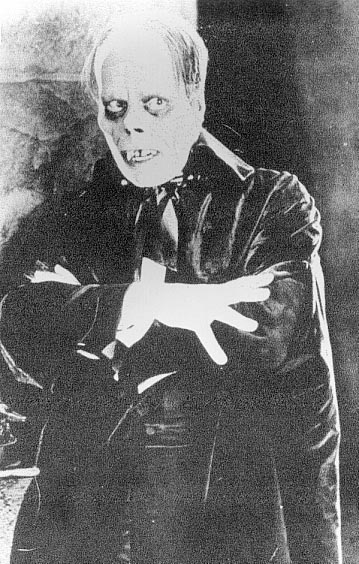
Chaney From 'The Phantom Of The Opera'

Wednesday, September 28, 2005

Vintage Movie Reviews:Metropolis

The film is set in the year 2026, in the extraordinary Gothic skyscrapers of a corporate city-state, the Metropolis of the title. Society has been divided into two rigid groups: one of planners or thinkers, who live high above the earth in luxury, and another of workers who live underground toiling to sustain the lives of the privileged. The city is run by Johhan ‘Joh’ Fredersen (Alfred Abel).

The beautiful and evangelical figure Maria (Brigitte Helm) takes up the cause of the workers. She advises the desperate workers not to start a revolution, and instead wait for the arrival of “The Mediator”, who, she says, will unite the two halves of society. The son of Fredersen, Freder (Gustav Fröhlich), becomes infatuated with Maria, and descends into the working underworld. In the underworld, he experiences first-hand the toiling lifestyle of the workers, and observes the casual attitude of their employers (he is disgusted after seeing an explosion at the “M-Machine”, when the employers bring in new workers to keep the machine running before taking care of the men wounded or killed in the accident). Shocked at the working conditions, he joins her cause. Meanwhile his father Fredersen learns of the existence of The robotic Gynoid built by the scientist Rotwang (Rudolf Klein-Rogge) (Rotwang wanted to give the Robot the appearance of Fredersen’s dead wife Hel) and orders Rotwang to give the Robot Maria’s appearance. By doing so he wants to spread disorder among the workers what would give him the pretext to carry out a retaliatory strike against the workers.

The real Maria is imprisoned in Rotwang’s house in Metropolis, whilst the robot Maria becomes an exotic dancer in the city’s nightclubs, fomenting discord amongst the rich young men of Metropolis. The workers are encouraged by the robot Maria into a full-scale rebellion, and destroy the “Heart Machine”, the power station of the city. However, the destruction of the machine leads to the city’s reservoirs overfilling, which floods the workers’ underground city and seemingly drowns their children, who were left behind in the riot. When the workers realise this, they attack out into the gridlocked and confused upper city, foreshadowing the “destruction of the enemy in the citadel” ending still seen in films. The crowd breaks into the city’s entertainment district and capture the robot Maria, who they believe is responsible for drowning their children. They burn the robot at the stake, and when Freder sees this, he believes that it is the real Maria and despairs. However, Freder and the workers then realise that “Maria” is in fact a robot, and see the real Maria being chased by Rotwang along the battlements of the city’s cathedral. Freder chases after Rotwang, resulting in a climatic scene in which Joh Fredersen watches in terror as his son struggles with Rotwang on the cathedral’s roof. Rotwang falls to his death, and Maria and Freder return to the street, where Freder unites Joh and Grot, the workers’ leader, fulfilling his role as the “Mediator”.-WikiPedia

As a side note, Lillian Gish was originally cast as the character of Maria but the German producers wanted one of their own actresses for the part, hence the casting of Helm.


Tuesday, September 27, 2005

Vintage Movie Reviews:Harold Lloyd

The first movie appearance of Harold Lloyd was in a 1913 film called The Old Monk's Tale (1913). That same year Lloyd was cast as an extra in a movie called Rory 'o The Bogs where he came upon another extra, Hal Roach. They also appeared later on in Samson (1914) and in The Patchwork Girl of Oz (1914). In 1915 Roach had developed a new film company and he invited Harold Lloyd for his own series. The studio now had a new name, Rolin. Harold was a slow developer at comedy. His first character was called Willie Work, later Lonesome Luke, which was an imitation of Charlie Chaplin's tramp character. Just Nuts (1915), the first Lonesome Luke, was a success and Roach wanted no change. Finally in 1917 Lloyd saw the need fore change and thought up a new character called simply “Glasses” character, which would garnish him the most success.

In 1921 it was time for Lloyd to begin making feature-length comedies. The first of these was A Sailor-Made Man (1921) which was a huge a success. It was followed by Grandma's Boy (1922). Lloyd wanted Grandma's Boy to be just a dramatic picture but when he previewed it in a theatre the audience was not laughing. So Roach got all the writers to work out gags for the picture. After the film was released Lloyd recognized it as one of the greatest accomplishments.

Next came an interesting picture called Doctor Jack (1922)followed by Lloyd's most spectacular film, Safety Last in 1923. The film showed Lloyd dangling from a clock on the side of a building. At the end of that year Lloyd left Roach and formed his own company called 'The Harold Lloyd corporation' where for the first 2 years he distributed his movies through Pathe and later for Paramount. His most popular film was The Freshman in 1925. In 1928 Lloyd had already written his own autobiography “An American Comedy” the same year where he made his last silent film entitled Speedy.

In 1929 Lloyd began making a film called Welcome Danger where he originally shot it as a silent film but later on he re-shot it as a talking film. His career was going down with the dawn of sound. He made one more thrill picture called Feet First (1930)in the style of Safety Last.

He returned two years later with an amazing film which was regarded as his best talkie. The movie was Movie Crazy (1932) where Lloyd considered he was at his funniest. Convinced it was a hit he went on a trip to Europe. He later returned to Hollywood and had learned that the film had been a flop, he reduced himself to one film every two years. He made another great talking film entitled The Milky Way in 1936, directed by Leo McCarey. After one of his last movies, Professor Beware (1938), although he didn't exactly retire he just drifted away from the film industry. He produced two more films for RKO in the early 40s before retiring.


Later, Kenaz

Monday, September 26, 2005

Vintage Movie Reviews:Douglas Fairbanks Sr.

The screen's first great swashbuckling hero, Douglas Fairbanks began his film career as the prototype of the All-American Boy. Energetic, athletic, and exuberant, he was an early proponent of vigorous exercise and a positive attitude, to ensure good health and physical well-being. His buoyant manner and broad pantomimical style hardly qualified Doug for acting honors, but during his heyday he became an idol to millions of boys. Growing up in the West, Fairbanks appeared in local theatricals from the age of 12 and attended the Colorado School of Mines. Moving to New York in the early 1900s, he later went to Harvard and dabbled at various odd jobs before resuming his love affair with the theater. He landed on Broadway in 1902 in "Her Lord and Master," but once again gave up the stage to marry Anna Beth Sully in 1907 and join a Wall Street brokerage firm in search of "security." His son, Douglas Fairbanks, Jr., was born in 1909.

Lured once again to the stage, Fairbanks reestablished himself in short order and became a Broadway favorite in such plays as "The New Henrietta" and "Officer 666." He was nearly signed for films by the Lasky Feature Play Company in 1914, but ultimately made his film debut in The Lamb for Triangle-Fine Arts in 1915. Pictures like The Habit of Happiness (1915), The Americano and American Aristocracy (both 1916) quickly established the Fairbanks persona: good-natured, chivalrous, supremely self-confident-in short, a go-getter. His athletic ability was regularly put to use, and nearly every one of his films sported elaborate, exuberant stunt sequences in which he bounded all over the screen, cheerfully vanquishing his enemies and always getting the girl.

Fairbanks signed with Artcraft in 1917, becoming his own producer and appearing in Reaching for the Moon (1917), He Comes Up Smiling and Say! Young Fellow (both 1918), as well as the Westerns Wild and Woolly, The Man From Painted Post (both 1917), and Arizona (1918). He romanced (and reportedly lived with) the also-married Mary Pickford in the late teens, but they sidestepped potential scandal by divorcing their respective spouses and marrying in 1920, after which they were hailed around the world as the virtual king and queen of Hollywood. Their palatial residence in Beverly Hills was dubbed Pickfair, and it became the unofficial social capital of movieland.

With Pickford, Charlie Chaplin, and D. W. Griffith, Fairbanks founded United Artists Corporation in 1919, and his own His Majesty, the American was the company's first release. But Fairbanks' popularity was slipping due to the sameness of his vehicles. In 1920 he experimented with a period swashbuckler, The Mark of Zorro which essentially grafted the Fairbanks persona onto a romantic adventure story with delightful results. It was a tremendous hit. After one more modern picture, The Nut (1921), confirmed the declining appeal of his modern-dress comedies, Fairbanks devoted the remainder of his silent-screen career to lavish costume pictures. He immersed himself in the crafting of these films, writing many of them himself, and supervising production of sets and design of costumes. The Three Musketeers (1921) was a lavish adaptation of the Dumas classic, while Robin Hood (1922) nearly dwarfed the lively star with its gigantic sets and ornate production values.

The actor-producer's greatest achievement was probably The Thief of Bagdad (1924), a high point of Hollywood production style in the silent era. Don Q, Son of Zorro (1925), a sequel to his 1920 hit, wasn't nearly as remarkable as its predecessor. The Black Pirate (1926), however, was a deft swashbuckler enhanced by the pastel hues of two-color Technicolor, and enlivened by some of Fairbanks' most famous stunts, including a spectacular slide down the huge sail of a massive ship. The Gaucho (1927), an odd blend of spectacle and religious mysticism, seemed to be a misstep for Fairbanks, but he was back in form with The Iron Mask (1929), a sequel to The Three Musketeers that sported two brief "talkie" scenes.

The all-talking The Taming of the Shrew (1929) costarred Fairbanks with Pickford in a Shakespearean romp, but the superstar combination didn't click at box of fices, and Fairbanks, already unnerved by the burgeoning success of talkies, again shifted gears, returning to more modest, contemporary comedies. Reaching for the Moon (1931), Mr. Robinson Crusoe and a home-movie-like travelogue, Around the World in 80 Minutes (1932), all had their moments but clearly showed the star in decline, as 1930s audiences found new heroes to worship. Fairbanks retired from the screen on a grace note, appearing as the aging lover in Alexander Korda's British production of The Private Life of Don Juan (1934). In the late 1930s, he and his son discussed the possibility of a joint screen vehicle that never came to fruition. Ever restless in his later years, Fairbanks was divorced by Pickford in 1936 and married Lady Sylvia Ashley, a chorus girl by training and a lady by marriage. He died in his sleep of a heart attack at age 56.

Taken from Leonard Maltin's Movie Encyclopedia

Here are pictures of Fairbanks and Pickford.


Tarot Card Reading For The Week Of September 26-October 2 2005

The Question:"Will this week be a successful one?"

Review of the ten card Celtic Spread.

The the deck is first spread out face down in the middle of the table and mixed up thoroughly. The cards are then gathered and played out one card at a time, face up as follows.

The Celtic Cross spread is one of the most common tarot spreads. There is a cross in the center, with a row of 4 cards along the side. This spread will provide a fairly in-depth look at a situation including past, present and external influences. Beginners may want to start with a spread with fewer cards.

Here is the reading.

Cover: General atmosphere

Two of Cups
A NEW PARTNERSHIP OR RELATIONSHIP ENTERS YOUR LIFE.

Crossing: Opposing forces

Three of Pentacles
YOU WILL HAVE SUCCESS WITH A SKILL OR ABILITY, AND YOU WILL BE NEGOTIATING AND PLANNING YOUR WAY OUT OF A SITUATION.

Foundation: Past basis

King of Pentacles
YOU HAVE SECURED WHAT YOU WANTED, AND ARE NOW COMFORTABLE WITH WHAT YOU HAVE.

Behind You: Passing influences

Four of Wands
YOU WILL HAVE REASON TO CELEBRATE, HAPPINESS AND PEACE ARE NOW WITHIN YOUR GRASP, THERE IS A POSSIBILITY OF A MARRIAGE OR COMMITMENT IN THE NEAR FUTURE FOR YOU.

Crowining: Possible future

Six of Cups
YOU WILL BE REUNITING OR SPENDING TIME WITH SOMEONE FROM YOUR PAST

Before You: Soon to come

Eight of Cups
YOU ARE WALKING AWAY FROM A SITUATION IN YOUR LIFE, IN SEARCH OF SOMETHING BETTER.

Hopes: Goals or aspirations

Judgment
SOMETHING OR SOMEONE FROM YOUR PAST COMES BACK INTO YOUR LIFE OFFERING A NEW FUTURE FOR YOU.

Opinions: What others think

Eight of Swords
YOU ARE FEELING TRAPPED OR BOUND BY A SITUATION, AND CAN'T SEE A WAY OUT OF IT

Feelings: Fears

Five of Pentacles
YOU HAVE LOST OR WILL SOON LOSE LOVE, WORK, MONEY OR THINGS MAY BE JUST SLOW.

Outcome: Resolution

Seven of Wands
OTHERS ARE OPPOSING YOU AND WHAT YOU WANT OR HAVE, YOU WILL STAND TOE TO TOE AND TAKE A STAND FOR WHAT YOU WANT AND BELIEVE.

Quintessence:

The Lovers
MAKE DECISIONS BASED ON YOUR HEART, PAY ATTENTION TO WHAT YOU HAVE IN COMMON WITH OTHERS AND WHAT CONNECTS YOU.

Later,
Kenaz

Sunday, September 25, 2005

Vintage Movie Picks:Buster Keaton

Keaton at six months tumbled down a flight of stairs unharmed and was given the name "Buster" by Harry Houdini who, along with W.C. Fields, Bill Robinson ("Bojangles"), Eddie Cantor and Al Jolson shared headlines with The Three Keatons: Buster, his father Joe Keaton and mother Myra Keaton. Their act, one of the most dangerous in vaudeville, was about how to discipline a prankster child. Buster was thrown all over the stage and even into the audience. No matter what the stunt, he was poker-faced.

He first saw a movie studio in March 1917 and on April 23 his debut film, Roscoe 'Fatty' Arbuckle's The Butcher Boy (1917), was released. He stayed with Fatty through 15 two-reelers, even though he was offered much more to sign with Fox or Warner Bros. after returning from ten months with the U.S. Army (40th Infantry Division) in France. His first full-length feature, The Saphead (1920), established him as a star in his own right. By the middle of 1921 he had his own production company--Buster Keaton Productions--and was writing, directing and starring in his own films.

The first film the public saw was the comedy sensation of the year One Week (1920) in which Keaton wrote, directed and starred. Arbuckle took a while to learn the filmmaking process but Keaton just watched Arbuckle do it and that's all there was to it. One Week remains one of Keaton's greatest short films and certainly one of his funniest. After several more comedy shorts over the years including his classics such as The Boat (1921) and his best short Cops (1922) Keaton then decided to make the step into feature films. He first made The Three Ages (1923) which was made in the same style as his shorts but the system had to be changed so that the public would like it, Keaton would have to introduce romance, simple comedy and lots more. Next he made Our Hospitality (1923) which remains one of his best silent features but not until he made The Navigator in 1924, was he regarded as one of the greats of silent comedy. The Navigator put him high on a position which many silent comedians could not reach. Chaplin had reached that point as did Lloyd and finally Keaton did.

The most famous of Keaton's comedies is Sherlock Jr. (1924) which he directed entirely himself and reviews for the films were not the best probably because Hollywood had never seen anything like it. This spectacular Keaton feature had special effects never attempted before. Sherlock Jr. (1924) has Buster working in a local moving-picture theatre where after his work hours he goes to visit his girlfriend and as usual there is a rival. Shortly after Buster falls asleep in the projection room where, in his dream, he enters the movie and with his skilled cinematographer, Elgin Lessley, Keaton made one of the greatest films of all time, but his more complex and more funnier work was still to come. Now basically making one feature film per year, Keaton made lots of money with Seven Chances (1925) and Battling Butler (1926). After those films were released Keaton's producer Joe Schenck made a heap of money and now let Keaton do his own solo project.

So in 1926 Buster Keaton made the greatest civil-war film of all time, The General. Keaton's The General remains the most famous of all silent films and certainly one of the best films of all time from any era and of any genre. Keaton took a page out of the history books adapting the American civil-war of the 1860s and delivered his best performance. With him also in the director's chair, the audience could count on a good film. After the film’s top climax sequence where a steam engine goes across a bridge where the bridge then collapses and the engine falls into the river, that scene alone was the most expensive single shot of the entire silent era, but it certainly paid off.

Keaton had then found out that his contract was sold to MGM. Just the thing a father-in-law would do, the father-in-law being his producer Joe Schenck.
The sound era arrived and MGM never gave Keaton his independence in the 1930s and the public's memory of the great stone face of the silent era was fading.

In 1957 Buster appeared with Charles Chaplin in Limelight (1952) and his film biography, The Buster Keaton Story (1957) was released. Two years later he received a special Oscar for his life work in comedy, and he began to receive the accolades he so richly deserved, with festivals around the world honoring his work. He died in 1966 at 70 years of age.


later,
Kenaz

Thursday, September 22, 2005


Hamilton Mayors Posted by Picasa

Hamilton Mayors-to current Posted by Picasa

History of Hamilton Mayors

Mayors of Hamilton

The above collages corrispond with the names and dates below.

1847
Colin Campbell Ferrie
1808-1856

1848
George Sylvester Tiffany
1805-1856

1849
William L. Distin
1789-1879

1850
John Fisher
1806-1882

1851
John Rose Holden
1821-1879

1852
Nehemiah Ford
ca 1808-1860

1853
William G. Kerr
ca 1814-1861

1854
James Cummings
(3 months)
1815-1894

1854-1855
Charles Magill
(9 months)
1816-1898

1856
James Cummings
1815-1894

1857
John Francis Moore
1812-1894

1858
George Hamilton Mills
1827-1901

1859-1861
Henry McKinstry
1805-1871

1862-1864
Robert McElroy
ca 1810-1881

1865-1866
Charles Magill
1816-1898

1867
Benjamin Ernest Charlton
1835-1901

1868
Hutchison Clark
1806-1877

1869
James Edwin O’Reilly
1833-1907

1870
George Murison
1820-1889

1871-1872
Daniel Black Chisholm
1832-1899

1873-1874
Benjamin Ernest Charlton
1835-1901

1875-1876
George Roach
1818-1904

1877-1878
Francis Edwin Kilvert
1838-1910

1879-1881
James Edwin O’Reilly
1833-1907

1882-1883
Charles Magill
1816-1898

1884-1885
John James Mason
1842-1903

1886-1887
Alexander McKay
1843-1912

1888-1889
William Doran
1834-1903

1890-1891
David McLellan
1841-1892

1892-1893
Peter Campbell Blaicher
1835-1900

1894-1895
Alexander David Stewart
1852-1899

1896
George Elias Tuckett
1835-1900

1897-1898
Edward Alexander Colquhoun
1844-1904

1899-1900
James Vernall Teetzel
1853-1926

1901-1902
John Strathearne Hendrie
1857-1923

1903-1904
Wellington Jeffers Morden
1837-1928

1905-1906
Sanford Dennis Biggar
1861-1920

1907-1908
Thomas Joseph Stewart
1848-1926

1909-1910
John Inglis McLaren
1865-1948

1911-1912
George Harmon Lees
1860-1936

1913-1914
John Allan
1856-1922

1915-1916
Chester Samuel Walters
1878-1958

1917-1920
Charles Goodenough Booker
1859-1926

1921-1922
George Charles Coppley
1858-1936

1923-1925
Thomas William Jutten
1861-1955

1926-1927
Freeman Ferrier Treleaven, Q.C.
1884-1952

1928-1929
William Burton
1888-1944

1930-1933
John Peebles
1872-1948

1934-1935
Herbert Earl Wilton
1869-1937

1936-1943
William Robert Morrison, K.C.
1878-1947

1944-1949
Samuel Lawrence
1879-1959

1950-1962
Lloyd Douglas Jackson
1888-1973

1963-1976
Victor Kennedy Copps
1919-1988

1977-1980
John Alexander MacDonald
1927-

1981-1982
William Powell
1907-1992

1983-2000
Robert Maxwell Morrow
(longest serving mayor)
1946-

2001-2003
Robert E. Wade

2004-
Larry DiIanni

My Grade 1 report card from Prince of Wales, in Hamilton, Ontario. My see and say must have still been busted. Posted by Picasa

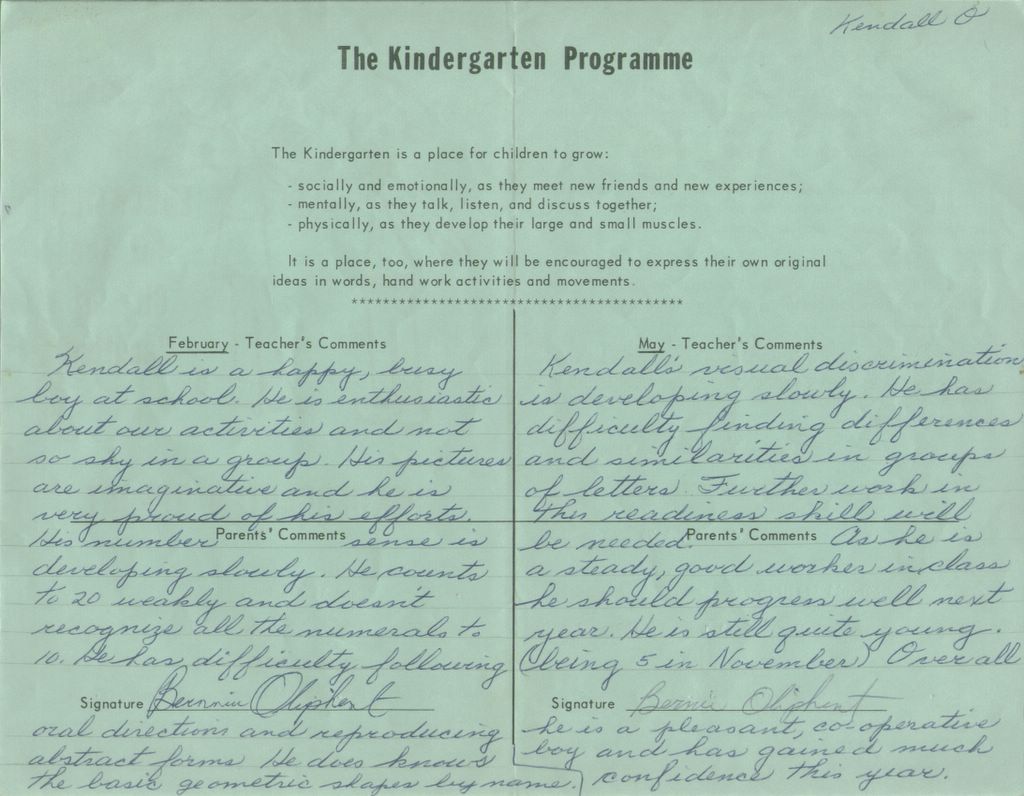
My Kindergarten report card. I still can't spell or add. And getting along with others? sometimes (smilie face, evil grin) Posted by Picasa

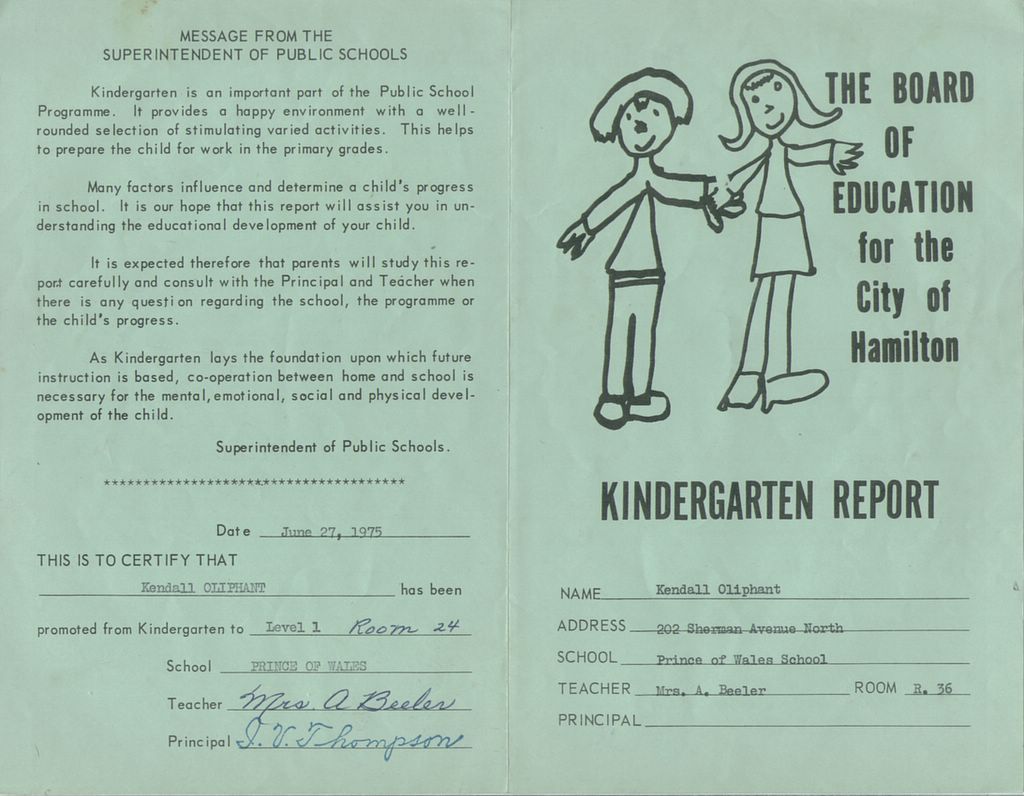
My Kindergarten report card. Prince of Wales. Front cover. Posted by Picasa

My hospital birth record card from St. Joseph's Hospital in Hamilton, Ontario. Posted by Picasa

The Prince of Wales Primary School in Hamilton, Ontario grade two- three class of 1977. I was in grade three (front row third from the right). Man, was I ever fashionable in the mock turtle neck and six million dollar man pink shirt) ahem. sarcasm. Posted by Picasa

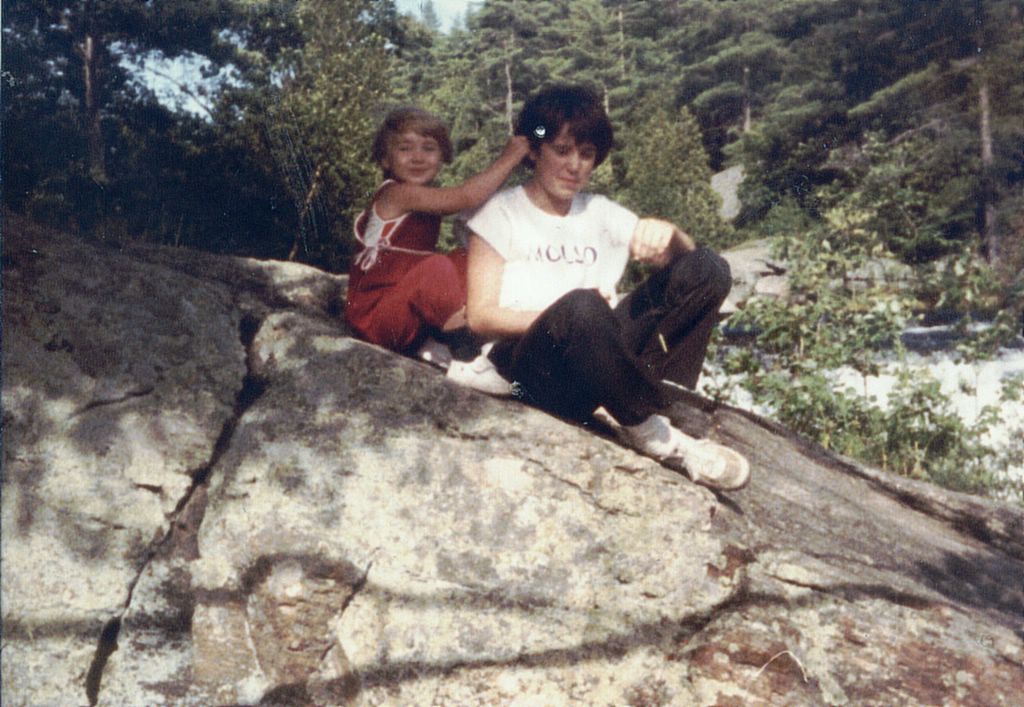
My Neice Jennifer and I in 1985. Posted by Picasa

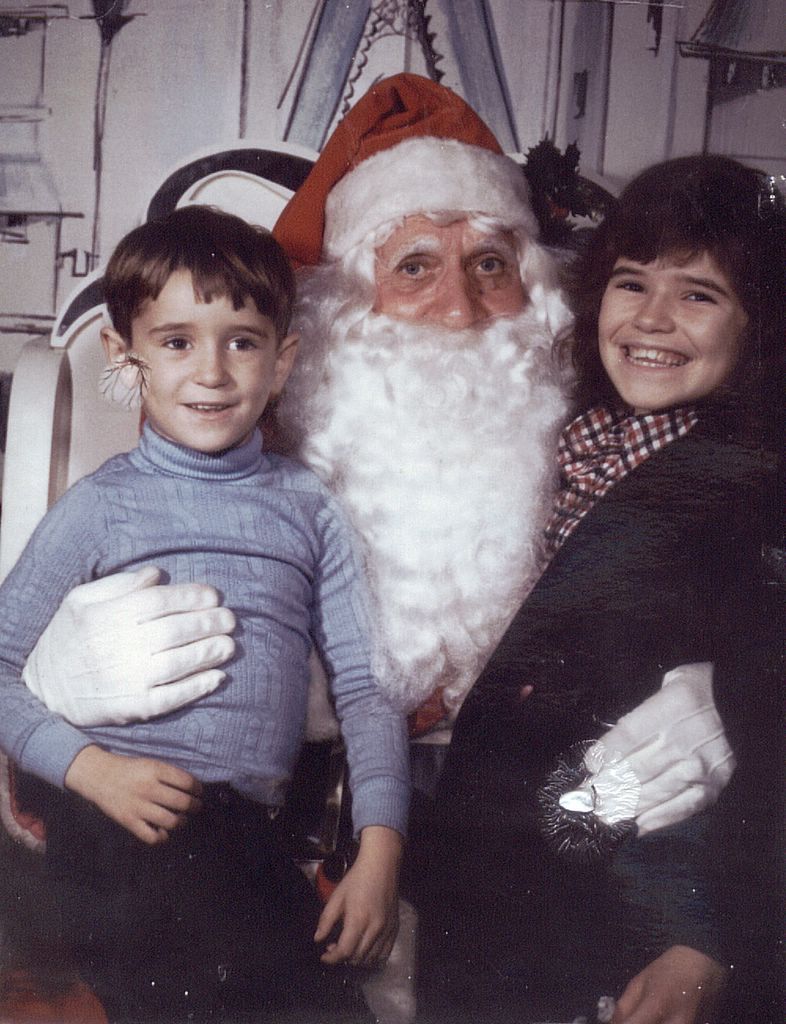
Christmas 1977. Posted by Picasa

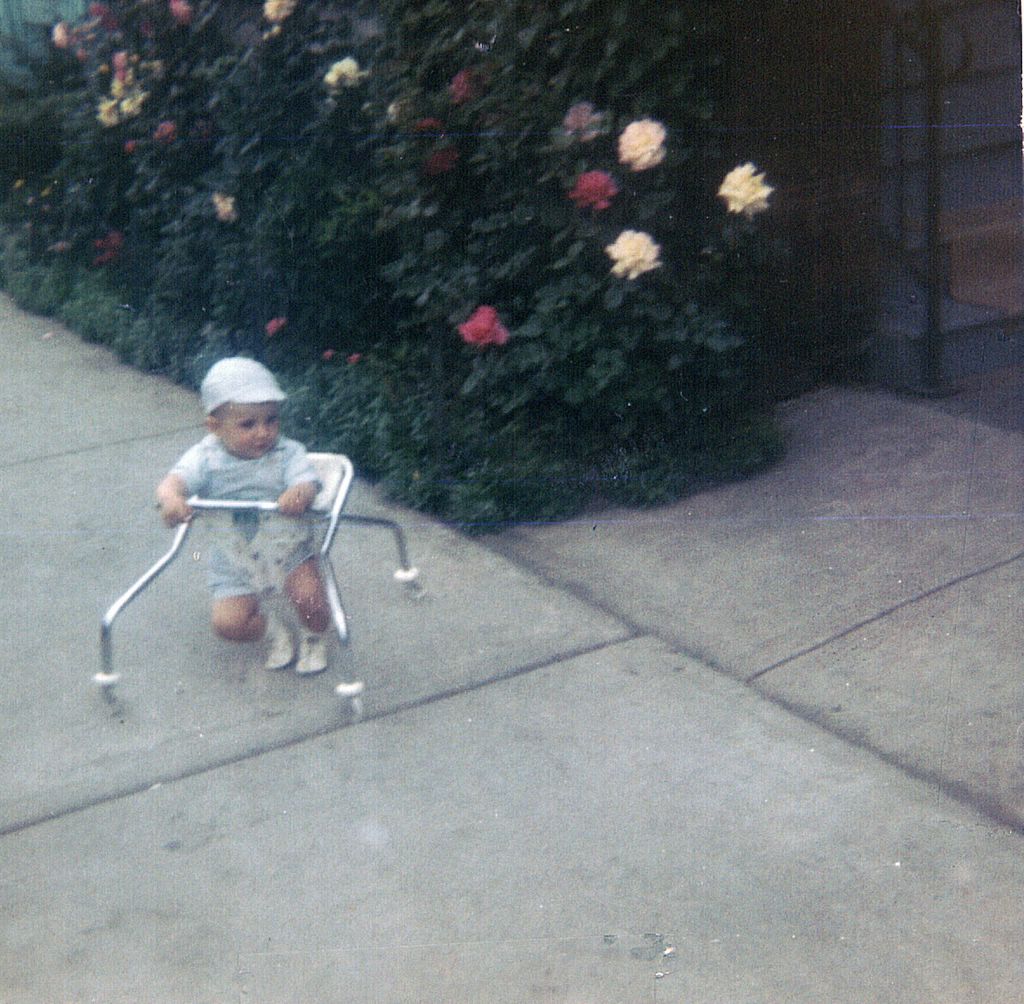
Rolling along in 1970. Posted by Picasa

Lovin my Buster Brown shoes. Posted by Picasa

The whole gang in 1970. Those where the days, a man came around with a pony knocking on doors, taking photos for a nominal fee. Posted by Picasa