An opening of one's knowledge,capabilities, vision and guidance. The Kenaz is about creating a relationship,learning and allowing room for interpretation. When you are in the darkness,an opening with light is the best and most gracious thing to have bestowed upon you. This is a great time for putting energies into new opportunities. Come share my world as I see it.
Showing posts with label Tao of Pooh. Show all posts

Tuesday, January 16, 2007

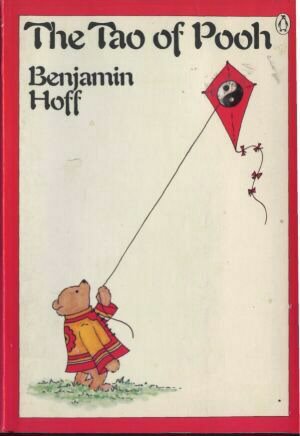
The Tao of Pooh

Hoff uses the British children's story Winne-the-Pooh to explain the concepts of Taoism. It's a simple and effective approach.

Pooh is a small bear whose one love in life is eating honey. Pooh is not cleaver but, rather, bumbles along in the stories arriving at the answer to riddles or problems without meaning to or through little effort or, even, without knowing he has arrived at the answer. He is contrasted with a self-proclaimed purveyor of knowledge, the owl, and a busy body rabbit as well as other animals of the 100 acre wood.

Hoff sets up his thesis of Pooh as Taoist master by first introducing the reader to a few background principles of the religion. He tells of a painting called "The Vinegar Tasters" with three men who have tasted a particular vinegar. The first is un-bending Confucius and he finds the vinegar sour. For him, life was ruled by rituals and reverence for ancestors; hence, the sour vinegar. The second taster is dreamer Buddha and, for him, the vinegar is bitter. He sees life as filled with attachments and desires for this world which lead to suffering and pain. Only by escaping these desires and attachments (thereby escaping this world completely through nirvana) may a person cease the suffering. The last vinegar taster was realist Lao-tse, the founder of Taoism. He is laughing as he finds heaven to exist on earth.

As Pooh as the perfect Taoist, Hoff explains the concept of the "uncarved block" (called "P'u" in Taoism). Hoff states the concept as follows:

The essence of the principle of the Uncarved Block is that things in their original simplicity contain their own natural power, power that is easily spoiled and lost when that simplicity is changed.

Pooh is able to accomplish what he does because he is simpleminded. As any old Taoist walking out of the woods can tell you, simple-minded does not necessarily mean stupid.

Hoff then quotes the Tao Te Ching: "The wise are not learned; the learned are not wise." This is so because the learned individual is restricted by his own learning.
Simply, using the character Owl from Winnie-The-Pooh as an example of a learned individual who lacks wisdom. In the story, Owl's knowledge and education never assist the characters in performing the task at hand. Time and again, it is Pooh's way (simple, slow paced approach) that wins the day.

I believe the point is to Know one's self leads to believing in one's self which leads to self-reliance. To emphasis the point, Hoff reminds us of the story of the Ugly Duckling who later turns into a swan. The duckling had already turned into a swan but still suffered with low self-esteem. It was not until the swan looked at her reflection in the water that she realized who she really was (i.e., saw her true inner self, an inner self that is hidden in us all).

The next principle presented is Wu Wei. Meaning, "without doing, causing, or making." This is exemplified by how Pooh goes about life. Pooh operates on the simple principle of minimal effort and working within his limitations.

The Wu Wei principle can be understood by striking at a piece of cork floating in water. The harder you hit it, the more it yields: the more it yields, the harder it bounces back. Without expending energy, the cork can easily wear you out.


These are the main points of the book. The book reinforced the ideas that I had, that being that we don't need to shift our responsibilities onto the shoulders of some deified Spiritual Superman, or sit around and wait for Fate to come knocking at the door. We simply need to believe in the power that's within us, and use it.

One of the most important concepts in Taoism is compassion ("Tz'u"). From it comes courage and, without it, one cannot achieve wisdom.


Loa-tse wrote: "To attain knowledge, add things every day. To attain wisdom, remove things every day." All things come from Nothing. This empty-mindedness (or clear-mindedness). The best example of this concept is a small child who's mind is free of prejudice and judgement.

On his way back from K'un-lun Mountains, the Yellow Emperor lost the dark pearl of Tao. He sent Knowledge to find it, but Knowledge was unable to understand it. He sent Distant Vision, but Distant Vision was unable to see it. He sent Eloquence, but Eloquence was unable to describe it. Finally, he sent Empty Mind, and Empty Mind came back with the pearl...Chuang-tse


Later,
Kenaz

Sunday, January 14, 2007

Cottleston Pie

"The Tao of Pooh" is a new incarnation of  Lao-Tsu, the ancient Chinese sage from whom Taoism first arose. Benjamin Hoff's tells of the teachings of the Toa in a fun and enjoyable manner. Each principle is explored through the eyes of the lovable characters of A.A Milne. Hoff's book makes it quite clear: "Eeyore frets, and Piglet hesitates, and Rabbit calculates, and Owl pontificates. Pooh just is." Pooh doesn't fret or hesitate or calculate or pontificate: He is blessed with an indefinable something, a grace that gets him past all the anxiety-driven craziness of those about him. he doesn't think very far ahead, maybe not beyond breakfast. He redeems every situation. He lives in the present. He goes for the sweet stuff, the honey. Blessed are those who go and do likewise.

Pooh's nonsense songs are songs of uncommon sense, though it may seem hard to get at, like the honey in the very bottom of the honey pot.  In "Cottleston Pie" Benjamin Hoff gives us a "Tao of Pooh" interpretation of the three riddles in the song. May I remind you how it goes?

Cottleston, Cottleston, Cottleston Pie,

A fly can't bird, but a bird can fly.

Ask me a riddle and I reply ...

Cottleston, Cottleston, Cottleston Pie,

A fish can't whistle and neither can I,

Ask me a riddle and I reply ...

Cottleston, Cottleston, Cottleston Pie,

Why does a chicken, I don't know why.

Ask me a riddle and I reply,

Cottleston, Cottleston, ..."

you know what.

First riddle: "A fly can't bird, but a bird can fly." Nonsense or uncommon sense? People are forever striving to be what they are not because they ignore "the clear reality of Things As They Are." The Cottleston Pie Principle says: Know your Inner Nature. Do not be alienated from yourself, forever in tension, trying to make yourself into something you are not. Accept that you are acceptable at the deepest level of your being. Come as you are. Cherish your integrity. Be attentive to your spiritual life. Seek your center, the place where your freedom resides. Take time, at regular intervals, to relax into yourself and appreciate your Inner Nature.

As yourself, when you need reminding, How could I ever have not known that "a fly can't bird but a bird can fly"? Let yourself laugh at yourself sometimes. And you'll begin to enjoy other people more, too. You'll know that they have Inner Natures of their own, and you'll enjoy the differences between you rather than being distressed by them. Let go of control sometimes. Rather than joining in Rabbit's clever scheme to drive Kanga and Roo out of the forest because they are different, you'll join in creating a community of mutual respect and enjoyment -- and compassion for the thorn-pierced foot.

Second riddle: "A fish can't whistle and neither can I." According to Benjamin Hoff, "Coming from a wise mind, such a statement would mean, 'I have certain limitations, and I know what they are.' ... There's nothing wrong with not being able to whistle, especially if you are a fish. But much is wrong with blindly trying to do what you aren't designed for."

In "Winnie the Pooh," Tigger and Roo are walking through the forest one morning and Tigger is talking about all the things Tiggers can do: " 'Can they fly?' asked Roo. 'Yes,' said Tigger, 'they're very good fliers, Tiggers are, 'stronry good flyers.' 'Oo!' said Roo. 'Can they fly as well as Owl?' 'Yes,' said Tigger. 'Only they don't want to.' " A little later, Christopher Robin and his friends have to rescue Tigger from the limb of a tree onto which he has climbed, letting him drop into a blanket, ker-plop!

Maybe you have known people like that. Or maybe you've had to be rescued from a limb or two you've climbed out on yourself.  People who care will cushion your fall. Here's another way the personal side of life is linked to the community: We are forever bumping up against our limitations in unexpected ways; but with the caring concern of others, we can learn from these bumps. Knowing that "a fish can't whistle and neither can I" does not deny the possibility of learning and growth; owning your limitations is the basis of spiritual learning and growth.

Pooh's third Cottleston Pie riddle asks: "Why does a chicken, I don't know why." Why did the chicken cross the road? To get to the other side. Why does he want to get to the other side, or wherever a chicken might want to go? We don't know, and I suppose the chicken doesn't fully understand it, either. Instinct is the scientific-sounding answer; but appeal to instinct really means: We don't know, and probably nobody else does, either. We could as well say: The chicken is acting in accord with its Inner Nature and its Limitations. But then we'd need to add: Even these do not determine what it will do, for the chicken does what it wants to do, we know not why. In the end it is unlimited, at liberty. And so are we who live within the Unlimited, a reality that is mysterious and transcends us absolutely. Lao-Tsu calls it the Tao. The freedom to choose what we will do and what we would become is our clearest link to ultimate reality.


Thursday, November 03, 2005

The Te of Piglet


Ten years after his Tao of Pooh, in 1982, Benjamin Hoff was pressed to write a follow up of his Western inquiry into Taoism. He did this by writing his The Te of Piglet, published in 1992. It is still in print, with a paperback edition issued by Penguin USA in 1993.

Hoff explicitly states that this second book is not a sequel to his first book, but rather a companion. The book is based around two topics, the concept of Te, the Chinese word meaning 'power' or 'virtue' and Piglet, of the Winnie the Pooh books.

In his first book, he brought out the essential tenets and perspectives of Taoism, in terms accessible to Westerners. In his second book, he elucidates the Taoist concept of 'Virtue — of the small'; though, he also uses it as an opportunity to elaborate on his introduction to Taoism. It is written with many embedded stories from the A. A. Milne Winnie the Pooh books, both for entertainment and because they serve as very useful tools for explaining Taoism — most Chinese stories are rather inaccessible to Westerners.

In The Te of Piglet, Piglet is shown to possess great power — a common interpretation of the word Te, which more commonly means Virtue-, not only because he is small, but, also, because he has a great heart or, to use a Taoist/Chinese word, Tz'u. The book goes through the other characters — Tigger, Owl, Rabbit, Eeyore, and Pooh — to show the various aspects of our humanity that Taoism says gets in the way of living in harmony with the Tao.

Book reference
Hoff, Benjamin. The Te of Piglet. Paperback edition, Penquin USA, New York, 1993. ISBN 0140230165.

Here are links to other posts related to this topic,
Favourite Quotes From The Tao Of Pooh
ORIGINS OF "CHI" AND IT'S RELATIONSHIP TO THE CONCEPTS OF "YIN AND YANG"

Later,
Kenaz

Thursday, August 18, 2005

Favourite Quote From "The Tao of Pooh"

"When you wake up in the morning, Pooh," said Piglet at last, "what's the first thing you say to yourself?"

"What's for breakfast? said Pooh. "What do you say, Piglet?"

"I say, I wonder what's going to happen exciting today?" said Piglet.

Pooh nodded thoughtfully.

"It's the same thing," he said.

The Tao of Pooh

Winnie the Pooh has a certain way about him, a way of doing things which has made him the world's most beloved bear. And Pooh's Way, as Benjamin Hoff brilliantly demonstrates, seems strangely close to the ancient Chinese principles of Taoism. The 'Tao of Pooh' explains Taoism by Winnie the Pooh and explaines Winnie the Pooh by Taoism. It makes you understand what A.A. Milne probably meant when he said he didn't write the Pooh-books for children in the first place.

Over the centuries Taoism classic teachings were developed and divided into philosophical, monastic, and folk religious forms. All of these could be included under the general heading of Taoism. But the basic Taoism is simply a particular way of appreciating, learning from, and working with whatever happens in everyday life. From the Taoist point of view, the natural result of this harmonious way of living is happiness.

One of the basic principles of Taoism is P'U, the Uncarved Block. The essence of the Uncarved Block is that things in their original simplicity contain their own natural power, power that is easily spoiled and lost when that simplicity is changed. This principle applies not only to things, but to people as well. Or Bears. Which brings us to Pooh, the very Epitome of the Uncarved Block. When you discard arrogance, complexity, and a few, other things that get in the way, sooner or later you will discover that simple, childlike, and mysterious secret known to those of the Uncarved Block: Life is Fun. Along with that comes the ability to do things spontaneously and have them work, odd as that may appear to others at times. As Piglet put it in 'Winnie-the-Pooh', "Pooh hasn't much Brain, but he never comes to any harm. He does silly things and they turn out right."

Owl instead, is the opposite of Pooh, the Knowledge for the sake of Appearing Wise, the one who studies Knowledge for the sake of Knowledge, and who keeps what he learns to himself or to his own small group, rather than working for the enlightenment of others. That way, the scholars can appear Superior, and will not likely be suspected of Not Knowing Something. After all, from the scholarly point of view, it's practically a crime not to know everything. But sometimes the knowledge of the scholar is a bit hard to understand because it doesn't seem to match up with our own experience of things. Isn't the knowledge that comes from experience more valuable than the knowledge that doesn't?

While Owl's little routine is that of Knowledge for the sake of Appearing Wise, Eeyore's is that of Knowledge for the sake of Complaining About Something and Rabbit's is that of Knowledge of Being Clever. As anyone who doesn't have it can see, the Eeyore Attitude gets in the way of things like wisdom and happiness, and pretty much prevents any sort of real Accomplishment in life. Cleverness, after all, has its limitations. Its mechanical judgments and clever remarks tend to prove inaccurate with passing time, because it doesn't look very deeply into things to begin with. The thing that makes someone truly different -unique, in fact- is something that Cleverness cannot really understand.

"A fish can't whistle and neither can I." There's nothing wrong with not being able to whistle, especially if you're a fish. But there can be lots of things wrong with blindly trying to do what you aren't designed for. Unfortunately, some people aren't so wise, and end up causing big trouble for themselves and others. The wise know their limitations; the foolish do not. To demonstrate what we mean, we can think of no one better than Tigger, who doesn't know his limitations ('Tiggers can do everything'), which brings him in lots of trouble. Piglet instead knows his limitations and that's what makes him sometimes more braver than you would expect from such a small animal. So, the first thing we need to do is recognize and trust our own Inner Nature, and not lose sight of it. Inside the Bouncy Tigger is the Rescuer who knows the Way, and in each of us is something Special, and that we need to keep:

"Tigger is all right really," said Piglet lazily.
"Of course he is," said Christopher Robin.
"Everybody is really," said Pooh. "That's what I think," said Pooh.
"But I don't suppose I'm right," he said.
"Of course you are," said Christopher Robin.


This text is taken from 'The Tao of Pooh' by Benjamin Hoff, published by Mandarin Paperbacks. Also published by Mandarin Paperbacks and written by Benjamin Hoff; 'The Te of Piglet'.

In this second book he makes the explicit statement that it isn't a sequel to his first book, but rather a companion. The book is based around two topics, the concept of Te, the Chinese word meaning 'power' or 'virtue' and Piglet, of the Winnie the Pooh books. In his first book, he brings out the essential tenets and perspectives of Taoism, in terms accessible to Westerners. In his second book, he elucidates the Taoist concept of 'Virtue - of the small'; though, he also uses it as an opportunity to elaborate on his introduction to Taoism. It is written with many embedded stories from the A.A. Milne Winnie the Pooh books, both for entertainment and because they serve as very useful tools for explaining Taoism -most Chinese stories are rather inaccessible to Westerners.

In The Te of Piglet, Piglet is shown to possess great power -a common interpretation of the word Te, which more commonly means Virtue-, not only because he is small, but, also, because he has a great heart or, to use a Taoist/Chinese word, Tz'u. The book goes through the other characters— Tigger, Owl, Rabbit, Eeyore, and Pooh—to show the various aspects of our humanity that Taoism says gets in the way of living in harmony with the Tao.