
Humphrey Bogart
Cassablanca-"Of all the gin joints in all the towns in all the world ..." with Humphrey Bogart and Dooley Wilson
Cassablanca-"Now, now. Here's lookin' at you, Kid." with Humphrey Bogart and Ingrid Bergman
 Hamilton Tigers
The return of the Quebec Bulldogs (formerly a Stanley Cup winning NHA team) to the city of Quebec for the 1919-20 season ended in failure. Despite having the league's scoring leader (39 goals) "The Phantom" Joe Malone in the line-up, the Bulldogs only managed a pathetic four wins in 24 games. And so the team was put up for sale.
As it happened, a group from Hamilton, Ontario were interested in bringing a pro team to the city to play in a new artificial-ice arena. They were the owners of the Abso-pure Ice Company, and shortly before the start of the 1920-21 season, they succeeded in making the deal with the Quebec owners, and purchased the franchise for $5,000.
The new professional team was heartily received by hockey fans, who on opening night came to the Barton Street Arena somewhere around 6,500 strong to watch their team (minus Joe Malone) trounce an unconditioned Montreal Canadiens team 5-0.
Although the line-up was bolstered by additions from each of the other three teams, the Tigers quickly began to falter. By the end of the first season, the team managed only six more wins, and finished last place.
The following three seasons saw the Tigers finish dead last each time, although by the 1923-24 season they had worked their way up to nine wins.
The 1924-25 season saw a complete transformation: unlike in other seasons when the team managed a few good early season wins and then fizzled, this year the Tigers could not stop winning and fought their way to the top of the standings. Hamiltonians were ecstatic: after four years of disappointment, suddenly the city had a Stanley Cup contender.
But as the season drew to a close, there was growing discord among the Tigers' players: not at one another, but at management. The players were not being compensated for the extra time they were playing (an earlier training camp, as well as six more games than before, and now at least two play-off games) and they wanted something done about it. Thus they justifiably went on strike, but this quickly failed and led to the team's suspension from post-season play.
Over time, all of the players involved went to the league on their hands and knees begging for forgiveness, and eventually all were re-instated. But none would return to the league as Hamilton Tigers, for in yet another act of injustice the league decided that the city of Hamilton no longer deserved an NHL franchise and the team was sold to some American bootlegger for $75,000.
Renamed the New York Americans, the franchise continued to exist until the 1941-42 season, at the end of which it went defunct leaving the NHL with only six teams.
 Hamilton Red Wings
The Hamilton Tiger Cubs were renamed in 1960 becoming the Hamilton Red Wings, and sponsored by the NHL Detroit Red Wings. The team played for 14 seasons before being renamed the Hamilton Fincups.
The Red Wings of 1962 were coached by Eddie Bush. The team finished second overall in the OHA standings, then lost only 1 game in the post-season run to the Memorial Cup. In the playoffs Hamilton defeated the St. Catharines Teepees, Niagara Falls Flyers, and the Metro Jr. A. champs Toronto St. Michael's Majors 4 games to 1, winning the J. Ross Robertson Cup. The Red Wings then swept the series against the Quebec Citadelles for the Eastern Canadian championship.
The Red Wings would play the Western Canadian champion Edmonton Oil Kings for the Memorial Cup. The first game of the 1962 Memorial Cup was played on home ice at the Barton Street Arena which Hamilton won 5-2. The next three games were played at the Guelph Memorial Gardens. Hamilton won game two 4-2. Edmonton won game three 5-3. Hamilton shutout Edmonton 3-0 in game four. The fifth and deciding game was played in the Kitchener Memorial Auditorium. The Red Wings defeated the Oil Kings 7-4 to win the series and the Memorial Cup, 4 games to 1.
Five years later the Red Wings made it to the OHA finals again in 1967, but were swept 4 games to 0 by the Toronto Marlboros.
The Hamilton Red Wings played home games at the Barton Street Arena, also known as the Hamilton Forum .
 Hamilton Fincups
The Fincups were a short-lived team in the Ontario Hockey Association that was very successful on the ice, but did poorly generating revenue. The club bounced around in three outdated arenas in four years. Unable to turn much of a profit, the Fincups moved out of town, becoming the Brantford Alexanders.
The name "Fincup" is a combination of the team's owners, the Finochio Brothers and Ron Cupido. They renamed the Hamilton Red Wings after the 1974 season, and hired Bert Templeton as the team's new coach. Templeton would was voted winner of the Matt Leyden Trophy as Coach of the Year in his first season. Templeton was let go partway through the Fincups 4th season and replaced by Dave Draper.
In the four short seasons that the Fincups played, the team won the Memorial Cup once, and the J. Ross Robertson Cup once. The Fincups also represented Canada at the World Junior Tournament and came away with a silver medal.
The Fincups won the Emms Division regular season title for two consecutive years in 1975-76 & 1976-77, and the Hamilton Spectator Trophy in 1976-77 as the first overall team in the OHA regular season.
The Fincups made the OHA finals all 3 years they played out of Hamilton, and came within one win of making it four consecutive appearances in the championship series in their only year in St. Catharines.
The Hamilton Fincups played home games at the Barton Street Arena, also known as the Hamilton Forum from 1974-1976. The St. Catharines Fincups played in the Garden City Arena in downtown St. Catharines, Ontario in 1976-1977. After moving back to Hamilton, the Fincups played out of the Mountain Arena from 1977-1978.
Hamilton Steelhawks

The Brantford Alexanders were relocated in 1984 becoming the Hamilton Steelhawks. The franchise which started in Hamilton in 1953, twice left Hamilton for lack of an adequate arena but returned for the opening of Copps Coliseum. However the team was not well-supported, and played for only four seasons in Hamilton before moving to Niagara Falls, Ontario to play as the Thunder.
The Steelhawks name was chosen to reflect the steel industry in Hamilton. The modernized name and logo was designed to catch on with a young fan base as well. The team enjoyed three successful playoff runs, although they never made a trip to the league finals.
Notable alumni are NHL stars Shayne Corson, Keith Primeau and NHL tough guy Bob Probert. Wayne Gretzky's younger brother Keith Gretzky also played for the Steelhawks, and was the co-winner 1986-87 William Hanley Trophy as the OHA's Most Sportsmanlike Player.
The team was owned by Jack Robillard, Bob Willson and Al Martin, who also owned the London Knights.
The Hamilton Steelhawks played home games at Mountain Arena for 1984-85 and then moved to Copps Coliseum from 1985 to 1988. The annual OHL / QMJHL All-Star game was played here in 1988. The Coliseum's upper bowl curtain was closed for home games.
Hamilton Dukes

The Toronto Marlboro were moved to Hamilton, Ontario for the 1989-1990 season becoming the Dukes of Hamilton. The name "Dukes"" orinigated as a nickname for the Toronto team coming from its namesake, the Duke of Marlborough.
The Dukes were chosen to host the Memorial Cup their first season in Hamilton. However when the team finished last over all in the standings, the OHL sent the league champion Oshawa Generals and finalist Kitchener Rangers instead.
The second season for the Dukes was only marginally better even after switching from the Leyden division to the Emms division. The Dukes qualified for the last playoff spot, but lost in four games straight. Following the 1990-1991 season, the team was relocated to Guelph, Ontario where it became the Guelph Storm.
The Dukes played their home games at Copps Coliseum, which hosted the Memorial Cup in 1990.
 Hamilton Bulldogs
When th Edmonton Oilers announced plans to suspend operations of the previous Hamilton Bulldogs franchise, local interests secured ownership of the Quebec Citadelles and relocated them to Hamilton. Fans voted to keep the Bulldogs name which won over the Hamilton Canadiens and Hamilton Habs. The team's primary affiliate has been the Montreal Canadiens, but had a partial agreement with the Edmonton Oilers in 2002-03 and again in 2005-06.
AHL's Hamilton Bulldogs and is also a concert and convention centre.
Dave Andreychuk Arena formerly the Chedoke Twin Pad Arena

Home of the OPJHL Hamilton Red Wings.
Another arena in Hamilton with great history is the Parkdale Arena now called the Pat Quinn Parkdale Arena. The Toronto Maple Leafs coach returned to his hometown last year for a ceremony at the east end hockey rink. Quinn says he began playing the sport as a kid at an outdoor rink where the current arena stands. He credits the city's many hockey volunteers and teammates for helping him achieve his goals.
I played house league hockey in this arena from 1980-1986 and to describe the experience in a soundbite, I would have to say "Old School". 1980 was the first season in the newly renovated arena after playing the 1979 season in any "barn" that the league could rent ice time in.
I recall stories of many who played at that arena in the 50s and 60s before there was a roof over the place. Definition of oldschool...they would have to arrive an hour before game time with shovels to clear the snow.
Fast forward a few decades and little was improved, the wind would wip through the cracks in the corrigated sheet metal that encased the lovable blue barn, mixing with what ever heat the antiquated space heaters that hung over the players benches. The result was a crap shoot of conditions. I can remember playing in a few Parkdale versions of the "Fog Bowl"
Anyway, as you can see Hamilton has had a much storied history of hockey at all levels. The great fans of Hamilton will probably never be treated to having their own NHL franchise, but the Hammer will always be gracious hosts to many NHL, junior, international and alumni tournament tilts. Who can forget the Canada 6-5 win over the Soviet Union at the 1987 Canada Cup Tournament. I was there that September 15 to witness one of the most memorable plays in hockey history. Gretzky, Lemieux and Larry Murphy rush down the ice, with Gretzky skating on left wing, the pass to Lemieux setting up the point blank game-winner in the slot with 1:26 left in the game.
 Lemieux and Gretzky celebrate after Lemieux's game-winner, while Larry Murphy regains his balance. Courtesy of Wikipedia.
Other great source of hockey in Hamilton at all levels is Larry Robertson, a regular contributor of Ontario Hockey Now Magazine
Later,
Kenaz
"I never dreamed that any mere physical experience could be so stimulating!" with Humphrey Bogart and Katharine Hepburn"
Marilyn Monroe
Marilyn Monroe
"Give me a reason." with Eli Wallach in THE MISFITS (1961)
Marlon Brando
Marlon Brando
Stella!" with Marlon Brando and Peg Hillias
"I could'a been a contender." with Marlon Brando and Rod Steiger
Frank Sinatra
Frank Sinatra
"In the Hole" with Montgomery Clift in FROM HERE TO ETERNITY (1953)"
And as a bonus here's some words of wisdom from the 'Duke'
And as a bonus here's some words of wisdom from the 'Duke'


Tuesday, April 18, 2006
Favourite Movie Dialogues
These are my favourite movie monologues and dialogues of all time, enjoy. If the embedded audio doesn't work click on the links.
Monday, April 17, 2006
Rune Reading For The Period Of April 17-April 23,2006
Introduction to Rune Readings
Rune readings are arrangements of the 24 runes (letters) of the old Futhark alphabet. The layout of the runes is known as a spread, and determines what each rune refers to. For example, in the Three Norns spread, the first rune represents the past, the second the present, and the third the future.
Sets: In addition to each rune having a meaning, the material in which the runes are carved can color the reading. Most people consistently use runes made of ceramic, stone, or wood. In order to broaden your experience, we offer readings with Gold Runes (for questions about business, career, and property), Jade Runes (for questions about love, friendship, and relationships), Ice Runes (for questions about struggle, conflict, and achievement), Spirit Runes (for questions about mysticism, spirituality, and religion), and Stone Runes (for questions about the natural world and things beyond human control).
The question will remain the same: "Will this week be a successful one?"
Rune Alphabet

Spread:Cross(in order of reading)
The Cross spread is used to plot the arc of your life and the forces acting on it. It is the most popular spread, giving a very complete view of the situation. Ice Runes are most commonly used for questions about struggle, conflict, and achievement.

Here is the Reading Using the Ice Set.
1.

The left rune represents an important element of the past. Algiz can be easily recognized as the antlers of the elk that it represents. The elk can represent victory, but is much more appropriately associated with the thrill of the hunt itself. This rune therefore can portend vigor and success in active endeavors. Also, this rune seems symbolic of a hand with outstretched fingers - a protective hand. This hand may suggest that you will be shielded from things negative - the problems still exist, you are spared the brunt of their force.
2.

The middle rune represents a deciding element of the present. Nyd is frequently seen as a powerfully negative rune. You have drawn the rune reversed, which will lessen some of its effects. Generally Nyd represents loss, sorrow, and a hard journey with lessons learned. Nyd reversed here might be cautioning that the lessons might go unheeded representing repeated mistakes. The rune here might also be representing a minor loss or a nearly avoided catastrophe. Be careful, things are tricky and require strong attentiveness.
3.

The right rune represents the critical element of the future, at the core of the final outcome. Inguz is the rune of completion and fertility. The presence of this rune suggests that tasks which have been initiated will come to fruition. This rune is associated with Ing and Frey, it is this connection that explains its connotations of both fertility and sexuality. The variant of this rune shown here is reminiscent of the twin strands of life, and of the challenge and rewards of bringing together things complimentary.
4.

The top rune represents a force that works for you. Raido is the rune of riding, as in a cart or as cargo. It is seen here reversed, suggesting a disruption of travel or communication. Etiological analysis of this rune has also given it interpretations of advice or justice, and of being in a position of moral correctness. Reversed, there is an indication of the lack of solid council, or the holding of a position that is not morally sound.
5.

The bottom Rune represents a force that works against you. Berkana, the birch tree, is representative of rebirth, fertility, and a positive outcome to ventures undertaken. It is also the rune of families. Here the rune is reversed, warning you to be heedful of new beginnings, lest they sour. Rebirth is either delayed, or totally disrupted. There is also a warning of family troubles.
If you are further interested in Rune stones, please check out a script I wrote about three years ago. The story tells of a women's chance encounter with the towns rune reader and physcic. Her reading leads to a terrible discovery about her ex-husband.Click here to read 'Evil Of A Different Kind'
Later,
Kenaz
Rune readings are arrangements of the 24 runes (letters) of the old Futhark alphabet. The layout of the runes is known as a spread, and determines what each rune refers to. For example, in the Three Norns spread, the first rune represents the past, the second the present, and the third the future.
Sets: In addition to each rune having a meaning, the material in which the runes are carved can color the reading. Most people consistently use runes made of ceramic, stone, or wood. In order to broaden your experience, we offer readings with Gold Runes (for questions about business, career, and property), Jade Runes (for questions about love, friendship, and relationships), Ice Runes (for questions about struggle, conflict, and achievement), Spirit Runes (for questions about mysticism, spirituality, and religion), and Stone Runes (for questions about the natural world and things beyond human control).
The question will remain the same: "Will this week be a successful one?"
Rune Alphabet
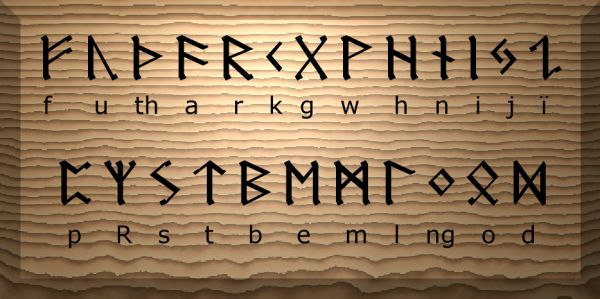
Spread:Cross(in order of reading)
The Cross spread is used to plot the arc of your life and the forces acting on it. It is the most popular spread, giving a very complete view of the situation. Ice Runes are most commonly used for questions about struggle, conflict, and achievement.

Here is the Reading Using the Ice Set.
1.
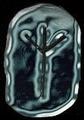
The left rune represents an important element of the past. Algiz can be easily recognized as the antlers of the elk that it represents. The elk can represent victory, but is much more appropriately associated with the thrill of the hunt itself. This rune therefore can portend vigor and success in active endeavors. Also, this rune seems symbolic of a hand with outstretched fingers - a protective hand. This hand may suggest that you will be shielded from things negative - the problems still exist, you are spared the brunt of their force.
2.
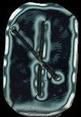
The middle rune represents a deciding element of the present. Nyd is frequently seen as a powerfully negative rune. You have drawn the rune reversed, which will lessen some of its effects. Generally Nyd represents loss, sorrow, and a hard journey with lessons learned. Nyd reversed here might be cautioning that the lessons might go unheeded representing repeated mistakes. The rune here might also be representing a minor loss or a nearly avoided catastrophe. Be careful, things are tricky and require strong attentiveness.
3.
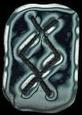
The right rune represents the critical element of the future, at the core of the final outcome. Inguz is the rune of completion and fertility. The presence of this rune suggests that tasks which have been initiated will come to fruition. This rune is associated with Ing and Frey, it is this connection that explains its connotations of both fertility and sexuality. The variant of this rune shown here is reminiscent of the twin strands of life, and of the challenge and rewards of bringing together things complimentary.
4.
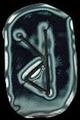
The top rune represents a force that works for you. Raido is the rune of riding, as in a cart or as cargo. It is seen here reversed, suggesting a disruption of travel or communication. Etiological analysis of this rune has also given it interpretations of advice or justice, and of being in a position of moral correctness. Reversed, there is an indication of the lack of solid council, or the holding of a position that is not morally sound.
5.
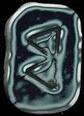
The bottom Rune represents a force that works against you. Berkana, the birch tree, is representative of rebirth, fertility, and a positive outcome to ventures undertaken. It is also the rune of families. Here the rune is reversed, warning you to be heedful of new beginnings, lest they sour. Rebirth is either delayed, or totally disrupted. There is also a warning of family troubles.
If you are further interested in Rune stones, please check out a script I wrote about three years ago. The story tells of a women's chance encounter with the towns rune reader and physcic. Her reading leads to a terrible discovery about her ex-husband.Click here to read 'Evil Of A Different Kind'
Later,
Kenaz
Sunday, April 16, 2006
ORIGINS OF EASTER
Easter was named after Eostre (a.k.a. Eastre). She was the Great Mother Goddess of the Saxon people in Northern Europe. Similarly, the "Teutonic dawn goddess of fertility [was] known variously as Ostare, Ostara, Ostern, Eostra, Eostre, Eostur, Eastra, Eastur, Austron and Ausos." 1 Her name was derived from the ancient word for spring: "eastre. Similar Goddesses were known by other names in ancient cultures around the Mediterranean, and were celebrated in the springtime. Some were, Aphrodite from ancient Cyprus and Ishtar from Assyria.
Many, perhaps most, Pagan religions in the Mediterranean area had a major seasonal day of religious celebration at or following the Spring Equinox. Cybele, the Phrygian fertility goddess, had a fictional consort who was believed to have been born via a virgin birth. He was Attis, who was believed to have died and been resurrected each year during the period MAR-22 to MAR-25. "About 200 B.C. mystery cults began to appear in Rome just as they had earlier in Greece. Most notable was the Cybele cult centered on Vatican hill ...Associated with the Cybele cult was that of her lover, Attis (the older Tammuz, Osiris, Dionysus, or Orpheus under a new name). He was a god of ever-reviving vegetation. Born of a virgin, he died and was reborn annually. The festival began as a day of blood on Black Friday and culminated after three days in a day of rejoicing over the resurrection.
Wherever Christian worship of Jesus and Pagan worship of Attis were active in the same geographical area in ancient times, Christians "used to celebrate the death and resurrection of Jesus on the same date; and pagans and Christians used to quarrel bitterly about which of their gods was the true prototype and which the imitation."
Many religious historians believe that the death and resurrection legends were first associated with Attis, many centuries before the birth of Jesus. They were simply grafted onto stories of Jesus' life in order to make Christian theology more acceptable to Pagans. Others suggest that many of the events in Jesus' life that were recorded in the gospels were lifted from the life of Krishna, the second person of the Hindu Trinity. Ancient Christians had an alternative explanation; they claimed that Satan had created counterfeit deities in advance of the coming of Christ in order to confuse humanity. Modern-day Christians generally regard the Attis legend as being a Pagan myth of little value. They regard Jesus' death and resurrection account as being true, and unrelated to the earlier tradition.
Wiccans and other modern-day Neopagans continue to celebrate the Spring Equinox as one of their 8 yearly Sabbats (holy days of celebration). Near the Mediterranean, this is a time of sprouting of the summer's crop; farther north, it is the time for seeding. Their rituals at the Spring Equinox are related primarily to the fertility of the crops and to the balance of the day and night times. Where Wiccans can safely celebrate the Sabbat out of doors without threat of religious persecution, they often incorporate a bonfire into their rituals, jumping over the dying embers is believed to assure fertility of people and crops.
Later,
Kenaz
Many, perhaps most, Pagan religions in the Mediterranean area had a major seasonal day of religious celebration at or following the Spring Equinox. Cybele, the Phrygian fertility goddess, had a fictional consort who was believed to have been born via a virgin birth. He was Attis, who was believed to have died and been resurrected each year during the period MAR-22 to MAR-25. "About 200 B.C. mystery cults began to appear in Rome just as they had earlier in Greece. Most notable was the Cybele cult centered on Vatican hill ...Associated with the Cybele cult was that of her lover, Attis (the older Tammuz, Osiris, Dionysus, or Orpheus under a new name). He was a god of ever-reviving vegetation. Born of a virgin, he died and was reborn annually. The festival began as a day of blood on Black Friday and culminated after three days in a day of rejoicing over the resurrection.
Wherever Christian worship of Jesus and Pagan worship of Attis were active in the same geographical area in ancient times, Christians "used to celebrate the death and resurrection of Jesus on the same date; and pagans and Christians used to quarrel bitterly about which of their gods was the true prototype and which the imitation."
Many religious historians believe that the death and resurrection legends were first associated with Attis, many centuries before the birth of Jesus. They were simply grafted onto stories of Jesus' life in order to make Christian theology more acceptable to Pagans. Others suggest that many of the events in Jesus' life that were recorded in the gospels were lifted from the life of Krishna, the second person of the Hindu Trinity. Ancient Christians had an alternative explanation; they claimed that Satan had created counterfeit deities in advance of the coming of Christ in order to confuse humanity. Modern-day Christians generally regard the Attis legend as being a Pagan myth of little value. They regard Jesus' death and resurrection account as being true, and unrelated to the earlier tradition.
Wiccans and other modern-day Neopagans continue to celebrate the Spring Equinox as one of their 8 yearly Sabbats (holy days of celebration). Near the Mediterranean, this is a time of sprouting of the summer's crop; farther north, it is the time for seeding. Their rituals at the Spring Equinox are related primarily to the fertility of the crops and to the balance of the day and night times. Where Wiccans can safely celebrate the Sabbat out of doors without threat of religious persecution, they often incorporate a bonfire into their rituals, jumping over the dying embers is believed to assure fertility of people and crops.
Later,
Kenaz
Saturday, April 15, 2006
Jeffrey Baldwin
When Toronto emergency workers arrived at an east-end Toronto home early on the morning November 30, 2002, the house was dark. They knocked twice before a woman, Elva Bottineau, answered the door and directed them to the kitchen. What they found there was shocking. Lying on the table was the emaciated, lifeless body of Bottineau's five-year-old grandson Jeffrey Baldwin. Firefighters and paramedics tried in vain to resuscitate him. Seasoned police investigators had never seen a case like it and were immediately suspicious. They wanted to know how Jeffrey could just waste away in a home filled with six adults and five other children. The CBC news program "The Fifth Estate" aired this in depth report dealing with this tradgedy. Click hear to read more about this case. The video of the program is below.
As well as my previous post on the subject
As well as my previous post on the subject
History of Easter
Easter
A Christian feast commemorating Christ's resurrection. Easter Sunday celebrations follow the sombre observances of the Last Supper, Jesus's torture and crucifixion.
The Thursday before Easter ("Holy" or "Maundy Thursday") is the day Jesus is believed to have instituted the Eucharist which assumed the central role in Christian worship services.
At the Last Supper, Jesus washed the feet of his disciples to demonstrate that Christians are called to serve humanity. He also issued a new commandment: "Love one another. As I have loved you, so you must love one another. By this all men will know that you are my disciples, if you love one another" (John 13: 34-35). After the Last Supper, Jesus was arrested, tried and condemned to death.
On Good Friday, Jesus endured a humiliating and torturous march to Calvary where he was crucified and died. Many Christians make solemn observances of Christ's "Passion" on Good Friday by following the Stations of the Cross. The 14 stations -- depicted in sculpture or images in churches throughout the world -- commemorate the stages of Jesus's journey to the cross.
Holy Saturday is a sombre day of waiting without benefit of knowing how grief is to be overcome.
Easter Sunday is the day Christians celebrate Christ's rising from the dead. According to the gospels, a group of women found Jesus's tomb empty and a divine messenger proclaimed that Jesus had been raised from the dead. Later, Jesus met the Apostles, renewing their courage and conviction to share the good news of eternal life with God through Christ.
Timing: At the Council of Nicea in 325, the date of Easter was fixed as the Sunday following the full moon after the spring equinox. This year, Easter is tomorrow, April 16.
Most Eastern Orthodox Churches follow the Julian calendar which is now 13 days out of sync with the more accurate Gregorian calendar. This year, Christian Orthodox celebrate Easter on Sunday, April 23.
The Easter Bunny
Not unlike Christmas, the Christian holiday of Easter is thought to have overtaken an earlier Pagan festival. In Easter's case, it was the spring festival of Eostre. Celebrating the fertility goddess of the Saxon people in Northern Europe, Eostre's name meant spring. Her symbol was a hare which is thought to have, over time, morphed into a rabbit.
The appearance of an egg-laying rabbit (brightly coloured eggs, no less) is documented in 16th century Germany where children eagerly awaited the arrival of the "Oschter Haws."
The tradition appears to have been brought to America by settlers in the 18th century where the Easter Bunny became firmly established as a popular symbol of Easter.
The egg, which represented fertility and rebirth to pagans, was also adopted as part of the Christian Easter festival. It came to be associated with the resurrection with some holding that it symbolizes the stone that was rolled away from in front of Jesus's tomb.
Later,
Kenaz
A Christian feast commemorating Christ's resurrection. Easter Sunday celebrations follow the sombre observances of the Last Supper, Jesus's torture and crucifixion.
The Thursday before Easter ("Holy" or "Maundy Thursday") is the day Jesus is believed to have instituted the Eucharist which assumed the central role in Christian worship services.
At the Last Supper, Jesus washed the feet of his disciples to demonstrate that Christians are called to serve humanity. He also issued a new commandment: "Love one another. As I have loved you, so you must love one another. By this all men will know that you are my disciples, if you love one another" (John 13: 34-35). After the Last Supper, Jesus was arrested, tried and condemned to death.
On Good Friday, Jesus endured a humiliating and torturous march to Calvary where he was crucified and died. Many Christians make solemn observances of Christ's "Passion" on Good Friday by following the Stations of the Cross. The 14 stations -- depicted in sculpture or images in churches throughout the world -- commemorate the stages of Jesus's journey to the cross.
Holy Saturday is a sombre day of waiting without benefit of knowing how grief is to be overcome.
Easter Sunday is the day Christians celebrate Christ's rising from the dead. According to the gospels, a group of women found Jesus's tomb empty and a divine messenger proclaimed that Jesus had been raised from the dead. Later, Jesus met the Apostles, renewing their courage and conviction to share the good news of eternal life with God through Christ.
Timing: At the Council of Nicea in 325, the date of Easter was fixed as the Sunday following the full moon after the spring equinox. This year, Easter is tomorrow, April 16.
Most Eastern Orthodox Churches follow the Julian calendar which is now 13 days out of sync with the more accurate Gregorian calendar. This year, Christian Orthodox celebrate Easter on Sunday, April 23.
The Easter Bunny
Not unlike Christmas, the Christian holiday of Easter is thought to have overtaken an earlier Pagan festival. In Easter's case, it was the spring festival of Eostre. Celebrating the fertility goddess of the Saxon people in Northern Europe, Eostre's name meant spring. Her symbol was a hare which is thought to have, over time, morphed into a rabbit.
The appearance of an egg-laying rabbit (brightly coloured eggs, no less) is documented in 16th century Germany where children eagerly awaited the arrival of the "Oschter Haws."
The tradition appears to have been brought to America by settlers in the 18th century where the Easter Bunny became firmly established as a popular symbol of Easter.
The egg, which represented fertility and rebirth to pagans, was also adopted as part of the Christian Easter festival. It came to be associated with the resurrection with some holding that it symbolizes the stone that was rolled away from in front of Jesus's tomb.
Later,
Kenaz
Friday, April 14, 2006
Good Friday
Good or Holy Friday is the name ascribed to a Friday, when the Savior of this world, Jesus Christ, was crucified, decried of treason by the Romans. It is on this Friday that Christ suffered for the well-being of mankind and spread his ubiquitous 'goodness' over this world. May be that is one reason why this Friday is called Good Friday. Some others hold the view that the name Good Friday was derived from God's Friday. But whatever the attributes, one thing shines through for sure--the welfare of mankind that Christ ensured through his sacrifice on Good Friday. Although it was on this Friday that the world at large was deprived of this One man, Jesus Christ, who brought spiritual revolution in the hearts of many, it still remains a day of hope, a day which bears the promise of an impending revival, a new tomorrow, a resurrection !
Good Friday witnessed the passion of Christ as he bore the cross through the streets to where he was finally put to death; Good Friday commemorates the Crucifixion of Christ by the Roman soldiers and Good Friday also remembers how the son of God, Christ forgave all and sundry who've sinned against the Supreme, against God. So the spirit of forgiving and an all-pervading goodness echoes on every Good Friday to keep Christ's message of "conquering all evil through good" alive !
In honour of this day I offer a home movie that has been pain staking transferred first from its original 16mm real to real footage to an analog cam-corder, then to VHS and finally into .mpg format to which I have uploaded to Google Video and posted on my sister blog http://whiteoliphantfamilyphotos.blogspot.com/
.
I have uploaded my families history starting in 1963 and commencing until 2001. The commentary is provided by my mother, father and myself. One weekend during the summer of 1997 we sat in my parents rec room and created these tapes and I'm happy to share, enjoy.
Later,
Kenaz
Good Friday witnessed the passion of Christ as he bore the cross through the streets to where he was finally put to death; Good Friday commemorates the Crucifixion of Christ by the Roman soldiers and Good Friday also remembers how the son of God, Christ forgave all and sundry who've sinned against the Supreme, against God. So the spirit of forgiving and an all-pervading goodness echoes on every Good Friday to keep Christ's message of "conquering all evil through good" alive !
In honour of this day I offer a home movie that has been pain staking transferred first from its original 16mm real to real footage to an analog cam-corder, then to VHS and finally into .mpg format to which I have uploaded to Google Video and posted on my sister blog http://whiteoliphantfamilyphotos.blogspot.com/
.
I have uploaded my families history starting in 1963 and commencing until 2001. The commentary is provided by my mother, father and myself. One weekend during the summer of 1997 we sat in my parents rec room and created these tapes and I'm happy to share, enjoy.
Later,
Kenaz
Wednesday, April 12, 2006
Brown Bess Escapes the Fire
A rare British musket that was only weeks away from being turned into molten iron will become a centrepiece exhibit at a famous Hamilton museum. The musket, turned over to the museum on Sunday, is in extremely good condition and has several intriguing initials carved into it. The public will get its first look at the historic weapon June 3 when the museum celebrates its 25th anniversary of the re-enactment of the Battle of Stoney Creek.
Known as a Brown Bess India Pattern, the musket was manufactured for British troops in the 1760s and issued to the soldiers who fought the Americans in the War of 1812. The owner had turned in the Brown Bess, along with several other weapons of potential historical significance, during last month's police amnesty. All 1,254 guns collected by police were headed for a steel foundry blast furnace at the end of the month.
Hamilton's newspaper sent photos to historians, museum curators -- including the Canadian War Museum in Ottawa -- pleaded with Hamilton police not to destroy the weapon. Contacted by police last week, the owner agreed to donate it to a local museum because of its possible link to the Battle of Stoney Creek. The owner decided it would be best placed with Battlefield House museum. The owner said he bought the musket from an antique gun dealer 30 years ago.
Police will now give local curators a list of all weapons turned in to check for potential historical treasures. Three or four other muzzleloading weapons handed over by the Brown Bess owner may also escape the smelter.
Battlefield House museum, a national historic site, commemorates the June 6, 1813, Battle of Stoney Creek when British forces attacked and repelled invading American troops.
Later,
Kenaz
Known as a Brown Bess India Pattern, the musket was manufactured for British troops in the 1760s and issued to the soldiers who fought the Americans in the War of 1812. The owner had turned in the Brown Bess, along with several other weapons of potential historical significance, during last month's police amnesty. All 1,254 guns collected by police were headed for a steel foundry blast furnace at the end of the month.
Hamilton's newspaper sent photos to historians, museum curators -- including the Canadian War Museum in Ottawa -- pleaded with Hamilton police not to destroy the weapon. Contacted by police last week, the owner agreed to donate it to a local museum because of its possible link to the Battle of Stoney Creek. The owner decided it would be best placed with Battlefield House museum. The owner said he bought the musket from an antique gun dealer 30 years ago.
Police will now give local curators a list of all weapons turned in to check for potential historical treasures. Three or four other muzzleloading weapons handed over by the Brown Bess owner may also escape the smelter.
Battlefield House museum, a national historic site, commemorates the June 6, 1813, Battle of Stoney Creek when British forces attacked and repelled invading American troops.
Later,
Kenaz
Sunday, April 09, 2006
Lowe's Plans To Make Hamilton Their Foothold Into Canada
The U.S. big-box giant Lowe's will open its first Canadian store on Barton Street, just down the road from Home Depot. Construction of the 148,000-square-foot store and garden centre is expected to start as early as autumn 2007.
Lowe's, which is more focused on home decor than Home Depot, is looking to build as many as 10 stores in Canada over 2007 with a majority slotted for the Greater Toronto Area. Home Depot is ahead in the home improvement game and has already surrounded Hamilton with stores in Ancaster, Stoney Creek and Burlington. There are also plans to build another store in Hamilton.
Hamilton and the surrounding Toronto area have been identified as key market for home improvement by Home Depot. Lets face it we are a city of half a**ed handymen and do-it yourselfers.
Home Depot is the largest home improvement retailer in North America with 138 stores in Canada and more than 2,000 in the U.S. The Atlanta-based company announced Wednesday it plans add 18 Canadian stores this year.
That came just days after Lowe's announced it would open as many as 10 stores in this country. It appears the two American giants are going to battle for Canada's $28-billion-a-year home improvement market.
In Hamilton, Lowe's future location at Barton Street East and Woodward Avenue is a vacant, contaminated brownfield site. That's close to the Home Depot on Centennial Parkway near the QEW. The big box store says it will revitalize the area, bringing about 100 more jobs badly needed to Hamilton.
Lets hope this US led box war won't end in disserted store fronts and unemployment like the war that saw Walmart destroy most of its Canadadian competetion. Hopefully Canadian Tire has learned how to tred in this sea of American prosperity unlike Eatons who was drowned by Walmart. Hamilton can't take another hit like that.
Later,
Kenaz
Lowe's, which is more focused on home decor than Home Depot, is looking to build as many as 10 stores in Canada over 2007 with a majority slotted for the Greater Toronto Area. Home Depot is ahead in the home improvement game and has already surrounded Hamilton with stores in Ancaster, Stoney Creek and Burlington. There are also plans to build another store in Hamilton.
Hamilton and the surrounding Toronto area have been identified as key market for home improvement by Home Depot. Lets face it we are a city of half a**ed handymen and do-it yourselfers.
Home Depot is the largest home improvement retailer in North America with 138 stores in Canada and more than 2,000 in the U.S. The Atlanta-based company announced Wednesday it plans add 18 Canadian stores this year.
That came just days after Lowe's announced it would open as many as 10 stores in this country. It appears the two American giants are going to battle for Canada's $28-billion-a-year home improvement market.
In Hamilton, Lowe's future location at Barton Street East and Woodward Avenue is a vacant, contaminated brownfield site. That's close to the Home Depot on Centennial Parkway near the QEW. The big box store says it will revitalize the area, bringing about 100 more jobs badly needed to Hamilton.
Lets hope this US led box war won't end in disserted store fronts and unemployment like the war that saw Walmart destroy most of its Canadadian competetion. Hopefully Canadian Tire has learned how to tred in this sea of American prosperity unlike Eatons who was drowned by Walmart. Hamilton can't take another hit like that.
Later,
Kenaz
Saying Goodbye To Jeffrey Baldwin
The grandparents of a five-year-old boy who was locked up and left to wither and die in a cold, fetid room, were convicted of second-degree murder yesterday in what police said was one of the worst cases of child abuse in Canada. Elva Bottineau, 54, and Norman Kidman, 53, were supposed to save Jeffrey Baldwin and his siblings from a life of abuse at the hands of their parents.
Instead the couple turned out to be the devil's incarnations who posed their will on a helpless soul. Jeffrey's only crime was to be born into a cruel society that pleads ignorance in the face of their savior.
How could this pair have been allowed to use the children as a source of income? They collected government cheques in their names while confining the young ones to what police described as "a horrible room" that was "harsh, dark, cold and damp. Where were the agencies set up to investigate such abuses? Why was this little gods creation allowed to suffer?
The courts heard Police Officer after another stand and testify how this case was the worse they seen. How Jeffrey was hidden away in the unheated bedroom for as long as 14 hours a day, breathing in the stench of his own urine and feces. Juror's endured the description of the child's room as "extremely shocking," with wet uncarpeted floors, mattresses soaked through and littered with stains, bags of filthy diapers throughout, and no toys in sight.
Jeffrey, who weighed just 21 pounds when he died in November 2002, was treated like a contestant in a human cock fight, having to eat from a bowl with his fingers and drink from a toilet when he was thirsty. The problem was the people he needed to fight for his safety coward just below him in the splendor of their abode while this hero died in squalor.
Jeffrey and his sister were locked up so frequently that regular visitors to the home often had no idea they even lived there. How? Even an untrained person should have known something was wrong, wasn't their a smell, noises? Court heard it took several weeks of repeated visits until they finally learned of what was called "bedroom number two".
On an early visit one officer noted a lock on the door and asked for it to be removed in a later visit he noticed the lock had been removed and inquired about it. Norman Kidman hastily returned with a regular eyelet and hook type clasp. Again I have to ask why did this not merit grounds for a search warrant? Why the wait?
Elva Bottineau's lawyer argued she did not deliberately kill her grandson. He cited a psychologist who testified Bottineau was mentally handicapped with a personality disorder preventing her from seeing Jeffrey waste away. But another expert witness, countered that Bottineau had knew what she was doing and lied to protect herself.
We can't just say oh she didn't know she was mentally sick, that wouldn't be fair to Jeffrey who didn't ask to thrown away all because an abnormal women with no regard for humanity, who didn't seek treatment, was allowed into his life.
It will interesting to hear what Ontario's chief coroner has to say in his inquest as to the involvement of the Toronto Catholic Children's Aid Society, the people who should have been responsible for Jeffrey's care and well being.
The Catholic Children's Aid Society released a statement in it's defense saying it deeply regrets Jeffrey's tragic death and wished it had done more to prevent it. Sorry to little to late.
On April 12 the trial will resume to discuss sentencing. Unfortunately no earthly sentence will be suffice for these two devils disciples. I truly hope these two are prepared to meet their makers and in the end when little Jeffrey Baldwin steps through heavens gates and takes his place in heavens chorus. His voice of damnation is finally heard. Only then can the process of forgiveness begin.
Later,
Kenaz
Instead the couple turned out to be the devil's incarnations who posed their will on a helpless soul. Jeffrey's only crime was to be born into a cruel society that pleads ignorance in the face of their savior.
How could this pair have been allowed to use the children as a source of income? They collected government cheques in their names while confining the young ones to what police described as "a horrible room" that was "harsh, dark, cold and damp. Where were the agencies set up to investigate such abuses? Why was this little gods creation allowed to suffer?
The courts heard Police Officer after another stand and testify how this case was the worse they seen. How Jeffrey was hidden away in the unheated bedroom for as long as 14 hours a day, breathing in the stench of his own urine and feces. Juror's endured the description of the child's room as "extremely shocking," with wet uncarpeted floors, mattresses soaked through and littered with stains, bags of filthy diapers throughout, and no toys in sight.
Jeffrey, who weighed just 21 pounds when he died in November 2002, was treated like a contestant in a human cock fight, having to eat from a bowl with his fingers and drink from a toilet when he was thirsty. The problem was the people he needed to fight for his safety coward just below him in the splendor of their abode while this hero died in squalor.
Jeffrey and his sister were locked up so frequently that regular visitors to the home often had no idea they even lived there. How? Even an untrained person should have known something was wrong, wasn't their a smell, noises? Court heard it took several weeks of repeated visits until they finally learned of what was called "bedroom number two".
On an early visit one officer noted a lock on the door and asked for it to be removed in a later visit he noticed the lock had been removed and inquired about it. Norman Kidman hastily returned with a regular eyelet and hook type clasp. Again I have to ask why did this not merit grounds for a search warrant? Why the wait?
Elva Bottineau's lawyer argued she did not deliberately kill her grandson. He cited a psychologist who testified Bottineau was mentally handicapped with a personality disorder preventing her from seeing Jeffrey waste away. But another expert witness, countered that Bottineau had knew what she was doing and lied to protect herself.
We can't just say oh she didn't know she was mentally sick, that wouldn't be fair to Jeffrey who didn't ask to thrown away all because an abnormal women with no regard for humanity, who didn't seek treatment, was allowed into his life.
It will interesting to hear what Ontario's chief coroner has to say in his inquest as to the involvement of the Toronto Catholic Children's Aid Society, the people who should have been responsible for Jeffrey's care and well being.
The Catholic Children's Aid Society released a statement in it's defense saying it deeply regrets Jeffrey's tragic death and wished it had done more to prevent it. Sorry to little to late.
On April 12 the trial will resume to discuss sentencing. Unfortunately no earthly sentence will be suffice for these two devils disciples. I truly hope these two are prepared to meet their makers and in the end when little Jeffrey Baldwin steps through heavens gates and takes his place in heavens chorus. His voice of damnation is finally heard. Only then can the process of forgiveness begin.
Later,
Kenaz
Friday, April 07, 2006
Rune Reading For The Period Of April 7-April 16,2006
Introduction to Rune Readings
Rune readings are arrangements of the 24 runes (letters) of the old Futhark alphabet. The layout of the runes is known as a spread, and determines what each rune refers to. For example, in the Three Norns spread, the first rune represents the past, the second the present, and the third the future.
Sets: In addition to each rune having a meaning, the material in which the runes are carved can color the reading. Most people consistently use runes made of ceramic, stone, or wood. In order to broaden your experience, we offer readings with Gold Runes (for questions about business, career, and property), Jade Runes (for questions about love, friendship, and relationships), Ice Runes (for questions about struggle, conflict, and achievement), Spirit Runes (for questions about mysticism, spirituality, and religion), and Stone Runes (for questions about the natural world and things beyond human control).
The question will remain the same: "Will this week be a successful one?"
Rune Alphabet
Spread:Cross(in order of reading)
The Cross spread is used to plot the arc of your life and the forces acting on it. It is the most popular spread, giving a very complete view of the situation. Ice Runes are most commonly used for questions about struggle, conflict, and achievement.
Here is the Reading Using the Ice Set.
1.

The left rune represents an important element of the past. Raido means to ride. In this rune, the image is not so much the riding of a horse as in riding in a cart or as cargo. As such Raido may suggest a journey, but is much more indicative of communication. Alternate interpretations based on the use of Raido as a cognate in other words give it the meaning of council, judgment, and moral correctness. Therefore, this rune is the rune of wise advice and good leadership.
2.

The middle rune represents a deciding element of the present. Ken is the rune of light and knowledge, driving away darkness and ignorance and revealing hidden truth. This rune also brings forth images of friendship and comfort. Ken is the light of inspiration, the light of imagination, and a beacon in the darkest hours.
3.

The right rune represents the critical element of the future, at the core of the final outcome. Uruz is the name of the Auroch, an extinct prehistoric ox. This animal was strong and brave, and was the focus of rites of manhood in older days. Reversed, this rune symbolizes either the lack of challenge, or the lack of preparation for a challenge. This rune suggests that you must reach deep within in order to gain the power you will need, whether to get out of your current rut, or to face what appears to be a hopeless situation.
4.

The top rune represents a force that works for you. Perth is the rune of chance and gambling. Throw the dice, read your fate. Gaming is a fine way to pass the night...as long as one is careful. Games of chance have outcomes that are hidden from us, and as such Perth represents secrets unknown. Perth symbolizes enjoyment and wild abandon, but be watchful, for Perth is also the rune of mystery and the outcomes unexpected. You cannot lose if you do not play, but neither can you win...
5.

The bottom Rune represents a force that works against you. Ger is one of the runes that touches on the cycles of the year, in this case the fall harvest. These cycles are eternal, which is represented in the rune by the fact that it is unchanged by reversal. Ger can represent pregnancy or other forms of fruitfulness, and is especially indicative of the cycles of providence and karma - that which has been sown is now being reaped. This rune can also represent the cycles of wealth, for crops were frequently a sign of wealth.
If you are further interested in Rune stones, please check out a script I wrote about three years ago. The story tells of a women's chance encounter with the towns rune reader and physcic. Her reading leads to a terrible discovery about her ex-husband.Click here to read 'Evil Of A Different Kind'
Later,
Kenaz
Rune readings are arrangements of the 24 runes (letters) of the old Futhark alphabet. The layout of the runes is known as a spread, and determines what each rune refers to. For example, in the Three Norns spread, the first rune represents the past, the second the present, and the third the future.
Sets: In addition to each rune having a meaning, the material in which the runes are carved can color the reading. Most people consistently use runes made of ceramic, stone, or wood. In order to broaden your experience, we offer readings with Gold Runes (for questions about business, career, and property), Jade Runes (for questions about love, friendship, and relationships), Ice Runes (for questions about struggle, conflict, and achievement), Spirit Runes (for questions about mysticism, spirituality, and religion), and Stone Runes (for questions about the natural world and things beyond human control).
The question will remain the same: "Will this week be a successful one?"
Rune Alphabet
Spread:Cross(in order of reading)
The Cross spread is used to plot the arc of your life and the forces acting on it. It is the most popular spread, giving a very complete view of the situation. Ice Runes are most commonly used for questions about struggle, conflict, and achievement.
Here is the Reading Using the Ice Set.
1.

The left rune represents an important element of the past. Raido means to ride. In this rune, the image is not so much the riding of a horse as in riding in a cart or as cargo. As such Raido may suggest a journey, but is much more indicative of communication. Alternate interpretations based on the use of Raido as a cognate in other words give it the meaning of council, judgment, and moral correctness. Therefore, this rune is the rune of wise advice and good leadership.
2.
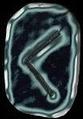
The middle rune represents a deciding element of the present. Ken is the rune of light and knowledge, driving away darkness and ignorance and revealing hidden truth. This rune also brings forth images of friendship and comfort. Ken is the light of inspiration, the light of imagination, and a beacon in the darkest hours.
3.
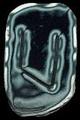
The right rune represents the critical element of the future, at the core of the final outcome. Uruz is the name of the Auroch, an extinct prehistoric ox. This animal was strong and brave, and was the focus of rites of manhood in older days. Reversed, this rune symbolizes either the lack of challenge, or the lack of preparation for a challenge. This rune suggests that you must reach deep within in order to gain the power you will need, whether to get out of your current rut, or to face what appears to be a hopeless situation.
4.

The top rune represents a force that works for you. Perth is the rune of chance and gambling. Throw the dice, read your fate. Gaming is a fine way to pass the night...as long as one is careful. Games of chance have outcomes that are hidden from us, and as such Perth represents secrets unknown. Perth symbolizes enjoyment and wild abandon, but be watchful, for Perth is also the rune of mystery and the outcomes unexpected. You cannot lose if you do not play, but neither can you win...
5.

The bottom Rune represents a force that works against you. Ger is one of the runes that touches on the cycles of the year, in this case the fall harvest. These cycles are eternal, which is represented in the rune by the fact that it is unchanged by reversal. Ger can represent pregnancy or other forms of fruitfulness, and is especially indicative of the cycles of providence and karma - that which has been sown is now being reaped. This rune can also represent the cycles of wealth, for crops were frequently a sign of wealth.
If you are further interested in Rune stones, please check out a script I wrote about three years ago. The story tells of a women's chance encounter with the towns rune reader and physcic. Her reading leads to a terrible discovery about her ex-husband.Click here to read 'Evil Of A Different Kind'
Later,
Kenaz
Hamilton Police Have No Respect For History

The Canadian War Museum is appealing to Hamilton police not to destroy a rare, vintage musket likely used in local battles during the War of 1812. Photos of two guns where then emailed to the Ottawa museum late yesterday afternoon. Thirty seconds later, the museum phoned back.
"You just ruined my day," said special projects director Daniel Glenney. "How do I get that Brown Bess?"
Glenney said the British India Pattern musket was manufactured between 1797 and 1805 and used in Canada by the regular British troops in the War of 1812. It was then used by the Canadian militia in the Upper Canada Rebellion of 1837. Even more interesting is that a soldier's name (WBY Shelburne) is carved into the stock, which should help historians trace the weapon.
Nicknamed Brown Bess for its dark colour, the flintlock was issued to soldiers in Sir Isaac Brock's 49th Regiment of Foot, the King's Regiment and the 41st Regiment of Foot at the turn of the 19th century.
"They would have been carrying those right out of the armouries from England," Glenney said.
The Brown Bess, now locked up with 1,253 other firearms turned in during a month-long police gun amnesty, "could have been used at Queenston Heights, Lundy's Lane and Chippewa," he explained.
"It would have been used by the garrison troops at Burlington Heights all through the war or the Battle of Stoney Creek."
So few remain because the British sold most of the muskets as surplus to the Mexican army, where they were used at the Battle of the Alamo.
Hamilton police have several other weapons that museums would like to have, he said, including a rare Johnson rifle and German MG-34 machine gun from the Second World War, a Remington Rolling Block and a Martini Henry rifle from the 1800s.
And there are suggestions that a weapon owned by a Hamilton man killed with General George Armstrong Custer at the Battle of the Little Big Horn is on the destruction list.
All are due to be melted in a Dofasco blast furnace at the end of April.
"It would be a shame just to melt them down without consideration," Glenney added.
Police subtly softened their stance yesterday, after maintaining all through the amnesty that all weapons would be destroyed regardless of historic value.
The whole point of the gun amnesty is community safety, said Deputy Chief Ken Leendertse. Owners who turned in guns did so knowing they were entering into a contract with police.
"They signed a form that acknowledged they turned it over to the police service for destruction.
"Citizens had an opportunity to turn these weapons over to museums before they turned them over to us."
Nevertheless, police now say they will be flexible if an owner who turned in a gun wants to renegotiate the contract. One owner, who handed over more than 60 firearms, recently asked police to return one with significance to the family.
That will only happen if the owner produces proper papers for it, Leendertse noted. He also left the door open for special entreaties from museums, saying they would be dealt with on a case-by-case basis.
Police have also agreed to check a rumour that a .50- calibre cap-and-ball flintlock belonging to Lieutenant William Winer Cooke was turned in and is slated to be destroyed. If true, the weapon would be of extreme historical importance, given that Cooke, who grew up in Hamilton, died next to Custer in 1876.
He was the author of the famous "last message" to Frederick Benteen that read: "Benteen. Come On. Big village. Be quick. Bring packs. WW Cooke. P.S. Bring Packs."
Police say people must not lose focus on why Hamiltonians want to get rid of guns.
"The people of Hamilton have an intolerance for gun violence," Leendertse said. "If we save one life, that's worth more than any history."
Wouldn't giving the guns to a museum serve both issues of preserving history and getting these guns off the street? Or is the Hamilton Police department hard up for another photo op so they can gloat over doing their jobs.
Later,
Kenaz
"You just ruined my day," said special projects director Daniel Glenney. "How do I get that Brown Bess?"
Glenney said the British India Pattern musket was manufactured between 1797 and 1805 and used in Canada by the regular British troops in the War of 1812. It was then used by the Canadian militia in the Upper Canada Rebellion of 1837. Even more interesting is that a soldier's name (WBY Shelburne) is carved into the stock, which should help historians trace the weapon.
Nicknamed Brown Bess for its dark colour, the flintlock was issued to soldiers in Sir Isaac Brock's 49th Regiment of Foot, the King's Regiment and the 41st Regiment of Foot at the turn of the 19th century.
"They would have been carrying those right out of the armouries from England," Glenney said.
The Brown Bess, now locked up with 1,253 other firearms turned in during a month-long police gun amnesty, "could have been used at Queenston Heights, Lundy's Lane and Chippewa," he explained.
"It would have been used by the garrison troops at Burlington Heights all through the war or the Battle of Stoney Creek."
So few remain because the British sold most of the muskets as surplus to the Mexican army, where they were used at the Battle of the Alamo.
Hamilton police have several other weapons that museums would like to have, he said, including a rare Johnson rifle and German MG-34 machine gun from the Second World War, a Remington Rolling Block and a Martini Henry rifle from the 1800s.
And there are suggestions that a weapon owned by a Hamilton man killed with General George Armstrong Custer at the Battle of the Little Big Horn is on the destruction list.
All are due to be melted in a Dofasco blast furnace at the end of April.
"It would be a shame just to melt them down without consideration," Glenney added.
Police subtly softened their stance yesterday, after maintaining all through the amnesty that all weapons would be destroyed regardless of historic value.
The whole point of the gun amnesty is community safety, said Deputy Chief Ken Leendertse. Owners who turned in guns did so knowing they were entering into a contract with police.
"They signed a form that acknowledged they turned it over to the police service for destruction.
"Citizens had an opportunity to turn these weapons over to museums before they turned them over to us."
Nevertheless, police now say they will be flexible if an owner who turned in a gun wants to renegotiate the contract. One owner, who handed over more than 60 firearms, recently asked police to return one with significance to the family.
That will only happen if the owner produces proper papers for it, Leendertse noted. He also left the door open for special entreaties from museums, saying they would be dealt with on a case-by-case basis.
Police have also agreed to check a rumour that a .50- calibre cap-and-ball flintlock belonging to Lieutenant William Winer Cooke was turned in and is slated to be destroyed. If true, the weapon would be of extreme historical importance, given that Cooke, who grew up in Hamilton, died next to Custer in 1876.
He was the author of the famous "last message" to Frederick Benteen that read: "Benteen. Come On. Big village. Be quick. Bring packs. WW Cooke. P.S. Bring Packs."
Police say people must not lose focus on why Hamiltonians want to get rid of guns.
"The people of Hamilton have an intolerance for gun violence," Leendertse said. "If we save one life, that's worth more than any history."
Wouldn't giving the guns to a museum serve both issues of preserving history and getting these guns off the street? Or is the Hamilton Police department hard up for another photo op so they can gloat over doing their jobs.
Later,
Kenaz
Sunday, April 02, 2006
Tales From The Set::Ultra
It's been a while says I've posted anything about any sets I've been working on, because, honestly, there wasn't much to say. It's same old, same old. Action! Do your cross, mime some fake conversation, cut! Back to one! Repeat a few times.
The exception this week, is the fact that I've worked three days now on the pilot for a new CBS action comedy series entitled "Ultra".
The stunt laden show makes it fun to on set. Personally I find it more fascinating to watch the way a stunt is outlined and set up, than the actual execution. For example, I spent Thursday and Friday night out on University Avenue in Toronto partaking in a scene that initialed a crash involving a semi, four cars and a cab. Then Ultra(Lena Headley) entering and saving the day.
The scene was only 6/8 of a page, but each of the six parts of the scene needed to be shot separately, requiring a wide shot, some coverage and little crowd reaction. Five of the six parts where completed on Thursday night, the most fascinating being a stunt driver, simulating being hit by the truck causing the car to ride up on two wheels and do a controlled flip. Amazing that it only took a couple of dry runs to execute the one shot deal.
That left the fun stuff for Friday night, Ultra pulling a family from a car, seconds before the truck and car go up in flames. This of course being achieved with the use of propane burners and camera trickery. The stuff any pyro would get off on (hmm, fire! Fire!). All I could think of is how nice it would have been if the god awful hot dog substantial had been barbecued for a change.
My contribution had me exiting one of the cars and running away safety positioned to look as if it came to a screeching halt. Unfortunately the camera mans positioning for the first take was over ruled by Barbara Hall and changed. A nice shot that would have caught my face was reduced to my feet. Damn I wouldn't have worn those worn sneakers if I knew that!
any who, it looks like the biz is picking up again in Toronto and especially here in Hamilton, where currently there are three productions in progress with at least four more set to shoot in the next couple of months. I've already worked on a couple of them and looking forward to a great spring.
I've added some new screen caps of some older sets that I've worked on, including The Eleventh Hour and The Man Who Saved Christmas over at kendalloliphant.blogspot.com
Later,
Kenaz
The exception this week, is the fact that I've worked three days now on the pilot for a new CBS action comedy series entitled "Ultra".
The stunt laden show makes it fun to on set. Personally I find it more fascinating to watch the way a stunt is outlined and set up, than the actual execution. For example, I spent Thursday and Friday night out on University Avenue in Toronto partaking in a scene that initialed a crash involving a semi, four cars and a cab. Then Ultra(Lena Headley) entering and saving the day.
The scene was only 6/8 of a page, but each of the six parts of the scene needed to be shot separately, requiring a wide shot, some coverage and little crowd reaction. Five of the six parts where completed on Thursday night, the most fascinating being a stunt driver, simulating being hit by the truck causing the car to ride up on two wheels and do a controlled flip. Amazing that it only took a couple of dry runs to execute the one shot deal.
That left the fun stuff for Friday night, Ultra pulling a family from a car, seconds before the truck and car go up in flames. This of course being achieved with the use of propane burners and camera trickery. The stuff any pyro would get off on (hmm, fire! Fire!). All I could think of is how nice it would have been if the god awful hot dog substantial had been barbecued for a change.
My contribution had me exiting one of the cars and running away safety positioned to look as if it came to a screeching halt. Unfortunately the camera mans positioning for the first take was over ruled by Barbara Hall and changed. A nice shot that would have caught my face was reduced to my feet. Damn I wouldn't have worn those worn sneakers if I knew that!
any who, it looks like the biz is picking up again in Toronto and especially here in Hamilton, where currently there are three productions in progress with at least four more set to shoot in the next couple of months. I've already worked on a couple of them and looking forward to a great spring.
I've added some new screen caps of some older sets that I've worked on, including The Eleventh Hour and The Man Who Saved Christmas over at kendalloliphant.blogspot.com
Later,
Kenaz
Tuesday, March 28, 2006
History of hockey in Hamilton(revised)
 Hamilton Tigers
The return of the Quebec Bulldogs (formerly a Stanley Cup winning NHA team) to the city of Quebec for the 1919-20 season ended in failure. Despite having the league's scoring leader (39 goals) "The Phantom" Joe Malone in the line-up, the Bulldogs only managed a pathetic four wins in 24 games. And so the team was put up for sale.
As it happened, a group from Hamilton, Ontario were interested in bringing a pro team to the city to play in a new artificial-ice arena. They were the owners of the Abso-pure Ice Company, and shortly before the start of the 1920-21 season, they succeeded in making the deal with the Quebec owners, and purchased the franchise for $5,000.
The new professional team was heartily received by hockey fans, who on opening night came to the Barton Street Arena somewhere around 6,500 strong to watch their team (minus Joe Malone) trounce an unconditioned Montreal Canadiens team 5-0.
Although the line-up was bolstered by additions from each of the other three teams, the Tigers quickly began to falter. By the end of the first season, the team managed only six more wins, and finished last place.
The following three seasons saw the Tigers finish dead last each time, although by the 1923-24 season they had worked their way up to nine wins.
The 1924-25 season saw a complete transformation: unlike in other seasons when the team managed a few good early season wins and then fizzled, this year the Tigers could not stop winning and fought their way to the top of the standings. Hamiltonians were ecstatic: after four years of disappointment, suddenly the city had a Stanley Cup contender.
But as the season drew to a close, there was growing discord among the Tigers' players: not at one another, but at management. The players were not being compensated for the extra time they were playing (an earlier training camp, as well as six more games than before, and now at least two play-off games) and they wanted something done about it. Thus they justifiably went on strike, but this quickly failed and led to the team's suspension from post-season play.
Over time, all of the players involved went to the league on their hands and knees begging for forgiveness, and eventually all were re-instated. But none would return to the league as Hamilton Tigers, for in yet another act of injustice the league decided that the city of Hamilton no longer deserved an NHL franchise and the team was sold to some American bootlegger for $75,000.
Renamed the New York Americans, the franchise continued to exist until the 1941-42 season, at the end of which it went defunct leaving the NHL with only six teams.
 Hamilton Red Wings
The Hamilton Tiger Cubs were renamed in 1960 becoming the Hamilton Red Wings, and sponsored by the NHL Detroit Red Wings. The team played for 14 seasons before being renamed the Hamilton Fincups.
The Red Wings of 1962 were coached by Eddie Bush. The team finished second overall in the OHA standings, then lost only 1 game in the post-season run to the Memorial Cup. In the playoffs Hamilton defeated the St. Catharines Teepees, Niagara Falls Flyers, and the Metro Jr. A. champs Toronto St. Michael's Majors 4 games to 1, winning the J. Ross Robertson Cup. The Red Wings then swept the series against the Quebec Citadelles for the Eastern Canadian championship.
The Red Wings would play the Western Canadian champion Edmonton Oil Kings for the Memorial Cup. The first game of the 1962 Memorial Cup was played on home ice at the Barton Street Arena which Hamilton won 5-2. The next three games were played at the Guelph Memorial Gardens. Hamilton won game two 4-2. Edmonton won game three 5-3. Hamilton shutout Edmonton 3-0 in game four. The fifth and deciding game was played in the Kitchener Memorial Auditorium. The Red Wings defeated the Oil Kings 7-4 to win the series and the Memorial Cup, 4 games to 1.
Five years later the Red Wings made it to the OHA finals again in 1967, but were swept 4 games to 0 by the Toronto Marlboros.
The Hamilton Red Wings played home games at the Barton Street Arena, also known as the Hamilton Forum .
 Hamilton Fincups
The Fincups were a short-lived team in the Ontario Hockey Association that was very successful on the ice, but did poorly generating revenue. The club bounced around in three outdated arenas in four years. Unable to turn much of a profit, the Fincups moved out of town, becoming the Brantford Alexanders.
The name "Fincup" is a combination of the team's owners, the Finochio Brothers and Ron Cupido. They renamed the Hamilton Red Wings after the 1974 season, and hired Bert Templeton as the team's new coach. Templeton would was voted winner of the Matt Leyden Trophy as Coach of the Year in his first season. Templeton was let go partway through the Fincups 4th season and replaced by Dave Draper.
In the four short seasons that the Fincups played, the team won the Memorial Cup once, and the J. Ross Robertson Cup once. The Fincups also represented Canada at the World Junior Tournament and came away with a silver medal.
The Fincups won the Emms Division regular season title for two consecutive years in 1975-76 & 1976-77, and the Hamilton Spectator Trophy in 1976-77 as the first overall team in the OHA regular season.
The Fincups made the OHA finals all 3 years they played out of Hamilton, and came within one win of making it four consecutive appearances in the championship series in their only year in St. Catharines.
The Hamilton Fincups played home games at the Barton Street Arena, also known as the Hamilton Forum from 1974-1976. The St. Catharines Fincups played in the Garden City Arena in downtown St. Catharines, Ontario in 1976-1977. After moving back to Hamilton, the Fincups played out of the Mountain Arena from 1977-1978.
Hamilton Steelhawks

The Brantford Alexanders were relocated in 1984 becoming the Hamilton Steelhawks. The franchise which started in Hamilton in 1953, twice left Hamilton for lack of an adequate arena but returned for the opening of Copps Coliseum. However the team was not well-supported, and played for only four seasons in Hamilton before moving to Niagara Falls, Ontario to play as the Thunder.
The Steelhawks name was chosen to reflect the steel industry in Hamilton. The modernized name and logo was designed to catch on with a young fan base as well. The team enjoyed three successful playoff runs, although they never made a trip to the league finals.
Notable alumni are NHL stars Shayne Corson, Keith Primeau and NHL tough guy Bob Probert. Wayne Gretzky's younger brother Keith Gretzky also played for the Steelhawks, and was the co-winner 1986-87 William Hanley Trophy as the OHA's Most Sportsmanlike Player.
The team was owned by Jack Robillard, Bob Willson and Al Martin, who also owned the London Knights.
The Hamilton Steelhawks played home games at Mountain Arena for 1984-85 and then moved to Copps Coliseum from 1985 to 1988. The annual OHL / QMJHL All-Star game was played here in 1988. The Coliseum's upper bowl curtain was closed for home games.
Hamilton Dukes

The Toronto Marlboro were moved to Hamilton, Ontario for the 1989-1990 season becoming the Dukes of Hamilton. The name "Dukes"" orinigated as a nickname for the Toronto team coming from its namesake, the Duke of Marlborough.
The Dukes were chosen to host the Memorial Cup their first season in Hamilton. However when the team finished last over all in the standings, the OHL sent the league champion Oshawa Generals and finalist Kitchener Rangers instead.
The second season for the Dukes was only marginally better even after switching from the Leyden division to the Emms division. The Dukes qualified for the last playoff spot, but lost in four games straight. Following the 1990-1991 season, the team was relocated to Guelph, Ontario where it became the Guelph Storm.
The Dukes played their home games at Copps Coliseum, which hosted the Memorial Cup in 1990.
 Hamilton Bulldogs
When th Edmonton Oilers announced plans to suspend operations of the previous Hamilton Bulldogs franchise, local interests secured ownership of the Quebec Citadelles and relocated them to Hamilton. Fans voted to keep the Bulldogs name which won over the Hamilton Canadiens and Hamilton Habs. The team's primary affiliate has been the Montreal Canadiens, but had a partial agreement with the Edmonton Oilers in 2002-03 and again in 2005-06.
AHL's Hamilton Bulldogs and is also a concert and convention centre.
Dave Andreychuk Arena formerly the Chedoke Twin Pad Arena

Home of the OPJHL Hamilton Red Wings.
Another arena in Hamilton with great history is the Parkdale Arena now called the Pat Quinn Parkdale Arena. The Toronto Maple Leafs coach returned to his hometown last year for a ceremony at the east end hockey rink. Quinn says he began playing the sport as a kid at an outdoor rink where the current arena stands. He credits the city's many hockey volunteers and teammates for helping him achieve his goals.
I played house league hockey in this arena from 1980-1986 and to describe the experience in a soundbite, I would have to say "Old School". 1980 was the first season in the newly renovated arena after playing the 1979 season in any "barn" that the league could rent ice time in.
I recall stories of many who played at that arena in the 50s and 60s before there was a roof over the place. Definition of oldschool...they would have to arrive an hour before game time with shovels to clear the snow.
Fast forward a few decades and little was improved, the wind would wip through the cracks in the corrigated sheet metal that encased the lovable blue barn, mixing with what ever heat the antiquated space heaters that hung over the players benches. The result was a crap shoot of conditions. I can remember playing in a few Parkdale versions of the "Fog Bowl"
Anyway, as you can see Hamilton has had a much storied history of hockey at all levels. The great fans of Hamilton will probably never be treated to having their own NHL franchise, but the Hammer will always be gracious hosts to many NHL, junior, international and alumni tournament tilts. Who can forget the Canada 6-5 win over the Soviet Union at the 1987 Canada Cup Tournament. I was there that September 15 to witness one of the most memorable plays in hockey history. Gretzky, Lemieux and Larry Murphy rush down the ice, with Gretzky skating on left wing, the pass to Lemieux setting up the point blank game-winner in the slot with 1:26 left in the game.
 Lemieux and Gretzky celebrate after Lemieux's game-winner, while Larry Murphy regains his balance. Courtesy of Wikipedia.
Other great source of hockey in Hamilton at all levels is Larry Robertson, a regular contributor of Ontario Hockey Now Magazine
Later,
Kenaz
Subscribe to:
Posts (Atom)