
Hamilton City Hall is backing away from its crackdown on homemade cookies, squares and other goodies at local events after clarifying the rules with the province. All bake sales by churches, service clubs and fraternal organizations will now be exempt from food safety regulations no matter the location.
Good news for Mary Whitwell, who will be able to continue her nearly 60- year tradition of baking for the Binbrook Fair. The 82-year-old was left shaking her head when the city's public health inspectors objected to her church's table at last year's fair.
Local officials had interpreted provincial regulations to mean that bake sales were only exempt from the rules if held on-site at a church, service club or fraternal organization. Once they moved to an off-site location, like a community fair or mall sale, the food would have to be made in an inspected kitchen. That raised the ire of more than one grandmother who'd been baking in her own kitchen for decades.
The city has since contacted the province for clarification and found the most recent interpretation is to exempt both on- and off-site bake sales. This left many city councilors with milk stashes on their face as they quickly saw the merritt in the new ruling.
That brings a close to this case. Hamiltonians can once again enjoy their favourite sweets at the many area fairs and bake sales without the stress and worry that they could be partaking in a crime! The city needs to worry about the 'junk' on the street and leave our 'junk food' alone.
my original post on this story
Later,
Kenaz
Tuesday, March 21, 2006


Monday, March 20, 2006
Hamilton ring saga comes full circle
The story of Der Ring, and its connection to Westdale Secondary School in Hamilton, reads like a fairy tale. Today civic officials in this Schwaben community will host a ceremony for a delegation from Hamilton that will mark the final chapter of an incredible series of events that began 62 years ago when an RCAF Lancaster bomber crashed while returning from a mission over nearby Augsburg.
In a crowded community centre, the mayor of Bad Urach, a town of 12,000, the local burgermeister, who oversees the village of Seeburg, and other dignitaries will recall the sad loss of six Canadian airmen.
But the focus of attention will also be on the ring engraved with the name Westdale. And everyone will see the irony that two communities that fought each other so bitterly in war could now be brought together in peace and hope by a tiny band of silver found on the ground.
The world has come full circle and so will the ring when it is handed back to the Ridgers family that lost a loved one and a symbol of high school achievement so long ago.
Cyril (Cy) Ridgers, then 27, of Hamilton, was the navigator on board the Lancaster that was brought down on Feb. 26, 1944.
Elders in the Bad Urach area still remember the 1 a.m. skies lighting up with gunfire from German night fighters chasing the Canadian bombers.
Fritz Gross was 11 years old at the time and says he got dressed quickly in his coat and boots that were still wet from playing in the snow the day before. He rushed outside to find the fiery Lancaster screaming like a siren as it plunged from the sky. He didn't see the impact on the ground, but the explosion rocked the town and a mushroom cloud of smoke arose over the hillside.
Later he learned there was one survivor. Doug Mullock was captured and spent the rest of the war as a PoW. The bodies of his six crewmates were buried by German soldiers. Mullock died in 1981, ironically in the crash of his own single-engined plane.
In 1958, Gross was working with a construction team doing some excavation work at a Uhenfels castle near the crash site. By then the area had been thoroughly cleaned of debris, the metal from plane wrecks being a valued commodity at the time. But he noticed something flickering in the sunlight. It was a crumpled ring with the words Westdale and Alius Alia Via Ad Astra Ascendit engraved on it.
Gross figured the ring was from the crash, or a crash. But who was the owner? And what did "Westdale" mean?
He went to the Red Cross to see if there might be a way to return the ring to the family. But no one knew where to start.
So he banged it back into shape in his shop, shined it up as best he could and kept the keepsake in the drawer of a bedside table. Occasionally he would show it to friends, but years would sometimes go by without anyone looking at it.
Then one day last August, retired teacher Otmar Gotterbarm, 64, learned about the ring and decided to look into the story behind it. Gotterbarm is the author of a book about three American bombers who also crashed in his community during the war. He is an authority on allied bombing missions that relentlessly bombed Germany through the latter years of the war.
He feels that the history of those raids has not been adequately researched. He wants to better understand the circumstances around various bombers that crashed in his community.
It's part of a more general awakening of interest in wartime history in a country that is still coming to terms with the Nazi years.
But while there is a greater willingness to discuss the past, there are a dwindling numbers of witnesses and participants to interview. The Second World War from 1939 to 1945 is fading from living memory.
More recently Gotterbarm has been studying a series of RCAF crashes for a future project. It was out of that effort that he asked his son Mario to try to track down what "Westdale" meant on the Internet.
A half-hour later he came and said, "I found it." It turned out Westdale was a high school, the Latin was the school's motto -- Everyone Finds Their Own Way To The Stars -- and the coat of arms on the ring was identical to the one on the website.
So Otmar Gotterbarm e-mailed the school and eventually the message ended up with principal Stella Gibson.
Gotterbarm included a list of nearly 30 names from four RCAF bomber crashes in the area. He collected the information from RAF records and asked if there was some way to find out if any of the airmen had attended Westdale.
There was only one person on both lists -- Cyril Ridgers.
So she sent back an e-mail to Gotterbarm and he followed up by asking if Gibson could contact any family members.
There were no Ridgers in the Hamilton phone book, but there were three in Stoney Creek. She called the first one. "Yes, I do indeed know who Cy Ridgers is," Craig Ridgers replied. "He was my father's brother."
Gibson told Ridgers about the ring. It was all very emotional for him. He had just attended his father's funeral a few days before.
He had never met his uncle, but he was well acquainted with stories about his accomplishments during the war, which included winning the Distinguished Flying Cross.
Later Ridgers managed to find a picture of his Uncle Cy apparently wearing the Westdale ring on his baby finger.
Word spread through school about the e-mail from Germany. Then someone realized that a group of 22 Westdale students and a couple of teachers were going to be in Munich in March as part of a school-organized European trip.
Why not divert the group of students to the community for a ceremony? And better still, why not have Craig Ridgers and his wife, Janice, also attend to receive the ring back?
Ridgers arrived in Bad Urach yesterday. And a bus carrying Westdale students and teachers is scheduled to pull into town by 11:30 a.m. today, local time.
Gibson says she finds it amazing that such a turn of events has happened this year as Westdale celebrates its 75th anniversary. Cy Ridgers is believed to have been a Grade 9 student in that very first year, 1931. And now his graduation ring will be coming home.
Later,
Kenaz
In a crowded community centre, the mayor of Bad Urach, a town of 12,000, the local burgermeister, who oversees the village of Seeburg, and other dignitaries will recall the sad loss of six Canadian airmen.
But the focus of attention will also be on the ring engraved with the name Westdale. And everyone will see the irony that two communities that fought each other so bitterly in war could now be brought together in peace and hope by a tiny band of silver found on the ground.
The world has come full circle and so will the ring when it is handed back to the Ridgers family that lost a loved one and a symbol of high school achievement so long ago.
Cyril (Cy) Ridgers, then 27, of Hamilton, was the navigator on board the Lancaster that was brought down on Feb. 26, 1944.
Elders in the Bad Urach area still remember the 1 a.m. skies lighting up with gunfire from German night fighters chasing the Canadian bombers.
Fritz Gross was 11 years old at the time and says he got dressed quickly in his coat and boots that were still wet from playing in the snow the day before. He rushed outside to find the fiery Lancaster screaming like a siren as it plunged from the sky. He didn't see the impact on the ground, but the explosion rocked the town and a mushroom cloud of smoke arose over the hillside.
Later he learned there was one survivor. Doug Mullock was captured and spent the rest of the war as a PoW. The bodies of his six crewmates were buried by German soldiers. Mullock died in 1981, ironically in the crash of his own single-engined plane.
In 1958, Gross was working with a construction team doing some excavation work at a Uhenfels castle near the crash site. By then the area had been thoroughly cleaned of debris, the metal from plane wrecks being a valued commodity at the time. But he noticed something flickering in the sunlight. It was a crumpled ring with the words Westdale and Alius Alia Via Ad Astra Ascendit engraved on it.
Gross figured the ring was from the crash, or a crash. But who was the owner? And what did "Westdale" mean?
He went to the Red Cross to see if there might be a way to return the ring to the family. But no one knew where to start.
So he banged it back into shape in his shop, shined it up as best he could and kept the keepsake in the drawer of a bedside table. Occasionally he would show it to friends, but years would sometimes go by without anyone looking at it.
Then one day last August, retired teacher Otmar Gotterbarm, 64, learned about the ring and decided to look into the story behind it. Gotterbarm is the author of a book about three American bombers who also crashed in his community during the war. He is an authority on allied bombing missions that relentlessly bombed Germany through the latter years of the war.
He feels that the history of those raids has not been adequately researched. He wants to better understand the circumstances around various bombers that crashed in his community.
It's part of a more general awakening of interest in wartime history in a country that is still coming to terms with the Nazi years.
But while there is a greater willingness to discuss the past, there are a dwindling numbers of witnesses and participants to interview. The Second World War from 1939 to 1945 is fading from living memory.
More recently Gotterbarm has been studying a series of RCAF crashes for a future project. It was out of that effort that he asked his son Mario to try to track down what "Westdale" meant on the Internet.
A half-hour later he came and said, "I found it." It turned out Westdale was a high school, the Latin was the school's motto -- Everyone Finds Their Own Way To The Stars -- and the coat of arms on the ring was identical to the one on the website.
So Otmar Gotterbarm e-mailed the school and eventually the message ended up with principal Stella Gibson.
Gotterbarm included a list of nearly 30 names from four RCAF bomber crashes in the area. He collected the information from RAF records and asked if there was some way to find out if any of the airmen had attended Westdale.
There was only one person on both lists -- Cyril Ridgers.
So she sent back an e-mail to Gotterbarm and he followed up by asking if Gibson could contact any family members.
There were no Ridgers in the Hamilton phone book, but there were three in Stoney Creek. She called the first one. "Yes, I do indeed know who Cy Ridgers is," Craig Ridgers replied. "He was my father's brother."
Gibson told Ridgers about the ring. It was all very emotional for him. He had just attended his father's funeral a few days before.
He had never met his uncle, but he was well acquainted with stories about his accomplishments during the war, which included winning the Distinguished Flying Cross.
Later Ridgers managed to find a picture of his Uncle Cy apparently wearing the Westdale ring on his baby finger.
Word spread through school about the e-mail from Germany. Then someone realized that a group of 22 Westdale students and a couple of teachers were going to be in Munich in March as part of a school-organized European trip.
Why not divert the group of students to the community for a ceremony? And better still, why not have Craig Ridgers and his wife, Janice, also attend to receive the ring back?
Ridgers arrived in Bad Urach yesterday. And a bus carrying Westdale students and teachers is scheduled to pull into town by 11:30 a.m. today, local time.
Gibson says she finds it amazing that such a turn of events has happened this year as Westdale celebrates its 75th anniversary. Cy Ridgers is believed to have been a Grade 9 student in that very first year, 1931. And now his graduation ring will be coming home.
Later,
Kenaz
Saturday, March 18, 2006
Canadian troops should leave Afghanistan until the peace can be kept
Expect it to take at least "four to five years" before Canadians can realistically consider whether and how to pull our 2,300 peacekeeping troops out of Afghanistan, the Afghan ambassador to Canada said yesterday.
Canadian and other international troops might have to extend their Afghan mission as much as another 10 years, Omar Samad said in a speech at the McGill University Faculty Club.
About 35,000 U.S., British, Canadian and other peacekeeping troops from a total of 35 nations are stationed in Afghanistan. These forces should leave, until the U.S can ensure the soldiers; who are being used in roles that are above their nations set mandates. A peace keeper by definition is someone who enters a hostile territory after it is deemed under control by a stable entity, with the mission to rebuild.
Until the Americans can ensure Canada that their mission to eradicate Afghanistan's international status as a breeding ground and base of operations for "radical, extremist Islamists" including Osama bin Laden, is complete; we should not be used as the international branch of the U.S Army. We are a sovereign nation with an independent army.
American President Bush started his crusade against this perceived common evil as soon as he took office. Just because he believes in his delusions that the worlds threats all come from one source, which he dubbed 'Al Qaeda' is completely wrong. There are terrorists cells in some fifty countries and most of them have had nothing to do with Osama bin Laden, including Iraq.
Bush has decided on his own that any nation that has anti-American ideology is somehow connected to this organization. He has taken the term 'Al Qaeda' and applied it as a synonym to mean 'terrorist'. This only trivialize's the real threat, and the real needs of the people that this one particular terrorist group has caused.
To get back to the issue, that is Afghanistan. Samad believes that his nation is "at the crossroads" in its development toward becoming a stable nation, this is true, but it will take decades longer to rebuild a country that has been ravaged back to the stone age, than he or the U.S believe.
Years of Soviet occupation eroded the countries beliefs and infrastructure allowing Islamic extremism to flourish. Afghanistan cannot be developed and its economy cannot be rebuilt without an active international peacekeeping force on hand. I agree, but at what cost and by whom. Samad and Bush feel that it will take at least four or five years to rebuild their security institutions. He added that the job is halfway done, having begun in 2001. In that time period they have only managed to secure a few military bases, their is no effective Afghan army ready to take over control of the country, nor will their be even in ten years.
Only then can their be discussions about the presence of foreign peace keepers to help a stable Afghan security force, until then Samad and Bush need to work on a realistic timeline. Until that time comes Canada needs to pull back from the front lines and concentrate on what we do best. Rebuild lives, not go on witch hunts with misguided voodoo doctors(Bush).
On Monday, Canada headed in the right direction when, during his first foreign visit as head of government, Prime Minister Stephen Harper pledged to Canadian troops that Canada would not "cut and run" from the peacekeeping mission, whose current mandate expires in February.
But the next day, Harper told Afghan President Hamid Karzai his minority government's desire to keep our troops in Afghanistan can't be guaranteed if opposition parties in Parliament resist.
So what are the prospects for a more rapid withdrawal of Canada troops? My personal opinion is one of guarded optimism, hopefully Harper will not prove his critics right by becoming another Bush patsy.
In a related story, anti-war protesters took to the streets of downtown Toronto, Ottawa and Montreal on Saturday, joining worldwide demonstrations marking the third anniversary of the U.S.-led invasion of Iraq. The Toronto protest was organized by the Coalition to Stop the War, which is campaigning against the Iraq invasion and ongoing occupation of the country.
Protesters waved placards and chanted as they marched from the U.S. consulate to the downtown core. The also waved signs protesting Canada's 2,200-strong presence in Afghanistan and speakers called on the Canadian government to focus on issues closer to home, such as poverty and homelessness.
According to one group of Canadian anti-war protesters, Canada's involvement in Afghanistan is our equivalent to the American invasion of Iraq. Group spokesman Jo Wood says that Canadian troops stationed in Kandahar are not there as part of a peacekeeping mission, but instead represent a contribution to George W. Bush's 'endless' war against terrorism.
I disagree on one point of this group, they request that Ottawa grant asylum to American army deserters. No, unlike Vietnam, the American soldiers stationed around the world are there because they chose to. They knew of the dangers of war and just because they have second thoughts, Canada should not be a safe haven for deserters. The old adage applies "do the crime, do the time".
This issue will remain a hot topic for a long time, according to a recent poll conducted by Strategic Counsel, 55 percent of Canadians approve of the Afghanistan mission, while 41 percent are opposed.
To all our brave men and women in Afghanistan I say onto you kudos for your devotion. It's time to put on a pot of 'Hortons brew and put out a box of Tim Bits and bring our beacons of Canadiana home safe and sound.
Later,
Kenaz
Canadian and other international troops might have to extend their Afghan mission as much as another 10 years, Omar Samad said in a speech at the McGill University Faculty Club.
About 35,000 U.S., British, Canadian and other peacekeeping troops from a total of 35 nations are stationed in Afghanistan. These forces should leave, until the U.S can ensure the soldiers; who are being used in roles that are above their nations set mandates. A peace keeper by definition is someone who enters a hostile territory after it is deemed under control by a stable entity, with the mission to rebuild.
Until the Americans can ensure Canada that their mission to eradicate Afghanistan's international status as a breeding ground and base of operations for "radical, extremist Islamists" including Osama bin Laden, is complete; we should not be used as the international branch of the U.S Army. We are a sovereign nation with an independent army.
American President Bush started his crusade against this perceived common evil as soon as he took office. Just because he believes in his delusions that the worlds threats all come from one source, which he dubbed 'Al Qaeda' is completely wrong. There are terrorists cells in some fifty countries and most of them have had nothing to do with Osama bin Laden, including Iraq.
Bush has decided on his own that any nation that has anti-American ideology is somehow connected to this organization. He has taken the term 'Al Qaeda' and applied it as a synonym to mean 'terrorist'. This only trivialize's the real threat, and the real needs of the people that this one particular terrorist group has caused.
To get back to the issue, that is Afghanistan. Samad believes that his nation is "at the crossroads" in its development toward becoming a stable nation, this is true, but it will take decades longer to rebuild a country that has been ravaged back to the stone age, than he or the U.S believe.
Years of Soviet occupation eroded the countries beliefs and infrastructure allowing Islamic extremism to flourish. Afghanistan cannot be developed and its economy cannot be rebuilt without an active international peacekeeping force on hand. I agree, but at what cost and by whom. Samad and Bush feel that it will take at least four or five years to rebuild their security institutions. He added that the job is halfway done, having begun in 2001. In that time period they have only managed to secure a few military bases, their is no effective Afghan army ready to take over control of the country, nor will their be even in ten years.
Only then can their be discussions about the presence of foreign peace keepers to help a stable Afghan security force, until then Samad and Bush need to work on a realistic timeline. Until that time comes Canada needs to pull back from the front lines and concentrate on what we do best. Rebuild lives, not go on witch hunts with misguided voodoo doctors(Bush).
On Monday, Canada headed in the right direction when, during his first foreign visit as head of government, Prime Minister Stephen Harper pledged to Canadian troops that Canada would not "cut and run" from the peacekeeping mission, whose current mandate expires in February.
But the next day, Harper told Afghan President Hamid Karzai his minority government's desire to keep our troops in Afghanistan can't be guaranteed if opposition parties in Parliament resist.
So what are the prospects for a more rapid withdrawal of Canada troops? My personal opinion is one of guarded optimism, hopefully Harper will not prove his critics right by becoming another Bush patsy.
In a related story, anti-war protesters took to the streets of downtown Toronto, Ottawa and Montreal on Saturday, joining worldwide demonstrations marking the third anniversary of the U.S.-led invasion of Iraq. The Toronto protest was organized by the Coalition to Stop the War, which is campaigning against the Iraq invasion and ongoing occupation of the country.
Protesters waved placards and chanted as they marched from the U.S. consulate to the downtown core. The also waved signs protesting Canada's 2,200-strong presence in Afghanistan and speakers called on the Canadian government to focus on issues closer to home, such as poverty and homelessness.
According to one group of Canadian anti-war protesters, Canada's involvement in Afghanistan is our equivalent to the American invasion of Iraq. Group spokesman Jo Wood says that Canadian troops stationed in Kandahar are not there as part of a peacekeeping mission, but instead represent a contribution to George W. Bush's 'endless' war against terrorism.
I disagree on one point of this group, they request that Ottawa grant asylum to American army deserters. No, unlike Vietnam, the American soldiers stationed around the world are there because they chose to. They knew of the dangers of war and just because they have second thoughts, Canada should not be a safe haven for deserters. The old adage applies "do the crime, do the time".
This issue will remain a hot topic for a long time, according to a recent poll conducted by Strategic Counsel, 55 percent of Canadians approve of the Afghanistan mission, while 41 percent are opposed.
To all our brave men and women in Afghanistan I say onto you kudos for your devotion. It's time to put on a pot of 'Hortons brew and put out a box of Tim Bits and bring our beacons of Canadiana home safe and sound.
Later,
Kenaz
Friday, March 17, 2006
Saying 'goodbye' to the 'Butcher of Belgrade"
Toxicologists who examined Slobodan Milosevic's blood tests say the former Yugoslav president was not poisoned, says the head of the United Nations war crimes tribunal.
Tribunal president Judge Fausto Pocar also said Friday that the preliminary tests showed no sign that Milosevic had received "toxic concentrations" of any medication with the power to kill him. Preliminary results from a Dutch autopsy had earlier suggested Milosevic died of a heart attack in his cell last weekend.
This lays to rest the accusations from Milosevic's family and supporters who have been accusing UN authorities of killing the 64-year-old former Serb leader by administering poison. They also say he failed to receive proper medical care for his heart condition and high blood pressure while in custody. Shortly after the former Serb leader's death, a toxicologist who had examined earlier blood test results said they showed the presence of an antibiotic drug called rifampicin, which could have diminished the effectiveness of Milosevic's heart medications.
I remember the shock I felt when the first pictures of the effect of Milosevic's war of genocide had on this jewl of the Balkins. I remember the stories of his army using the ski jump platform that was home to many great triumps from the Olympic games a few short years earlier, as a cowards roost. A place to terrorize the citizens of Sarajevo with sniper fire. No, I can not fathom the horror these innocent people trying to go about their daly lives, in the midst of choas. But what I can understand is the real need for the worlds 'Democratic' societies to band together and head off these madmen before we descend any further into the depths of hell.
A group of Milosevic's opponents published what they called a "memorial" in the daily newspaper Politika, placed next to several traditional death notices lauding the former Socialist Party leader.
"Thank you for the deceit and theft, for every drop of blood shed by thousands, for the fear and uncertainty, for the failed lives and generations, the unfulfilled dreams, for the horrors and wars you waged in our name, without asking us, for all the burdens you've placed on our shoulders," the anti-Milosevic notice said.
"We remember tanks on Belgrade streets and blood on the pavements. We remember Vukovar. We remember Dubrovnik. We remember Knin and Krajina. We remember Sarajevo. We remember Srebrenica. We remember the air strikes. We remember Kosovo.
"We'll be remembering that one for a while. And dreaming of it."
To the people scared by this man, I applaud you. You have shown the world how to wade into the darkness and grasp for the beakon of light that evil so shuns. Rise high your head and set forth your arm and allow your torches to set ablaze the evil that plagues us. In time we can clean the world of its evil in a wave of democracy. Here, I offer my drop to get the tide flowing.
Later,
Kenaz
Tribunal president Judge Fausto Pocar also said Friday that the preliminary tests showed no sign that Milosevic had received "toxic concentrations" of any medication with the power to kill him. Preliminary results from a Dutch autopsy had earlier suggested Milosevic died of a heart attack in his cell last weekend.
This lays to rest the accusations from Milosevic's family and supporters who have been accusing UN authorities of killing the 64-year-old former Serb leader by administering poison. They also say he failed to receive proper medical care for his heart condition and high blood pressure while in custody. Shortly after the former Serb leader's death, a toxicologist who had examined earlier blood test results said they showed the presence of an antibiotic drug called rifampicin, which could have diminished the effectiveness of Milosevic's heart medications.
I remember the shock I felt when the first pictures of the effect of Milosevic's war of genocide had on this jewl of the Balkins. I remember the stories of his army using the ski jump platform that was home to many great triumps from the Olympic games a few short years earlier, as a cowards roost. A place to terrorize the citizens of Sarajevo with sniper fire. No, I can not fathom the horror these innocent people trying to go about their daly lives, in the midst of choas. But what I can understand is the real need for the worlds 'Democratic' societies to band together and head off these madmen before we descend any further into the depths of hell.
A group of Milosevic's opponents published what they called a "memorial" in the daily newspaper Politika, placed next to several traditional death notices lauding the former Socialist Party leader.
"Thank you for the deceit and theft, for every drop of blood shed by thousands, for the fear and uncertainty, for the failed lives and generations, the unfulfilled dreams, for the horrors and wars you waged in our name, without asking us, for all the burdens you've placed on our shoulders," the anti-Milosevic notice said.
"We remember tanks on Belgrade streets and blood on the pavements. We remember Vukovar. We remember Dubrovnik. We remember Knin and Krajina. We remember Sarajevo. We remember Srebrenica. We remember the air strikes. We remember Kosovo.
"We'll be remembering that one for a while. And dreaming of it."
To the people scared by this man, I applaud you. You have shown the world how to wade into the darkness and grasp for the beakon of light that evil so shuns. Rise high your head and set forth your arm and allow your torches to set ablaze the evil that plagues us. In time we can clean the world of its evil in a wave of democracy. Here, I offer my drop to get the tide flowing.
Later,
Kenaz
Rune Reading For The Period Of March 17-March 26, 2006
Introduction to Rune Readings
Rune readings are arrangements of the 24 runes (letters) of the old Futhark alphabet. The layout of the runes is known as a spread, and determines what each rune refers to. For example, in the Three Norns spread, the first rune represents the past, the second the present, and the third the future.
Sets: In addition to each rune having a meaning, the material in which the runes are carved can color the reading. Most people consistently use runes made of ceramic, stone, or wood. In order to broaden your experience, we offer readings with Gold Runes (for questions about business, career, and property), Jade Runes (for questions about love, friendship, and relationships), Ice Runes (for questions about struggle, conflict, and achievement), Spirit Runes (for questions about mysticism, spirituality, and religion), and Stone Runes (for questions about the natural world and things beyond human control).
The question will remain the same: "Will this week be a successful one?"
Rune Alphabet

Spread:Cross(in order of reading)
The Cross spread is used to plot the arc of your life and the forces acting on it. It is the most popular spread, giving a very complete view of the situation. Ice Runes are most commonly used for questions about struggle, conflict, and achievement.

Here is the Reading Using the Ice Set.
1.

The left rune represents an important element of the past. Eoh refers to the Yew tree. The Yew does not go dormant and therefore represents endurance. Even the wood of the tree is strong, resilient, and pliable - the Yew bends, but does not break. The evergreen nature of the Yew is present even in the rune itself, as it cannot be changed even by reversal. This rune is historically symbolic of death, but, as in the Tarot and as suggested by the nature of the Yew tree itself, death is seen only as a transmutation of something eternal and unchanging - the spirit.
2.

The middle rune represents a deciding element of the present. Laguz is the most strongly feminine of runes, representing water. Deep sexuality is suggested by this rune. Through Laguz, water is seen as the ocean - vast, uncontrollable, ever-changing, and vital. When interpreted as the returning tide, Laguz can also predict the inevitable return from a long journey.
3.

The right rune represents the critical element of the future, at the core of the final outcome. Tyr was the Norse god of war. It was through his sacrifice that the great force of chaos, the wolf Fenrir was bound. Here however, you have drawn the rune reversed. This could mean that a sacrifice made will not lead to the desired result. It could also mean a loss, or a victory overturned. This rune warns against entering into conflicts or negotiations, especially ones requiring that an offering or concession be made - the wolf might take your hand and yet remain unbound. Note also that Tyr was the god of law, so there is a suggestion of a wrongdoer who will avoid justice.
4.

The top rune represents a force that works for you. Raido means to ride. In this rune, the image is not so much the riding of a horse as in riding in a cart or as cargo. As such Raido may suggest a journey, but is much more indicative of communication. Alternate interpretations based on the use of Raido as a cognate in other words give it the meaning of council, judgment, and moral correctness. Therefore, this rune is the rune of wise advice and good leadership.
5.

The bottom Rune represents a force that works against you. Ger is one of the runes that touches on the cycles of the year, in this case the fall harvest. These cycles are eternal, which is represented in the rune by the fact that it is unchanged by reversal. Ger can represent pregnancy or other forms of fruitfulness, and is especially indicative of the cycles of providence and karma - that which has been sown is now being reaped. This rune can also represent the cycles of wealth, for crops were frequently a sign of wealth.
If you are further interested in Rune stones, please check out a script I wrote about three years ago. The story tells of a women's chance encounter with the towns rune reader and physcic. Her reading leads to a terrible discovery about her ex-husband.Click here to read 'Evil Of A Different Kind'
Later,
Kenaz
Rune readings are arrangements of the 24 runes (letters) of the old Futhark alphabet. The layout of the runes is known as a spread, and determines what each rune refers to. For example, in the Three Norns spread, the first rune represents the past, the second the present, and the third the future.
Sets: In addition to each rune having a meaning, the material in which the runes are carved can color the reading. Most people consistently use runes made of ceramic, stone, or wood. In order to broaden your experience, we offer readings with Gold Runes (for questions about business, career, and property), Jade Runes (for questions about love, friendship, and relationships), Ice Runes (for questions about struggle, conflict, and achievement), Spirit Runes (for questions about mysticism, spirituality, and religion), and Stone Runes (for questions about the natural world and things beyond human control).
The question will remain the same: "Will this week be a successful one?"
Rune Alphabet

Spread:Cross(in order of reading)
The Cross spread is used to plot the arc of your life and the forces acting on it. It is the most popular spread, giving a very complete view of the situation. Ice Runes are most commonly used for questions about struggle, conflict, and achievement.

Here is the Reading Using the Ice Set.
1.
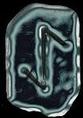
The left rune represents an important element of the past. Eoh refers to the Yew tree. The Yew does not go dormant and therefore represents endurance. Even the wood of the tree is strong, resilient, and pliable - the Yew bends, but does not break. The evergreen nature of the Yew is present even in the rune itself, as it cannot be changed even by reversal. This rune is historically symbolic of death, but, as in the Tarot and as suggested by the nature of the Yew tree itself, death is seen only as a transmutation of something eternal and unchanging - the spirit.
2.
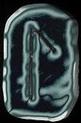
The middle rune represents a deciding element of the present. Laguz is the most strongly feminine of runes, representing water. Deep sexuality is suggested by this rune. Through Laguz, water is seen as the ocean - vast, uncontrollable, ever-changing, and vital. When interpreted as the returning tide, Laguz can also predict the inevitable return from a long journey.
3.

The right rune represents the critical element of the future, at the core of the final outcome. Tyr was the Norse god of war. It was through his sacrifice that the great force of chaos, the wolf Fenrir was bound. Here however, you have drawn the rune reversed. This could mean that a sacrifice made will not lead to the desired result. It could also mean a loss, or a victory overturned. This rune warns against entering into conflicts or negotiations, especially ones requiring that an offering or concession be made - the wolf might take your hand and yet remain unbound. Note also that Tyr was the god of law, so there is a suggestion of a wrongdoer who will avoid justice.
4.
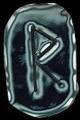
The top rune represents a force that works for you. Raido means to ride. In this rune, the image is not so much the riding of a horse as in riding in a cart or as cargo. As such Raido may suggest a journey, but is much more indicative of communication. Alternate interpretations based on the use of Raido as a cognate in other words give it the meaning of council, judgment, and moral correctness. Therefore, this rune is the rune of wise advice and good leadership.
5.

The bottom Rune represents a force that works against you. Ger is one of the runes that touches on the cycles of the year, in this case the fall harvest. These cycles are eternal, which is represented in the rune by the fact that it is unchanged by reversal. Ger can represent pregnancy or other forms of fruitfulness, and is especially indicative of the cycles of providence and karma - that which has been sown is now being reaped. This rune can also represent the cycles of wealth, for crops were frequently a sign of wealth.
If you are further interested in Rune stones, please check out a script I wrote about three years ago. The story tells of a women's chance encounter with the towns rune reader and physcic. Her reading leads to a terrible discovery about her ex-husband.Click here to read 'Evil Of A Different Kind'
Later,
Kenaz
Thursday, March 16, 2006
Red Storey dies at age 88
Red Storey, a classic larger-than-life character who won two Grey Cups as an athlete and entered the Hockey Hall of Fame in 1967 for his refereeing, died yesterday at age 88.
Born Roy Alvin Storey in Barrie, Ont., pretty much everyone called him Red. As a young man, he played hockey, lacrosse, baseball and football; however, football was his first love. He turned pro with the Toronto Argonauts at the age of 18. Legend has it he used to hitchhike between Barrie and Toronto when he played for the Argos.
Storey made football history in 1938 when he scored three touchdowns coming off the bench in the fourth quarter for the Argos against the Winnipeg Blue Bombers, powering his team to a Grey Cup win -- a record that stands today. Storey won two Grey Cups with the Argos, but a knee injury in 1941 ended his football career.
By 1950, Storey had entered the NHL as a referee. Beliveau described him as fair, frank and a lot of fun. The league trusted Storey to referee in every Stanley Cup final between 1952 and 1958.
In 1955, Storey faced his biggest refereeing challenge: He dropped the puck at the Montreal Forum on the night of the Maurice "Rocket" Richard riot. NHL Commissioner Clarence Campbell had suspended the Canadiens start for the rest of the season and all of the playoffs. He then showed up at the Forum four days later to take in the St. Patrick's Day game against the Detroit Red Wings.
"It was very scary," Storey recalled years later. "I thought if someone lit a match, the whole place might explode."
As it was, the game ended in the first period when someone threw a tear gas bomb on the ice, and people started pelting Campbell with food, then physically assaulting him. People evacuated the forum and then the melee started working its way down Montreal's St. Catharine's Street. More than 60 people were arrested.
"There wouldn't have been any problem if that numbnuts had stayed home," Storey said, adding, "you know who I'm talking about."
Storey had a reason to call Campbell "numbnuts." In 1959, Campbell publicly said Storey had choked while refereeing a game at Chicago Stadium. Storey quit in a huff and never worked for the NHL again.
However, he stayed in hockey, doing broadcast commentary and participating in old-timers' games across North America. This is the era that I remember Red from. He was the equivalent of basketballs "Meadow Lark" Lemon. Complete with gimmicky wigs and bucket of confetti.
The Canadian Sports Hall of Fame inducted him as a member in 1986. In 1991, he was made a member of the Order of Canada. Storey did more than sports. He raised millions over his half-century of charity work -- money aimed at helping kids who were growing up as poor as he did.
"There are thousands of kids in Montreal who have milk every day because of Red Storey's milk fund. This man was absolutely larger than life," Burns said.
Tomorrow is St.Patrick's day and I'm sure more than a few pints will be hoisted in memory of Red and Boom Boom, who died Saturday.
Later,
Kenaz
Born Roy Alvin Storey in Barrie, Ont., pretty much everyone called him Red. As a young man, he played hockey, lacrosse, baseball and football; however, football was his first love. He turned pro with the Toronto Argonauts at the age of 18. Legend has it he used to hitchhike between Barrie and Toronto when he played for the Argos.
Storey made football history in 1938 when he scored three touchdowns coming off the bench in the fourth quarter for the Argos against the Winnipeg Blue Bombers, powering his team to a Grey Cup win -- a record that stands today. Storey won two Grey Cups with the Argos, but a knee injury in 1941 ended his football career.
By 1950, Storey had entered the NHL as a referee. Beliveau described him as fair, frank and a lot of fun. The league trusted Storey to referee in every Stanley Cup final between 1952 and 1958.
In 1955, Storey faced his biggest refereeing challenge: He dropped the puck at the Montreal Forum on the night of the Maurice "Rocket" Richard riot. NHL Commissioner Clarence Campbell had suspended the Canadiens start for the rest of the season and all of the playoffs. He then showed up at the Forum four days later to take in the St. Patrick's Day game against the Detroit Red Wings.
"It was very scary," Storey recalled years later. "I thought if someone lit a match, the whole place might explode."
As it was, the game ended in the first period when someone threw a tear gas bomb on the ice, and people started pelting Campbell with food, then physically assaulting him. People evacuated the forum and then the melee started working its way down Montreal's St. Catharine's Street. More than 60 people were arrested.
"There wouldn't have been any problem if that numbnuts had stayed home," Storey said, adding, "you know who I'm talking about."
Storey had a reason to call Campbell "numbnuts." In 1959, Campbell publicly said Storey had choked while refereeing a game at Chicago Stadium. Storey quit in a huff and never worked for the NHL again.
However, he stayed in hockey, doing broadcast commentary and participating in old-timers' games across North America. This is the era that I remember Red from. He was the equivalent of basketballs "Meadow Lark" Lemon. Complete with gimmicky wigs and bucket of confetti.
The Canadian Sports Hall of Fame inducted him as a member in 1986. In 1991, he was made a member of the Order of Canada. Storey did more than sports. He raised millions over his half-century of charity work -- money aimed at helping kids who were growing up as poor as he did.
"There are thousands of kids in Montreal who have milk every day because of Red Storey's milk fund. This man was absolutely larger than life," Burns said.
Tomorrow is St.Patrick's day and I'm sure more than a few pints will be hoisted in memory of Red and Boom Boom, who died Saturday.
Later,
Kenaz
Unexpected Twist For Kennedy's Assassin
Robert F. Kennedy's assassin, Sirhan Sirhan, comes up for parole again this week in a potential conflict of interest for Gov. Arnold Schwarzenegger, who is married to RFK's niece.
Sirhan shot Kennedy to death at a Los Angeles hotel in 1968, minutes after the New York senator claimed victory in the California presidential primary. Four other people were also struck by bullets. Sirhan was arrested on the scene; Kennedy died early the next day.
Sirhan received a death sentence that was commuted to life in prison in 1972 when the California Supreme Court declared the death penalty unconstitutional.
Sirhan claims he was hypnotized at the time and that a second gunman might have actually killed Kennedy at the Ambassador Hotel in Los Angeles. Sirhan's former attorney said that Sirhan could not have fired the fatal shot because he was out of range when it took place.
Questions about Sirhan's motives and rumors of a conspiracy lingered, and in 1975, the FBI appointed a special investigator to probe the claims that more than one gunman was involved. The investigation concluded that a conspiracy was possible but unlikely.
The assassin's parole hearing at Corcoran State Prison on Wednesday — the 13th since his conviction and the first since Schwarzenegger's election in 2003 — will be heard by two board members, one of whom was appointed by Schwarzenegger.
If the board recommends his release — an unlikely occurrence, experts say — the decision of whether to free Sirhan will fall to Schwarzenegger, setting up an unusual dilemma.
"Judges can recuse themselves, but this is not the kind of decision a governor can delegate," said Jack Pitney, a government professor at Claremont McKenna College.
The governor's press office declined to comment, saying it is highly unlikely the decision would fall to Schwarzenegger.
Sirhan's longtime lawyer died last year, and he has not chosen a new attorney.
Los Angeles Deputy District Attorney David Dahle, who will argue the state's case before the parole board, said there is little chance the decision would fall to the Republican governor. He conceded there is at least the appearance of a conflict.
"Obviously there's an issue. He's married to the Kennedy family," he said. "But he is not a member of the immediate family."
Schwarzenegger's wife is TV journalist Maria Shriver. Her mother, Eunice Kennedy Shriver, was a sister of RFK and President Kennedy.
Schwarzenegger and Shriver are occasional visitors to the Massachusetts home of Sen. Edward Kennedy, RFK's younger brother. As recently as last year, the California governor participated in a benefit for the Robert F. Kennedy Memorial.
(This story is particularily interesting for the fact that I've had the opportunity to work on three film sets that dealt with the Kennady family, Jackie, Ethel, Joan: The Women of Camelot(2001), Beauty and Power(2002), RFK(Little Brother,working title)(2002).)
Later,
Kenaz
Sirhan shot Kennedy to death at a Los Angeles hotel in 1968, minutes after the New York senator claimed victory in the California presidential primary. Four other people were also struck by bullets. Sirhan was arrested on the scene; Kennedy died early the next day.
Sirhan received a death sentence that was commuted to life in prison in 1972 when the California Supreme Court declared the death penalty unconstitutional.
Sirhan claims he was hypnotized at the time and that a second gunman might have actually killed Kennedy at the Ambassador Hotel in Los Angeles. Sirhan's former attorney said that Sirhan could not have fired the fatal shot because he was out of range when it took place.
Questions about Sirhan's motives and rumors of a conspiracy lingered, and in 1975, the FBI appointed a special investigator to probe the claims that more than one gunman was involved. The investigation concluded that a conspiracy was possible but unlikely.
The assassin's parole hearing at Corcoran State Prison on Wednesday — the 13th since his conviction and the first since Schwarzenegger's election in 2003 — will be heard by two board members, one of whom was appointed by Schwarzenegger.
If the board recommends his release — an unlikely occurrence, experts say — the decision of whether to free Sirhan will fall to Schwarzenegger, setting up an unusual dilemma.
"Judges can recuse themselves, but this is not the kind of decision a governor can delegate," said Jack Pitney, a government professor at Claremont McKenna College.
The governor's press office declined to comment, saying it is highly unlikely the decision would fall to Schwarzenegger.
Sirhan's longtime lawyer died last year, and he has not chosen a new attorney.
Los Angeles Deputy District Attorney David Dahle, who will argue the state's case before the parole board, said there is little chance the decision would fall to the Republican governor. He conceded there is at least the appearance of a conflict.
"Obviously there's an issue. He's married to the Kennedy family," he said. "But he is not a member of the immediate family."
Schwarzenegger's wife is TV journalist Maria Shriver. Her mother, Eunice Kennedy Shriver, was a sister of RFK and President Kennedy.
Schwarzenegger and Shriver are occasional visitors to the Massachusetts home of Sen. Edward Kennedy, RFK's younger brother. As recently as last year, the California governor participated in a benefit for the Robert F. Kennedy Memorial.
(This story is particularily interesting for the fact that I've had the opportunity to work on three film sets that dealt with the Kennady family, Jackie, Ethel, Joan: The Women of Camelot(2001), Beauty and Power(2002), RFK(Little Brother,working title)(2002).)
Later,
Kenaz
Tuesday, March 14, 2006
Funny Arnold Schwarzenegger commercial
Conan featured this Japanese commercial starring Governor Arnie on last nights show. Tonight I was poking around the net and came across the spot. This is to damn stupid to be believed, check it out.
Monday, March 13, 2006
Construction on 9/11 Memorial set to begin

Construction is set to begin Monday at the site of the former World Trade Center in New York on a memorial to victims of the Sept. 11 attacks. Reflecting Absence, a design by New York architect Michael Arad, will mark the fallen towers near their footprints with two stone reflecting pools, surrounded by trees. Around each pool are the names of the nearly 3,000 people killed in the 2001 attacks and in the 1993 bombing of the World Trade Centre.
Not everyone is happy, several family members of those who where killed have lauched a law suite against the designers. They object to having the names of their loved ones underground and to the fact that the site of the tragedy is being covered over.

From Michael Arad and Peter Walker
Reflecting Absence
This memorial proposes a space that resonates with the feelings of loss and absence that were generated by the destruction of the World Trade Center and the taking of thousands of lives on September 11, 2001 and February 26, 1993. It is located in a field of trees that is interrupted by two large voids containing recessed pools. The pools and the ramps that surround them encompass the footprints of the twin towers. A cascade of water that describes the perimeter of each square feeds the pools with a continuous stream. They are large voids, open and visible reminders of the absence.
The surface of the memorial plaza is punctuated by the linear rhythms of rows of deciduous trees, forming informal clusters, clearings and groves. This surface consists of a composition of stone pavers, plantings and low ground cover. Through its annual cycle of rebirth, the living park extends and deepens the experience of the memorial.
Bordering each pool is a pair of ramps that lead down to the memorial spaces. Descending into the memorial, visitors are removed from the sights and sounds of the city and immersed in a cool darkness. As they proceed, the sound of water falling grows louder, and more daylight filters in from below. At the bottom of their descent, they find themselves behind a thin curtain of water, staring out at an enormous pool. Surrounding this pool is a continuous ribbon of names. The enormity of this space and the multitude of names that form this endless ribbon underscore the vast scope of the destruction. Standing there at the water's edge, looking at a pool of water that is flowing away into an abyss, a visitor to the site can sense that what is beyond this curtain of water and ribbon of names is inaccessible.
The names of the deceased will be arranged in no particular order around the pools. After carefully considering different arrangements, I have found that any arrangement that tries to impose meaning through physical adjacency will cause grief and anguish to people who might be excluded from that process, furthering the sense of loss that they are already suffering.
The haphazard brutality of the attacks is reflected in the arrangement of names, and no attempt is made to impose order upon this suffering. The selfless sacrifices of rescue workers could be acknowledged with their agency's insignia next to their names. Visitors to the site, including family members and friends of the deceased, would be guided by on-site staff or a printed directory to the specific location of each name. For those whose deceased were never physically identified, the location of the name marks a spot that is their own.
In between the two pools is a short passageway that links them at this lower level. A single alcove is located along this passageway, containing a small dais where visitors can light a candle or leave an artifact in memory of loved ones. Across from it, in a small chamber, visitors might pause and contemplate. This space provides for gatherings, quiet reflection, and memorial services.
Along the western edge of the site, a deep fissure exposes the slurry wall from plaza level to bedrock and provides access via a stairway. Descending alongside its battered surfaces, visitors will witness the massive expanse of the original foundations. The entrance to the underground interpretive center is located at bedrock. Here visitors could view many preserved artifacts from the twin towers: twisted steel beams, a crushed fire truck, and personal effects. The underground interpretive center would contain exhibition areas as well as lecture halls and a research library.
In contrast with the public mandate of the underground interpretive center is the very private nature of the room for unidentified remains. It is situated at bedrock at the north tower footprint. Here a large stone vessel forms a centerpiece for the unidentified remains. A large opening in the ceiling connects this space to the sky above, and the sound of water shelters the space from the city. Family members can gather here for moments of private contemplation. It is a personal space for remembrance.
The memorial plaza is designed to be a mediating space; it belongs both to the city and to the memorial. Located at street level to allow for its integration into the fabric of the city, the plaza encourages the use of this space by New Yorkers on a daily basis. The memorial grounds will not be isolated from the rest of the city; they will be a living part of it.
Later,
Kenaz
Sunday, March 12, 2006
Hockey's "Boomer" passes away
Bernard “Boom Boom” Geoffrion passes away
Bernard “Boom Boom” Geoffrion was one of many hockey players to claim the invention of the slapshot, but whoever it was, he was definitely the one who made it famous.
Geoffrion, who played 16 seasons in the NHL between 1950 and 1968 and spent 14 with his hometown Montreal Canadiens, died Saturday of stomach cancer at an Atlanta hospital. He was 75. The man nicknamed for his thunderous slapper registered 393 goals and 428 assists in his NHL career. Ironically, he will have his number 5 jersey retired by the Habs at a ceremony before Saturday night’s game against the New York Rangers, with whom he spent his final two seasons.
Geoffrion was one of the most feared goal scorers of his era and was named to the Hockey Hall of Fame in 1972. But off the ice, he was also known for his practical jokes and outgoing personality. But as good as he was, Geoffrion could’ve been even better were it not for a string of injuries and illness that defined his late career and followed him into retirement. He battled ulcers that cut short coaching stints with the Atlanta Flames and the Rangers and forced him to have part of his stomach removed. In the 1990s, he wrestled with prostate cancer and the loss of vision in his right eye.
Still, there’s no denying in his youth Geoffrion was as talented as they come and an integral part of a Canadiens dynasty that won five consecutive Stanley Cups between 1956-1960. Geoffrion won the Calder Trophy as the league's top rookie in 1952. During his career he also won two Art Ross Trophies as the league’s top scorer and the 1961 Hart Memorial Trophy as most valuable player.
Later,
Kenaz
Bernard “Boom Boom” Geoffrion was one of many hockey players to claim the invention of the slapshot, but whoever it was, he was definitely the one who made it famous.
Geoffrion, who played 16 seasons in the NHL between 1950 and 1968 and spent 14 with his hometown Montreal Canadiens, died Saturday of stomach cancer at an Atlanta hospital. He was 75. The man nicknamed for his thunderous slapper registered 393 goals and 428 assists in his NHL career. Ironically, he will have his number 5 jersey retired by the Habs at a ceremony before Saturday night’s game against the New York Rangers, with whom he spent his final two seasons.
Geoffrion was one of the most feared goal scorers of his era and was named to the Hockey Hall of Fame in 1972. But off the ice, he was also known for his practical jokes and outgoing personality. But as good as he was, Geoffrion could’ve been even better were it not for a string of injuries and illness that defined his late career and followed him into retirement. He battled ulcers that cut short coaching stints with the Atlanta Flames and the Rangers and forced him to have part of his stomach removed. In the 1990s, he wrestled with prostate cancer and the loss of vision in his right eye.
Still, there’s no denying in his youth Geoffrion was as talented as they come and an integral part of a Canadiens dynasty that won five consecutive Stanley Cups between 1956-1960. Geoffrion won the Calder Trophy as the league's top rookie in 1952. During his career he also won two Art Ross Trophies as the league’s top scorer and the 1961 Hart Memorial Trophy as most valuable player.
Later,
Kenaz
Butcher of the Balkans meets his maker
The man who was dubbed "the butcher of the Balkans" after he led a series of brutal military campaigns that were followed by charges of war crimes, including genocide, will never face judgment for his alleged offences.
Former Yugoslav leader Slobodan Milosevic was found dead in his cell at a United Nations detention centre in the Netherlands Saturday morning.
A representative of the international war crimes tribunal said the former Serbian president, who orchestrated the Balkan wars of the 1990s, apparently died of natural causes. His health troubles, including a heart condition and high blood pressure, had interrupted the court proceedings several times.
"Milosevic was found lifeless on his bed in his cell at the United Nations detention unit," the tribunal said in a statement.
"The guard immediately alerted the detention unit officer in command and the medical officer. The latter confirmed that Slobodan Milosevic was dead."
Milosevic, 64, had been standing trial in The Hague since 2002 for war crimes, including crimes against humanity and genocide in Croatia, Bosnia and Kosovo during the bloody breakup of Yugoslavia.
history of Milosevic's reign of terror
Later.
Kenaz
Former Yugoslav leader Slobodan Milosevic was found dead in his cell at a United Nations detention centre in the Netherlands Saturday morning.
A representative of the international war crimes tribunal said the former Serbian president, who orchestrated the Balkan wars of the 1990s, apparently died of natural causes. His health troubles, including a heart condition and high blood pressure, had interrupted the court proceedings several times.
"Milosevic was found lifeless on his bed in his cell at the United Nations detention unit," the tribunal said in a statement.
"The guard immediately alerted the detention unit officer in command and the medical officer. The latter confirmed that Slobodan Milosevic was dead."
Milosevic, 64, had been standing trial in The Hague since 2002 for war crimes, including crimes against humanity and genocide in Croatia, Bosnia and Kosovo during the bloody breakup of Yugoslavia.
history of Milosevic's reign of terror
Later.
Kenaz
"What we feared most has happened"
Tom Fox murdered
The torture and murder of an American hostage in Iraq has increased the concern for three others seized along with Tom Fox, including two Canadians. All four men – Fox, Canadians Harmeet Sooden and James Loney, and Briton Norman Kember – were kidnapped on Nov. 26 after going to Iraq as members of Christian Peacemaker Teams (CPT), an organization devoted to helping people in war zones.
"What we feared most has happened," said Jane Pritchard, a CPT member in Toronto.
She said she felt dread, "and then kind of suspended animation and focused prayer, I guess, for our three remaining colleagues."
The BBC reported that in Britain, CPT backer Bruce Kent said the news of Fox's death "is a very bad setback."
Sooden's family said they were shocked and shaken by Fox's death. Loney's family is not speaking publicly now.
Fox's body was found in western Baghdad on Thursday. On Saturday, Iraqi police said he had been tortured and shot.
His hands and feet were bound and he had gunshot wounds to the head and chest, police said. There were also bruises on his head and cuts on his body, which was wrapped in a blanket.
There has been no news on the fate of fellow activists.
Fox, a Quaker and father of two, was notably absent from a video that aired earlier in the week showing three of the men.
The Christian Peacemaker Teams, which still has five people in Iraq, said it will continue its work despite the risks.
"We reject kidnapping and hostage-taking wholesale," CPT spokeswoman Isabella Bates said on Saturday. "If any of us are taken hostage, absolutely no ransom will be paid."
Later,
Kenaz
The torture and murder of an American hostage in Iraq has increased the concern for three others seized along with Tom Fox, including two Canadians. All four men – Fox, Canadians Harmeet Sooden and James Loney, and Briton Norman Kember – were kidnapped on Nov. 26 after going to Iraq as members of Christian Peacemaker Teams (CPT), an organization devoted to helping people in war zones.
"What we feared most has happened," said Jane Pritchard, a CPT member in Toronto.
She said she felt dread, "and then kind of suspended animation and focused prayer, I guess, for our three remaining colleagues."
The BBC reported that in Britain, CPT backer Bruce Kent said the news of Fox's death "is a very bad setback."
Sooden's family said they were shocked and shaken by Fox's death. Loney's family is not speaking publicly now.
Fox's body was found in western Baghdad on Thursday. On Saturday, Iraqi police said he had been tortured and shot.
His hands and feet were bound and he had gunshot wounds to the head and chest, police said. There were also bruises on his head and cuts on his body, which was wrapped in a blanket.
There has been no news on the fate of fellow activists.
Fox, a Quaker and father of two, was notably absent from a video that aired earlier in the week showing three of the men.
The Christian Peacemaker Teams, which still has five people in Iraq, said it will continue its work despite the risks.
"We reject kidnapping and hostage-taking wholesale," CPT spokeswoman Isabella Bates said on Saturday. "If any of us are taken hostage, absolutely no ransom will be paid."
Later,
Kenaz
Saturday, March 11, 2006
Mayor Diianni saga reads like a trashy novel
For almost two years now, Hamilton Mayor Larry Di Ianni has been embroiled in controversy about illegal contributions to his successful 2003 campaign. The law allows a maximum of $750 per individual or group of related companies. Dundas bookseller Joanna Chapman took Di Ianni to court and obtained an order for an audit. Di Ianni has returned thousands of dollars in overcontributions.
The case reads like a cheap mystery novel, full of shady characters, and a plot full of deceit. The problem is, this case is no piece of trashy pulp fiction. Real people will be held accountable and in the end that could be Hamilton tax payers to the sum of $100,000 by the time all the lawyers are paid.
Lets look at the story chapter by chapter. First the issue, Should Mayor Larry Di Ianni be forced to answer to a judge for accepting $26,000 in illegal campaign donations he says were honest mistakes?
The players, Mayor Larry Di Ianni: elected in 2003 after more than two decades as a Stoney Creek councillor. Joanna Chapman: a Dundas bookseller and former councillor. John Best: a communications consultant who lost in Ward 3. Marvin Caplan: former Ward 1 councillor defeated in 2003.
The rules, The Municipal Elections Act sets the rules for campaign donations. An individual or company cannot donate more than $750. It also stipulates how contributions must be documented. The act has been widely criticized as confusing and vague. It states council can take legal action if an audit finds possible contraventions.
Now the story, July 2004: Chapman asks council to audit Di Ianni's mayoral campaign expenses after she found possible violations. She also fingers councillors Tom Jackson, Bill Kelly, Terry Whitehead and five failed candidates. Council rejects her request. Chapman announces she is going to court. Di Ianni hires an auditor to examine his books, which are already under review by his team.
December 2004: Complaints against most of the candidates are dropped after they agree to play by the rules. Chapman continues to pursue Di Ianni, John Best and Marvin Caplan, who claim they've done nothing wrong.
May 2005: After months of arguments, Justice Timothy Culver makes history by ordering an audit of Di Ianni's books. Culver says Chapman had reasonable grounds to believe Di Ianni contravened the Municipal Elections Act. The judge chastises council for failing or refusing to exercise its jurisdiction and not considering the merits of Chapman's case.
Di Ianni has returned $19,500 in illegal donations after his own audit and investigation. The violations included companies making multiple donations which put them over the limit. He says any errors were unintentional.
Also, May 2005: Chapman lays charges against 18 companies for overcontributing to Di Ianni's campaign and violating the elections act.
Spokespersons for three of the companies -- J. Voortman and Associates, The Effort Trust Company and St. Lawrence Cement Inc. -- express surprise at the charges but acknowledge overcontributions. All suggest it resulted from simple error.
August 2005: Council hires Ken Froese, a chartered accountant with LECG Canada, to audit the books of Di Ianni, Best and Caplan.
October 2005: Froese's investigation finds five new violations worth $3,300 beyond those uncovered by Di Ianni.
Among the violations are donations from ineligible contributors including a charity, a Quebec-based company, an estate without the supporting will and two unincorporated companies. The auditor noted all contraventions, "were appropriately addressed by the candidate."
He asks to continue his audit to dig deeper. Froese finds three apparent contraventions and one reporting error in Best's books. Caplan can't find his records.
February 2006: Froese reports he's found another $3,100 in illegal donations to Di Ianni. He found three groups of connected companies that exceeded the $750 limit and donations from ineligible companies. In each violation, Froese notes his conclusions, "relied on information not otherwise provided to Di Ianni."
Caplan's audit finds a violation for not keeping his campaign finance records and two reporting errors. The auditor adds two reporting errors to Best's possible violations. Council hires a Kingston lawyer to advise on whether they should charge Di Ianni, Best and Caplan.
The decision, March 7, Larry Di Ianni told to answer to a judge for breaking election financing rules in his quest to be Hamilton's leader. City council made legal history yesterday, voting 12-1 to charge Di Ianni for violating the Municipal Elections Act. The decision came as vindication for citizen activist Joanna Chapman, who has fought for nearly two years to see the election of 2003 scrutinized.
The Mayor says "he will take his lumps". Council also voted to charge failed candidates Marvin Caplan and John Best. The mayor returned nearly $26,000 in illegal donations from his $330,000 mayoral campaign after his own investigation and a court-ordered audit. He says any violations were honest mistakes by a volunteer-driven campaign.
An outside legal opinion, debated by councillors behind closed doors for nearly two hours yesterday, advised there were reasonable grounds to charge Di Ianni. It countered a report by the city's own legal team, which recommended taking no action.
The alleged offences include failing to return illegal donations as soon as possible and poor bookkeeping of donor information. Under election rules, a corporation or individual can not donate more than $750. If found guilty of violating the act, a candidate can be fined up to $5,000 or kicked out of office.
The legal opinion forced the hand of councillors, many who feared taking no action would only lead to judicial review of their decision. Councillor Bill Kelly was the only councillor to vote against charges.
Flamborough Councillor Margaret McCarthy said it'd be "irresponsible" for council to ignore the legal advice.
Di Ianni said he wanted to speak to his lawyer before deciding if he will plead guilty to the charges.
But Best already plans to plead guilty. He has always maintained his errors, which the outside lawyer cited as reporting violations and not refunding an illegal donation in a timely manner were honest mistakes.
"I'm ready for the next round," he said, adding he does plan to seek legal advice about how the city handled his case.
He believes they were negligent in not going ahead with an audit months ago when he asked.
But Caplan, who was cited for not keeping proper election records, said he plans to fight the charges.
"I am not guilty," he said, questioning if it's even fair that Chapman, who does not live in his ward, can pursue him.
Di Ianni has already thrown his hat back in the ring for the fall election.
Voters will be the judge, he said.
The timing of Di Ianni's re-election campaign announcements is "interesting to say the least," said Chapman.
"It just seemed to me like extremely strange timing. I don't think it would have been my choice in his shoes."
Stay tuned for the next chapter in this Steeltown saga.
Final word, Mayor Larry Di Ianni still doesn't get it. He continues to blame Joanna Chapman for his problems and at the same time manipulating the public.
The issue is not about whether the mayor is doing a good job or not. The real issue is that his campaign accepted and deposited to his account dozens of illegal election donations, prohibited by the Municipal Elections Act. This was clear nearly two years ago but the mayor has been trying to avoid the consequences ever since.
And because of the choices he made, we, the taxpayers of Hamilton, have to pay the expenses of an audit and now a court case. Along with Chapman, we law-abiding citizens are the victims of this embarrassing situation.
Hopefully come November, Hamiltonian's will speak loud and clear with their votes and burn Di Ianni's little black book of lies. Furthermore, I hope this saga gives a wake up call to our elected officials downtown, sending them the message that us city folk are sick of the scandals that have plagued our city. Can we have a clean city election?
Later,
Kenaz
The case reads like a cheap mystery novel, full of shady characters, and a plot full of deceit. The problem is, this case is no piece of trashy pulp fiction. Real people will be held accountable and in the end that could be Hamilton tax payers to the sum of $100,000 by the time all the lawyers are paid.
Lets look at the story chapter by chapter. First the issue, Should Mayor Larry Di Ianni be forced to answer to a judge for accepting $26,000 in illegal campaign donations he says were honest mistakes?
The players, Mayor Larry Di Ianni: elected in 2003 after more than two decades as a Stoney Creek councillor. Joanna Chapman: a Dundas bookseller and former councillor. John Best: a communications consultant who lost in Ward 3. Marvin Caplan: former Ward 1 councillor defeated in 2003.
The rules, The Municipal Elections Act sets the rules for campaign donations. An individual or company cannot donate more than $750. It also stipulates how contributions must be documented. The act has been widely criticized as confusing and vague. It states council can take legal action if an audit finds possible contraventions.
Now the story, July 2004: Chapman asks council to audit Di Ianni's mayoral campaign expenses after she found possible violations. She also fingers councillors Tom Jackson, Bill Kelly, Terry Whitehead and five failed candidates. Council rejects her request. Chapman announces she is going to court. Di Ianni hires an auditor to examine his books, which are already under review by his team.
December 2004: Complaints against most of the candidates are dropped after they agree to play by the rules. Chapman continues to pursue Di Ianni, John Best and Marvin Caplan, who claim they've done nothing wrong.
May 2005: After months of arguments, Justice Timothy Culver makes history by ordering an audit of Di Ianni's books. Culver says Chapman had reasonable grounds to believe Di Ianni contravened the Municipal Elections Act. The judge chastises council for failing or refusing to exercise its jurisdiction and not considering the merits of Chapman's case.
Di Ianni has returned $19,500 in illegal donations after his own audit and investigation. The violations included companies making multiple donations which put them over the limit. He says any errors were unintentional.
Also, May 2005: Chapman lays charges against 18 companies for overcontributing to Di Ianni's campaign and violating the elections act.
Spokespersons for three of the companies -- J. Voortman and Associates, The Effort Trust Company and St. Lawrence Cement Inc. -- express surprise at the charges but acknowledge overcontributions. All suggest it resulted from simple error.
August 2005: Council hires Ken Froese, a chartered accountant with LECG Canada, to audit the books of Di Ianni, Best and Caplan.
October 2005: Froese's investigation finds five new violations worth $3,300 beyond those uncovered by Di Ianni.
Among the violations are donations from ineligible contributors including a charity, a Quebec-based company, an estate without the supporting will and two unincorporated companies. The auditor noted all contraventions, "were appropriately addressed by the candidate."
He asks to continue his audit to dig deeper. Froese finds three apparent contraventions and one reporting error in Best's books. Caplan can't find his records.
February 2006: Froese reports he's found another $3,100 in illegal donations to Di Ianni. He found three groups of connected companies that exceeded the $750 limit and donations from ineligible companies. In each violation, Froese notes his conclusions, "relied on information not otherwise provided to Di Ianni."
Caplan's audit finds a violation for not keeping his campaign finance records and two reporting errors. The auditor adds two reporting errors to Best's possible violations. Council hires a Kingston lawyer to advise on whether they should charge Di Ianni, Best and Caplan.
The decision, March 7, Larry Di Ianni told to answer to a judge for breaking election financing rules in his quest to be Hamilton's leader. City council made legal history yesterday, voting 12-1 to charge Di Ianni for violating the Municipal Elections Act. The decision came as vindication for citizen activist Joanna Chapman, who has fought for nearly two years to see the election of 2003 scrutinized.
The Mayor says "he will take his lumps". Council also voted to charge failed candidates Marvin Caplan and John Best. The mayor returned nearly $26,000 in illegal donations from his $330,000 mayoral campaign after his own investigation and a court-ordered audit. He says any violations were honest mistakes by a volunteer-driven campaign.
An outside legal opinion, debated by councillors behind closed doors for nearly two hours yesterday, advised there were reasonable grounds to charge Di Ianni. It countered a report by the city's own legal team, which recommended taking no action.
The alleged offences include failing to return illegal donations as soon as possible and poor bookkeeping of donor information. Under election rules, a corporation or individual can not donate more than $750. If found guilty of violating the act, a candidate can be fined up to $5,000 or kicked out of office.
The legal opinion forced the hand of councillors, many who feared taking no action would only lead to judicial review of their decision. Councillor Bill Kelly was the only councillor to vote against charges.
Flamborough Councillor Margaret McCarthy said it'd be "irresponsible" for council to ignore the legal advice.
Di Ianni said he wanted to speak to his lawyer before deciding if he will plead guilty to the charges.
But Best already plans to plead guilty. He has always maintained his errors, which the outside lawyer cited as reporting violations and not refunding an illegal donation in a timely manner were honest mistakes.
"I'm ready for the next round," he said, adding he does plan to seek legal advice about how the city handled his case.
He believes they were negligent in not going ahead with an audit months ago when he asked.
But Caplan, who was cited for not keeping proper election records, said he plans to fight the charges.
"I am not guilty," he said, questioning if it's even fair that Chapman, who does not live in his ward, can pursue him.
Di Ianni has already thrown his hat back in the ring for the fall election.
Voters will be the judge, he said.
The timing of Di Ianni's re-election campaign announcements is "interesting to say the least," said Chapman.
"It just seemed to me like extremely strange timing. I don't think it would have been my choice in his shoes."
Stay tuned for the next chapter in this Steeltown saga.
Final word, Mayor Larry Di Ianni still doesn't get it. He continues to blame Joanna Chapman for his problems and at the same time manipulating the public.
The issue is not about whether the mayor is doing a good job or not. The real issue is that his campaign accepted and deposited to his account dozens of illegal election donations, prohibited by the Municipal Elections Act. This was clear nearly two years ago but the mayor has been trying to avoid the consequences ever since.
And because of the choices he made, we, the taxpayers of Hamilton, have to pay the expenses of an audit and now a court case. Along with Chapman, we law-abiding citizens are the victims of this embarrassing situation.
Hopefully come November, Hamiltonian's will speak loud and clear with their votes and burn Di Ianni's little black book of lies. Furthermore, I hope this saga gives a wake up call to our elected officials downtown, sending them the message that us city folk are sick of the scandals that have plagued our city. Can we have a clean city election?
Later,
Kenaz
SIU probes death of police prisoner
Hamilton Spectator, February 14,2006
The provincial police watchdog is investigating the death of a 40-year-old man from serious head injuries after his arrest for public intoxication. He was arrested by a Hamilton police officer at the liquor store on Dundurn Street at about 5:10 p.m. on Feb. 10 and taken to police headquarters on King William Street. He was lodged in a cell at about 6 p.m. According to a Special Investigations Unit press release, officers on a "routine check" of the cells could not wake the man at about 11:20 p.m.He was taken to St. Joseph's Hospital and then transferred to Hamilton General with serious head injuries. The man died Sunday. The results of a post-mortem examination conducted yesterday are not being released.
(Feb 15, 2006)The Hamilton Spectator
Ontario's Special Investigations Unit says it is still trying to piece together how and why a Hamilton man died after being taken into police custody late last week.
Darin Fournier, 40, of Hamilton, was arrested for public intoxication at the liquor store on Dundurn Street South on Thursday, Feb. 9.
Fournier spent about five and a half hours that evening in a police station holding cell. He was sent to hospital with serious head injuries after officers were unable to wake him during a routine check around 11:20 p.m. Fournier died Sunday evening in Hamilton General Hospital.
The SIU said he "succumbed to injuries," but would not reveal their nature.
"Considering that the cause of death is very pertinent to what we are investigating, we are not releasing the post- mortem examination results at this time," SIU spokesperson Rose Bliss said yesterday.
Bliss said investigators don't yet have clear answers if Fournier already had head injuries before being taken into custody.
Darin Fournier was laid to rest in his New Brunswick hometown on February 17. The Ontario Special Investigations Unit, which probes cases of civilians suffering serious injury, sexual assault or death in incidents involving police, is still looking into Fournier's death and have not offered any resolution to date.
April 9.2006
Update:Hamilton police have been cleared in the death of a homeless man who died from a head injury received in police custody.
An autopsy concluded Fournier died from blunt trauma to the head, suffered during a fall. While Fournier had fallen in the LCBO parking lot, the SIU determined he died from a head injury suffered in a later fall in a Central Station holding cell during a scuffle with police.
The SIU concluded the skirmish was initiated by Fournier and that police did not intentionally cause his fall. According to the SIU, two officers arrested Fournier Feb. 9 after receiving a complaint from LCBO staff about his behaviour outside the store around 5:15 p.m.
Unable to find an empty spot at a detox centre, the officers brought Fournier to the downtown station. After Fournier refused to get out of the cruiser, two officers pulled him out and dragged him by his arms into the station where he put up another struggle, lost his balance and fell, hitting the back of his head on the floor.
Video surveillance showed Fournier moving around in his cell at around 7:35 p.m. before going back to sleep. Police were unable to rouse Fournier at 11:30 p.m. and called paramedics. He died after spending three days in a coma in hospital.
SIU director James Cornish noted, "The outward signs of his injury were slow to manifest themselves.
"What signs there may have been were masked by his level of intoxication."
Cornish determined officers did not act irresponsibly.
"The force that the police used in that interaction was not unreasonable and certainly was not used with the intention of causing him to fall, let alone to cause him any injury."
I don't where Cornish gets off delivering this most unwise and uneducated deduction. I can remember playing recreational hockey as a kid and once being checked into the boards causing me to bump my head. Completely, minor. The point being, my mother watched me like a hawk for the next day, making sure I didn't sleep for any length of time! Any idiot knows that you don't let a person who has had two sugnificant blows to the head sleep, intoxicated or not.
This is yet another cry out to the city to better educate and train their officers and for the SIU to cross the "thin blue line" and admit their mistakes.
Alcoholic waist to society or not this man didn't deserve to die and his wife and children don't deserve the lies the Hamilton Police department have offered them.
Later,
Kenaz
The provincial police watchdog is investigating the death of a 40-year-old man from serious head injuries after his arrest for public intoxication. He was arrested by a Hamilton police officer at the liquor store on Dundurn Street at about 5:10 p.m. on Feb. 10 and taken to police headquarters on King William Street. He was lodged in a cell at about 6 p.m. According to a Special Investigations Unit press release, officers on a "routine check" of the cells could not wake the man at about 11:20 p.m.He was taken to St. Joseph's Hospital and then transferred to Hamilton General with serious head injuries. The man died Sunday. The results of a post-mortem examination conducted yesterday are not being released.
(Feb 15, 2006)The Hamilton Spectator
Ontario's Special Investigations Unit says it is still trying to piece together how and why a Hamilton man died after being taken into police custody late last week.
Darin Fournier, 40, of Hamilton, was arrested for public intoxication at the liquor store on Dundurn Street South on Thursday, Feb. 9.
Fournier spent about five and a half hours that evening in a police station holding cell. He was sent to hospital with serious head injuries after officers were unable to wake him during a routine check around 11:20 p.m. Fournier died Sunday evening in Hamilton General Hospital.
The SIU said he "succumbed to injuries," but would not reveal their nature.
"Considering that the cause of death is very pertinent to what we are investigating, we are not releasing the post- mortem examination results at this time," SIU spokesperson Rose Bliss said yesterday.
Bliss said investigators don't yet have clear answers if Fournier already had head injuries before being taken into custody.
Darin Fournier was laid to rest in his New Brunswick hometown on February 17. The Ontario Special Investigations Unit, which probes cases of civilians suffering serious injury, sexual assault or death in incidents involving police, is still looking into Fournier's death and have not offered any resolution to date.
April 9.2006
Update:Hamilton police have been cleared in the death of a homeless man who died from a head injury received in police custody.
An autopsy concluded Fournier died from blunt trauma to the head, suffered during a fall. While Fournier had fallen in the LCBO parking lot, the SIU determined he died from a head injury suffered in a later fall in a Central Station holding cell during a scuffle with police.
The SIU concluded the skirmish was initiated by Fournier and that police did not intentionally cause his fall. According to the SIU, two officers arrested Fournier Feb. 9 after receiving a complaint from LCBO staff about his behaviour outside the store around 5:15 p.m.
Unable to find an empty spot at a detox centre, the officers brought Fournier to the downtown station. After Fournier refused to get out of the cruiser, two officers pulled him out and dragged him by his arms into the station where he put up another struggle, lost his balance and fell, hitting the back of his head on the floor.
Video surveillance showed Fournier moving around in his cell at around 7:35 p.m. before going back to sleep. Police were unable to rouse Fournier at 11:30 p.m. and called paramedics. He died after spending three days in a coma in hospital.
SIU director James Cornish noted, "The outward signs of his injury were slow to manifest themselves.
"What signs there may have been were masked by his level of intoxication."
Cornish determined officers did not act irresponsibly.
"The force that the police used in that interaction was not unreasonable and certainly was not used with the intention of causing him to fall, let alone to cause him any injury."
I don't where Cornish gets off delivering this most unwise and uneducated deduction. I can remember playing recreational hockey as a kid and once being checked into the boards causing me to bump my head. Completely, minor. The point being, my mother watched me like a hawk for the next day, making sure I didn't sleep for any length of time! Any idiot knows that you don't let a person who has had two sugnificant blows to the head sleep, intoxicated or not.
This is yet another cry out to the city to better educate and train their officers and for the SIU to cross the "thin blue line" and admit their mistakes.
Alcoholic waist to society or not this man didn't deserve to die and his wife and children don't deserve the lies the Hamilton Police department have offered them.
Later,
Kenaz
Convicted sex offender only gets 2 years less a day
Hagersville's Zach Wobbes is going to prison for rape. But the judge in the case says his parents also bear some responsibility for the crime.
Zach Wobbes grew up in "a poison environment." The convicted sex offender is going to jail for two years less a day for gang raping an 18-year-old girl. That's his punishment.
His parents' punishment is shame and a very public tongue-lashing by a Superior Court Justice. Looking over Zach's bowed head as he wept in the prisoner's box, Justice David Marshall locked his eyes on Andy and Sheila Wobbes as they sat in the first row of the packed courtroom. He has no authority over the couple even though Sheila supplied a bunch of Zach's underage friends from Hagersville High School with booze and beer and Jell-O shots. Even though she was home while the same boys watched pornography. And even though she was in the house when Zach and two friends, 15 and 16, first kissed, groped and shaved the drunk girl and then violated her with bottles while she was unconscious. Five or six other boys watched.
Even though one partygoer, disgusted by the rape, told her she should check on what was happening in her son's room. She didn't. No, Sheila was never charged.
But Marshall was not about to let her, or her husband, off that easily. Moments before handing down his much-anticipated sentence yesterday, the judge took the highly unusual step of addressing the parents.
"Your home was a poison environment that was not a proper or decent place for a teenage boy to grow up," he said.
Andy, a tall, athletic man dressed all in black, gulped loudly, clasped his hands in his lap and looked toward the ceiling. Sheila, wearing a white shirt and black pants, removed her glasses and wiped at the tears that streamed down her cheeks. They have failed as parents. more
Zach rehearsed tears for the court: cellmate
The most dramatic moment in the Zach Wobbes sexual assault court case might not be what it seemed. The moment came Tuesday, at the very end of a long day at the sex offender's sentencing hearing. Zach was given an opportunity to address the court.
He rose, asked the judge's permission to face the father of the young woman he helped to gang rape with beer bottles, then wept as he told the story of his first night at the Hamilton-Wentworth Detention Centre.
He spoke of his cellmate, a big, bald man facing murder charges. Of the inmate ordering him to perform oral sex before going to bed. Of Zach's refusal.
"I think now I know the tiniest, tiniest bit of what she felt," Zach said.
It appeared to be the first time Zach had shown any empathy. Any remorse. A significant turning point that Justice David Marshall cited yesterday as a reason for handing down a sentence of two years less a day to Zach rather than the three or four years the Crown sought.
The problem is, Zach's cellmate says it's a lie. more
HAGERSVILLE IN PAIN
Tight community overcome with sadness, disgust over party rape and the mom's role in providing alcohol. This small community was left wondering yesterday.
Wondering how the grotesque rape of a teenage girl could have happened. Wondering why the prosecution didn't charge the mother of Zach Wobbes for providing teenage boys with alcohol before the rape.
There's no answer to that question. Officials will only say that she wasn't charged. But residents still wonder.
"She should be punished for letting all this happen," said longtime resident Frank Dillon.
He remembers hearing stories right after the incident in June 2004. But people just stopped talking about it after a week or two.
One Hagersville man's voice trembled and his jaw tightened when asked about Zach Wobbes.
"I have a 15-year-old daughter," said Tom, who refused to give his last name. "It could have happened to her."
As a father, Tom would do anything to protect his teenaged daughter, which is the reason he refused to give his last name. His daughter goes to Hagersville Secondary School, where Wobbes went, and he doesn't want her to be connected to his opinion.
"It disgusts me," he said. "Two years is a slap on the wrist and he should have gotten more. He has two years to figure out what he has done. That girl has the rest of her life to suffer." more
What I find even more disgusting than Zach Wobbes is his classmates attitudes. While all of this was going on in Zach's locked and darkened bedroom, there were five or six more Hagersville students watching the rape happen. They watched it the way they viewed the porno movie they had enjoyed earlier in the evening.
Amazingly, the Hagersville High connection doesn't end there. Dozens of students quickly heard about what happened at Zach's party. By the next day, the rumours were rampant. The victim herself heard details of her rape for the first time from students. And yet, all those students who knew the story did nothing. Didn't tell their teachers. Or the police.
Here's one comment from a severely mixed up girl, "even under the influence of alchol, Zach would not take advantage of a female. I strongly believe that he was under peer pressure from hs so called 'friends'. I do not feel that jail time is appropriate for this young man, but house arrest maybe a better idea."
more quotes from the rapists schoolmates.
The Hagersville I new growing was a place full of good people with holsome values, when did it revert back to the time of the caveman full of misogynistic drunken thugs.
Later,
Kenaz
Zach Wobbes grew up in "a poison environment." The convicted sex offender is going to jail for two years less a day for gang raping an 18-year-old girl. That's his punishment.
His parents' punishment is shame and a very public tongue-lashing by a Superior Court Justice. Looking over Zach's bowed head as he wept in the prisoner's box, Justice David Marshall locked his eyes on Andy and Sheila Wobbes as they sat in the first row of the packed courtroom. He has no authority over the couple even though Sheila supplied a bunch of Zach's underage friends from Hagersville High School with booze and beer and Jell-O shots. Even though she was home while the same boys watched pornography. And even though she was in the house when Zach and two friends, 15 and 16, first kissed, groped and shaved the drunk girl and then violated her with bottles while she was unconscious. Five or six other boys watched.
Even though one partygoer, disgusted by the rape, told her she should check on what was happening in her son's room. She didn't. No, Sheila was never charged.
But Marshall was not about to let her, or her husband, off that easily. Moments before handing down his much-anticipated sentence yesterday, the judge took the highly unusual step of addressing the parents.
"Your home was a poison environment that was not a proper or decent place for a teenage boy to grow up," he said.
Andy, a tall, athletic man dressed all in black, gulped loudly, clasped his hands in his lap and looked toward the ceiling. Sheila, wearing a white shirt and black pants, removed her glasses and wiped at the tears that streamed down her cheeks. They have failed as parents. more
Zach rehearsed tears for the court: cellmate
The most dramatic moment in the Zach Wobbes sexual assault court case might not be what it seemed. The moment came Tuesday, at the very end of a long day at the sex offender's sentencing hearing. Zach was given an opportunity to address the court.
He rose, asked the judge's permission to face the father of the young woman he helped to gang rape with beer bottles, then wept as he told the story of his first night at the Hamilton-Wentworth Detention Centre.
He spoke of his cellmate, a big, bald man facing murder charges. Of the inmate ordering him to perform oral sex before going to bed. Of Zach's refusal.
"I think now I know the tiniest, tiniest bit of what she felt," Zach said.
It appeared to be the first time Zach had shown any empathy. Any remorse. A significant turning point that Justice David Marshall cited yesterday as a reason for handing down a sentence of two years less a day to Zach rather than the three or four years the Crown sought.
The problem is, Zach's cellmate says it's a lie. more
HAGERSVILLE IN PAIN
Tight community overcome with sadness, disgust over party rape and the mom's role in providing alcohol. This small community was left wondering yesterday.
Wondering how the grotesque rape of a teenage girl could have happened. Wondering why the prosecution didn't charge the mother of Zach Wobbes for providing teenage boys with alcohol before the rape.
There's no answer to that question. Officials will only say that she wasn't charged. But residents still wonder.
"She should be punished for letting all this happen," said longtime resident Frank Dillon.
He remembers hearing stories right after the incident in June 2004. But people just stopped talking about it after a week or two.
One Hagersville man's voice trembled and his jaw tightened when asked about Zach Wobbes.
"I have a 15-year-old daughter," said Tom, who refused to give his last name. "It could have happened to her."
As a father, Tom would do anything to protect his teenaged daughter, which is the reason he refused to give his last name. His daughter goes to Hagersville Secondary School, where Wobbes went, and he doesn't want her to be connected to his opinion.
"It disgusts me," he said. "Two years is a slap on the wrist and he should have gotten more. He has two years to figure out what he has done. That girl has the rest of her life to suffer." more
What I find even more disgusting than Zach Wobbes is his classmates attitudes. While all of this was going on in Zach's locked and darkened bedroom, there were five or six more Hagersville students watching the rape happen. They watched it the way they viewed the porno movie they had enjoyed earlier in the evening.
Amazingly, the Hagersville High connection doesn't end there. Dozens of students quickly heard about what happened at Zach's party. By the next day, the rumours were rampant. The victim herself heard details of her rape for the first time from students. And yet, all those students who knew the story did nothing. Didn't tell their teachers. Or the police.
Here's one comment from a severely mixed up girl, "even under the influence of alchol, Zach would not take advantage of a female. I strongly believe that he was under peer pressure from hs so called 'friends'. I do not feel that jail time is appropriate for this young man, but house arrest maybe a better idea."
more quotes from the rapists schoolmates.
The Hagersville I new growing was a place full of good people with holsome values, when did it revert back to the time of the caveman full of misogynistic drunken thugs.
Later,
Kenaz
Friday, March 10, 2006
Canadian Tire couple retired
 The Canadian Tire couple is no more.
When the retailer unveiled its new spring ad campaign yesterday, the bearded handyman Ted and his wife Gloria were nowhere to be seen. The famous pitch-couple had been showing off innovative products for the hardware chain for almost a decade.
Like the chains coupons they where loved by some and hated by many, the couple had transcended advertising into the realm of pop culture, where they were parodied by the likes of Royal Canadian Air Farce and This Hour has 22 Minutes.
Tracy Fellows, a vice president of advertising at Canadian Tire Corp., said the couple's "demo-mercials" were effective. But internal research showed that they were starting to wear on consumers by late last year, the Globe and Mail's online service reported.
"Though those demo-mercials were extremely successful for us over the last eight years, it was time for us to move on," Fellows said.
"And try to build more of an integrated program between the brand spots and the pro-duct spots working closer together."
The new Canadian Tire campaign will make its debut during Saturday's Hockey Night in Canada broadcast. One spot features a couple covetously eyeing their neighbours' back yard. As they imagine the things they could do with their own yard, Canadian Tire signs appear in different parts of the yard, indicating the aisle numbers where different products can be found.
Other ads will continue to highlight specific products, but in a more humorous, less earnest way than the Canadian Tire couple spots.
"We've injected a little more wit, a little personality, a little charm -- something that we felt was missing," said Lance Martin, associate creative director at Taxi Advertising and Design.
The new ads mark the first Canadian Tire campaign for Taxi, which replaced Doner Canada as the retailer's agency last year.
And if I may toss in my $6.50 worth of "Canadian Tire Bucks", I say good riddence. These adds where pretty annoying. Here is what this average Canadian couple would like us to believe.
In last season's summer promotion they went camping. With them they bring a Dome Tent that doesn't require poles ($139.99), and triple duty pumps that will inflate air beds and soccer balls in the blink of a mosquito's eye.
Add to that the generator (they had one from before but it wasn't very portable so they bought a new one) so mom and dad can watch flicks while camping. They ought to be zipped up in the Dome Tent with their brat kid and rolled down a cliff. The kid then gives thanks for said generator, now that he can play his video games instead of swimming in the lake to work off a bit of his pudding.
Then, later in the summer it's time for gardening. The two of them are always shown outside with some gadget or other they've just bough. Which makes the next-door neighbour drool with envy. The neibour is firstly a nosy busy body, secondly if a power washer makes you drool, your an idiot.
Anyway, a quick toting up of their purchases for last summer puts them in hock to Canadian Tire for somewhere around $3,000, minus $300 of coupons- all bargains, and all useful, mind you. But what this couple does for a living is never mentioned. Nor does the kid do anything, come on, how about making use of this slacker. Get him to make use of the brand new $299.99 super duper Simoniz S2000 gas powered pressure washer, to wash the car. And, while his dumb ass is moving how about cleaning the deck, patio and driveway.
Maybe this couple can find work hocking "Ikea" put it together yourself furniture, god I really need Ted to show me more uses for the "12 piece interchangable screwdriver drill bit set at $39.99"
Later,
Kenaz
Thursday, March 09, 2006
The province and Hamilton police shut down crack house
The Ontario Attorney General has seized an infamous downtown Hamilton landmark, scene of every type of crime from drug dealing to murder. The seizure yesterday is the first step to freeze and forfeit to the Crown the property at 193 King St. E., which includes the defunct Sandbar tavern and five apartments above it.
Chief Brian Mullan says the police department plans to use the Civil Remedies Act as a weapon to move against trouble spots across the city. Police now have an officer specializing in applications of the legislation. He promised to use it against booze cans selling illegal alcohol, marijuana grow operations and prostitution.
Mullan said this is the first time the conspiracy section of the Remedies for Organized Crime and Other Unlawful Activities Act (Civil Remedies Act) has been applied in a seizure.
Ontario Attorney General Michael Bryant came to Hamilton yesterday to stand in front of the old Sandbar and promise a safe community.
"This crack house of horrors is out of business."

Ontario Attorney General Michael Bryant, right, with police Chief Brian Mullan, centre, and Hamilton Police Services Board Chair Bernie Morelli, announces the seizure of the tavern.
The property manager of the King Street East building was not available for comment yesterday. The building's owner, Ruth Ricca, was quoted after a homicide in the building in 2003 that she had nothing to do with how the building was run. She was not available for comment.
The Sandbar closed in 1999 when the Alcohol and Gaming Commission of Ontario revoked its licence, charging that drugs were sold, stolen property was fenced and violence was common. There have been two murders in the apartments upstairs since. In 2001, Jackie McLean, 35, was beaten to death in an unoccupied apartment. Two years later Jim McAllister was stabbed to death there.
The province and police are invoking rarely used powers to implement the five-year old Civil Remedies Act. Under this legislation, the court can take over private property suspected of housing criminal activity.
Mullan -- whose own office window faces the backside of a building he calls "a blight" across a parking lot -- says police have answered calls to the site almost every day for years and have spent millions of dollars in policing this one address. In the past 10 years, two crack-cocaine related murders, numerous stabbings and illegal drug trafficking have all taken place inside.
Three weeks ago, police armed with search warrants for each of the five apartments arrested a number of people on charges involving crack cocaine and seized closed circuit video equipment which had been used to monitor the entrance and the stairs leading to the apartments.
Police now have to show the extent of criminal activity within and that means boxes and boxes of incident reports had to be submitted. A hearing will be held in about a month to determine whether the seizure will be made permanent. At that hearing police will have to demonstrate that "criminal enterprise was being undertaken at the location with the knowledge of the landlord."
Mullan said the ministry was prepared to move ahead some months ago but decided to hold off until the trial of McLean's killer finished a few weeks ago. If the final hearing is successful, use of the conspiracy section of the legislation will become "a benchmark case that will be precedent-setting and will allow other police services to take advantage of the legislation in this way, in partnership with the ministry."
Area residents breathed a sigh of relief as they watched lock smiths and city workers board up the den of hell. A police officer will guard the boarded up building 24 hours a day until the courts allow the province to sell it.
Since being created five years ago, the Civil Remedies Act has been used to seize half a dozen properties in Hamilton and more than 100 in Ontario. The province has accumulated more than $2.2 million from the sale of these properties.
Civil asset forfeiture, as used in the Sandbar case, focuses solely on the connection between property and unlawful activity whereas criminal asset forfeiture permits forfeiture of assets obtained by or used in the commission of an offence following conviction of an individual.
Later,
Kenaz
Chief Brian Mullan says the police department plans to use the Civil Remedies Act as a weapon to move against trouble spots across the city. Police now have an officer specializing in applications of the legislation. He promised to use it against booze cans selling illegal alcohol, marijuana grow operations and prostitution.
Mullan said this is the first time the conspiracy section of the Remedies for Organized Crime and Other Unlawful Activities Act (Civil Remedies Act) has been applied in a seizure.
Ontario Attorney General Michael Bryant came to Hamilton yesterday to stand in front of the old Sandbar and promise a safe community.
"This crack house of horrors is out of business."

Ontario Attorney General Michael Bryant, right, with police Chief Brian Mullan, centre, and Hamilton Police Services Board Chair Bernie Morelli, announces the seizure of the tavern.
The property manager of the King Street East building was not available for comment yesterday. The building's owner, Ruth Ricca, was quoted after a homicide in the building in 2003 that she had nothing to do with how the building was run. She was not available for comment.
The Sandbar closed in 1999 when the Alcohol and Gaming Commission of Ontario revoked its licence, charging that drugs were sold, stolen property was fenced and violence was common. There have been two murders in the apartments upstairs since. In 2001, Jackie McLean, 35, was beaten to death in an unoccupied apartment. Two years later Jim McAllister was stabbed to death there.
The province and police are invoking rarely used powers to implement the five-year old Civil Remedies Act. Under this legislation, the court can take over private property suspected of housing criminal activity.
Mullan -- whose own office window faces the backside of a building he calls "a blight" across a parking lot -- says police have answered calls to the site almost every day for years and have spent millions of dollars in policing this one address. In the past 10 years, two crack-cocaine related murders, numerous stabbings and illegal drug trafficking have all taken place inside.
Three weeks ago, police armed with search warrants for each of the five apartments arrested a number of people on charges involving crack cocaine and seized closed circuit video equipment which had been used to monitor the entrance and the stairs leading to the apartments.
Police now have to show the extent of criminal activity within and that means boxes and boxes of incident reports had to be submitted. A hearing will be held in about a month to determine whether the seizure will be made permanent. At that hearing police will have to demonstrate that "criminal enterprise was being undertaken at the location with the knowledge of the landlord."
Mullan said the ministry was prepared to move ahead some months ago but decided to hold off until the trial of McLean's killer finished a few weeks ago. If the final hearing is successful, use of the conspiracy section of the legislation will become "a benchmark case that will be precedent-setting and will allow other police services to take advantage of the legislation in this way, in partnership with the ministry."
Area residents breathed a sigh of relief as they watched lock smiths and city workers board up the den of hell. A police officer will guard the boarded up building 24 hours a day until the courts allow the province to sell it.
Since being created five years ago, the Civil Remedies Act has been used to seize half a dozen properties in Hamilton and more than 100 in Ontario. The province has accumulated more than $2.2 million from the sale of these properties.
Civil asset forfeiture, as used in the Sandbar case, focuses solely on the connection between property and unlawful activity whereas criminal asset forfeiture permits forfeiture of assets obtained by or used in the commission of an offence following conviction of an individual.
Later,
Kenaz
$28,700 cup brew-ha-ha!
Luck struck two St. Jerome, Quebec (near Montreal) girls when they discovered a winning Tim Hortons coffee cup yesterday, but now their families are fighting over who gets the prize. The dispute began after a 10-year-old girl named Marilou found the cup in the garbage bin of her primary school. Remembering the doughnut chain's popular contest, she tried to roll up the rim. Her small fingers were unable to loosen the tough cardboard, so she enlisted the help of a 12-year-old schoolmate. The other girl rolled up the rim and found it was a winner, entitlement to a Toyota RAV4 SUV - base price $28,700 - one of 30 automobiles being given away as prizes.
"They took the cup to the school's daycare service, and a teacher called both parents," said Nathalie Prevost, mother of the 12-year-old girl. Prevost would not reveal her daughter's name.
"The first parent to arrive there was Marilou's father, so he took the cup."
Prevost thought her daughter's helping hand deserved some recognition, however, so she phoned a local radio station to ask for legal advice.
"I wanted the name of a lawyer who could tell me if my daughter is entitled some of the prize," Prevost said.
That's when the story became a media sensation.
Marilou's father, who remained anonymous, said in a televised broadcast he wanted to give some money from the sale of the car to Prevost's family.
"But this morning they said (on the radio) they wanted everything, so now they'll lose it all because they went too far," he said.
Prevost countered she's not seeking a specific amount.
"It's not for me, it's for my daughter's education," she said.
"I never wanted this to blow up the way it has."
Tim Hortons spokesperson Greg Skinner could not confirm the cup was a winner, because the prize had not been claimed.
But he said the winner of the prize is whoever submits the cup's tab.
"If I buy you a coffee and you get a winning cup, it's your car," Skinner said. "I might be mad at you as your best friend, but you're the winner."
Because the girls are minors, he noted, neither of them can claim the RAV4 as a prize. Prevost said she doesn't plan to go to court but hopes the other family will find it in their hearts to recognize her daughter's part in their luck.
"At least I hope the parents save the money for their daughter's education and don't spend it themselves," she said.
As for the girls, they had a bit of a spat at school, but their teachers got them on speaking terms again, Prevost said.
"They weren't very close friends to begin with," she said.
(yeesh! people it's not macro-science, sell the goddam SUV and split the proceeds 50/50. The only problem I've ever had is feeling ripped off when the free tea biscuit I won was much smaller than the regular ones.)
Update: the situation could get more complicated.
CBC-TV's The National reported last night that a staff member who may have thrown the cup away is said to be considering legal action.
But it would a tough battle.
"The person who threw out that coffee cup, they gave up on it. It's gone, you cannot find who it was," a lawyer said.
Later,
Kenaz
"They took the cup to the school's daycare service, and a teacher called both parents," said Nathalie Prevost, mother of the 12-year-old girl. Prevost would not reveal her daughter's name.
"The first parent to arrive there was Marilou's father, so he took the cup."
Prevost thought her daughter's helping hand deserved some recognition, however, so she phoned a local radio station to ask for legal advice.
"I wanted the name of a lawyer who could tell me if my daughter is entitled some of the prize," Prevost said.
That's when the story became a media sensation.
Marilou's father, who remained anonymous, said in a televised broadcast he wanted to give some money from the sale of the car to Prevost's family.
"But this morning they said (on the radio) they wanted everything, so now they'll lose it all because they went too far," he said.
Prevost countered she's not seeking a specific amount.
"It's not for me, it's for my daughter's education," she said.
"I never wanted this to blow up the way it has."
Tim Hortons spokesperson Greg Skinner could not confirm the cup was a winner, because the prize had not been claimed.
But he said the winner of the prize is whoever submits the cup's tab.
"If I buy you a coffee and you get a winning cup, it's your car," Skinner said. "I might be mad at you as your best friend, but you're the winner."
Because the girls are minors, he noted, neither of them can claim the RAV4 as a prize. Prevost said she doesn't plan to go to court but hopes the other family will find it in their hearts to recognize her daughter's part in their luck.
"At least I hope the parents save the money for their daughter's education and don't spend it themselves," she said.
As for the girls, they had a bit of a spat at school, but their teachers got them on speaking terms again, Prevost said.
"They weren't very close friends to begin with," she said.
(yeesh! people it's not macro-science, sell the goddam SUV and split the proceeds 50/50. The only problem I've ever had is feeling ripped off when the free tea biscuit I won was much smaller than the regular ones.)
Update: the situation could get more complicated.
CBC-TV's The National reported last night that a staff member who may have thrown the cup away is said to be considering legal action.
But it would a tough battle.
"The person who threw out that coffee cup, they gave up on it. It's gone, you cannot find who it was," a lawyer said.
Later,
Kenaz
Wednesday, March 08, 2006
Canadian strips archaeology bare

Simcha Jocobovici is the host of a great new documentary series called "The Naked Archaeologist". The series airs on Canada's "Vision Channel" each Tuesday at 9:30pm and 1:30 a.m. ET, and repeats on Tuesdays, at 10:30 p.m. ET.
Jocobovici is a two-time Emmy Award winning producer and director and his show looks at Biblical archaeology in a fresh light. Shot on location in Israel, Egypt and Greece this Canadian Indiana Jones dances, raps and clambers under barbed wire and over fences in search of the most extraordinary archaeological finds from the ancient Middle East, and isn't affraid to clash swords with some of the world’s foremost archaeologists, historians and scientists over the perceptions of the acient world that we have grown to believe.
Fast, funny and irreverent Jacobovici asks the questions we all want to know the answers to: Was Jezebel really that sexy? What do you do when you find a 2,000-year-old palace under your house? And where do you stop for a good falafel when you’re on your way to find the real Mount Sinai?
In one episode Jacobovici fearlessly probes one of the most controversial new theories in Biblical archaeology: Does arecently discovered Bronze Age ceramic penises explain why Delilah fell for Samson?
This series is a completely fresh way of looking at archaeology and history. Simcha takes the viewer to places most of us will never have access to and reveals what archaeology can – and cannot – tell us about history and the Bible all in a fun way.
The show also helps us to see that the ancient past is still with us. Only The Naked Archaeologist could relate a history of the alphabet that brings together ancient inscriptions, the Biblical story of Exodus and the ‘tags’ of modern-day graffiti artists.
The series offers up 26 halh hour episodes ranging from a debate over the autheticity of the James Ossuary to an enlightning discovery at the Church of St. John. He finds out the Baptist features a painting by a Canadian artist, complete with carved beavers on the frame. Complete episode guide
Here's a video:
The Naked Archaeologist
Here are two reviews of the show,
"...Archeologist is ‘naked’ and in your face", The Globe and Mail
"...the naked truth-he's out there looking for the truth in the bible..." The Toronto Star
I know this series is airing in Britain but I'm not sure about the U.S and I checked Amazon and the DVD's are not yet available.
Later,
Kenaz
Here are two reviews of the show,
"...Archeologist is ‘naked’ and in your face", The Globe and Mail
"...the naked truth-he's out there looking for the truth in the bible..." The Toronto Star
I know this series is airing in Britain but I'm not sure about the U.S and I checked Amazon and the DVD's are not yet available.
Later,
Kenaz
New playlist uploaded at The Eternal Kenaz
Firstly, I would like to wish all the women out there a happy Women's Day, in honour I offer this playlist over at my Live365 site. Some of the old time radio shows and songs feature many strong women or are about them. I'm sorry but some of the songs are about a different type of women. Never the less enjoy.
I dedicate this day to my mom, Bernice.

Authors Playhouse - Southern Exposure - 44-09-15
The Blue Jays - White Cliffs Of Dover - The Chess Story 1947-1975 (1952-1954 Part Two) (Disc 4)
Irma Thomas - Cheater Man - The Chess Story 1947-1975 (1967-1968) (Disc 12)
Ellery Queen - TheAdventureOfTheMischiefMaker - 44-01-13 34:22
JOHN COLTRANE - Witches' pit - The Prestige Recordings CD 04
Myles & Dupont - Loud Mouth Annie - The Chess Story 1947-1975 (1957-1959 Part Two) (Disc 8)
CBS Radio Mystery Theater - Loser Take All
Lou Josie - Vacation's Over - The Chess Story 1947-1975 (1957-1959 Part Two) (Disc 8)
The Tuneweavers - Happy Happy Birthday Baby - The Chess Story 1947-1975 (1957-1959 Part One) (Disc 7)
Bob Hope, Glenn Miller - GI Journal
For more great Old Time Radio classics and great blues and jazz click on the title link.
later,
Kenaz
I dedicate this day to my mom, Bernice.

Authors Playhouse - Southern Exposure - 44-09-15
The Blue Jays - White Cliffs Of Dover - The Chess Story 1947-1975 (1952-1954 Part Two) (Disc 4)
Irma Thomas - Cheater Man - The Chess Story 1947-1975 (1967-1968) (Disc 12)
Ellery Queen - TheAdventureOfTheMischiefMaker - 44-01-13 34:22
JOHN COLTRANE - Witches' pit - The Prestige Recordings CD 04
Myles & Dupont - Loud Mouth Annie - The Chess Story 1947-1975 (1957-1959 Part Two) (Disc 8)
CBS Radio Mystery Theater - Loser Take All
Lou Josie - Vacation's Over - The Chess Story 1947-1975 (1957-1959 Part Two) (Disc 8)
The Tuneweavers - Happy Happy Birthday Baby - The Chess Story 1947-1975 (1957-1959 Part One) (Disc 7)
Bob Hope, Glenn Miller - GI Journal
For more great Old Time Radio classics and great blues and jazz click on the title link.
later,
Kenaz
Subscribe to:
Posts (Atom)