
Steve Irwin's exuberance wasn't a television gimmick. He and his wife where serious about the conservation of the crocadile and other animals.
When I heard about his death I figured he did so in the line of duty. He did, put not at the hands of one of the "man eaters" he has devoted his life to saving, but rather a not so menacing stingray. Irwin died during underwater filming at the age of 44 after a stingray barb pierced his heart.
Irwin was known through his documentaries on the cable TV channel to some 500 million people in more than 120 countries. As the exuberant, golden-haired, khaki-wearing and apparently fearless Crocodile Hunter, he got very close to — and even wrestled — numerous apex predators. His unscripted narration was punctuated with “Crikey!” and “ Look at this beauty!” Many wrongfully called him a thrill seeker, but he called himself a wildlife warrior. He was in fact a highly knowledgeable natural historian, whose mission was to educate people by enthusing them.
Background
Stephen Robert Irwin was born in Melbourne in 1962. When he was 8 the family moved to Queensland, where they started the small Queensland Reptile and Fauna Park in Beerwah on the Sunshine Coast. Irwin was involved from an early age: he helped to look after the reptiles, having been given a scrub python for his sixth birthday (for which he started to catch fish and rodents) and by the age of 9 was jumping into rivers at night and catching crocodiles with his bare hands. In time he became one of the stars of the Queensland government’s rogue crocodile relocation programme. Many of the crocodiles were relocated to the family’s park, which was expanded in 1987.
Four years later Irwin took over management of the park, renaming it Australia Zoo, and the following year married Terri, who had been a visitor to the park. They went on a crocodile-trapping honeymoon in northern Australia, which — because of a chance meeting with with his old friend John Stainton, a television producer — became the first episode of The Crocodile Hunter series.
Ten one-hour episodes were made over the following three years, and more than 50 in total. Irwin was typically to be seen crawling towards wild crocodiles, snakes, goannas and spiders, among many other animals. “I would never blame an animal if it bit me, that is for sure,” he said to one interviewer, “because I’m at fault, not them”. He later estimated that he had been bitten more than 1,000 times. He was sanguine as ever when his leg was “ chomped” by a saltwater crocodile and needed 12 stitches. “I heal so quickly,” he said. “I tell you what, if you cut my arm off I would grow a new one.”
The popularity of Irwin’s programmes boosted business in reptile parks around Australia. Conscious of the educational impact he could have, he frequently reminded his public that many of the animals — including 17 of the 23 crocodile species — were rare or endangered. He fulfilled his mission as an environmentalist by creating International Crocodile Rescue and the Steve Irwin Conservation Foundation — which later became an independent charity and was renamed Wildlife Warriors Worldwide.
But Irwin had a few lapses of judgment: in 2004, during a public show at his zoo he “did a Michael Jackson” and fed a chicken to a crocodile while holding his baby son Bob in his other arm 3ft away. It caused outrage — and prompted the Queensland government to ban children and untrained adults from entering crocodile enclosures — but Irwin vigorously defended himself, saying that the child was in no danger, and that it equated to other children learning to swim.
Then, in June 2004, Irwin was said to have breached an Australian law prohibiting people from getting too close to Antarctic wildlife in filming whales, penguins and seals. In response to the outcry a special edition of Crocodile Hunter, entitled Crocodiles & Controversy, was made to explain both incidents.
Appearances on Larry King Live (2004) and The Tonight Show with Jay Leno (2006) helped him to win back some support, and Irwin had just signed a deal with Warner Brothers and IMAX in America to make an IMAX film next year. He was filming an underwater documentary Ocean’s Deadliest on the Great Barrier Reef, when he died.
Irwin’s death in a stingray attack is thought to be only the second known case in Australia. Stainton has said that Irwin’s eight-year-old daughter Bindi, whose new TV show will appear in January, will succeed him as wildlife warrior. He is survived by his wife, son and daughter.
Memorable Quotes
On Animals and Conservation
"But I put my life on the line to save animals."
"The only animals I'm not comfortable with are parrots, but I'm learning as I go. I'm getting better and better at 'em. I really am."
"Yeah, I think it's an absolute disaster that Australia, the government, allowed kangaroo culling."
His outlook on life
"I have no fear of losing my life - if I have to save a koala or a crocodile or a kangaroo or a snake, mate, I will save it."
"I am optimistic globally. So many scientists are working frantically on the reparation of our planet."
"I believe our biggest issue is the same biggest issue that the whole world is facing, and that's habitat destruction."
"I believe that education is all about being excited about something. Seeing passion and enthusiasm helps push an educational message."
"My dad taught me from my youngest childhood memories through these connections with Aboriginal and tribal people that you must always protect people's sacred status, regardless of the pest."
"So fear helps me from making mistakes, but I make lot of mistakes."
"Yeah, I'm a thrill seeker, but crikey, education's the most important thing."
You know, you can touch a stick of dynamite, but if you touch a venomous snake it'll turn around and bite you and kill you so fast it's not even funny."
On his show
"Crikey means gee whiz, wow!"
"Crikey, mate. You're far safer dealing with crocodiles and western diamondback rattlesnakes than the executives and the producers and all those sharks in the big MGM building."
Heros
"See, I've always seen Jacques Cousteau as a hero, mate. He's a legend - like my dad, just a legend. And so what he did for conservation in the '60s through the '70s was just phenomenal."
Steve Irwin will be a hero for future generation.RIP
Later,
Kenaz
Monday, September 04, 2006


Saturday, September 02, 2006
Elephant Artwork
Heres a collection of Elephant artwork that I've gathered from the web. Enjoy.
Later,
Kenaz
Later,
Kenaz
Thursday, August 31, 2006
Northern Light Glenn Ford, Dead at age 90
Glenn Ford
From www.news.bbc.co.uk
Gwyllyn Samuel Newton might be called the anti-star. He didn't hang out with the gang in Hollywood watering holes. He never quarreled with directors or studio bosses. His name was never sullied by scandal. He did his acting job and went on to the next one.
Better known by his stage name, derived from his birth place Glenn Ford died aged 90 at his home in Beverly Hills. The actor, who appeared in hits like Gilda, The Big Heat and Midway, was found dead by paramedics. His health had been failing for some time.
Born in the town of Glenford in his native Canada, Ford moved to California as a child and joined Columbia Pictures in 1939, with a part in "Heaven with a Barbed Wire Fence".His career peaked when he won a Golden Globe for best actor for Capra's "Pocketful of Miracles" in 1961. He was earlier nominated in the same category for "The Teahouse of the August Moon," made in 1956.
During a 53-year Hollywood career, he featured in more than 100 films from romance to comedy, often portraying the tough, introspective hero. He never won an Academy Award. He never earned the big bucks that stars of his stature enjoyed. Yet for 52 years Glenn Ford remained an in-demand actor whose name above the title could attract movie ticket buyers.
Early in his career, Ford turned out a film every five days from Columbia Pictures' B-unit. His career contrasts with that of his (mostly) friendly rival at Columbia studio, William Holden. Both were put under contract by Columbia boss Harry Cohn in the pre-World War II period. Both vied for good roles; sometimes they co-starred, as rivals in such films as "Texas" and "The Man from Colorado."
Ford was sedate, Holden was a roisterer, noted for his boozing and romancing. Holden once bragged to Robert Mitchum that he had bedded every one of his leading ladies.
Holden won the Oscar for "Stalag 17" and was nominated for "Sunset Boulevard" and "Network." He died in 1981 during a drinking binge. He was 63. Ford continued working until 1991 when a series of strokes overcame him.
Volenteer service in the Marines during World War II interrupted his fledgling career, but only briefly. His interest in the military continued as, during both the Korean War and the Vietnam War, Ford took the time to make goodwill visits to the American troops.
Ford's movie-acting career flourished in the 1950s and '60s, and continued into the early 1990s, with increasing television roles. His major roles in thrillers and dramas and action films include A Stolen Life, The Big Heat, Framed, Blackboard Jungle, Interrupted Melody, Experiment in Terror, Four Horsemen of the Apocalypse, Ransom! and Westerns such as The Fastest Gun Alive, 3:10 to Yuma, Cowboy and Cimarron.
Ford established himself as a leading Hollywood star and formed an electric on-screen partnership with Rita Hayworth, which lasted for six films. 
His acting talents ranged from romance to comedy, with famous credits like Superman, The Sheepman, The Gazebo and Don't Go Near the Water.
In addition to the previously mentioned Rita Hayworth and William Holden, his co-stars included Hollywood greats such as Bette Davis, Henry Fonda, Jack Lemmon, Shirley Maclaine, Marlon Brando, Sidney Poitier, Robert Mitchum, Charlton Heston, Barbara Stanwyck, Edward G. Robinson, Charles Boyer and Frederic March. Other notable co-stars included Gloria Grahame, Lee Marvin, Janet Leigh, Ernest Borgnine, Debbie Reynolds, Shirley Jones, Rod Steiger, Donald O'Connor, Geraldine Page, Ann Sheridan, Gene Tierney, Anne Bancroft, Ida Lupino, Joseph Cotton, Jeanne Crain, Melvyn Douglas and Lee J. Cobb.
An action man both on and off screen, he later took up hang-gliding at the age of 64 and got married for the fourth time at 76.
In 1980, Ford offered to buy the National Hockey League's Atlanta Flames for $8 million in order to keep the team in Atlanta, but he was outbid by Canadian Nelson Skalbania, who moved the team to Calgary, Alberta where they became the Calgary Flames.
Failing health meant Ford missed a 90th birthday tribute on May 1st at Hollywood's Grauman's Egyptian Theatre.
But he did send greetings via video, saying: "I wish I were up and around, but I'm doing the best that I can. There's so much I have to be grateful for."
At the event, Shirley Jones, who co-starred with him in the comedy The Courtship of Eddie's Father, called Ford "one of the cornerstones of our industry, and there aren't many left."
During interviews with this reporter over the years, Ford revealed some of the factors contributing to his longevity.
"I've always been of the opinion that motion pictures talk too much," he remarked in 1975. "When I see films that go on and on with dialogue, I feel like telling the actors, `Be quiet! Let the audience do some of the work.' It's much better to let the audience use their imaginations than to tell them everything.
"Some actors count their lines as soon as they receive a script. I'm the opposite. I try to see how many lines I can whittle down. I tell producers and directors, `Do me a favor and trim that speech to four lines.' You can say just as much in four as you can in fourteen."
In the era after WWII, stars like Kirk Douglas and John Wayne formed their own production companies. Ford tried it once, with "Pocketful of Miracles," Frank Capra's remake of his hit "Lady for a Day."
That was Ford's last venture as producer. He reasoned, "Hell, no actor is going to tell Frank Capra how to make a picture. He had forgotten more about movie making than most directors know."
Ford said in 1960 that he preferred to work for major studios than independent producers. His reasoning:
"I've had a lot of (independent) guys tell me I can earn a million dollars by making a picture with them. Of course, the script isn't quite right, and they won't spend much money on the picture. It doesn't take many of those before you're washed up."
"It comes to mind instantly what a remarkable actor he was," actor Sidney Poitier, who starred in "The Blackboard Jungle" with Ford, said Wednesday evening. "He had those magical qualities that are intangible but are quite impactful on the screen. He was a movie star."
That was no worry for Glenn Ford. He was a star to the end of his career.
Glenn Ford links,
Glenn Ford at the Internet Movie Database
Glenn Ford biography at Northern Stars
Later,
Kenaz
Wednesday, August 30, 2006


Pluto bashing is wrong!

Pluto was officially demoted from his planet sized stature to that of dwarf last week. When asked for comment Pluto could only shake his head and mutter "its always about the size, they said it didn't matter" It could also have to do with his constant wobble and his erratic behavior.
Pluto was never one for following the path of the norm. Unlike his other counterparts, Pluto strolled through the cosmos on his own elliptical path, often crossing in the path of the much larger bodies.
The New Horizons mission, was asked whether it still planned to visit Pluto in 2015. No word has been released from the New Horizons project noting whether or not Pluto's demoted status would have affected their visit, funding or prestige. Luckily the visit was planned from Earth in January of this year before this change in stature.
It's just like the busy bodies on Earth to bully those much smaller themselves and use their "big dog status" to strip this little guy of his dignity. Shame on you! Remember it's not the size of the dog that counts, it's the fight in the dog that matters. And damn it Pluto has plenty of fight! Stuck way out their in the cold void would effect anyone's equilibrium and make them wobble a little bit and hey, what's the matter with taking a different journey through life.
God sakes! Show some humanity, Pluto is a little planet, not a dwarf!
Later,
Kenaz
Monday, August 28, 2006
Ma and Pa Kettle
"Excerpt from Back on the Farm (1951) Ma and Pa Kettle teach their own brand of math."
_________________________________________________________________________________________________________________________________________________________________________________________________________________________________________________________________________________
I remember watching these films as a kid on the weekends with my mom and dad. "Ma and Pa" along with "Laurel and Hardy" where classic examples of the naive fool that makes the "situation comedy" so appealing. These golden classics paved the way for future characters the likes of "Jack Tripper" of "Threes Company" and "Joey" of Friends.
Ma and Pa Kettle were the featured characters in a series of popular light comedic movies in the 1940s and 1950s. The movies revolved around the absurd misadventures of the Kettle clan, a large but loving family of country hicks.
Pa (Percy Kilbride) was a gentle but slow-speaking, slow-thinking and lazy man. His only talents appeared to be avoiding work and winning contests. Ma (Marjorie Main) was larger, raucous, more ambitious and smarter than Pa, but not by much, and could easily be fooled. She was content with her role as mother to a small army of children on the Kettle's ramshackle farm. (Later in the series the Kettles moved into a modern home that Pa won.)
Much of the humor came from the preposterous situations the Kettles found themselves in, such as Pa being mistaken for a wealthy industrialist or being jailed after he accidentally set a series of events in motion that resulted in race horses at the fair eating feed laced with concrete.
The Kettles first appeared in supporting roles in The Egg and I, starring Fred MacMurray and Claudette Colbert. After that they starred in a series of their own movies. Main was nominated for the Academy Award for Best Supporting Actress in 1948 for her role in The Egg and I.
Kilbride retired after making the "Waikiki" movie; the Pa Kettle character did not appear in The Kettles in the Ozarks. In The Kettles on Old MacDonald's Farm, the last Kettle movie, Parker Fennelly played Pa Kettle.
The eight Kettle films starting Kilbride and Main are The Egg and I - 1947,Ma and Pa Kettle - 1949, Ma and Pa Kettle Go to Town - 1950, Ma and Pa Kettle Back on the Farm - 1951, Ma and Pa Kettle at the Fair - 1952, Ma and Pa Kettle on Vacation - 1953, Ma and Pa Kettle at Home - 1954, Ma and Pa Kettle at Waikiki - 1955, The Kettles in the Ozarks - 1956 and The Kettles on Old MacDonald's Farm - 1957
_________________________________________________________________________________________________________________________________________________________________________________________________________________________________________________________________________________
Percy Kilbride (July 16, 1888 - December 11, 1964), born in San Francisco, California, was a popular character actor. Despite being raised in a big city, he made a career of playing country hicks, most memorably as lazy Pa Kettle in the Ma and Pa Kettle movie series.
Kilbride began working in theater at the age of 12 and eventually became an actor on Broadway. Ironically in light of his most familiar roles, he first played an 18th-century French dandy in A Tale of Two Cities.
His film debut was as Jakey in White Woman in 1933. He left Broadway for good in 1942.
In 1947 he and Marjorie Main played the supporting parts of Ma and Pa Kettle in The Egg and I, starring Fred MacMurray and Claudette Colbert. Those were followed by the popular Ma and Pa Kettle series with Kilbride and Main playing the main characters, during which time he also played in other movies.
Kilbride retired after making the 1955 film Ma and Pa Kettle at Waikiki He did, however, take a small role in Son of Flubber in 1963.
He died in Los Angeles, California, after having been struck by a car while walking near his home with a friend.
____________________________________________________________________________________________________________________________________________________________________________________________________________________________________________________________________________________
Marjorie Main was born in Acton, Indiana as Mary Tomlinson. She attended Franklin College, in Franklin, Indiana and adopted a stage name to avoid embarrassing her father, who was a minister. She worked in vaudeville on the Chautauqua and Orpheum circuits, and debuted on Broadway in 1916. Her first film was A House Divided in 1931.
Marjorie Main began playing upper class dowagers, but was ultimately typecast in abrasive, domineering, salty roles: her distinct voice was like chalk upon a blackboard. She repeated her stage role in Dead End in the movie version of 1937, and was subsequently cast repeatedly as the mother of gangsters. She again transferred a strong stage performance, as a dude ranch operator in The Women, to film in 1939. She made six comedies with Wallace Beery in the 1940s.
She played Ma Kettle in The Egg and I in 1947 opposite Percy Kilbride as Pa Kettle. She was nominated for an Academy Award for the role, and repeated it in nine more films.
Later,
Kenaz
Saturday, August 26, 2006
Justice for Drew
A mother sits by her son's hospital bedside day in and day out waiting for her bubbly, active boy to respond to her. To look her in the eyes. To smile.
For three weeks, as her young son has clung to life, Lee has wondered how an ordinary walk home from a concert a few blocks from their home could have become such a nightmare.
Police, so far, have no answers. Why?
Just a block and a half from his home, 13-year-old Drew was pulled into a Main Street East parking lot behind the Bible Centred Ministries building and beaten into unconsciousness. Lee is left wondering if her son will be able to hug her again. To play sports again. To be a kid again. She dreams of it, but has a hard time believing it is even a remote possibility.
Looking exhausted and emotionally drained, this courageous mother made a desperate plea through the media for information about her son's attacker or about the attack itself.
Detective Constable Daryl Reid is leading the investigation and believes there is valuable information being withheld. The parking lot, to the north of Main Street East just east of Proctor Boulevard, is a highly visible lot.
Lee said Drew had left the house around 7 p.m. Aug. 5 to attend a concert in Gage Park with his friends. His curfew was 9:30 p.m. and he knew he was expected to abide by it. He never made it home.
Drew had separated from his friends after they had walked west along Maplewood Avenue to Sherman Avenue South. Drew continued the walk home west along Main Street East. It was approximately 9:50 p.m. when Drew wandered by a parking lot at 685 Main St. E.
A man came out of the shadows and grabbed the boy and knocked him to the ground. He began his merciless attack, kicking and stomping on the boy's head. An elderly woman witnessed the attack from a window above the parking lot and screamed at the unknown man to stop. The man paused and took a few steps away then continued to beat the young boy. The woman continued to scream and the man ran off, leaving the boy lying motionless in the parking lot.
After two and a half weeks in a drug-induced coma, Drew was moved out of intensive care Thursday, but remains in hospital in serious condition. His mother says even if he is able to receive rehabilitation, his life will never be the same.
He may never play with his friends again and the world may never know this kids potential.
The suspect as a male, black, 16-20 years old, 5-foot-5, 130 to 140 pounds, wearing long pants.
This kind of garbage makes me sick to my stomach and I'm sorry if I sound like a broken record, but the Hamilton Police once again have nothing to say. I know, cowards don't read, but I plead with the scum who did this to turn himself in and take his punishment like a man.
I know every faith preaches and common sense dictates vigilance and not vigilantism, but some circumstances make you so mad as to only wish the worse. For this satan bastard, I wish just that.
UPDATE:
July 14, 2009
The family of Drew Lee, a boy brutally stomped on in an unprovoked attack while walking home, is outraged his attacker was given three years in prison for causing Drew permanent brain damage.Alexander Carloni, 21, was sentenced this morning in a Hamilton courtroom filled with tears from both Lee and Carloni’s families. Carloni was given two-for-one credit for the two and a half years he spent in custody awaiting trial, so that his sentence is equivalent to about eight years. Justice Jane Milanetti said earlier in court there is no sentence she could give Carloni that would be adequate for Drew and his family. Drew has been left significantly compromised, physically, emotionally and intellectually and he will never be the same, she said.To Carloni, Milanetti said it was up to him to “walk the talk” of the remorse he expressed yesterday and to follow through on turning his life around.
Later,
Kenaz
For three weeks, as her young son has clung to life, Lee has wondered how an ordinary walk home from a concert a few blocks from their home could have become such a nightmare.
Police, so far, have no answers. Why?
Just a block and a half from his home, 13-year-old Drew was pulled into a Main Street East parking lot behind the Bible Centred Ministries building and beaten into unconsciousness. Lee is left wondering if her son will be able to hug her again. To play sports again. To be a kid again. She dreams of it, but has a hard time believing it is even a remote possibility.
Looking exhausted and emotionally drained, this courageous mother made a desperate plea through the media for information about her son's attacker or about the attack itself.
Detective Constable Daryl Reid is leading the investigation and believes there is valuable information being withheld. The parking lot, to the north of Main Street East just east of Proctor Boulevard, is a highly visible lot.
Lee said Drew had left the house around 7 p.m. Aug. 5 to attend a concert in Gage Park with his friends. His curfew was 9:30 p.m. and he knew he was expected to abide by it. He never made it home.
Drew had separated from his friends after they had walked west along Maplewood Avenue to Sherman Avenue South. Drew continued the walk home west along Main Street East. It was approximately 9:50 p.m. when Drew wandered by a parking lot at 685 Main St. E.
A man came out of the shadows and grabbed the boy and knocked him to the ground. He began his merciless attack, kicking and stomping on the boy's head. An elderly woman witnessed the attack from a window above the parking lot and screamed at the unknown man to stop. The man paused and took a few steps away then continued to beat the young boy. The woman continued to scream and the man ran off, leaving the boy lying motionless in the parking lot.
After two and a half weeks in a drug-induced coma, Drew was moved out of intensive care Thursday, but remains in hospital in serious condition. His mother says even if he is able to receive rehabilitation, his life will never be the same.
He may never play with his friends again and the world may never know this kids potential.
The suspect as a male, black, 16-20 years old, 5-foot-5, 130 to 140 pounds, wearing long pants.
This kind of garbage makes me sick to my stomach and I'm sorry if I sound like a broken record, but the Hamilton Police once again have nothing to say. I know, cowards don't read, but I plead with the scum who did this to turn himself in and take his punishment like a man.
I know every faith preaches and common sense dictates vigilance and not vigilantism, but some circumstances make you so mad as to only wish the worse. For this satan bastard, I wish just that.
UPDATE:
July 14, 2009
The family of Drew Lee, a boy brutally stomped on in an unprovoked attack while walking home, is outraged his attacker was given three years in prison for causing Drew permanent brain damage.Alexander Carloni, 21, was sentenced this morning in a Hamilton courtroom filled with tears from both Lee and Carloni’s families. Carloni was given two-for-one credit for the two and a half years he spent in custody awaiting trial, so that his sentence is equivalent to about eight years. Justice Jane Milanetti said earlier in court there is no sentence she could give Carloni that would be adequate for Drew and his family. Drew has been left significantly compromised, physically, emotionally and intellectually and he will never be the same, she said.To Carloni, Milanetti said it was up to him to “walk the talk” of the remorse he expressed yesterday and to follow through on turning his life around.
Later,
Kenaz
Wagons Ho! over at Kenaz's Old Time Radio
This week I'm going country. No, I don't mean buttermilk yellow and cow dispensers. More like the complete series from two of the most popular OTR western series, Gunsmoke and Green Valley Line. I've thrown in a little Hoppalong Cassidy to boot.
Gunsmoke
Macdonnel and Meston wanted to create a radio western for adults, in contrast to the prevailing juvenile fare like The Lone Ranger or The Cisco Kid. Gunsmoke was set in Dodge City, Kansas during the thriving cattle days of the 1870s. Dunning notes that "The show drew critical acclaim for unprecedented realism;" he also writes that among old time radio fans, "Gunsmoke is routinely placed among the best shows of any kind and any time." (Dunning, 304) The show's cast, writing, and sound effects have seen much praise.
The radio series, which first aired April 26, 1952 and ran until June 18, 1961 on CBS, starred William Conrad as Marshal Matt Dillon, Howard McNear as the ghoulish, brittle Doc Charles Adams, Georgia Ellis as prostitute, Kitty Russell and Parley Baer as Dillon's assistant (but not his deputy) Chester Proudfoot. (On the television series, Doc's first name and Chester's last name were changed.) Chester's character had no surname until "Proudfoot" was ad libbed by Baer during a rehearsal early on, while Doc Adams was named after cartoonist Charles Addams. In a 1953 interview with Time, Macdonnell declared, "Kitty is just someone Matt has to visit every once in a while. We never say it, but Kitty is a prostitute, plain and simple." (Dunning, 304)-wikipedia
Green Valley Line
Syndicated program 1930's , probably originating from WXYZ, Detroit, starring Rolon Parker and John Todd. The basic story line is of a small railroad just after the turn of the twentieth century in the town of Morristown.
To enjoy, click on the radio logo located in the side bar.
Later,
Kenaz
Gunsmoke
Macdonnel and Meston wanted to create a radio western for adults, in contrast to the prevailing juvenile fare like The Lone Ranger or The Cisco Kid. Gunsmoke was set in Dodge City, Kansas during the thriving cattle days of the 1870s. Dunning notes that "The show drew critical acclaim for unprecedented realism;" he also writes that among old time radio fans, "Gunsmoke is routinely placed among the best shows of any kind and any time." (Dunning, 304) The show's cast, writing, and sound effects have seen much praise.
The radio series, which first aired April 26, 1952 and ran until June 18, 1961 on CBS, starred William Conrad as Marshal Matt Dillon, Howard McNear as the ghoulish, brittle Doc Charles Adams, Georgia Ellis as prostitute, Kitty Russell and Parley Baer as Dillon's assistant (but not his deputy) Chester Proudfoot. (On the television series, Doc's first name and Chester's last name were changed.) Chester's character had no surname until "Proudfoot" was ad libbed by Baer during a rehearsal early on, while Doc Adams was named after cartoonist Charles Addams. In a 1953 interview with Time, Macdonnell declared, "Kitty is just someone Matt has to visit every once in a while. We never say it, but Kitty is a prostitute, plain and simple." (Dunning, 304)-wikipedia
Green Valley Line
Syndicated program 1930's , probably originating from WXYZ, Detroit, starring Rolon Parker and John Todd. The basic story line is of a small railroad just after the turn of the twentieth century in the town of Morristown.
To enjoy, click on the radio logo located in the side bar.
Later,
Kenaz
Friday, August 25, 2006
Andre is a "giant" amongst men
Andre Fidanza,40, and Marco DiCioccio, 41 run a Wheelchair Service store on Main Street East, here in Hamilton. They help clients with physical disabilities. That's not the only thing that makes these guys heros.
At the end of a busy workday Tuesday when a man on a bicycle flashed by their window clutching a woman's purse, followed by a woman, screaming she had been robbed.
Police have been scouring central Hamilton for a purse-snatcher who attacked elderly women by riding up behind them, knocking them down and stealing their valuables. Eight women, mostly in their 70s and 80s, have been robbed since last Thursday. One woman was 90. One elderly woman's wrist was broken. Others ended up with scrapes and bruises. All were left emotionally shaken.
A drug addict had gone on a crack cocaine binge and was responsible. Lethargically, the cops waited until the second victim was assaulted to set up a task force to catch him.
On Tuesday afternoon, a bike-riding mugger robbed an 85-year-old woman in the morning, then snatched the purse from a middle-aged woman stepping off an HSR bus at Main Street East near Andre's Wheelchair Service at Ferguson Avenue.
The dinamic duo are men of action and decided to jump in their crime fighting van and went after him.
Seriously, Fidanza echoed many Hamilton citizens when he was aquoted as saying "He is tired of the drug addicts and crime swirling around his store. This was just the right thing to do, he said. Even more so because so many of the victims are vulnerable seniors.
The mugger pedalled west on Main against the traffic. The wheelchair guys did some quick thinking and guessed the crook might double back. They headed up Ferguson then drove several blocks toward downtown on Hunter Street.
"Sure enough, he pulls right in front of us on the corner of Catharine and Hunter," Fidanza said. "He tried to elude me, but I was right on his rear end. He was terrified."
In desperation, the robber threw the purse away and tried to escape by making a wild dash across opposite lanes under the rail bridge at Catharine and Hunter. He succeeded in jumping one curb, but not a second. The mugger went one way and his bike went another.
As DiCioccio went to gather up the woman's purse, Fidanza followed the thief on foot.
"I told him, 'C'mon, buddy, just lie down. ... I can do this all day,'" he said. "I wasn't even breaking a sweat, but this guy couldn't even breathe."
The robber gave up, and his pursuers, with help from several other passersby, held him until police arrived.
Kenneth Lloyd, 43, of no fixed address, has been charged with one count of robbery and breach of probation.
Acting Detective Sergeant Dave Brady praised the citizens. "We're grateful for their assistance, but at the same time we have to cautiously warn the public that we don't want to see anyone hurt unnecessarily."
This isn't much, these guys should be given awards from their city and praised for their actions.
Story from the Hamilton Spectator
Later,
Kenaz
At the end of a busy workday Tuesday when a man on a bicycle flashed by their window clutching a woman's purse, followed by a woman, screaming she had been robbed.
Police have been scouring central Hamilton for a purse-snatcher who attacked elderly women by riding up behind them, knocking them down and stealing their valuables. Eight women, mostly in their 70s and 80s, have been robbed since last Thursday. One woman was 90. One elderly woman's wrist was broken. Others ended up with scrapes and bruises. All were left emotionally shaken.
A drug addict had gone on a crack cocaine binge and was responsible. Lethargically, the cops waited until the second victim was assaulted to set up a task force to catch him.
On Tuesday afternoon, a bike-riding mugger robbed an 85-year-old woman in the morning, then snatched the purse from a middle-aged woman stepping off an HSR bus at Main Street East near Andre's Wheelchair Service at Ferguson Avenue.
The dinamic duo are men of action and decided to jump in their crime fighting van and went after him.
Seriously, Fidanza echoed many Hamilton citizens when he was aquoted as saying "He is tired of the drug addicts and crime swirling around his store. This was just the right thing to do, he said. Even more so because so many of the victims are vulnerable seniors.
The mugger pedalled west on Main against the traffic. The wheelchair guys did some quick thinking and guessed the crook might double back. They headed up Ferguson then drove several blocks toward downtown on Hunter Street.
"Sure enough, he pulls right in front of us on the corner of Catharine and Hunter," Fidanza said. "He tried to elude me, but I was right on his rear end. He was terrified."
In desperation, the robber threw the purse away and tried to escape by making a wild dash across opposite lanes under the rail bridge at Catharine and Hunter. He succeeded in jumping one curb, but not a second. The mugger went one way and his bike went another.
As DiCioccio went to gather up the woman's purse, Fidanza followed the thief on foot.
"I told him, 'C'mon, buddy, just lie down. ... I can do this all day,'" he said. "I wasn't even breaking a sweat, but this guy couldn't even breathe."
The robber gave up, and his pursuers, with help from several other passersby, held him until police arrived.
Kenneth Lloyd, 43, of no fixed address, has been charged with one count of robbery and breach of probation.
Acting Detective Sergeant Dave Brady praised the citizens. "We're grateful for their assistance, but at the same time we have to cautiously warn the public that we don't want to see anyone hurt unnecessarily."
This isn't much, these guys should be given awards from their city and praised for their actions.
Story from the Hamilton Spectator
Later,
Kenaz
Larry Di Ianni pleads guilty
In a court-approved sweat-hearts deal yesterday, Hamilton Mayor Di Ianni pleaded guilty to six counts under the Municipal Elections Act. He agreed to pay $4,500 to a charity and write an essay for Municipal World magazine so others can learn from his experience. Thirty-five other charges were withdrawn.
What happened to the 35 others that were originally laid against Di Ianni by Wilkin, the hired gun who had been given carte blanche by city council to decide what charges to lay and which to take to trial? The one who was hell bent on getting justice.
Kingston lawyer Tim Wilkin, put his hopes in a hand basket and preyed the decision will send a strong message to other candidates to watch their campaign fundraising closely. Furthermore, the charges where withdrawn because Di Ianni accepted responsibility and to avoid an expensive court trial, he said. That "oh I won't do it again, I'm sorry" line didn't work on my grade school principle. How the hell does this guy think it works now?
The six counts Di Ianni pleaded guilty to reflected the types of overall violations: failing to return illegal donations in a timely manner, failing to return overcontributions in a timely manner and improper record keeping.
Wilkin asked the judge to use an exception to the rule because Di Ianni's violation was not intentional. Sure, and if I or you "unintentially" try to write off a $50.00 bar tab as a legitimate expense and when you get caught, chalk it up to bad book keeping, you would have the book thrown at you.
Judge Zuraw agreed, saying it would be "unjust and cruel" to force Di Ianni out of politics. I'm not asking for the Mayor to clean city halls mens room, just stop giving Hamiltom more black eyes.
Di Ianni is the first elected official in Ontario to be convicted of breaking the Municipal Elections Act. The law does not require the errors be intentional for conviction.
The Mayor may wish the case was over, but Joanna Chapman says she plans to counter with more charges. The mayor returned $26,000 in illegal donations, but his guilty plea only dealt with $2,000. What about the other $24,000?
Di Ianni's campaign finances may yet achieve the same status of other long-running Hamilton stories like the Red Hill Parkway and Lister Block.
IN DEPTH
Lets look at the players in the third installment of "Hamilton:The Money Pit"
* July 2004: Downtown bookstore owner,Joanna Chapman asks council to audit Mayor Larry Di Ianni's mayoral campaign expenses. She also fingers councillors Tom Jackson, Bill Kelly, Terry Whitehead and five unsuccessful candidates. Council rejects her request. Chapman announces she is going to court. Di Ianni hires an auditor to examine his books.
* December 2004: Complaints against most of the candidates are dropped after they agree to take steps to comply with the Municipal Elections Act. Chapman continues to pursue Di Ianni, John Best and Marvin Caplan, who insist they've done nothing wrong.
* May 2005: After months of arguments, Justice Timothy Culver makes history by ordering an audit of Di Ianni's books. The judge chastises council for failing or refusing to exercise its jurisdiction and not considering the merits of Chapman's case. Di Ianni has returned $19,500 in illegal donations and says any errors were unintentional.
* May 2005: Chapman lays charges against 18 companies for overcontributing to Di Ianni's campaign and violating the elections act.
* August 2005: Council hires Ken Froese, a chartered accountant with LECG Canada, to audit the books of Di Ianni, Best and Caplan.
* October 2005: Froese's investigation finds five new Di Ianni violations worth $3,300. He asks to continue his audit to dig deeper. Froese finds three apparent contraventions and one reporting error in Best's books. Caplan can't find his records.
* February 2006: Froese reports he's found another $3,100 in illegal donations to Di Ianni. For each violation, Froese notes his conclusions "relied on information not otherwise provided to Di Ianni." He also finds issues with the books of Caplan and Best. Council hires a Kingston lawyer to advise whether to lay charges.
* March 6, 2006: Council votes to charge Di Ianni after receiving a legal report that says there are grounds to do so. The vote is 12-1. It also votes to charge Best and Caplan.
* July 10, 2006: 41 charges are laid against Di Ianni. Best is charged with six counts, Caplan with one.
* Aug. 15, 2006: The charges against Best and Caplan are withdrawn in agreements that see both men donate to charity. Di Ianni's case is deferred as talks continue to avoid trial.
* Yesterday: Di Ianni pleads guilty to six charges, the other 35 are withdrawn. He agrees to make a charitable donation of $4,500 and write an essay.
Some tips for Mr. Di Ianni as he sets forth on his essay. "Wikipedia" has an excellent listing on Hamilton Mayors. Detailing great builders like Copps and Sam Lawrence. In twenty years from now Larry Di Ianni, will be nothing more than a footnote under the heading "fraud".
A bigger fraud will take place on election day, unless someone steps up and runs against Di Ianni. Hamilton needs a lion not a paper tiger.
Later,
Kenaz
What happened to the 35 others that were originally laid against Di Ianni by Wilkin, the hired gun who had been given carte blanche by city council to decide what charges to lay and which to take to trial? The one who was hell bent on getting justice.
Kingston lawyer Tim Wilkin, put his hopes in a hand basket and preyed the decision will send a strong message to other candidates to watch their campaign fundraising closely. Furthermore, the charges where withdrawn because Di Ianni accepted responsibility and to avoid an expensive court trial, he said. That "oh I won't do it again, I'm sorry" line didn't work on my grade school principle. How the hell does this guy think it works now?
The six counts Di Ianni pleaded guilty to reflected the types of overall violations: failing to return illegal donations in a timely manner, failing to return overcontributions in a timely manner and improper record keeping.
Wilkin asked the judge to use an exception to the rule because Di Ianni's violation was not intentional. Sure, and if I or you "unintentially" try to write off a $50.00 bar tab as a legitimate expense and when you get caught, chalk it up to bad book keeping, you would have the book thrown at you.
Judge Zuraw agreed, saying it would be "unjust and cruel" to force Di Ianni out of politics. I'm not asking for the Mayor to clean city halls mens room, just stop giving Hamiltom more black eyes.
Di Ianni is the first elected official in Ontario to be convicted of breaking the Municipal Elections Act. The law does not require the errors be intentional for conviction.
The Mayor may wish the case was over, but Joanna Chapman says she plans to counter with more charges. The mayor returned $26,000 in illegal donations, but his guilty plea only dealt with $2,000. What about the other $24,000?
Di Ianni's campaign finances may yet achieve the same status of other long-running Hamilton stories like the Red Hill Parkway and Lister Block.
IN DEPTH
Lets look at the players in the third installment of "Hamilton:The Money Pit"
* July 2004: Downtown bookstore owner,Joanna Chapman asks council to audit Mayor Larry Di Ianni's mayoral campaign expenses. She also fingers councillors Tom Jackson, Bill Kelly, Terry Whitehead and five unsuccessful candidates. Council rejects her request. Chapman announces she is going to court. Di Ianni hires an auditor to examine his books.
* December 2004: Complaints against most of the candidates are dropped after they agree to take steps to comply with the Municipal Elections Act. Chapman continues to pursue Di Ianni, John Best and Marvin Caplan, who insist they've done nothing wrong.
* May 2005: After months of arguments, Justice Timothy Culver makes history by ordering an audit of Di Ianni's books. The judge chastises council for failing or refusing to exercise its jurisdiction and not considering the merits of Chapman's case. Di Ianni has returned $19,500 in illegal donations and says any errors were unintentional.
* May 2005: Chapman lays charges against 18 companies for overcontributing to Di Ianni's campaign and violating the elections act.
* August 2005: Council hires Ken Froese, a chartered accountant with LECG Canada, to audit the books of Di Ianni, Best and Caplan.
* October 2005: Froese's investigation finds five new Di Ianni violations worth $3,300. He asks to continue his audit to dig deeper. Froese finds three apparent contraventions and one reporting error in Best's books. Caplan can't find his records.
* February 2006: Froese reports he's found another $3,100 in illegal donations to Di Ianni. For each violation, Froese notes his conclusions "relied on information not otherwise provided to Di Ianni." He also finds issues with the books of Caplan and Best. Council hires a Kingston lawyer to advise whether to lay charges.
* March 6, 2006: Council votes to charge Di Ianni after receiving a legal report that says there are grounds to do so. The vote is 12-1. It also votes to charge Best and Caplan.
* July 10, 2006: 41 charges are laid against Di Ianni. Best is charged with six counts, Caplan with one.
* Aug. 15, 2006: The charges against Best and Caplan are withdrawn in agreements that see both men donate to charity. Di Ianni's case is deferred as talks continue to avoid trial.
* Yesterday: Di Ianni pleads guilty to six charges, the other 35 are withdrawn. He agrees to make a charitable donation of $4,500 and write an essay.
Some tips for Mr. Di Ianni as he sets forth on his essay. "Wikipedia" has an excellent listing on Hamilton Mayors. Detailing great builders like Copps and Sam Lawrence. In twenty years from now Larry Di Ianni, will be nothing more than a footnote under the heading "fraud".
A bigger fraud will take place on election day, unless someone steps up and runs against Di Ianni. Hamilton needs a lion not a paper tiger.
Later,
Kenaz
Wednesday, August 23, 2006
Letter to a coward
A despicable crackhead mugger has been preying on older women in broad daylight in central Hamilton. The scum cruises streets and sidewalks on a blue or possibly black bicycle looking for a target. The older, the better. A frail woman, he knows, is easy prey. When he attacks, he does it from behind.
He pedals up at high speed, and grabs the unsuspecting woman's purse. He doesn't care if she is flung to the ground. Six women -- the youngest 45, the oldest 90 -- have been attacked by the purse snatcher.
Police did make an arrest in connection with a purse snatching yesterday downtown of a cycling bandit. The man has been charged with one count of robbery. This garbage wasn't caught due to the vigilance of our police. No, he was caught because area residences have had enough.
The woman gave chase and a passing motorist stopped to assist and then called police. Two local business people saw the commotion, jumped in their vehicle and also chased the thief.
The man lost control of his bike and crashed at Catharine Street South and Hunter Street East. He then ran off on foot, but was apprehended by the good Samaritans and held for police. The purse was recovered.
Yesterday's purse-snatching victim is the youngest of seven women who have been attacked by a bicycle riding bandit. The oldest was 90. On Monday, a man attacked two women, the first at breakfast, the second nine hours later. The mugging spree began last Thursday, with purse snatching at the corner of James and Bold streets at 9 a.m.
He struck again early Saturday afternoon at George and Hess streets, breaking the 62-year-old woman's wrist and leaving her with facial injuries from her fall. He attacked twice Sunday, first on Park Street South, then three hours later at King and Summers Lane. Those two women are 90 and 87. Monday's victims, both robbed along Hunter Street, were 45 and 72. The attacks left them with cuts and bruises.
The problem is the cops didn't get involved until Monday, setting up a task force. For a couple days their will be a noticeable police presence in the downtown, then they will disappear.
Seniors have complained to police on numerous occasions. They do not react fast enough. This time waiting until four women had been attacked before setting up the surveillance.
Of course Deputy Police Chief Tom Marlor is towing the line saying police put together an operational plan to catch the guy as quickly as they could.
"The investigators were working from Day 1, right away," he said.
The good hard working people of this city need more than rhetoric from it's police, we need action. It's a sad joke that one of the favourite pastimes to partake in while visiting downtown Hamilton is "freak of nature" spotting in Gore Park. While checking out the weirdos can be fun while sipping a cup of joe in one of the nearby cafes, after these attacks, I'm not laughing.
I beg these cowards to get help and I plead to our Police Chief, ask for help if you can't get the job done.
Later,
Kenaz
He pedals up at high speed, and grabs the unsuspecting woman's purse. He doesn't care if she is flung to the ground. Six women -- the youngest 45, the oldest 90 -- have been attacked by the purse snatcher.
Police did make an arrest in connection with a purse snatching yesterday downtown of a cycling bandit. The man has been charged with one count of robbery. This garbage wasn't caught due to the vigilance of our police. No, he was caught because area residences have had enough.
The woman gave chase and a passing motorist stopped to assist and then called police. Two local business people saw the commotion, jumped in their vehicle and also chased the thief.
The man lost control of his bike and crashed at Catharine Street South and Hunter Street East. He then ran off on foot, but was apprehended by the good Samaritans and held for police. The purse was recovered.
Yesterday's purse-snatching victim is the youngest of seven women who have been attacked by a bicycle riding bandit. The oldest was 90. On Monday, a man attacked two women, the first at breakfast, the second nine hours later. The mugging spree began last Thursday, with purse snatching at the corner of James and Bold streets at 9 a.m.
He struck again early Saturday afternoon at George and Hess streets, breaking the 62-year-old woman's wrist and leaving her with facial injuries from her fall. He attacked twice Sunday, first on Park Street South, then three hours later at King and Summers Lane. Those two women are 90 and 87. Monday's victims, both robbed along Hunter Street, were 45 and 72. The attacks left them with cuts and bruises.
The problem is the cops didn't get involved until Monday, setting up a task force. For a couple days their will be a noticeable police presence in the downtown, then they will disappear.
Seniors have complained to police on numerous occasions. They do not react fast enough. This time waiting until four women had been attacked before setting up the surveillance.
Of course Deputy Police Chief Tom Marlor is towing the line saying police put together an operational plan to catch the guy as quickly as they could.
"The investigators were working from Day 1, right away," he said.
The good hard working people of this city need more than rhetoric from it's police, we need action. It's a sad joke that one of the favourite pastimes to partake in while visiting downtown Hamilton is "freak of nature" spotting in Gore Park. While checking out the weirdos can be fun while sipping a cup of joe in one of the nearby cafes, after these attacks, I'm not laughing.
I beg these cowards to get help and I plead to our Police Chief, ask for help if you can't get the job done.
Later,
Kenaz
Sunday, August 20, 2006
Rune Reading For The Period Of August 20-August 26,2006
It's been a while since I posted a weekly rune reading. It's the stary of my work week tonight. I'm back at the candy factory for a week of nights. So here goes, lets see what the runes have to say.
Introduction to Rune Readings
Rune readings are arrangements of the 24 runes (letters) of the old Futhark alphabet. The layout of the runes is known as a spread, and determines what each rune refers to. For example, in the Three Norns spread, the first rune represents the past, the second the present, and the third the future.
Sets: In addition to each rune having a meaning, the material in which the runes are carved can color the reading. Most people consistently use runes made of ceramic, stone, or wood. In order to broaden your experience, we offer readings with Gold Runes (for questions about business, career, and property), Jade Runes (for questions about love, friendship, and relationships), Ice Runes (for questions about struggle, conflict, and achievement), Spirit Runes (for questions about mysticism, spirituality, and religion), and Stone Runes (for questions about the natural world and things beyond human control).
The question will remain the same: "Will this week be a successful one?"
Rune Alphabet

Spread:Cross(in order of reading)
The Cross spread is used to plot the arc of your life and the forces acting on it. It is the most popular spread, giving a very complete view of the situation. Ice Runes are most commonly used for questions about struggle, conflict, and achievement.

Here is the Reading Using the Ice Set.
1.

The left rune represents an important element of the past. Eoh refers to the Yew tree. The Yew does not go dormant and therefore represents endurance. Even the wood of the tree is strong, resilient, and pliable - the Yew bends, but does not break. The evergreen nature of the Yew is present even in the rune itself, as it cannot be changed even by reversal. This rune is historically symbolic of death, but, as in the Tarot and as suggested by the nature of the Yew tree itself, death is seen only as a transmutation of something eternal and unchanging - the spirit.
2.

The middle rune represents a deciding element of the present. Raido means to ride. In this rune, the image is not so much the riding of a horse as in riding in a cart or as cargo. As such Raido may suggest a journey, but is much more indicative of communication. Alternate interpretations based on the use of Raido as a cognate in other words give it the meaning of council, judgment, and moral correctness. Therefore, this rune is the rune of wise advice and good leadership.
3.

The right rune represents the critical element of the future, at the core of the final outcome. Gebo means gift, and like many gifts, the rune may be understood on many levels. Gifts are generally positive things, for both the giver and the recipient. In many cultures however, gifts and favors carry with them an obligation to respond in kind. It is for this reason that gifts, and hence the rune Gebo, are frequently symbolic of friendships, marriages, alliances, mergers, and other bonds between people or organizations. Gebo is a strong rune and the unions represented are strong as well. Moreover, Gebo is not reversible, as true friendships are not easily undone.
4.

The top rune represents a force that works for you. Perth, the rune of chance and gambling has been drawn reversed. This can have many possible meanings. It could represent secrets revealed or mysteries uncovered. It could be a warning against gambling - now might not be the time to take a chance.
5.

The bottom Rune represents a force that works against you. Laguz is the most strongly feminine of runes, representing water. Deep sexuality is suggested by this rune. Through Laguz, water is seen as the ocean - vast, uncontrollable, ever-changing, and vital. When interpreted as the returning tide, Laguz can also predict the inevitable return from a long journey.
Using the same question here is this weeks Tarot reading also using the Celtic Cross. This is a little more in depth and as any indication, this week should be interesting.
Tarot Card Reading
Later,
Kenaz
Introduction to Rune Readings
Rune readings are arrangements of the 24 runes (letters) of the old Futhark alphabet. The layout of the runes is known as a spread, and determines what each rune refers to. For example, in the Three Norns spread, the first rune represents the past, the second the present, and the third the future.
Sets: In addition to each rune having a meaning, the material in which the runes are carved can color the reading. Most people consistently use runes made of ceramic, stone, or wood. In order to broaden your experience, we offer readings with Gold Runes (for questions about business, career, and property), Jade Runes (for questions about love, friendship, and relationships), Ice Runes (for questions about struggle, conflict, and achievement), Spirit Runes (for questions about mysticism, spirituality, and religion), and Stone Runes (for questions about the natural world and things beyond human control).
The question will remain the same: "Will this week be a successful one?"
Rune Alphabet

Spread:Cross(in order of reading)
The Cross spread is used to plot the arc of your life and the forces acting on it. It is the most popular spread, giving a very complete view of the situation. Ice Runes are most commonly used for questions about struggle, conflict, and achievement.

Here is the Reading Using the Ice Set.
1.
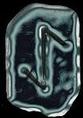
The left rune represents an important element of the past. Eoh refers to the Yew tree. The Yew does not go dormant and therefore represents endurance. Even the wood of the tree is strong, resilient, and pliable - the Yew bends, but does not break. The evergreen nature of the Yew is present even in the rune itself, as it cannot be changed even by reversal. This rune is historically symbolic of death, but, as in the Tarot and as suggested by the nature of the Yew tree itself, death is seen only as a transmutation of something eternal and unchanging - the spirit.
2.
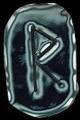
The middle rune represents a deciding element of the present. Raido means to ride. In this rune, the image is not so much the riding of a horse as in riding in a cart or as cargo. As such Raido may suggest a journey, but is much more indicative of communication. Alternate interpretations based on the use of Raido as a cognate in other words give it the meaning of council, judgment, and moral correctness. Therefore, this rune is the rune of wise advice and good leadership.
3.
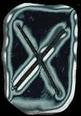
The right rune represents the critical element of the future, at the core of the final outcome. Gebo means gift, and like many gifts, the rune may be understood on many levels. Gifts are generally positive things, for both the giver and the recipient. In many cultures however, gifts and favors carry with them an obligation to respond in kind. It is for this reason that gifts, and hence the rune Gebo, are frequently symbolic of friendships, marriages, alliances, mergers, and other bonds between people or organizations. Gebo is a strong rune and the unions represented are strong as well. Moreover, Gebo is not reversible, as true friendships are not easily undone.
4.
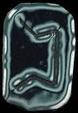
The top rune represents a force that works for you. Perth, the rune of chance and gambling has been drawn reversed. This can have many possible meanings. It could represent secrets revealed or mysteries uncovered. It could be a warning against gambling - now might not be the time to take a chance.
5.
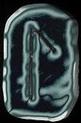
The bottom Rune represents a force that works against you. Laguz is the most strongly feminine of runes, representing water. Deep sexuality is suggested by this rune. Through Laguz, water is seen as the ocean - vast, uncontrollable, ever-changing, and vital. When interpreted as the returning tide, Laguz can also predict the inevitable return from a long journey.
Using the same question here is this weeks Tarot reading also using the Celtic Cross. This is a little more in depth and as any indication, this week should be interesting.
Tarot Card Reading
Later,
Kenaz
Friday, August 18, 2006
U.S Senator makes a 'monkey' of himself
...or should I say a complete jack-ass.
US Republican Senator George Allen has apologised for calling a man of Indian descent by a name which means monkey, saying he never meant to cause offence. Before Mr. Allen opens his big mouth again, maybe he should check out the definition of 'racist'.
Allen called SR Sidarth, who has been monitoring Mr Allen's re-election campaign for Democratic challenger Jim Webb, "Macaca" at a Republican rally.
"This fellow over here with the yellow shirt, Macaca, or whatever his name is, he's with my opponent," Mr Allen said.
Macaca is a genus of monkey which includes the macaque and reese.
Furtermore Allen showed how red his neck really was when he added "Let's give a welcome to Macaca here. Welcome to America and the real world of Virginia." Stupid, considering Mr. Sidarth was from Virginia.
On Monday, Mr Allen's spokesman, Dick Wadhams, said the name Macaca was a variation of Mohawk, a nickname Mr Allen's team of advisers had given the student because he had a Mohawk haircut.
But on Tuesday, Mr Allen, who is widely expected to try to run for president in 2008, said the name was "just made up" and that he had no idea the word referred to a monkey.
I'm not sure what dictionary Wadham read but I'm sure it's bookmarked at monkeys uncle.
Maybe Allen's campaign song should be 'Dueling Banjos' because all I see when I look at his picture is the mentally challenged kid from 'Deliverence'.
The kicker, in his younger years he wore a Confederate flag lapel pin in his high school yearbook photo and had the flag hanging in his living room.
Allen is my early favourite for 'loser of the year'.
Later,
Kenaz
US Republican Senator George Allen has apologised for calling a man of Indian descent by a name which means monkey, saying he never meant to cause offence. Before Mr. Allen opens his big mouth again, maybe he should check out the definition of 'racist'.
Allen called SR Sidarth, who has been monitoring Mr Allen's re-election campaign for Democratic challenger Jim Webb, "Macaca" at a Republican rally.
"This fellow over here with the yellow shirt, Macaca, or whatever his name is, he's with my opponent," Mr Allen said.
Macaca is a genus of monkey which includes the macaque and reese.
Furtermore Allen showed how red his neck really was when he added "Let's give a welcome to Macaca here. Welcome to America and the real world of Virginia." Stupid, considering Mr. Sidarth was from Virginia.
On Monday, Mr Allen's spokesman, Dick Wadhams, said the name Macaca was a variation of Mohawk, a nickname Mr Allen's team of advisers had given the student because he had a Mohawk haircut.
But on Tuesday, Mr Allen, who is widely expected to try to run for president in 2008, said the name was "just made up" and that he had no idea the word referred to a monkey.
I'm not sure what dictionary Wadham read but I'm sure it's bookmarked at monkeys uncle.
Maybe Allen's campaign song should be 'Dueling Banjos' because all I see when I look at his picture is the mentally challenged kid from 'Deliverence'.
The kicker, in his younger years he wore a Confederate flag lapel pin in his high school yearbook photo and had the flag hanging in his living room.
Allen is my early favourite for 'loser of the year'.
Later,
Kenaz
Monday, August 14, 2006
Middle East in Crisis
Timeline of recent events
Aug. 14, 2006
The shaky ceasefire held along the Lebanese-Israeli border on its first day, while leaders of the warring groups both claimed victory.
Israeli Prime Minister Ehud Olhmert said his country's forces had delivered "a major blow to Hezbollah," while Sheik Hassan Nasrallah, the leader of the Islamic militant group, claimed a "strategic victory" over Israel.
Olhmert said Israel will continue to pursue Hezbollah.
Nasrallah claimed his militant Islamic group had achieved a "strategic, historic victory" against Israel. He also said it was the wrong time to publicly discuss disarming Hezbollah, which is a condition of the UN ceasefire.
Israeli troops clashed with Hezbollah militants in three separate skirmishes on the first day of the ceasefire, but there were no reports of major hostilities hours after the ceasefire came into effect.
Israel, Hezbollah both claim upper hand as ceasefire holds
Aug. 11, 2006
The UN Security Council votes 15-0 to adopt the resolution that calls for an end to the fighting between Israel and Hezbollah. It authorizes the deployment of UN peacekeepers to help Lebanese troops take control of south Lebanon as Israel withdraws.
Earlier in the day, the U.S. and France come to an agreement on the final wording of a draft UN resolution to halt the fighting. Both sides send the text to the governments of Israel and Lebanon. The draft calls for a "full cessation of hostilities." It tells Hezbollah militants to stop all attacks immediately and tells Israel to end "all offensive operations." After the fighting stops, Lebanon is to deploy its armed forces throughout southern Lebanon as the Israeli army withdraws. The draft is presented to the UN Security Council for a vote.
Israeli Prime Minister Ehud Olmert accepts the draft resolution, and will recommend that his government approve the deal in its meeting on Aug. 13.
But, the military offensive that expanded earlier on Friday continues. Israeli air strikes kill at least 14 people across Lebanon, including 12 in an attack on the Abboudiyeh border crossing into Syria. This leaves only one open border crossing from Lebanon into Syria.
Explosions are also reported in Beirut's southern suburbs. Israeli warplanes also hit three vehicles in the Lebanese city of Baalbek, killing at least one person.
Hezbollah fires more than 150 rockets into Israel.
UN prepares to vote as Israel expands Lebanese offensive
Aug. 10, 2006
The Israeli security cabinet decides to hold off a planned expansion of its ground offensive, to give diplomats a few more days to work on a ceasefire proposal. But Defence Minister Amir Peretz says the military will use "all of its tools" against Hezbollah if the UN ceasefire talks are unsuccessful.
Israeli forces take control of Marjayoun, a predominantly Christian town about eight kilometres north of the Israel-Lebanon border. Israeli warplanes drop leaflets that warn of a "painful and strong" response to Hezbollah, and tell residents in three southern suburbs to evacuate their homes. Lebanese officials say at least four civilians are killed.
Hezbollah fires 110 rockets into northern Israel by mid-afternoon, reportedly killing an Arab Israeli woman and her daughter.
Israel takes key town, delays expansion of push into Lebanon
Aug. 9, 2006
The Canadian Embassy in Beirut says Ottawa has booked two ships with room for about 2,400 Canadians still wanting to flee Lebanon. It says the ships will leave from Beirut to an undisclosed location next week.
Israel's security cabinet decides to expand its ground offensive in Lebanon toward the Litani River, about 30 kilometres from the Israel-Lebanon border. Just hours before, Maj.-Gen. Udi Adam is replaced as commander of Israeli forces in Lebanon by Maj.-Gen. Moshe Kaplinsky, the deputy chief of staff.
Meanwhile, the UN Security Council continues to debate a draft resolution seeking a ceasefire to the fighting in Lebanon. In a televised speech, Hezbollah leader Sheik Hassan Nasrallah warns Israeli Arabs to leave Haifa, as he threatens to intensify attacks on the Israeli city. He also says he approves of Lebanon's proposal to deploy 15,000 Lebanese troops to south Lebanon.
Eleven Israeli soldiers are killed during fighting with Hezbollah guerrillas in southern Lebanon. And at least four missiles from Israeli ships strike suburbs south of Beirut. Israeli air strikes also hit the largest of Lebanon's refugee camps for Palestinians and destroy a building in the Bekaa Valley, leaving a woman and four children under the rubble.
Israel to broaden ground offensive against Hezbollah
Hezbollah leader warns Arabs to leave Haifa
2 more ships to take Canadians from Beirut
Aug. 8, 2006
The UN Security council meets and representatives of the Arab League presents it with a new ceasefire plan, which involves Lebanon deploying 15,000 of its troops along the Israel-Lebanon border.
Israeli Prime Minister Ehud Olmert says Israel is seriously considering this proposal, calling it "interesting," but says Hezbollah guerillas must be disarmed and removed as a threat first.
Meanwhile, the Israeli military drops leaflets in the city of Tyre in southern Lebanon, warning people not to drive or their vehicles will be bombed. And Israeli air strikes hit Hezbollah positions in southern Lebanon, as Israeli forces also try to get control of the militant group's villages and sites used to launch rockets at northern Israel.
Hezbollah and Israeli troops exchange gunfire in near Bint Jbail, a militant stronghold that Israeli troops have been trying to capture for weeks. Hezbollah reportedly attacks Israeli troops near the town of Naquora, killing two Israeli reservists. The militant group fires about 90 rockets on northern Israel by the afternoon.
Arab League to present new ceasefire plan to UN
Israel to bomb all moving vehicles in southern Lebanon
Aug. 7, 2006
An Israeli air strike kills six civilians and wounds two people, all from the same family, in the village of Ghazzaniyeh. At least 49 people die in Israeli attacks.
Hezbollah rockets wound at least five people. The Israeli army says Hezbollah guerrillas killed two Israeli soldiers with an anti-tank missile in south Lebanon. Hours later, another Israeli soldier is killed by sniper fire.
Lebanese Prime Minister Fouad Siniora again calls for an immediate ceasefire during an emergency meeting of the Arab League in Beirut to discuss the UN Security Council draft resolution on a ceasefire.
The Lebanese government proposes sending 15,000 Lebanese troops to the Israel-Lebanon border to stand between Israel and Hezbollah. Lebanese troops would take control of south Lebanon and Israel would withdraw from the region. Lebanon would assert its control of the region and take control of Hezbollah strongholds.
Amnesty International holds vigils around the world calling for a ceasefire, including one outside Montreal's Mount-Royal metro station.
Lebanese PM renews ceasefire plea
Amnesty calls for Mideast ceasefire at Montreal vigil
Aug. 6, 2006
About 80 missiles hit towns across northern Israel, killing 15 Israelis and wounding dozens more — the deadliest attack on Israel since fighting began. Hezbollah also sends rockets into Haifa, killing three and wounding 40 others.
Israeli air strikes and artillery kill at least 13 people in southern Lebanon. Lebanese security officials say the bombing raid lasted for half an hour. Israeli soldiers move into the Lebanese town of Qana.
Diplomatic efforts continue to end the fighting. Lebanese parliamentary speaker Nabih Berri rejects the U.S.-French draft resolution because it did not include the government’s plan for ending the fighting. The Lebanese cabinet votes unanimously to deploy 15,000 Lebanese soldiers to help 2,000 UN peacekeepers if there is a ceasefire and Israeli forces pull back.
At home in Montreal, Quebec politicians and Jewish and Muslim Canadians march through the city streets, calling for an end to the conflict in the Middle East.
Mideast fighting escalates amid efforts to secure ceasefire
Israeli commandos in gunfight near Tyre
Aug. 5, 2006
Israeli forces storm an apartment building and attack suspected Hezbollah guerillas in the southern Lebanese port city of Tyre. The raid was planned to destroy suspected Hezbollah launchers for long-range rockets. The Israeli army also drops leaflets on the city of Sidon, warning residents to leave the area immediately.
Meanwhile, Hezbollah fires more rockets into Israel.
Diplomatic efforts to end the fighting continue as the U.S. and France agree on a draft UN resolution after weeks of negotiation. The draft does not call for an immediate cessation of violence, but calls for Hezbollah to stop all military operations and for Israel to stop its offensive drive against Lebanon. The resolution would allow Israel to strike back if Hezbollah were to break a ceasefire. It also calls for a buffer zone in south Lebanon occupied only by international and Lebanese soldiers.
In Ottawa, about 1,000 people gather on Parliament Hill to protest the fighting in Lebanon.
Anti-war protesters rally on Parliament Hill
Israeli commandos in gunfight near Tyre
U.S., France agree on draft Mideast resolution
Aug. 4, 2006
Hezbollah rockets hit the Israeli city of Hadera, 75 kilometres south of the Israel-Lebanon border. There are no casualties, but the strike marks the farthest south that Hezbollah attacks have reached. Israeli authorities say about 190 rockets hit northern Israel.
Israeli air strikes hit Christian areas north of Beirut for the first time, killing four civilians and wounding 10. Air raids damage four bridges on the main north-south coastal road linking Beirut to Syria, further isolating Lebanon.
Liberal foreign affairs critic Keith Martin demands the Tories call for an immediate ceasefire in the Middle East conflict and calls for the Harper government to give more funding to aid organizations.
Prime Minister Stephen Harper tells a news conference that principles, not polls, will govern how the Conservatives establish policy, as 80 protesters gather outside the Conservative caucus retreat in response to Harper's refusal to call for an immediate ceasefire.
The body of Maj. Paeta Hess-von Kruedener comes home. Canadian military officials, dignitaries, colleagues, friends and family gather for a repatriation ceremony at CFB Trenton.
Liberals demand Tories call for immediate Mideast ceasefire
Harper remains firm on Mideast crisis, softwood
Canadian UN observer's body returned home
Aug. 3, 2006
Early in the morning, Israel launches air strikes near Beirut for the first time in nearly a week.
One Israeli soldier is killed and four others wounded in a battle with Hezbollah guerrillas in Ayt a-Shab in southern Lebanon.
At least eight Israeli civilians are killed as a result of rocket fire, while four Israeli soldiers are killed in clashes with Hezbollah and two others are wounded.
Hezbollah leader Sheik Hassan Nasrallah says his militant group will stop firing rockets on Israeli cities if Israel stops its attacks on Lebanese towns. He threatens to fire rockets at Tel Aviv if central Beirut is attacked.
A statement from the Israeli military says that its bombing of the Lebanese village of Qana was a mistake and that its attack guidelines would be evaluated and updated as a result.
Israel resumes attacks on Beirut
Hezbollah leader offers ceasefire, but threatens Tel Aviv
Qana attack a mistake, Israeli military concludes
Aug. 2, 2006
Hezbollah launches more than 210 rockets into northern Israel, the highest daily number in the conflict. One of the rockets hits Beit Shean, about 68 kilometres from the border, marking the deepest rocket strike into Israel so far. Another Hezbollah rocket hits the West Bank. An Israeli-American is killed and 58 other people injured across the country, police say.
A series of Israeli air raids, including a strike near a hospital in Al Jamaliyeh, kills 15 Lebanese civilians, witnesses say.
About 10,000 Israeli troops move into southern Lebanon, where they conduct house-to-house searches for Hezbollah fighters.
Mohammed al-Safadi, Lebanon's transport and public works minister, says the Israeli attacks have caused an estimated $2 billion US in damage on the country's infrastructure.
Israel renews strikes near Beirut
Hezbollah launches record number of rockets into Israel
Aug. 1, 2006
Israeli troops land by helicopter in northeastern Lebanon and launch strikes on a Hezbollah stronghold in Baalbek, their deepest ground attack in Lebanon since fighting began. The military confirms that it captured several guerrillas in the Baalbek operation.
Heavy fighting near the Lebanese border village of Aita al-Shaab kills three Israeli soldiers. The Israelis say they struck dozens of Hezbollah militants during the fighting.
Israeli planes hit Shia villages in south Lebanon and attack Hezbollah positions elsewhere in the country.
Iranian cleric Ayatollah Ahmad Jannati asks Muslim countries to send weapons to Hezbollah to help in the fight against Israel.
Israeli troops push deeper into Lebanon
July 31, 2006:
Israeli air strikes resume in southern Lebanon less than 12 hours after the government announced a 48-hour suspension to investigate the civilian deaths in Qana.
One of the air strikes kills a Lebanese soldier in Tyre. Other air strikes took place in Taibe to support Israeli ground troops, the military said.
Hezbollah rockets hit Kiryet Shmona in northern Israel. No casualties were reported.
Israeli Prime Minister Ehud Olmert apologizes for civilian casualties after an Israeli air strike in Qana, but pledges there will be no ceasefire with Hezbollah in the coming days.
Overnight, Israel's security cabinet approves expanding the military ground operation in southern Lebanon by a near-unanimous vote.
Israeli air strikes resume in Lebanon
Israel battling a 'vicious force': cabinet minister
Israel votes to expand ground attack
July 30, 2006
An early morning Israeli air strike on the southern Lebanese town of Qana collapses a building, killing 28 people, many of them women and children. Lebanese officials say the civilians killed had taken refuge in the basement of the building.
Israeli officials say the neighbourhood was targeted based on intelligence that Hezbollah fighters had used it to launch rockets at northern Israel. They also say civilians were warned several days ago to leave Qana.
Hezbollah launches 157 rockets into northern Israel — the highest one-day total during the offensive. The rockets injure 13 people.
Following the Qana attack, Israel agrees to a 48-hour cessation of bombings over southern Lebanon while it investigates the incident. U.S. State Department spokesman Adam Ereli says Israel and the UN will co-ordinate a 24-hour window for civilians to leave southern Lebanon if they wish.
U.S. Secretary of State Condoleezza Rice cancels a planned visit to Beirut, hours after the air strike on Qana.
Israeli air strike kills dozens of civilians
Israel agrees to 48-hour suspension of air strikes
July 29, 2006
U.S. Secretary of State Condoleezza Rice arrives for talks in Jerusalem. Hezbollah leader Sheik Hassan Nasrallah says he will co-operate with the Lebanese government in negotiations toward ending the crisis.
France drafts a resolution calling for an immediate ceasefire between Israel and Lebanon. The proposal calls for a buffer zone in south Lebanon to be patrolled by international forces and the Lebanese army and the release of two Israeli soldiers captured by Hezbollah.
Israeli officials reject a UN call for a 72-hour ceasefire to allow civilians to leave the region and help aid workers bring in humanitarian supplies. A government spokesman says the ceasefire is unnecessary "because Israel has opened humanitarian corridors to and from Lebanon."
An Israeli air strike on a house in the Lebanese village of Nmeiriya kills seven people, including a mother and her five children and another child.
Two UN peacekeepers from India are wounded in an Israeli air strike near their border post in Adaisseh in southern Lebanon.
Israeli warplanes struck the Lebanese side of the Syrian-Lebanese border, blocking fleeing refugees and humanitarian aid.
Israeli troops withdraw from Bint Jbail, saying their mission is finished. Israeli radio reports that Israeli troops had killed 50 guerrillas in the town over a week-long battle. Hezbollah leaders, however, say they had defeated the Israeli forces, killing 18 of their troops.
Hezbollah fires rockets at the northern Israeli town of Safid.
The last of Ottawa's scheduled ships from Lebanon leaves Beirut, carrying hundreds of Canadians, but Foreign Affairs officials say they'll continue to help any Canadians who want to leave. An estimated 13,000 Canadian have left Lebanon during the daily evacuations.
Nasrallah ready to talk as Rice returns to Mideast
2 Indian UN peacekeepers wounded in southern Lebanon
Canadian evacuees reach 13,000 as 2 ships leave Beirut
July 28, 2006
Israeli defence forces say their warplanes hit 130 Hezbollah targets in Lebanon overnight, including a base in the Bekaa Valley where long-range rockets were stored. Lebanese security officials say the raids killed three people and wounded nine, including four children.
The Israeli army says it has killed about 200 Hezbollah guerrillas since it launched its offensive more than two weeks ago. Hezbollah refutes the claim, saying it has fewer casualties, but provides no number.
Lebanese President Emile Lahoud tells CBC's Nahlah Ayed that Hezbollah has the complete backing of his government.
A United Nations official says the UN will remove 50 members of the unarmed Truce Supervision Organization from posts along the border between Israel and Lebanon to ensure their safety.
Canada's evacuation effort rescues more than 1,000 people, 877 of them Canadians, from Beirut, leaving by boat for Larnaca, Cyprus.
U.S. President George W. Bush and British Prime Minister Tony Blair announce that they will seek a UN resolution to send a multinational force to south Lebanon to end the conflict.
Missiles hit Hezbollah base, buildings and hideouts, Israel says
Lebanese president gives full backing to Hezbollah
UN removes unarmed observers from border
Ottawa winds down daily Lebanon evacuations
Bush, Blair call for multinational force to keep order in Lebanon
July 27, 2006
Israeli jets carry out air strikes, including more than 30 bombing runs in the southern region of Iqlim al-Tuffah. The air strikes hit roads in the south and east, as well as a Lebanese army base in the north. An Israeli missile strikes the car of a Lebanese policeman in the eastern city of Zahle, killing him.
Ground fighting and rocket attacks continue along the Israel-Lebanon border. Hezbollah rockets hit a vacant laundry-detergent plant in the northern Israeli town of Kiryat Shemona.
The Israeli cabinet votes to call up reserve units, but rules out expanding its military campaign against Hezbollah.
Israeli Justice Minister Haim Ramon says the international summit in Rome on the conflict gave Israel permission to continue its operation in Lebanon. European Union officials vehemently disagree, saying that nearly every country represented at the conference called for a ceasefire.
Ayman al-Zawahri, second-in-command of al-Qaeda, says the militant group now sees "all the world as a battlefield open in front of us." In a video message broadcast by Arab television network Al-Jazeera, al-Zawahri threatens to retaliate against the "crusader coalition."
Canadian Foreign Affairs evacuates 1,724 people out of Beirut. The department says that daily ship departures from the port will continue until Saturday and that the Canadian Embassy in Beirut is no longer contacting registered Canadians to board evacuation ships.
Mideast foes trade air strikes, rocket attacks
Israel calls up reserves, but won't expand military operation
'We will attack everywhere,' al-Qaeda leader warns
Evacuees pack Beirut port, after talks fail to bring ceasefire
Postcards urge PM to call for Mideast ceasefire
Wife of Canadian UN observer prays for a 'miracle'
July 26, 2006
Israeli Prime Minister Ehud Olmert apologizes to UN Secretary General Kofi Annan for the bombing of a UN post in southern Lebanon the day before. Olmert says the attacks were a mistake and promises a full investigation.
A preliminary UN report says UN peacekeepers in southern Lebanon called the Israeli military 10 times in six hours asking them to stop bombing in the area, before the post was hit.
Prime Minister Stephen Harper calls the attack a "terrible tragedy" but says he doubts the attack was deliberate.
Olmert also says Israel wants to establish a two-kilometre-wide "security zone" in south Lebanon, free of Hezbollah guerillas.
Hezbollah leader Sheik Hassan Nasrallah says they will start firing rockets capable of reaching deeper into Israel.
Israeli troops continue to fight for control of Bint Jbeil, a Hezbollah stronghold. About 20 Israeli rockets hit a southern suburb of Beirut, another Hezbollah site.
U.S., European, Arab and Canadian officials – including Foreign Affairs Minister Peter MacKay – meet in Rome and say they should work towards a ceasefire, but can't agree on a plan to put it in place. U.S. Secretary of State Condoleezza Rice says the summit must work to end the violence, but they cannot return to the "status quo" of instability in Lebanon. Annan says any solution to the region's violence must include Iran and Syria.
Canadians trying to leave Lebanon head for the city of Tyre, where they board a Canadian-chartered ship waiting offshore, headed for Cyprus.
Harper doubts UN post deliberately targeted
Israeli troops battle Hezbollah guerrillas for control of border town
World leaders want ceasefire, but fail to work out details
Stranded Canadians shuttled to waiting ship in Lebanon
July 25, 2006
Saudi Arabia's king urges Israel to stop its attacks on Lebanon, warning the violence could plunge the Middle East into a regional war if a ceasefire can't be forged.
The United States says it won't pressure Israel for a quick end to its military campaign against Hezbollah.
Opponents to Israel's military campaign in Lebanon and Gaza organize a general strike throughout the West Bank.
Demonstrators in Ramallah briefly clash with Palestinian police, throwing rocks as police beat them back with sticks.
U.S. Secretary of State Condoleezza Rice reaffirms Washington's commitment to a future two-state solution for the Israeli-Palestinian conflict.
Saudi Arabia pledges a $1.5-billion US donation to Lebanon to help with the reconstruction of the country and to restart the economy.
Hezbollah rockets kill a teenage girl and injure more than 30 people in northern Israel.
Israel says its troops are focused solely on crushing Hezbollah outposts and rocket-launching sites near the border with Israel. Israel says it has no intention of sending ground forces beyond southern Lebanon.
The Israeli military seals off the Lebanese border town of Bint Jbeil, a Hezbollah stronghold.
However, Israel says it will open safe delivery passages into Lebanon for humanitarian aid.
Israel air strikes hit a United Nations post, killing three UN observers, including a Canadian. One observer is missing. Officials say the observers are from Austria, China, Finland and Canada. UN Secretary General Kofi Annan says the UN post near Khiam, Lebanon, was clearly marked and Israel had assured them it would not be targeted by Israeli forces. Annan calls the attack "apparently deliberate".
Saudi king warns of regional war if strikes continue in Lebanon
U.S. won't pressure Israel for quick end to violence: Rice
July 24, 2006
Canadian soldiers help about a dozen Canadians flee from Tyre and get on a Cyprus-bound ship chartered by the Canadian government.
Three Palestinians die and eight are wounded after the Israeli military shells Beit Lahiya, a town in the Gaza Strip.
A Canadian-born pilot serving in the Israeli Air Force dies after his helicopter crashes in northern Israel.
An Israeli helicopter crashes near the Lebanese border, injuring six soldiers and sparking a huge fire.
Humanitarian aid begins to arrive in the port of Beirut after the Israeli navy lifts its blockade.
U.S. Secretary of State Condoleezza Rice arrives in Beirut on a surprise visit. She says a ceasefire is urgently needed, but only if conditions exist to make it sustainable.
UN emergency relief chief Jan Egeland announces that $171 million is needed to deliver food, medicine, clean water and sanitation services to the Lebanese people over the next three months.
Canadian soldiers help dozens escape Lebanon
Canadian-born pilot killed in Israeli helicopter crash
Israeli troops capture 2 Hezbollah guerrillas in fierce fighting
Annan, Rice intensify diplomatic efforts to end conflict in Lebanon
'Significant' American aid on way to Lebanon
July 23, 2006
Hezbollah militants continue to launch volleys of rockets into northern Israel, killing two people in one attack on the city of Haifa.
Israel conducts air strikes on Beirut, Tyre and the southern port of Sidon, where Israeli missiles destroy the Sayyed al-Zahraa religious complex, which is linked to Hezbollah. Israeli troops bomb a textile factory in al-Manara, a Lebanese border town, killing one person.
John Bolton, the U.S. ambassador to the United Nations, rejects Syria's offer to enter talks with the U.S. to resolve the conflict between Israel and Hezbollah.
Saudi Arabian officials, including Saudi Foreign Minister Prince Saud al-Faisal, meet with U.S. President George W. Bush and Secretary of State Condoleezza Rice in Washington, D.C., to discuss a ceasefire.
UN emergency relief chief Jan Egeland visits Beirut and calls for an end to the violence, saying the "disproportionate response by Israel is a violation of international humanitarian law."
The Department of Foreign Affairs announces that it has chartered a ship to take up to 1,000 Canadian citizens out of the southern Lebanese port of Tyre on July 26. The transportation out of Tyre means that Canadians there won't have to make the potentially dangerous trip to Beirut, where most Canadians are leaving Lebanon.
Explosions rock Lebanon, Israel
U.S. rejects Syrian call for ceasefire
Saudi Arabia seeks Lebanon ceasefire in meeting with Bush, Rice
Beirut bombings violate humanitarian law: UN
Ship will take Canadians from Tyre: Ottawa
July 22, 2006
Israel sends troops, tanks and bulldozers into southern Lebanon, seizing Maroun al-Ras, a large Lebanese border village.
Government spokesperson Avi Pazner says the attack is not an invasion and Israel has no intention of re-occupying Lebanon. "There is not yet a decision on an invasion of Lebanon," Pazner says.
Israeli planes fire missiles at communications towers in the mountains of northern and central Lebanon. The Lebanese Broadcasting Corp., the nation's leading private network, and two other TV stations go off the air within seconds.
Maj.-Gen. Sayyed Hassan Firuzabadi, the chairman of the joint chiefs of Iran's armed forces, says Iran would not join the fighting in the Middle East.
The Department of Foreign Affairs announces that about 2,000 more Canadians have been transported out of Lebanon to Cyprus.
UN Secretary General Kofi Annan announces that the number of refugees within Lebanon — 700,000 people displaced within the country by some estimates — could result in a "major humanitarian disaster."
Israeli forces enter southern Lebanon
Nearly 2,000 Canadians safely out of Lebanon
Lebanese refugees a potential disaster, Annan warns
July 21, 2006:
Israeli tanks and troops mass along the Lebanese border to prepare for a ground invasion. The action is designed to push Hezbollah back to create a buffer zone. A military radio station broadcasts warnings to southern Lebanon residents to leave the area.
A United Nations post near the Israeli-Lebanese border is hit, but reports about the attack's origin are conflicting. The Israeli army says Hezbollah rockets fell short of their targets and struck the post. An unnamed official at the UN post tells Canadian Press an Israeli artillery shell hit the building. The post is used by the UN interim force, which patrols the border established by the UN when Israeli troops withdrew from Lebanon six years ago.
Israeli troops — believed to be more than 1,000 soldiers — cross into Lebanon for the third straight day. Israeli air strikes hit Beirut, the Bekaa Valley and south Lebanon, sites thought to be Hezbollah strongholds. A section of Lebanon's oldest bridge, which is part of the Beirut-Damascus highway in central Lebanon, collapses after being hit with four Israeli missiles. Senior military officials say their offensive will not end until Israel can create a buffer zone by forcing Hezbollah to retreat behind the Litani river, 30 kilometres north of the Israeli-Lebanese border.
Hezbollah launches rockets into northern Israel. Five rockets hit Haifa and injure at least six people. The militant group says it has fired about 900 rockets into Israel in the past 10 days.
Israel's ambassador to Canada, Alan Baker, rejects previous warnings of possible war crimes charges, saying Israel is attacking legitimate Hezbollah military targets.
U.S. Secretary of State Condoleezza Rice says she's heading to Israel to work toward a diplomatic solution but did not call for a ceasefire. She says the illegal Hezbollah attack on Israel was the cause of the violence, and a ceasefire would only be a short-term fix.
Israeli army massing on Lebanese border
Rice sees no quick fix in Mideast
July 20, 2006:
The first boatload of Canadians arrives in Cyprus, after a 15-hour trip from Lebanon. At least 1,375 Canadians leave Beirut on ships headed for the Turkish port of Mersin. The ships begin arriving in Turkey at night. Nearly 100 people fly to Ottawa on Prime Minister Stephen Harper's government plane and the rest will take flights chartered by the federal government.
Three Israeli soldiers are wounded in two separate clashes with Hezbollah guerrillas inside southern Lebanon. Hezbollah says it destroyed two Israel tanks on the way to the border town of Maroun al-Ras. Israeli jets strike homes believed to be used by Hezbollah in the Lebanese town of Hermel, wounding three. Fighter jets also destroy another alleged Hezbollah site, a five-storey building in Baalbek.
The Israeli Army says a full-scale invasion of Lebanon is still a possibility.
UN Secretary General Kofi Annan condemns Hezbollah's "provocative attack" and Israel's "disproportionate" response during a special session of the United Nations Security Council. He calls for an end to the hostilities. UN High Commissioner for Human Rights Louise Arbour says that war crimes charges may be warranted against Israel and Hezbollah if steps aren't taken to protect civilians.
World leaders' reactions are split. Canada and the U.S. say Israel's response is measured. France and Russia condemn the air strikes, calling them an overreaction. Annan also says humanitarian groups cannot reach the more than 500,000 people in Lebanon who have been displaced or affected by the bombing.
Israeli troops cross Lebanese border
Canadians reach Cyprus after gruelling trip from Lebanon
70 troops off to Cyprus, navy ships on standby
'Hostilities must stop,' UN chief Annan says
July 19, 2006:
Canadians board the first ship out of the port of Beirut, chartered by Ottawa to rescue them from the strife-torn region. About 261 people board the ship, forcing the rest of the roughly 1,800 Canadians wanting to leave Beirut to stay one more night.
Prime Minister Stephen Harper makes a surprise announcement that he and his wife, Laureen, will fly to Cyprus and shuttle about 120 Canadians back home. He later flies to Cyprus with a skeleton crew to make room for those fleeing Lebanon.
Lebanese Prime Minister Fouad Siniora appeals for an end to the hostilities, which have left 300 dead and 1,000 wounded, the first official casualty figures out of Lebanon.
It is one of the deadliest days since the conflict began. Israeli troops clash with Hezbollah in southern Lebanon. Israeli strikes kill at least 58 people in Lebanon and Hezbollah militants kill at least four Israelis. Hezbollah fires a rocket into northern Israel, killing three people – two of them children – in Nazareth. It marks the first direct hit on a holy town during this conflict. Israeli warplanes drop 23 one-tonne bombs – also known as "bunker busters" – on a suspected Hezbollah bunker. The militant organization says none of its members are killed.
There are 80 Israeli air strikes overnight.
Diplomatic efforts to cease the fighting continue, with U.S. Secretary of State Condoleezza Rice speaking via telephone with Israeli Prime Minister Ehud Olmert, European Union foreign policy chief Javier Solana and Egyptian Foreign Minister Ahmed Aboul Gheit.
Hezbollah bunker bombed: Israeli military
Stranded Canadians begin boarding evacuation ship
Harper to fly to Cyprus to help with evacuation
July 18, 2006:
Israeli air strikes kill 11 Lebanese soldiers at an army base near Kfar Chima, as soldiers were heading for bomb shelters. Another 35 soldiers are injured.
The southern suburbs of Beirut, a Hezbollah stronghold, and a coastal road north of Beirut are hit. Hezbollah rockets hit Israel, many in the northern city of Haifa.
United Nations Secretary General Kofi Annan calls for an international force to stop the fighting in Lebanon. The U.S. and Israel have indicated they're not keen on the idea.
Prime Minister Ehud Olmert says Israel will continue to hit Hezbollah targets until the soldiers captured by Hezbollah are freed and Israelis are safe from attacks.
Israeli air strikes overnight level almost 20 houses and buildings in Lebanon. The military says it has crushed about 50 per cent of Hezbollah's arsenal. A Christian suburb in Beirut is hit for the first time since the offensive began.
Israeli missiles hit Lebanese army base
July 17, 2006:
The Israeli army sends ground troops into Lebanon for a quick operation involving a small number of troops to reduce Hezbollah rocket attacks on Israel, according to officials. Israeli warplanes pound Tripoli in northern Lebanon and the Bekaa Valley in the east. At least 15 people are killed.
Nine Lebanese army soldiers are killed and more wounded in attacks on military bases at the nearby port of Abdeh on Lebanon's northern coast, Lebanese security sources tell Reuters. The Israeli air force also hits the eastern city of Baalbek. Six Lebanese civilians are killed in an air strike on the village of Aitaroun, witnesses tell Hezbollah TV, the Islamist organization's television station. In Gaza City, Israeli air strikes destroy the Palestinian Foreign Ministry building. Nine Lebanese civilians are killed in a missile attack in the city of Tyre — all from one family, six of them children.
In a news conference, the Israeli military says it hit 60 Hezbollah targets on Sunday alone.
Hezbollah fires hundreds of missiles back into Israel, some reaching as far south as Arafula, about 60 kilometres south of the border. A rocket fired from Lebanon hits Haifa, destroying a three-storey building and killing three people. Hezbollah rockets also hit the northern Israeli town of Safed, Israeli officials say. Palestinian gunmen in the West Bank city of Nablus ambush Israeli troops, killing one and wounding six others.
Israel says it would consider a ceasefire if Hezbollah agrees to pull back from the Lebanese border and release two captured Israeli soldiers. Hezbollah rejects Prime Minister Ehud Olmert's ceasefire offerings of July 18, saying they were just an excuse to let Israel continue its attacks. The ceasefire proposal does not curtail the air strikes — they continue in Lebanon and Israel late into the day.
Canada leases six ships from Cyprus to retrieve Canadians who want to leave strife-torn Lebanon, the Department of Foreign Affairs says. The ships will be able to transport about 4,500 people a day. Ottawa says the evacuation could begin by the middle of the week, but will only proceed if the vessels are allowed safe and secure passage.
Israel, Hezbollah trade attacks
Ottawa: Ships ready to take Canadians from Lebanon by midweek
July 16, 2006:
For the first time since fighting began, Israeli warplanes drop bombs on central Beirut, its suburbs and a major power station. Seven Canadians are killed, most of whom were members of an extended family from Montreal on vacation in the village of Aitaroun: Ali El-Akhras, his wife Amira and their four children aged one, four, six and eight.
Hezbollah carries out a missile attack on a rail repair plant that kills eight people in the Israeli city of Haifa. Israeli Prime Minister Ehud Olmert warns that the attacks on Haifa would have "far-reaching consequences."
Foreign Affairs Minister Peter MacKay announces plans for evacuation of Canadian citizens from Lebanon.
Leaders of the Group of 8 industrial nations issue a statement calling for Israel to end its military actions in Lebanon and Gaza and for "extremist forces" to return Israeli soldiers captured in cross-border raids.
G8 calls for Israeli withdrawal, release of captured men
July 15, 2006:
Fifteen people, including a number of children, die in an Israeli air strike in southern Lebanon, according to Lebanese police. Israel expands its range of targets to include the northern port city of Tripoli. Eighteen Lebanese villagers are killed while fleeing when missiles hit their vehicles en route to the southern city of Tyre.
Hezbollah fires rockets for the first time at the Israeli city of Tiberias, 35 kilometres south of the Lebanon-Israel border. No injuries were reported. Rockets also hit other cities along the border, including Nahariya, Safed, Mahanayim, Hatzor, Ben Ami and Karmiel.
More Israeli air strikes on southern Beirut as Israel sends troops into Gaza
Arab League Secretary General Amr Moussa calls on the United Nations Security Council to tackle the crisis.
July 14, 2006:
Prime Minister Stephen Harper says Canada is concerned about the "escalation of violence in the Middle East," adding that it is essential that Hezbollah release two captured Israeli soldiers and Hamas do the same with two others. On his way to the G8 summit in St. Petersburg, Russia, Harper indirectly appealed to the governments of Syria, Iran and Lebanon, asking them to "encourage the recognition of Israel's right to exist." Harper says Israel is simply defending itself against Hezbollah and he describes Israel's response to the kidnapping of its soldiers as "measured."
Israel pounds Lebanon, destroying Hezbollah's headquarters in Beirut and smashing city roads and runways. Shortly after the attack, the organization's official television station, Hezbollah TV, played a recorded audio speech. Sheik Hassan Nasrallah, the group's secretary general, says, "You want an open war, we will go to the open war. We are ready for it. War, war on every level."
Meanwhile, reports surface that a Hezbollah rocket in the northern Israeli town of Meron has killed an Israeli woman and a four-year-old girl.
The United Nations Security Council meets in an emergency session to discuss a request by Lebanon to condemn the Israeli attacks. It is unable to agree on a response, but issues a brief statement calling for countries in the region to co-operate with UN efforts to arrange a ceasefire.
'Escalation is inevitable' unless Israeli soldiers released: Harper
Hezbollah leader vows 'open war' on Israel
Intense diplomacy to stop Mideast fighting
July 13, 2006:
Israeli air strikes target Beirut's international airport, destroying runways and fuel storage tanks. Other attacks hit highways, including the main highway between Beirut and Damascus, and military bases. The Israeli strikes kill about 60 people in Lebanon. Israel's navy enforces a sea blockade of ports in Lebanon. Israel insists that Hezbollah will not be able to return to its former position along the international border.
Hezbollah responds to the first wave of Israeli strikes by firing more than 100 Katushya rockets into northern Israel, killing two civilians. A rocket hits Haifa, Israel's third-largest city, but Hezbollah does not claim responsibility.
Israeli assault on Lebanon and Gaza continues
July 12, 2006:
Hezbollah militants in Lebanon conduct a raid into Israel, killing as many as seven Israeli soldiers and wounding another eight. The militants also capture two Israeli soldiers.
Israel's Defence Ministry says the Lebanese government would be held responsible for the kidnappings.
Israeli rockets target roads and bridges in southern Lebanon in an apparent attempt to block escape routes and troops enter the country to search for the abducted soldiers. Eight soldiers are killed and two are injured during fighting with Hezbollah.
Israeli Prime Minister Ehud Olmert calls the Hezbollah attack "an act of war."
Later,
Kenaz
Aug. 14, 2006
The shaky ceasefire held along the Lebanese-Israeli border on its first day, while leaders of the warring groups both claimed victory.
Israeli Prime Minister Ehud Olhmert said his country's forces had delivered "a major blow to Hezbollah," while Sheik Hassan Nasrallah, the leader of the Islamic militant group, claimed a "strategic victory" over Israel.
Olhmert said Israel will continue to pursue Hezbollah.
Nasrallah claimed his militant Islamic group had achieved a "strategic, historic victory" against Israel. He also said it was the wrong time to publicly discuss disarming Hezbollah, which is a condition of the UN ceasefire.
Israeli troops clashed with Hezbollah militants in three separate skirmishes on the first day of the ceasefire, but there were no reports of major hostilities hours after the ceasefire came into effect.
Israel, Hezbollah both claim upper hand as ceasefire holds
Aug. 11, 2006
The UN Security Council votes 15-0 to adopt the resolution that calls for an end to the fighting between Israel and Hezbollah. It authorizes the deployment of UN peacekeepers to help Lebanese troops take control of south Lebanon as Israel withdraws.
Earlier in the day, the U.S. and France come to an agreement on the final wording of a draft UN resolution to halt the fighting. Both sides send the text to the governments of Israel and Lebanon. The draft calls for a "full cessation of hostilities." It tells Hezbollah militants to stop all attacks immediately and tells Israel to end "all offensive operations." After the fighting stops, Lebanon is to deploy its armed forces throughout southern Lebanon as the Israeli army withdraws. The draft is presented to the UN Security Council for a vote.
Israeli Prime Minister Ehud Olmert accepts the draft resolution, and will recommend that his government approve the deal in its meeting on Aug. 13.
But, the military offensive that expanded earlier on Friday continues. Israeli air strikes kill at least 14 people across Lebanon, including 12 in an attack on the Abboudiyeh border crossing into Syria. This leaves only one open border crossing from Lebanon into Syria.
Explosions are also reported in Beirut's southern suburbs. Israeli warplanes also hit three vehicles in the Lebanese city of Baalbek, killing at least one person.
Hezbollah fires more than 150 rockets into Israel.
UN prepares to vote as Israel expands Lebanese offensive
Aug. 10, 2006
The Israeli security cabinet decides to hold off a planned expansion of its ground offensive, to give diplomats a few more days to work on a ceasefire proposal. But Defence Minister Amir Peretz says the military will use "all of its tools" against Hezbollah if the UN ceasefire talks are unsuccessful.
Israeli forces take control of Marjayoun, a predominantly Christian town about eight kilometres north of the Israel-Lebanon border. Israeli warplanes drop leaflets that warn of a "painful and strong" response to Hezbollah, and tell residents in three southern suburbs to evacuate their homes. Lebanese officials say at least four civilians are killed.
Hezbollah fires 110 rockets into northern Israel by mid-afternoon, reportedly killing an Arab Israeli woman and her daughter.
Israel takes key town, delays expansion of push into Lebanon
Aug. 9, 2006
The Canadian Embassy in Beirut says Ottawa has booked two ships with room for about 2,400 Canadians still wanting to flee Lebanon. It says the ships will leave from Beirut to an undisclosed location next week.
Israel's security cabinet decides to expand its ground offensive in Lebanon toward the Litani River, about 30 kilometres from the Israel-Lebanon border. Just hours before, Maj.-Gen. Udi Adam is replaced as commander of Israeli forces in Lebanon by Maj.-Gen. Moshe Kaplinsky, the deputy chief of staff.
Meanwhile, the UN Security Council continues to debate a draft resolution seeking a ceasefire to the fighting in Lebanon. In a televised speech, Hezbollah leader Sheik Hassan Nasrallah warns Israeli Arabs to leave Haifa, as he threatens to intensify attacks on the Israeli city. He also says he approves of Lebanon's proposal to deploy 15,000 Lebanese troops to south Lebanon.
Eleven Israeli soldiers are killed during fighting with Hezbollah guerrillas in southern Lebanon. And at least four missiles from Israeli ships strike suburbs south of Beirut. Israeli air strikes also hit the largest of Lebanon's refugee camps for Palestinians and destroy a building in the Bekaa Valley, leaving a woman and four children under the rubble.
Israel to broaden ground offensive against Hezbollah
Hezbollah leader warns Arabs to leave Haifa
2 more ships to take Canadians from Beirut
Aug. 8, 2006
The UN Security council meets and representatives of the Arab League presents it with a new ceasefire plan, which involves Lebanon deploying 15,000 of its troops along the Israel-Lebanon border.
Israeli Prime Minister Ehud Olmert says Israel is seriously considering this proposal, calling it "interesting," but says Hezbollah guerillas must be disarmed and removed as a threat first.
Meanwhile, the Israeli military drops leaflets in the city of Tyre in southern Lebanon, warning people not to drive or their vehicles will be bombed. And Israeli air strikes hit Hezbollah positions in southern Lebanon, as Israeli forces also try to get control of the militant group's villages and sites used to launch rockets at northern Israel.
Hezbollah and Israeli troops exchange gunfire in near Bint Jbail, a militant stronghold that Israeli troops have been trying to capture for weeks. Hezbollah reportedly attacks Israeli troops near the town of Naquora, killing two Israeli reservists. The militant group fires about 90 rockets on northern Israel by the afternoon.
Arab League to present new ceasefire plan to UN
Israel to bomb all moving vehicles in southern Lebanon
Aug. 7, 2006
An Israeli air strike kills six civilians and wounds two people, all from the same family, in the village of Ghazzaniyeh. At least 49 people die in Israeli attacks.
Hezbollah rockets wound at least five people. The Israeli army says Hezbollah guerrillas killed two Israeli soldiers with an anti-tank missile in south Lebanon. Hours later, another Israeli soldier is killed by sniper fire.
Lebanese Prime Minister Fouad Siniora again calls for an immediate ceasefire during an emergency meeting of the Arab League in Beirut to discuss the UN Security Council draft resolution on a ceasefire.
The Lebanese government proposes sending 15,000 Lebanese troops to the Israel-Lebanon border to stand between Israel and Hezbollah. Lebanese troops would take control of south Lebanon and Israel would withdraw from the region. Lebanon would assert its control of the region and take control of Hezbollah strongholds.
Amnesty International holds vigils around the world calling for a ceasefire, including one outside Montreal's Mount-Royal metro station.
Lebanese PM renews ceasefire plea
Amnesty calls for Mideast ceasefire at Montreal vigil
Aug. 6, 2006
About 80 missiles hit towns across northern Israel, killing 15 Israelis and wounding dozens more — the deadliest attack on Israel since fighting began. Hezbollah also sends rockets into Haifa, killing three and wounding 40 others.
Israeli air strikes and artillery kill at least 13 people in southern Lebanon. Lebanese security officials say the bombing raid lasted for half an hour. Israeli soldiers move into the Lebanese town of Qana.
Diplomatic efforts continue to end the fighting. Lebanese parliamentary speaker Nabih Berri rejects the U.S.-French draft resolution because it did not include the government’s plan for ending the fighting. The Lebanese cabinet votes unanimously to deploy 15,000 Lebanese soldiers to help 2,000 UN peacekeepers if there is a ceasefire and Israeli forces pull back.
At home in Montreal, Quebec politicians and Jewish and Muslim Canadians march through the city streets, calling for an end to the conflict in the Middle East.
Mideast fighting escalates amid efforts to secure ceasefire
Israeli commandos in gunfight near Tyre
Aug. 5, 2006
Israeli forces storm an apartment building and attack suspected Hezbollah guerillas in the southern Lebanese port city of Tyre. The raid was planned to destroy suspected Hezbollah launchers for long-range rockets. The Israeli army also drops leaflets on the city of Sidon, warning residents to leave the area immediately.
Meanwhile, Hezbollah fires more rockets into Israel.
Diplomatic efforts to end the fighting continue as the U.S. and France agree on a draft UN resolution after weeks of negotiation. The draft does not call for an immediate cessation of violence, but calls for Hezbollah to stop all military operations and for Israel to stop its offensive drive against Lebanon. The resolution would allow Israel to strike back if Hezbollah were to break a ceasefire. It also calls for a buffer zone in south Lebanon occupied only by international and Lebanese soldiers.
In Ottawa, about 1,000 people gather on Parliament Hill to protest the fighting in Lebanon.
Anti-war protesters rally on Parliament Hill
Israeli commandos in gunfight near Tyre
U.S., France agree on draft Mideast resolution
Aug. 4, 2006
Hezbollah rockets hit the Israeli city of Hadera, 75 kilometres south of the Israel-Lebanon border. There are no casualties, but the strike marks the farthest south that Hezbollah attacks have reached. Israeli authorities say about 190 rockets hit northern Israel.
Israeli air strikes hit Christian areas north of Beirut for the first time, killing four civilians and wounding 10. Air raids damage four bridges on the main north-south coastal road linking Beirut to Syria, further isolating Lebanon.
Liberal foreign affairs critic Keith Martin demands the Tories call for an immediate ceasefire in the Middle East conflict and calls for the Harper government to give more funding to aid organizations.
Prime Minister Stephen Harper tells a news conference that principles, not polls, will govern how the Conservatives establish policy, as 80 protesters gather outside the Conservative caucus retreat in response to Harper's refusal to call for an immediate ceasefire.
The body of Maj. Paeta Hess-von Kruedener comes home. Canadian military officials, dignitaries, colleagues, friends and family gather for a repatriation ceremony at CFB Trenton.
Liberals demand Tories call for immediate Mideast ceasefire
Harper remains firm on Mideast crisis, softwood
Canadian UN observer's body returned home
Aug. 3, 2006
Early in the morning, Israel launches air strikes near Beirut for the first time in nearly a week.
One Israeli soldier is killed and four others wounded in a battle with Hezbollah guerrillas in Ayt a-Shab in southern Lebanon.
At least eight Israeli civilians are killed as a result of rocket fire, while four Israeli soldiers are killed in clashes with Hezbollah and two others are wounded.
Hezbollah leader Sheik Hassan Nasrallah says his militant group will stop firing rockets on Israeli cities if Israel stops its attacks on Lebanese towns. He threatens to fire rockets at Tel Aviv if central Beirut is attacked.
A statement from the Israeli military says that its bombing of the Lebanese village of Qana was a mistake and that its attack guidelines would be evaluated and updated as a result.
Israel resumes attacks on Beirut
Hezbollah leader offers ceasefire, but threatens Tel Aviv
Qana attack a mistake, Israeli military concludes
Aug. 2, 2006
Hezbollah launches more than 210 rockets into northern Israel, the highest daily number in the conflict. One of the rockets hits Beit Shean, about 68 kilometres from the border, marking the deepest rocket strike into Israel so far. Another Hezbollah rocket hits the West Bank. An Israeli-American is killed and 58 other people injured across the country, police say.
A series of Israeli air raids, including a strike near a hospital in Al Jamaliyeh, kills 15 Lebanese civilians, witnesses say.
About 10,000 Israeli troops move into southern Lebanon, where they conduct house-to-house searches for Hezbollah fighters.
Mohammed al-Safadi, Lebanon's transport and public works minister, says the Israeli attacks have caused an estimated $2 billion US in damage on the country's infrastructure.
Israel renews strikes near Beirut
Hezbollah launches record number of rockets into Israel
Aug. 1, 2006
Israeli troops land by helicopter in northeastern Lebanon and launch strikes on a Hezbollah stronghold in Baalbek, their deepest ground attack in Lebanon since fighting began. The military confirms that it captured several guerrillas in the Baalbek operation.
Heavy fighting near the Lebanese border village of Aita al-Shaab kills three Israeli soldiers. The Israelis say they struck dozens of Hezbollah militants during the fighting.
Israeli planes hit Shia villages in south Lebanon and attack Hezbollah positions elsewhere in the country.
Iranian cleric Ayatollah Ahmad Jannati asks Muslim countries to send weapons to Hezbollah to help in the fight against Israel.
Israeli troops push deeper into Lebanon
July 31, 2006:
Israeli air strikes resume in southern Lebanon less than 12 hours after the government announced a 48-hour suspension to investigate the civilian deaths in Qana.
One of the air strikes kills a Lebanese soldier in Tyre. Other air strikes took place in Taibe to support Israeli ground troops, the military said.
Hezbollah rockets hit Kiryet Shmona in northern Israel. No casualties were reported.
Israeli Prime Minister Ehud Olmert apologizes for civilian casualties after an Israeli air strike in Qana, but pledges there will be no ceasefire with Hezbollah in the coming days.
Overnight, Israel's security cabinet approves expanding the military ground operation in southern Lebanon by a near-unanimous vote.
Israeli air strikes resume in Lebanon
Israel battling a 'vicious force': cabinet minister
Israel votes to expand ground attack
July 30, 2006
An early morning Israeli air strike on the southern Lebanese town of Qana collapses a building, killing 28 people, many of them women and children. Lebanese officials say the civilians killed had taken refuge in the basement of the building.
Israeli officials say the neighbourhood was targeted based on intelligence that Hezbollah fighters had used it to launch rockets at northern Israel. They also say civilians were warned several days ago to leave Qana.
Hezbollah launches 157 rockets into northern Israel — the highest one-day total during the offensive. The rockets injure 13 people.
Following the Qana attack, Israel agrees to a 48-hour cessation of bombings over southern Lebanon while it investigates the incident. U.S. State Department spokesman Adam Ereli says Israel and the UN will co-ordinate a 24-hour window for civilians to leave southern Lebanon if they wish.
U.S. Secretary of State Condoleezza Rice cancels a planned visit to Beirut, hours after the air strike on Qana.
Israeli air strike kills dozens of civilians
Israel agrees to 48-hour suspension of air strikes
July 29, 2006
U.S. Secretary of State Condoleezza Rice arrives for talks in Jerusalem. Hezbollah leader Sheik Hassan Nasrallah says he will co-operate with the Lebanese government in negotiations toward ending the crisis.
France drafts a resolution calling for an immediate ceasefire between Israel and Lebanon. The proposal calls for a buffer zone in south Lebanon to be patrolled by international forces and the Lebanese army and the release of two Israeli soldiers captured by Hezbollah.
Israeli officials reject a UN call for a 72-hour ceasefire to allow civilians to leave the region and help aid workers bring in humanitarian supplies. A government spokesman says the ceasefire is unnecessary "because Israel has opened humanitarian corridors to and from Lebanon."
An Israeli air strike on a house in the Lebanese village of Nmeiriya kills seven people, including a mother and her five children and another child.
Two UN peacekeepers from India are wounded in an Israeli air strike near their border post in Adaisseh in southern Lebanon.
Israeli warplanes struck the Lebanese side of the Syrian-Lebanese border, blocking fleeing refugees and humanitarian aid.
Israeli troops withdraw from Bint Jbail, saying their mission is finished. Israeli radio reports that Israeli troops had killed 50 guerrillas in the town over a week-long battle. Hezbollah leaders, however, say they had defeated the Israeli forces, killing 18 of their troops.
Hezbollah fires rockets at the northern Israeli town of Safid.
The last of Ottawa's scheduled ships from Lebanon leaves Beirut, carrying hundreds of Canadians, but Foreign Affairs officials say they'll continue to help any Canadians who want to leave. An estimated 13,000 Canadian have left Lebanon during the daily evacuations.
Nasrallah ready to talk as Rice returns to Mideast
2 Indian UN peacekeepers wounded in southern Lebanon
Canadian evacuees reach 13,000 as 2 ships leave Beirut
July 28, 2006
Israeli defence forces say their warplanes hit 130 Hezbollah targets in Lebanon overnight, including a base in the Bekaa Valley where long-range rockets were stored. Lebanese security officials say the raids killed three people and wounded nine, including four children.
The Israeli army says it has killed about 200 Hezbollah guerrillas since it launched its offensive more than two weeks ago. Hezbollah refutes the claim, saying it has fewer casualties, but provides no number.
Lebanese President Emile Lahoud tells CBC's Nahlah Ayed that Hezbollah has the complete backing of his government.
A United Nations official says the UN will remove 50 members of the unarmed Truce Supervision Organization from posts along the border between Israel and Lebanon to ensure their safety.
Canada's evacuation effort rescues more than 1,000 people, 877 of them Canadians, from Beirut, leaving by boat for Larnaca, Cyprus.
U.S. President George W. Bush and British Prime Minister Tony Blair announce that they will seek a UN resolution to send a multinational force to south Lebanon to end the conflict.
Missiles hit Hezbollah base, buildings and hideouts, Israel says
Lebanese president gives full backing to Hezbollah
UN removes unarmed observers from border
Ottawa winds down daily Lebanon evacuations
Bush, Blair call for multinational force to keep order in Lebanon
July 27, 2006
Israeli jets carry out air strikes, including more than 30 bombing runs in the southern region of Iqlim al-Tuffah. The air strikes hit roads in the south and east, as well as a Lebanese army base in the north. An Israeli missile strikes the car of a Lebanese policeman in the eastern city of Zahle, killing him.
Ground fighting and rocket attacks continue along the Israel-Lebanon border. Hezbollah rockets hit a vacant laundry-detergent plant in the northern Israeli town of Kiryat Shemona.
The Israeli cabinet votes to call up reserve units, but rules out expanding its military campaign against Hezbollah.
Israeli Justice Minister Haim Ramon says the international summit in Rome on the conflict gave Israel permission to continue its operation in Lebanon. European Union officials vehemently disagree, saying that nearly every country represented at the conference called for a ceasefire.
Ayman al-Zawahri, second-in-command of al-Qaeda, says the militant group now sees "all the world as a battlefield open in front of us." In a video message broadcast by Arab television network Al-Jazeera, al-Zawahri threatens to retaliate against the "crusader coalition."
Canadian Foreign Affairs evacuates 1,724 people out of Beirut. The department says that daily ship departures from the port will continue until Saturday and that the Canadian Embassy in Beirut is no longer contacting registered Canadians to board evacuation ships.
Mideast foes trade air strikes, rocket attacks
Israel calls up reserves, but won't expand military operation
'We will attack everywhere,' al-Qaeda leader warns
Evacuees pack Beirut port, after talks fail to bring ceasefire
Postcards urge PM to call for Mideast ceasefire
Wife of Canadian UN observer prays for a 'miracle'
July 26, 2006
Israeli Prime Minister Ehud Olmert apologizes to UN Secretary General Kofi Annan for the bombing of a UN post in southern Lebanon the day before. Olmert says the attacks were a mistake and promises a full investigation.
A preliminary UN report says UN peacekeepers in southern Lebanon called the Israeli military 10 times in six hours asking them to stop bombing in the area, before the post was hit.
Prime Minister Stephen Harper calls the attack a "terrible tragedy" but says he doubts the attack was deliberate.
Olmert also says Israel wants to establish a two-kilometre-wide "security zone" in south Lebanon, free of Hezbollah guerillas.
Hezbollah leader Sheik Hassan Nasrallah says they will start firing rockets capable of reaching deeper into Israel.
Israeli troops continue to fight for control of Bint Jbeil, a Hezbollah stronghold. About 20 Israeli rockets hit a southern suburb of Beirut, another Hezbollah site.
U.S., European, Arab and Canadian officials – including Foreign Affairs Minister Peter MacKay – meet in Rome and say they should work towards a ceasefire, but can't agree on a plan to put it in place. U.S. Secretary of State Condoleezza Rice says the summit must work to end the violence, but they cannot return to the "status quo" of instability in Lebanon. Annan says any solution to the region's violence must include Iran and Syria.
Canadians trying to leave Lebanon head for the city of Tyre, where they board a Canadian-chartered ship waiting offshore, headed for Cyprus.
Harper doubts UN post deliberately targeted
Israeli troops battle Hezbollah guerrillas for control of border town
World leaders want ceasefire, but fail to work out details
Stranded Canadians shuttled to waiting ship in Lebanon
July 25, 2006
Saudi Arabia's king urges Israel to stop its attacks on Lebanon, warning the violence could plunge the Middle East into a regional war if a ceasefire can't be forged.
The United States says it won't pressure Israel for a quick end to its military campaign against Hezbollah.
Opponents to Israel's military campaign in Lebanon and Gaza organize a general strike throughout the West Bank.
Demonstrators in Ramallah briefly clash with Palestinian police, throwing rocks as police beat them back with sticks.
U.S. Secretary of State Condoleezza Rice reaffirms Washington's commitment to a future two-state solution for the Israeli-Palestinian conflict.
Saudi Arabia pledges a $1.5-billion US donation to Lebanon to help with the reconstruction of the country and to restart the economy.
Hezbollah rockets kill a teenage girl and injure more than 30 people in northern Israel.
Israel says its troops are focused solely on crushing Hezbollah outposts and rocket-launching sites near the border with Israel. Israel says it has no intention of sending ground forces beyond southern Lebanon.
The Israeli military seals off the Lebanese border town of Bint Jbeil, a Hezbollah stronghold.
However, Israel says it will open safe delivery passages into Lebanon for humanitarian aid.
Israel air strikes hit a United Nations post, killing three UN observers, including a Canadian. One observer is missing. Officials say the observers are from Austria, China, Finland and Canada. UN Secretary General Kofi Annan says the UN post near Khiam, Lebanon, was clearly marked and Israel had assured them it would not be targeted by Israeli forces. Annan calls the attack "apparently deliberate".
Saudi king warns of regional war if strikes continue in Lebanon
U.S. won't pressure Israel for quick end to violence: Rice
July 24, 2006
Canadian soldiers help about a dozen Canadians flee from Tyre and get on a Cyprus-bound ship chartered by the Canadian government.
Three Palestinians die and eight are wounded after the Israeli military shells Beit Lahiya, a town in the Gaza Strip.
A Canadian-born pilot serving in the Israeli Air Force dies after his helicopter crashes in northern Israel.
An Israeli helicopter crashes near the Lebanese border, injuring six soldiers and sparking a huge fire.
Humanitarian aid begins to arrive in the port of Beirut after the Israeli navy lifts its blockade.
U.S. Secretary of State Condoleezza Rice arrives in Beirut on a surprise visit. She says a ceasefire is urgently needed, but only if conditions exist to make it sustainable.
UN emergency relief chief Jan Egeland announces that $171 million is needed to deliver food, medicine, clean water and sanitation services to the Lebanese people over the next three months.
Canadian soldiers help dozens escape Lebanon
Canadian-born pilot killed in Israeli helicopter crash
Israeli troops capture 2 Hezbollah guerrillas in fierce fighting
Annan, Rice intensify diplomatic efforts to end conflict in Lebanon
'Significant' American aid on way to Lebanon
July 23, 2006
Hezbollah militants continue to launch volleys of rockets into northern Israel, killing two people in one attack on the city of Haifa.
Israel conducts air strikes on Beirut, Tyre and the southern port of Sidon, where Israeli missiles destroy the Sayyed al-Zahraa religious complex, which is linked to Hezbollah. Israeli troops bomb a textile factory in al-Manara, a Lebanese border town, killing one person.
John Bolton, the U.S. ambassador to the United Nations, rejects Syria's offer to enter talks with the U.S. to resolve the conflict between Israel and Hezbollah.
Saudi Arabian officials, including Saudi Foreign Minister Prince Saud al-Faisal, meet with U.S. President George W. Bush and Secretary of State Condoleezza Rice in Washington, D.C., to discuss a ceasefire.
UN emergency relief chief Jan Egeland visits Beirut and calls for an end to the violence, saying the "disproportionate response by Israel is a violation of international humanitarian law."
The Department of Foreign Affairs announces that it has chartered a ship to take up to 1,000 Canadian citizens out of the southern Lebanese port of Tyre on July 26. The transportation out of Tyre means that Canadians there won't have to make the potentially dangerous trip to Beirut, where most Canadians are leaving Lebanon.
Explosions rock Lebanon, Israel
U.S. rejects Syrian call for ceasefire
Saudi Arabia seeks Lebanon ceasefire in meeting with Bush, Rice
Beirut bombings violate humanitarian law: UN
Ship will take Canadians from Tyre: Ottawa
July 22, 2006
Israel sends troops, tanks and bulldozers into southern Lebanon, seizing Maroun al-Ras, a large Lebanese border village.
Government spokesperson Avi Pazner says the attack is not an invasion and Israel has no intention of re-occupying Lebanon. "There is not yet a decision on an invasion of Lebanon," Pazner says.
Israeli planes fire missiles at communications towers in the mountains of northern and central Lebanon. The Lebanese Broadcasting Corp., the nation's leading private network, and two other TV stations go off the air within seconds.
Maj.-Gen. Sayyed Hassan Firuzabadi, the chairman of the joint chiefs of Iran's armed forces, says Iran would not join the fighting in the Middle East.
The Department of Foreign Affairs announces that about 2,000 more Canadians have been transported out of Lebanon to Cyprus.
UN Secretary General Kofi Annan announces that the number of refugees within Lebanon — 700,000 people displaced within the country by some estimates — could result in a "major humanitarian disaster."
Israeli forces enter southern Lebanon
Nearly 2,000 Canadians safely out of Lebanon
Lebanese refugees a potential disaster, Annan warns
July 21, 2006:
Israeli tanks and troops mass along the Lebanese border to prepare for a ground invasion. The action is designed to push Hezbollah back to create a buffer zone. A military radio station broadcasts warnings to southern Lebanon residents to leave the area.
A United Nations post near the Israeli-Lebanese border is hit, but reports about the attack's origin are conflicting. The Israeli army says Hezbollah rockets fell short of their targets and struck the post. An unnamed official at the UN post tells Canadian Press an Israeli artillery shell hit the building. The post is used by the UN interim force, which patrols the border established by the UN when Israeli troops withdrew from Lebanon six years ago.
Israeli troops — believed to be more than 1,000 soldiers — cross into Lebanon for the third straight day. Israeli air strikes hit Beirut, the Bekaa Valley and south Lebanon, sites thought to be Hezbollah strongholds. A section of Lebanon's oldest bridge, which is part of the Beirut-Damascus highway in central Lebanon, collapses after being hit with four Israeli missiles. Senior military officials say their offensive will not end until Israel can create a buffer zone by forcing Hezbollah to retreat behind the Litani river, 30 kilometres north of the Israeli-Lebanese border.
Hezbollah launches rockets into northern Israel. Five rockets hit Haifa and injure at least six people. The militant group says it has fired about 900 rockets into Israel in the past 10 days.
Israel's ambassador to Canada, Alan Baker, rejects previous warnings of possible war crimes charges, saying Israel is attacking legitimate Hezbollah military targets.
U.S. Secretary of State Condoleezza Rice says she's heading to Israel to work toward a diplomatic solution but did not call for a ceasefire. She says the illegal Hezbollah attack on Israel was the cause of the violence, and a ceasefire would only be a short-term fix.
Israeli army massing on Lebanese border
Rice sees no quick fix in Mideast
July 20, 2006:
The first boatload of Canadians arrives in Cyprus, after a 15-hour trip from Lebanon. At least 1,375 Canadians leave Beirut on ships headed for the Turkish port of Mersin. The ships begin arriving in Turkey at night. Nearly 100 people fly to Ottawa on Prime Minister Stephen Harper's government plane and the rest will take flights chartered by the federal government.
Three Israeli soldiers are wounded in two separate clashes with Hezbollah guerrillas inside southern Lebanon. Hezbollah says it destroyed two Israel tanks on the way to the border town of Maroun al-Ras. Israeli jets strike homes believed to be used by Hezbollah in the Lebanese town of Hermel, wounding three. Fighter jets also destroy another alleged Hezbollah site, a five-storey building in Baalbek.
The Israeli Army says a full-scale invasion of Lebanon is still a possibility.
UN Secretary General Kofi Annan condemns Hezbollah's "provocative attack" and Israel's "disproportionate" response during a special session of the United Nations Security Council. He calls for an end to the hostilities. UN High Commissioner for Human Rights Louise Arbour says that war crimes charges may be warranted against Israel and Hezbollah if steps aren't taken to protect civilians.
World leaders' reactions are split. Canada and the U.S. say Israel's response is measured. France and Russia condemn the air strikes, calling them an overreaction. Annan also says humanitarian groups cannot reach the more than 500,000 people in Lebanon who have been displaced or affected by the bombing.
Israeli troops cross Lebanese border
Canadians reach Cyprus after gruelling trip from Lebanon
70 troops off to Cyprus, navy ships on standby
'Hostilities must stop,' UN chief Annan says
July 19, 2006:
Canadians board the first ship out of the port of Beirut, chartered by Ottawa to rescue them from the strife-torn region. About 261 people board the ship, forcing the rest of the roughly 1,800 Canadians wanting to leave Beirut to stay one more night.
Prime Minister Stephen Harper makes a surprise announcement that he and his wife, Laureen, will fly to Cyprus and shuttle about 120 Canadians back home. He later flies to Cyprus with a skeleton crew to make room for those fleeing Lebanon.
Lebanese Prime Minister Fouad Siniora appeals for an end to the hostilities, which have left 300 dead and 1,000 wounded, the first official casualty figures out of Lebanon.
It is one of the deadliest days since the conflict began. Israeli troops clash with Hezbollah in southern Lebanon. Israeli strikes kill at least 58 people in Lebanon and Hezbollah militants kill at least four Israelis. Hezbollah fires a rocket into northern Israel, killing three people – two of them children – in Nazareth. It marks the first direct hit on a holy town during this conflict. Israeli warplanes drop 23 one-tonne bombs – also known as "bunker busters" – on a suspected Hezbollah bunker. The militant organization says none of its members are killed.
There are 80 Israeli air strikes overnight.
Diplomatic efforts to cease the fighting continue, with U.S. Secretary of State Condoleezza Rice speaking via telephone with Israeli Prime Minister Ehud Olmert, European Union foreign policy chief Javier Solana and Egyptian Foreign Minister Ahmed Aboul Gheit.
Hezbollah bunker bombed: Israeli military
Stranded Canadians begin boarding evacuation ship
Harper to fly to Cyprus to help with evacuation
July 18, 2006:
Israeli air strikes kill 11 Lebanese soldiers at an army base near Kfar Chima, as soldiers were heading for bomb shelters. Another 35 soldiers are injured.
The southern suburbs of Beirut, a Hezbollah stronghold, and a coastal road north of Beirut are hit. Hezbollah rockets hit Israel, many in the northern city of Haifa.
United Nations Secretary General Kofi Annan calls for an international force to stop the fighting in Lebanon. The U.S. and Israel have indicated they're not keen on the idea.
Prime Minister Ehud Olmert says Israel will continue to hit Hezbollah targets until the soldiers captured by Hezbollah are freed and Israelis are safe from attacks.
Israeli air strikes overnight level almost 20 houses and buildings in Lebanon. The military says it has crushed about 50 per cent of Hezbollah's arsenal. A Christian suburb in Beirut is hit for the first time since the offensive began.
Israeli missiles hit Lebanese army base
July 17, 2006:
The Israeli army sends ground troops into Lebanon for a quick operation involving a small number of troops to reduce Hezbollah rocket attacks on Israel, according to officials. Israeli warplanes pound Tripoli in northern Lebanon and the Bekaa Valley in the east. At least 15 people are killed.
Nine Lebanese army soldiers are killed and more wounded in attacks on military bases at the nearby port of Abdeh on Lebanon's northern coast, Lebanese security sources tell Reuters. The Israeli air force also hits the eastern city of Baalbek. Six Lebanese civilians are killed in an air strike on the village of Aitaroun, witnesses tell Hezbollah TV, the Islamist organization's television station. In Gaza City, Israeli air strikes destroy the Palestinian Foreign Ministry building. Nine Lebanese civilians are killed in a missile attack in the city of Tyre — all from one family, six of them children.
In a news conference, the Israeli military says it hit 60 Hezbollah targets on Sunday alone.
Hezbollah fires hundreds of missiles back into Israel, some reaching as far south as Arafula, about 60 kilometres south of the border. A rocket fired from Lebanon hits Haifa, destroying a three-storey building and killing three people. Hezbollah rockets also hit the northern Israeli town of Safed, Israeli officials say. Palestinian gunmen in the West Bank city of Nablus ambush Israeli troops, killing one and wounding six others.
Israel says it would consider a ceasefire if Hezbollah agrees to pull back from the Lebanese border and release two captured Israeli soldiers. Hezbollah rejects Prime Minister Ehud Olmert's ceasefire offerings of July 18, saying they were just an excuse to let Israel continue its attacks. The ceasefire proposal does not curtail the air strikes — they continue in Lebanon and Israel late into the day.
Canada leases six ships from Cyprus to retrieve Canadians who want to leave strife-torn Lebanon, the Department of Foreign Affairs says. The ships will be able to transport about 4,500 people a day. Ottawa says the evacuation could begin by the middle of the week, but will only proceed if the vessels are allowed safe and secure passage.
Israel, Hezbollah trade attacks
Ottawa: Ships ready to take Canadians from Lebanon by midweek
July 16, 2006:
For the first time since fighting began, Israeli warplanes drop bombs on central Beirut, its suburbs and a major power station. Seven Canadians are killed, most of whom were members of an extended family from Montreal on vacation in the village of Aitaroun: Ali El-Akhras, his wife Amira and their four children aged one, four, six and eight.
Hezbollah carries out a missile attack on a rail repair plant that kills eight people in the Israeli city of Haifa. Israeli Prime Minister Ehud Olmert warns that the attacks on Haifa would have "far-reaching consequences."
Foreign Affairs Minister Peter MacKay announces plans for evacuation of Canadian citizens from Lebanon.
Leaders of the Group of 8 industrial nations issue a statement calling for Israel to end its military actions in Lebanon and Gaza and for "extremist forces" to return Israeli soldiers captured in cross-border raids.
G8 calls for Israeli withdrawal, release of captured men
July 15, 2006:
Fifteen people, including a number of children, die in an Israeli air strike in southern Lebanon, according to Lebanese police. Israel expands its range of targets to include the northern port city of Tripoli. Eighteen Lebanese villagers are killed while fleeing when missiles hit their vehicles en route to the southern city of Tyre.
Hezbollah fires rockets for the first time at the Israeli city of Tiberias, 35 kilometres south of the Lebanon-Israel border. No injuries were reported. Rockets also hit other cities along the border, including Nahariya, Safed, Mahanayim, Hatzor, Ben Ami and Karmiel.
More Israeli air strikes on southern Beirut as Israel sends troops into Gaza
Arab League Secretary General Amr Moussa calls on the United Nations Security Council to tackle the crisis.
July 14, 2006:
Prime Minister Stephen Harper says Canada is concerned about the "escalation of violence in the Middle East," adding that it is essential that Hezbollah release two captured Israeli soldiers and Hamas do the same with two others. On his way to the G8 summit in St. Petersburg, Russia, Harper indirectly appealed to the governments of Syria, Iran and Lebanon, asking them to "encourage the recognition of Israel's right to exist." Harper says Israel is simply defending itself against Hezbollah and he describes Israel's response to the kidnapping of its soldiers as "measured."
Israel pounds Lebanon, destroying Hezbollah's headquarters in Beirut and smashing city roads and runways. Shortly after the attack, the organization's official television station, Hezbollah TV, played a recorded audio speech. Sheik Hassan Nasrallah, the group's secretary general, says, "You want an open war, we will go to the open war. We are ready for it. War, war on every level."
Meanwhile, reports surface that a Hezbollah rocket in the northern Israeli town of Meron has killed an Israeli woman and a four-year-old girl.
The United Nations Security Council meets in an emergency session to discuss a request by Lebanon to condemn the Israeli attacks. It is unable to agree on a response, but issues a brief statement calling for countries in the region to co-operate with UN efforts to arrange a ceasefire.
'Escalation is inevitable' unless Israeli soldiers released: Harper
Hezbollah leader vows 'open war' on Israel
Intense diplomacy to stop Mideast fighting
July 13, 2006:
Israeli air strikes target Beirut's international airport, destroying runways and fuel storage tanks. Other attacks hit highways, including the main highway between Beirut and Damascus, and military bases. The Israeli strikes kill about 60 people in Lebanon. Israel's navy enforces a sea blockade of ports in Lebanon. Israel insists that Hezbollah will not be able to return to its former position along the international border.
Hezbollah responds to the first wave of Israeli strikes by firing more than 100 Katushya rockets into northern Israel, killing two civilians. A rocket hits Haifa, Israel's third-largest city, but Hezbollah does not claim responsibility.
Israeli assault on Lebanon and Gaza continues
July 12, 2006:
Hezbollah militants in Lebanon conduct a raid into Israel, killing as many as seven Israeli soldiers and wounding another eight. The militants also capture two Israeli soldiers.
Israel's Defence Ministry says the Lebanese government would be held responsible for the kidnappings.
Israeli rockets target roads and bridges in southern Lebanon in an apparent attempt to block escape routes and troops enter the country to search for the abducted soldiers. Eight soldiers are killed and two are injured during fighting with Hezbollah.
Israeli Prime Minister Ehud Olmert calls the Hezbollah attack "an act of war."
Later,
Kenaz
Arch Oboler Marathon
This weeks marathon over at Kenaz's Old Time Radio includes the works of Arch Oboler. Arch Oboler's Plays was a radio drama series written, produced and directed by Arch Oboler. Minus a sponsor, it ran for one year, airing Saturday evenings on NBC from March 25, 1939 to March 23, 1940 and revived five years later on Mutual for a sustaining summer run from April 5, 1945 to October 11, 1945.
Leading film actors were heard on this series, including Gloria Blondell, Eddie Cantor, James Cagney, Ronald Colman, Joan Crawford, Greer Garson, Edmund Gwenn, Van Heflin, Katharine Hepburn, Elsa Lanchester, Peter Lorre, Frank Lovejoy, Raymond Massey, Burgess Meredith, Paul Muni, Alla Nazimova, Edmond O'Brien, Geraldine Page, Gale Sondergaard, Franchot Tone and George Zucco.
Click on the radio in the side bar to go to my live365 home page. There you can get your weeks free trial and listen in.
Enjoy,
Kenaz
Leading film actors were heard on this series, including Gloria Blondell, Eddie Cantor, James Cagney, Ronald Colman, Joan Crawford, Greer Garson, Edmund Gwenn, Van Heflin, Katharine Hepburn, Elsa Lanchester, Peter Lorre, Frank Lovejoy, Raymond Massey, Burgess Meredith, Paul Muni, Alla Nazimova, Edmond O'Brien, Geraldine Page, Gale Sondergaard, Franchot Tone and George Zucco.
Click on the radio in the side bar to go to my live365 home page. There you can get your weeks free trial and listen in.
Enjoy,
Kenaz
Thursday, August 10, 2006
Former McMaster and Tiger-Cat running back is earning praise from Redskins'
Early reports from training camp have been effusive in their praise of the former Hamilton Tiger-Cat and McMaster Marauder.
USA Today called him the player of the opening week for Washington. The Hampton Roads (Virginia) Daily Press said his has been the most impressive showing by anyone at camp. And the Roanoke Times says he's taken significant steps toward making the team.
Most important, however, has been the praise of head coach Joe Gibbs, whose opinion is the one that really matters in the end. Gibbs has gushed at Jess' quickness and called his promising. This will lead to more work.
Some of that work came last week in a controlled scrimmage with the Baltimore Ravens.
In front of 47,000 fans -- more people than he'd ever played in front of in his life -- Lumsden collected a game-high 32 yards, including the Skins' only touchdown on a 12-yard run.
On Sunday night (televised on NBC at 8), he's expected to get even more work and a longer look when Washington visits the Cincinnati Bengals in both teams' first exhibition game.
The Redskins are deep at running back so Jess' could have an uphill battle to land a spot, but it wouldn't be his first.
He's even managed to get the attention of the team's rabid fan club, in an interview, on thehogs.net this was exchanged:
You saw a lot of action in Saturday's scrimmage, you saw a lot of special teams work... obviously that must have given you a lot of confidence. What positive and/or negative feedback did you receive from the coaching staff after the game?
Jesse: You know, there are always corrections to be made, so I need to do a few things better on special teams and I need to do a few things better on offense but I did receive some very positive feedback and it definitely helps.
THN: I thought your teams work was excellent. There were a few kick returns where you were the first one down the field and kept your lane... I'm sure Danny Smith was probably happy with that...
Jesse: He's always very quick to compliment somebody if they do something right.
Perhaps the only misstep in coverage of him thus far has been American newspapers' insistence on calling his alma mater McMaster College. Yeesh.
Later,
Kenaz
USA Today called him the player of the opening week for Washington. The Hampton Roads (Virginia) Daily Press said his has been the most impressive showing by anyone at camp. And the Roanoke Times says he's taken significant steps toward making the team.
Most important, however, has been the praise of head coach Joe Gibbs, whose opinion is the one that really matters in the end. Gibbs has gushed at Jess' quickness and called his promising. This will lead to more work.
Some of that work came last week in a controlled scrimmage with the Baltimore Ravens.
In front of 47,000 fans -- more people than he'd ever played in front of in his life -- Lumsden collected a game-high 32 yards, including the Skins' only touchdown on a 12-yard run.
On Sunday night (televised on NBC at 8), he's expected to get even more work and a longer look when Washington visits the Cincinnati Bengals in both teams' first exhibition game.
The Redskins are deep at running back so Jess' could have an uphill battle to land a spot, but it wouldn't be his first.
He's even managed to get the attention of the team's rabid fan club, in an interview, on thehogs.net this was exchanged:
You saw a lot of action in Saturday's scrimmage, you saw a lot of special teams work... obviously that must have given you a lot of confidence. What positive and/or negative feedback did you receive from the coaching staff after the game?
Jesse: You know, there are always corrections to be made, so I need to do a few things better on special teams and I need to do a few things better on offense but I did receive some very positive feedback and it definitely helps.
THN: I thought your teams work was excellent. There were a few kick returns where you were the first one down the field and kept your lane... I'm sure Danny Smith was probably happy with that...
Jesse: He's always very quick to compliment somebody if they do something right.
Perhaps the only misstep in coverage of him thus far has been American newspapers' insistence on calling his alma mater McMaster College. Yeesh.
Later,
Kenaz
Harper is drowning in the Mid-East mire of turmoil
Governments, like the one created by Orwell love to change history. More interestingly still, they sometimes totally re-create it.
Last month, Stephen Harper's starting point for the mid-east crisis was Hezbollah's seizure of two Israeli soldiers as bargaining chips and its periodic cross-border rocket attacks. Now, as events accelerate forward, the prime minister has taken out his sharpie and began editing.
This week's startling move to appoint a Muslim Liberal as a special Middle East and South Asia adviser follows last week's subtle "adjustments" in Harper's original approval of the Israeli assault on Lebanon as "measured." Both are, of course, just political BS.
Instead of admitting he has no clue what he is talking about, the prime minister went shopping for someone knowledgeable in mid-east affairs. That man was Wajid Khan. His job now is to is to be Harpers "mind speak" editor and readjust the dates for the first salvoes of war. Harper now has an adviser who can be either ignored or used to embarrass Liberals. The later will not happen, but should. Harper will maintain his carefully crafted image of a leader who isn't afraid to make unpopular decisions.
This is the prime minister's public persona. In contrast to his progressive Conservative election campaign performance, Harper in power is the Reformer.
Ruling as if he has a majority and from within a closed inner circle, he is simultaneously trying to change the country and secure a second mandate. Spring saw that process advance surprisingly effortlessly while summer is proving hard work.
By beginning his Middle East history in early July, the prime minister forgot a lot of things Canadians remember. He skipped Israel's earlier invasion and 18-year occupation of southern Lebanon.
Was it amnesia or the more severe problem of myopia. Had Middle East events not followed their predictable course, Harper might have scored a hat trick by defining his leadership, moving Canadian foreign policy to the political right and wooing Jewish support away from Liberals.
Instead, in the Middle East as well as in Afghanistan, Harper is now on the other side of the peace issue to most Canadians and particularly Quebecers with the power to deny a majority.
If it wasn't for war Americans wouldn't learn geography. It's now as apt to say that foreign affairs are a way of teaching new Canadian prime ministers history. It's time for Harper to sink or swim.
Later,
Kenaz
Last month, Stephen Harper's starting point for the mid-east crisis was Hezbollah's seizure of two Israeli soldiers as bargaining chips and its periodic cross-border rocket attacks. Now, as events accelerate forward, the prime minister has taken out his sharpie and began editing.
This week's startling move to appoint a Muslim Liberal as a special Middle East and South Asia adviser follows last week's subtle "adjustments" in Harper's original approval of the Israeli assault on Lebanon as "measured." Both are, of course, just political BS.
Instead of admitting he has no clue what he is talking about, the prime minister went shopping for someone knowledgeable in mid-east affairs. That man was Wajid Khan. His job now is to is to be Harpers "mind speak" editor and readjust the dates for the first salvoes of war. Harper now has an adviser who can be either ignored or used to embarrass Liberals. The later will not happen, but should. Harper will maintain his carefully crafted image of a leader who isn't afraid to make unpopular decisions.
This is the prime minister's public persona. In contrast to his progressive Conservative election campaign performance, Harper in power is the Reformer.
Ruling as if he has a majority and from within a closed inner circle, he is simultaneously trying to change the country and secure a second mandate. Spring saw that process advance surprisingly effortlessly while summer is proving hard work.
By beginning his Middle East history in early July, the prime minister forgot a lot of things Canadians remember. He skipped Israel's earlier invasion and 18-year occupation of southern Lebanon.
Was it amnesia or the more severe problem of myopia. Had Middle East events not followed their predictable course, Harper might have scored a hat trick by defining his leadership, moving Canadian foreign policy to the political right and wooing Jewish support away from Liberals.
Instead, in the Middle East as well as in Afghanistan, Harper is now on the other side of the peace issue to most Canadians and particularly Quebecers with the power to deny a majority.
If it wasn't for war Americans wouldn't learn geography. It's now as apt to say that foreign affairs are a way of teaching new Canadian prime ministers history. It's time for Harper to sink or swim.
Later,
Kenaz
Wednesday, August 09, 2006
Peacekeepers' Day in Canada
Over fifty years ago, Lester B. Pearson, Canada's leading diplomat and later our Prime Minister, won the Nobel Peace Prize for his epochal plan to send troops from UN Member States to get between warring factions in international trouble spots. The legacy of that contribution is being implicitly honoured in several provinces and cities across Canada.
While Peacekeepers' Day in Canada falls on 9 August, specifically to commemorate the deaths of nine Canadian UN peacekeepers whose aircraft was shot down over Lebanon on that date in 1974, it also more contemporaneously remembers the 110 peacekeepers killed so far in far-flung places where the United Nations has intervened to save lives.
Canada's involvement in United Nations peacekeeping dates back to 1948, when it contributed to the force sent to the Middle East to monitor a ceasefire between Israeli and Arab armies. Over the years, Canadian peacekeepers have participated in 66 missions in the Middle East, the Balkans, India-Pakistan, Africa and Central America.
Lester B. Pearson assisted in the formation of the UN Charter in 1945 and was President of the seventh UN General Assembly in 1952. He was an initiator of the idea of peacekeeping as a meaningful UN role and recommended that UN troops be sent to Egypt to restore peace during the 1956 Suez crisis, for which he was awarded the 1957 Nobel Peace Prize. He was Canada's Prime Minister from 1963 to 1968.
Peace to all our fallen heros.
Later,
Kenaz
While Peacekeepers' Day in Canada falls on 9 August, specifically to commemorate the deaths of nine Canadian UN peacekeepers whose aircraft was shot down over Lebanon on that date in 1974, it also more contemporaneously remembers the 110 peacekeepers killed so far in far-flung places where the United Nations has intervened to save lives.
Canada's involvement in United Nations peacekeeping dates back to 1948, when it contributed to the force sent to the Middle East to monitor a ceasefire between Israeli and Arab armies. Over the years, Canadian peacekeepers have participated in 66 missions in the Middle East, the Balkans, India-Pakistan, Africa and Central America.
Lester B. Pearson assisted in the formation of the UN Charter in 1945 and was President of the seventh UN General Assembly in 1952. He was an initiator of the idea of peacekeeping as a meaningful UN role and recommended that UN troops be sent to Egypt to restore peace during the 1956 Suez crisis, for which he was awarded the 1957 Nobel Peace Prize. He was Canada's Prime Minister from 1963 to 1968.
Peace to all our fallen heros.
Later,
Kenaz
Monday, August 07, 2006
Canadian soldiers deserve answers not semantics
What I said was, this mission is worthwhile … and you are the right kind of folks to do it," the chief of defence staff told reporters.
Infamous words from Gen. Rick Hillier as he saw off 140 soldiers for a six-month deployment in Afghanistan.
The deaths of four soldiers again have raised questions about what is exactly Canada's role in Afghanistan.
Two roadside bombs hit a Canadian military convoy just west of Kandahar on Friday, a day after the deaths of four soldiers. One of the bombs detonated between two vehicles, but there was no major damage and the convoy continued to drive through the danger zone.
A day earlier, four Canadian soldiers were killed and 10 wounded in attacks near Kandahar in the bloodiest day of fighting so far for Canadian troops in Afghanistan.
Sgt. Vaughn Ingram, Cpl. Bryce Jeffrey Keller and Pte. Kevin Dallaire of the Princess Patricia's Canadian Light Infantry based in Edmonton were killed Thursday when Taliban militants attacked soldiers with rocket-propelled grenades on the outskirts of Kandahar.
Earlier in the day, Cpl. Christopher Jonathan Reid of Truro, N.S., was killed near Kandahar when a roadside bomb exploded near his armoured vehicle. Six other Canadians were wounded on Thursday.
Prime Minister Stephen Harper is playing word games with the people of Canada. He is distorting and changing the scope of the mission in Afghanistan with every misleading syllable that spills from his forked tongue. Canadians believed that the focus of this mission when it began was one based on reconstructing a country destroyed by the Taliban. The mission's original mandate was development, diplomacy and defence. Today it appears to be solely combat.
Harper insisted it's only through combat missions that Afghanistan will eventually be at peace.
Twenty four Canadian soldiers have paid the ultimate sacrifice, another eighty-four have been injured, for what? For Harper's piece of mind. So he can report back to his American chess masters and say what a good boy am I?
Canadian soldiers role in the UN is of one pacifism, not as a pawn in a war we can't win.
Later,
Kenaz
Infamous words from Gen. Rick Hillier as he saw off 140 soldiers for a six-month deployment in Afghanistan.
The deaths of four soldiers again have raised questions about what is exactly Canada's role in Afghanistan.
Two roadside bombs hit a Canadian military convoy just west of Kandahar on Friday, a day after the deaths of four soldiers. One of the bombs detonated between two vehicles, but there was no major damage and the convoy continued to drive through the danger zone.
A day earlier, four Canadian soldiers were killed and 10 wounded in attacks near Kandahar in the bloodiest day of fighting so far for Canadian troops in Afghanistan.
Sgt. Vaughn Ingram, Cpl. Bryce Jeffrey Keller and Pte. Kevin Dallaire of the Princess Patricia's Canadian Light Infantry based in Edmonton were killed Thursday when Taliban militants attacked soldiers with rocket-propelled grenades on the outskirts of Kandahar.
Earlier in the day, Cpl. Christopher Jonathan Reid of Truro, N.S., was killed near Kandahar when a roadside bomb exploded near his armoured vehicle. Six other Canadians were wounded on Thursday.
Prime Minister Stephen Harper is playing word games with the people of Canada. He is distorting and changing the scope of the mission in Afghanistan with every misleading syllable that spills from his forked tongue. Canadians believed that the focus of this mission when it began was one based on reconstructing a country destroyed by the Taliban. The mission's original mandate was development, diplomacy and defence. Today it appears to be solely combat.
Harper insisted it's only through combat missions that Afghanistan will eventually be at peace.
Twenty four Canadian soldiers have paid the ultimate sacrifice, another eighty-four have been injured, for what? For Harper's piece of mind. So he can report back to his American chess masters and say what a good boy am I?
Canadian soldiers role in the UN is of one pacifism, not as a pawn in a war we can't win.
Later,
Kenaz
Subscribe to:
Posts (Atom)