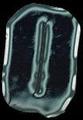
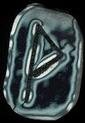
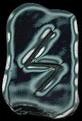
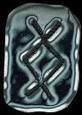
An opening of one's knowledge,capabilities, vision and guidance. The Kenaz is about creating a relationship,learning and allowing room for interpretation. When you are in the darkness,an opening with light is the best and most gracious thing to have bestowed upon you. This is a great time for putting energies into new opportunities. Come share my world as I see it.

Friday, February 03, 2006

Famous Hamiltonian's:Lincoln MacCauley Alexander


The Honourable Lincoln MacCauley Alexander, PC , CC , O.Ont , CD , QC , BA , LL.B (born January 21, 1922, in Toronto, Ontario), served as the 24th Lieutenant-Governor of Ontario from 1985 to 1991.

Born to West Indian immigrants to Canada, Lincoln Alexander first distinguished himself by serving in the Royal Canadian Air Force during the second World War. He then became Canada's first black Member of Parliament when he was elected to the Canadian House of Commons in 1968 as a member of the Progressive Conservative Party of Canada, representing the riding of Hamilton West.

Lincoln Alexander held the seat for the next four successive elections. In 1976 and 1978 he served as an observer to the United Nations. Under the brief government of Joe Clark in 1979-1980, Alexander served as Minister of Labour. He resigned his seat in 1980 to serve as the head of the Worker's Compensation Board.

Lincoln Alexander was selected by Prime Minister Brian Mulroney as the 24th Lieutenant Governor of Ontario, in 1985, the first black person to serve in a vice-regal position in Canada. During his term in office he concentrated on bringing attention to education and youth issues.

After his departure from office in 1991, Alexander was awarded the Order of Ontario, and made a Companion of the Order of Canada. He remains an active spokesman on race relations and veterans' issues, and is the Chancellor of the University of Guelph.

The Lincoln M. Alexander Parkway, a freeway through Hamilton, was named in his honour, though Lincoln Alexander has never held a driver's license of his own. There are three schools called Lincoln Alexander Public School, as well as Lincoln M. Alexander Secondary School, all named after him.

Later,
Kenaz

Thursday, February 02, 2006

My Oscar Predictions

Performance by an Actress in a Leading Role
The nominees are: Judi Dench (Mrs. Henderson Presents), Felicity Huffman (Transamerica), Keira Knightley (Pride & Prejudice), Charlize Theron (North Country) and Reese Witherspoon (Walk the Line)

Prediction: My heart goes with Reese Witherspoon (Walk the Line) but it would be damn nice to see Judi Dench beat the 'kids' again.

Performance by an Actress in a Supporting Role
The nominees are: Amy Adams (Junebug), Catherine Keener (Capote), Francis McDormand (North Country), Rachel Weisz (The Constant Gardener) and Michelle Williams (Brokeback Mountain)

Prediction:This is one tough category to prediction, every nomination is a contender but I have to go with Catherine Keener (Capote) after making The 40 Year Old Virgin and Death to Smoochy she should be rewarded for perseverence.

Performance by an Actor in a Leading Role
The nominees are: Philip Seymour Hoffman (Capote), Terrence Howard (Hustle & Flow), Heath Ledger (Brokeback Mountain), Joaquin Phoenix (Walk the Line) and David Strathairn (Good Night, and Good Luck)

This looks to be the year for Brokeback Mountain, but I'm putting my money on the underdog Philip Seymour Hoffman (Capote).

Performance by an Actor in a Supporting Role
The nominees are: George Clooney (Syriana), Matt Dillon (Crash), Paul Giamatti (Cinderella Man), Jake Gyllenhaal (Brokeback Mountain) and William Hurt (A History of Violence)

My Pick:Paul Giamatti deserves the win after two consecutive snubs for American Splendor and Sideways.

Achievement in Directing
The nominees are: Ang Lee (Brokeback Mountain), Bennett Miller (Capote), Paul Haggis (Crash), George Clooney (Good Night, and Good Luck) and Steven Spielberg (Munich)

Prediction:Ang Lee should take this one but Clooney could be the dark horse. How does Lee go from directing crap like Incredible Hulk to this gem?

Best Motion Picture of the Year
The nominees are: Brokeback Mountain, Capote, Crash, Good Night, and Good Luck and Munich.

Prediction:I'm a sucker for a good historical biopic so I love this years crop of films. Again money is on Brokeback Mountain but I'm going to go with Munich, Steven Spielberg shows why he is the best director today Geoffrey Rush is incredible.

Best Foreign Language Film of the Year
The nominees are: Don’t Tell, Joyeux Noël, Paradise Now, Sophie Scholl — The Final Days and Tsotsi.

Prediction:I haven't seen any of these films so I have to go with the story that has the strongest impact on me and Paradise Now's portrayal of the Israel-Palestine conflict does that.

Best Documentary Feature
The nominees are: Darwin’s Nightmare, Enron: The Smartest Guys in the Room, March of the Penguins, Murderball and Street Fight.

Prediction:After reading each of the plot outlines for each film, Murderball's portrayal of quadriplegics who play full-contact rugby in Mad Max-style wheelchairs,overcoming unimaginable obstacles to compete in the Paralympic Games in Athens, Greece, seems the most intriguing. But, the envirourment is still a hot issue so both Darwin's Nightmare, dealing with the complete anilation of Tanzania's fishing industry by preditory fish introduced by European vessels and Enron both have strong chances.

Canadian an American Officials In Dispute Over Details

Canadians are disputing the U.S. version of an incident in Iraq that saw American soldiers fire shots at a car carrying four Canadian diplomats in Baghdad.

No one was injured, but the two sides differ on what prompted the volley of shots.

A U.S. military spokesperson in Iraq claims American soldiers "felt threatened" that the car might represent a potential suicide-bomb attack after the vehicle came too close and ignored hand and arm signals to keep a safe distance away.

"They felt they had to use warning shots," said U.S. Lt.-Col. Barry Johnson, spokesman for the multinational force in Baghdad.

"Clearly, these warning shots weren't aimed at the occupants."

A statement from the country’s military said the shots were aimed "at the front of the vehicle, away from the passenger area."

But Canadian officials argue that one shot did enter the passenger compartment and others struck the vehicle.

They also claim that the car did keep a safe distance away from the convoy and that they didn’t see any warning signals.

"Our officials are clear that they were operating within the rules," prime minister-designate Stephen Harper said in Ottawa.

"Obviously, we'd like to make sure we deal with this and avoid such a situation in the future. We're obviously very glad no one was hurt."

Gen. Rick Hillier, Canada’s chief of defence staff, has contacted U.S. authorities with concerns over the chain of events.

The vehicle was carrying the charge d'affaires to Iraq, Stewart Henderson, consular offical Michelle Cameron, an unidentified agent with Canada's spy service and another official, plus the driver.

They were on a routine trip through the Green Zone, a highly militarized part of Baghdad that includes the headquarters of the U.S. military and houses the Iraqi government and diplomats, when the bullets began to fly.

No apology has come from the U.S. yet, as it continues to investigate what happened.

"Nobody, our soldiers and our security personnel, certainly don't want to fire on innocent people, certainly not close friends and allies, said U.S. State Department spokesman Sean McCormack.

Canada has a small diplomatic presence in Iraq at this point, but plans to establish an embassy there by the summer.

It will be interesting to see how the Americans will try to get out of this one without an adequate explanation or even an apology. Maybe the Canadians should be required to belt out "I am Canadian!" as they pass through the blocquade. Just my oppinion.

Later,
Kenaz

Wiarton Willie Predicts Early Spring

CREDIT: Frank Gunn, Canadian Press The current Wiarton Willie, albino weather-prognosticating groundhog in Wiarton, Ont.

Wiarton Willie, Canada's best-known four-legged forecaster, is predicting an early end to a winter many Canadians are still waiting to see. The pudgy white woodchuck failed to see his shadow on Groundhog Day in the central Ontario town.

Shubenacadie Sam, Nova Scotia's most famous weather-forecasting rodent, also predicted an early spring. But a unanimous groundhog verdict was prevented when Punxsutawney Phil in Pennsylvania saw his shadow.

Folklore has it that if a groundhog sees his shadow on Groundhog Day, he'll flee to his burrow, heralding six more weeks of winter. If he doesn't, it means an early spring.

The origins of the tradition aren't clear, but it's likely related to the fact that Groundhog Day falls midway between the start of winter and the beginning of spring. Some say it started with Candlemas, a Christian custom named for the lighting candles during the Feast of the Purification of the Virgin Mary. According to an old Scottish couplet: "If Candlemas Day is bright and clear, there'll be two winters in the year."

In Europe, the custom was to watch for hedgehogs emerging to catch insects. But when Europeans settled in North America, the lack of hedgehogs forced them to find a substitute. In 1887, German settlers in Punxsutawney, Penn., headed to Gobbler's Knob on Feb. 2 for their first, official Groundhog Day at that site.

Dozens of communities across North America have since come up with their own weather-predicting critters. It should come as small surprise that the prognosticating woodchucks didn't arrive at the same prediction -- they rarely do.

But in a year when Canada's traditionally fierce winter season has provided more whimper than bang, conflicting forecasts seem especially prescient. While most of Canada basks in unseasonably warmth, a blast of frigid weather has been ravaging Atlantic Canada.

The region was forced to battle rising sea levels, heavy snowfalls, and howling winds just days after reports of balmy temperatures forcing thousands of pregnant grey seals ashore on islands in the Gulf of St. Lawrence. Normally, the seals would give birth on ice floes, but there's been a shortage of ice in the Gulf this year, forcing the seals to take to the islands.

Environment Canada has noted several weather anomalies across the country, with ice roads not forming in northern Saskatchewan, Winnipeg getting rain in January, ski hills being idled by a lack of snow and more rain than usual drenching Vancouver.

Later,
Kenaz

Famous Hamiltonian Landmarks:Hillfield Strathallan College


Hillfield Strathallan College
From Wikipedia, the free encyclopedia.
Jump to: navigation, search

Hillfield Strathallan College is a Canadian private school which teaches grades from Junior Kindergarten to twelve in Hamilton, Ontario.
Contents

History

Started in 1901, was then Highfield School for Boys, was the first private residential and day school for boys in the city. It was a prep school for boys planning to enter the Royal Military College of Canada. Many graduates played key roles in the Canadian military. A series of name changes, reconstructions, new construction, and amalgamations with other institutions have since occurred, resulting in a single modern co-educational facility. Alumni from all founding organizations attended the centential anniversary in 2001.

Timeline

* 1901 - Highfield School for Boys founded
* 1920 - Hillcrest School was founded, as replacement to a previous school burnded two years prior.
* 1923 - Strathallan School founded
* 1929 - Hillcrest School and Highfield School were merged into Hillfield School, with new premises.
* 1959 - The Highfield School program was upgraded and renamed to Hillfield College to reflect this (note: the word college is used as it is England, and doesn't include education past high school in this case)
* 1961 - Strathallan School was renamed to Strathallan College
* 1962 - The two colleges, now named Hillfield-Strathallan Colleges, were put under a single Board of Governors, which ran the colleges in co-ordinated but separate manner during a transition period.
* 1963 - The amalgamation was completed and for the first time, it operated completely as a single entity for the first time
* 1995 - The current site of the college was acquired
* 1999 - Major additions to the campus, included a new Montessori school
* 2004 - The plural in the organization's name was dropped, and it came to just be Hillfield Strathallan College

Hamilton Philharmonic Youth Orchestra

The Hamilton Philharmonic Youth Orchestra (HPYO) is the "Orchestra in Residence" at the school. About 55 young people aged 9 to 22 are a part of it. They have performed in various places, such as:

* Carnegie Hall in Manhattan, New York City
* Banff, Alberta,
* Moosonee, Ontario
* Huntsville, Alabama
* Northampton, England

Notable alumni

The following includes notable alumni from before mergers, reorganization, and renaming:

* Henry Duncan Graham Crerar (b. 1888 d. 1965) - Canadian General Officer Commanding the Canadian First Army on D-Day in World War II. He had also served as a lieutenant-colonel in World War I.
* Henry Myles Carscallen - RCAF Air Vice-Marshall.

Later,
Kenaz

Wednesday, February 01, 2006

Famous Hamiltonian's:Ellen Fairclough

Ellen Fairclough, who in 1957 became the first woman to serve as a federal Cabinet Minister.

National Archives of Canada (PA 148646)


Ellen Fairclough became the first Canadian woman federal cabinet minister when she was appointed Secretary of State by Prime Minister Diefenbaker in 1957. Vivacious, intelligent and competent, Ellen Fairclough had a mixed record in cabinet. Her attempt to restrict family immigration sponsorships to immediate family members caused an uproar in the Italian community, but she was successful in introducing regulations that largely removed racial discrimination from Canadian immigration policy.

Birth:

January 28, 1905 in Hamilton, Ontario

Death:

November 13, 2004 in Hamilton, Ontario

Profession:

* Before entering politics, Ellen Fairclough was a Chartered Accountant and owner of a Hamilton accounting firm.

* Ellen Fairclough was active in the Consumers Association of Canada, the Girl Guides, the I.O.D.E., the United Empire Loyalist Association, and the Zonta Club of Hamilton and Zonta International.

* After leaving politics, Ellen Fairclough worked in a trust company and was then chairman of Ontario Hydro.

* Ellen Fairclough published her memoirs "Saturday's Child" in 1995.

Political Party:

Progressive Conservative

Federal Riding:

Hamilton West

Political Career of Ellen Fairclough:

* Ellen Fairclough was elected to Hamilton City Council in 1946. She served on the Hamilton City Council for five years until 1949.

* Ellen Fairclough was first elected to the House of Commons in a by-election in 1950. She was the only woman in the House of Commons until three others were elected in the 1953 general election.

* As Progressive Conservative labour critic, Ellen Fairclough introduced a private member's bill requiring equal pay for equal work and advocated the creation of a Department of Labour Women's Bureau.

* With the election of a Conservative minority government in 1957, John Diefenbaker grudgingly appointed Ellen Fairclough to cabinet as Secretary of State. As Secretary of State, Ellen Fairclough initiated Dominion Day celebrations on Parliament Hill.

* The Conservatives won a majority government in 1958, and Ellen Fairclough was appointed Minister of Citizenship and Immigration. At the beginning of her time at Citizenship and Immigration, Ellen Fairclough ran into political problems, especially from the Italian community, when she tried to limit immigration family sponsorships to immediate family members, and was forced to back down. In 1962 however, Ellen Fairclough successfully brought in regulations which went a long way towards the elimination of racial discrimination in Canadian immigration policy.

* She was moved to the Postmaster General portfolio in 1962.

* Ellen Fairclough was defeated in the 1963 election.

Later,
Kenaz

Tuesday, January 31, 2006

Famous Hamiltonian's:Victor K. Copps

From Wikipedia, the free encyclopedia.


Victor Kennedy (Vic) Copps (March 21, 1919 - October 15, 1988) was a Canadian politician and Mayor of Hamilton.

Born in Haileybury, Ontario, he enlisted in the Royal Canadian Air Force during World War II, following which, he worked in Timmins, Ontario for a local newspaper. In 1945 he moved to Hamilton to become a sports broadcaster on CHML. He entered local politics in 1960, winning a seat on the Board of Control and becoming deputy Mayor. He ran for Mayor in 1962 defeating the incumbent. He sparked outrage among Hamilton's Protestant community, as one of his first official acts was to abolish the annual Orange Order Parade, a staple of Hamilton for many years. In 1964 he was an unsuccessful candidate at the Ontario Liberal Party's leadership convention. Copps continued as mayor until 1976 when he was forced to retire following a heart attack. He was the city's first Roman Catholic mayor and its second-longest serving holder of that office. Under his leadership, the city engaged in a major project of urban renewal. The city's Copps Coliseum is named after him.

Vic Copps is the father of Sheila Copps, a former Canadian cabinet minister.

Later,
Kenaz

Famous Hamiltonian's:John Sopinka


The Honourable Mr. Justice John Sopinka

John Sopinka was born in Broderick, Saskatchewan, on March 19, 1933. He was the son of Metro Sopinka and Nancy Kikcio. In 1941 his family moved to Hamilton, Ontario. He studied at the University of Toronto, earning a B.A. in 1955 and an LL.B. three years later. From 1955 to 1958, while working on his law degree, he played professional football with the Toronto Argonauts and Montreal Alouettes of the Canadian Football League. He was called to the bar of Ontario in 1960, and was later called to the bars of four other provinces and two territories. He practised law in Toronto for 28 years, first with Fasken & Calvin and then with Stikeman, Elliott. During that time, he also lectured on law at both Osgoode Hall Law School and the University of Toronto. He is the author of several legal works, including The Trial of an Action, and co-author of The Law of Evidence in Canada. Appointed to the Supreme Court of Canada on May 24, 1988, he served on the Court for nine years. Justice Sopinka died on November 24, 1997, at the age of 64.

Later,
Kenaz

Famous Hamiltonian's:Lloyd Douglas Jackson


Lloyd Douglas Jackson
From Wikipedia, the free encyclopedia.

Lloyd Douglas Jackson (April 22, 1888 - September 11, 1973) was Mayor of Hamilton, Ontario, Canada from 1950 to 1962.

Born near Sarnia, Ontario, Jackson attended McMaster University while it was still in Toronto, earning a Bachelor's degree in Chemistry. He began his political career in Hamilton's Board of Education, whereupon he served as Mayor for 13 years. As Mayor, he focused on the development of Hamilton's downtown area, including the construction of the new City Hall.

In 1970, a shopping and commercial centre, Lloyd D. Jackson Square (known as Jackson Square), was named in his honour.

Later,
Kenaz

Monday, January 30, 2006

Rune Reading For The Week Of January 30, 2006-February 5, 2006

The question will remain the same: "Will this week be a successful one?"

Rune Alphabet


Spread:Cross(in order of reading)
The Cross spread is used to plot the arc of your life and the forces acting on it. It is the most popular spread, giving a very complete view of the situation. Ice Runes are most commonly used for questions about struggle, conflict, and achievement.


Here is the Reading Using the Ice Set.

1.


The left rune represents an important element of the past. Isa is the rune symbolizing Ice - cold, stagnant, frozen, and unchanging. This rune suggests heat removed not just from anger or conflict, but from passion as well. Paradoxically, Isa conveys images of slippery slopes and unsure footing, but also of circumstances that have crystallized and become utterly immutable. Remember that in the cold north, ice is not just THE challenge to be overcome, but the very nature of the environment. Be courageous, for you work against this element every day. Will you fight alone or with others against this, our common foe? Is there much worse than lack of change?

2.


The middle rune represents a deciding element of the present. Wunjo is the rune of Joy. Since joy is least frequently a solitary emotion, this rune often represents mutual or communal bliss. Wunjo is also seen as a rune of the gods and a rune of perfection, carrying with it the elation that blazes from the creation of a perfect work - perhaps this is the true joy of the gods, that they can create perfection. That aside, this rune does not focus on the struggle for perfection or on our inevitable imperfections, but rather on a job well done and the satisfaction that comes from it.

3.


The right rune represents the critical element of the future, at the core of the final outcome. Sowelu is a strong symbol, for it represents the sun. Unlike equatorial cultures who may see the sun as a harsh and imperial force capable of causing droughts, in the cold north the sun is a purely feminine force that gives life and allows crops to grow. In dark times, this rune represents clarity of sight and the victory of good over evil. Sowelu is irreversible, as the cycles of the sun and seasons are perpetual.

4.


The top rune represents a force that works for you. Ehwaz is representative of the eight-legged horse ridden by the god Odin. As such, this is the rune of controlled movement and travel, including the pursuit of an objective or station in life. Since some older sources show Odin not as a man riding a horse but as a centaur-like being, this rune can also represent the union of man and nature, or the fusion of two entities in perfect harmony. As this rune is reversed, this could bode poorly for travel or for the vehicle involved. In the more spiritual sense, this rune could represent difficulties in self-improvement or other attempts at advancement. Finally, it may represent a splitting of two or the inability of two to act as one.

5.


The bottom Rune represents a force that works against you. Othila is the homeland. Land was the purest form of immovable wealth in Norse civilization, distinct from the movable wealth represented by Fehu. This rune speaks of stability and safety stemming from inheritance, both material and genetic. With respect to the question asked, consider the background of the people and families involved...

If you are further interested in Rune stones, please check out a script I wrote about three years ago. The story tells of a women's chance encounter with the towns rune reader and physcic. Her reading leads to a terrible discovery about her ex-husband.Click here to read 'Evil Of A Different Kind'

Later,
Kenaz

Sunday, January 29, 2006

Famous Hamiltonian's:John Strathearn Hendrie

John Strathearn Hendrie
From Wikipedia, the free encyclopedia.

The Honourable Sir John Strathearn Hendrie, KCMG, CVO (August 15, 1857-July 17, 1923) was Lieutenant Governor of Ontario from 1914 to 1919.

John Hendrie was born in 1857 in Hamilton and was educated at Upper Canada College. He became a railway contractor and promoted the Hamilton Bridge Works. In 1885 he married Lena Henderson. A Member of Provincial Parliament from 1902 to 1914, he held the positions of Minister without Portfolio and Hydro-Electric Commissioner. He also commanded the 2nd Brigade, Canadian Field Artillery. Hendrie was appointed Lieutenant Governor of Ontario in 1914 and served until 1919. Much of his time in Office was spent helping the War Effort and hosting soldiers, seamen and dignitaries at Government House. He was knighted in 1915, and died in Baltimore, Maryland, in 1923.

Later,
Kenaz

Famous Hamiltonian's:George Hamilton

From Wikipedia, the free encyclopedia.

George Hamilton (October 1788-February 20, 1836) was a businessman and politician in Upper Canada, who founded the city of Hamilton, Ontario.

He was born at Queenston Heights in 1788 (1787 in some sources), the son of Robert Hamilton, and educated in Scotland. Hamilton served at the Battle of Queenston Heights and the Battle of Lundy's Lane during the War of 1812.

In 1815, he purchased 257 acres in Barton Township from James Durand, who represented the region in the House of Assembly. Together with a neighbouring landowner, he set up a town site. The new town was to become the capital of the new Gore District. Hamilton provided land for a court house and jail. The police village of Hamilton was incorporated in 1833.

Hamilton represented the riding of Wentworth in the Legislative Assembly of the Province of Canada from 1821 to 1830, where he tended to support moderate reformers and encourage immigration to Canada. He helped set up a canal to link Hamilton harbour to Lake Ontario and worked to secure funding for the court house and jail.

He died in Hamilton in 1836.

Later,
Kenaz

Saturday, January 28, 2006

Famous Hamiltonian's:Ron Joyce


Tim Hortons

Location: first store opened at 64 Ottawa Street North, Hamilton, Ontario

The first Tim Hortons store was opened in 1964 on 64 Ottawa Street North, near Dunsmure Rd., in Hamilton, Ontario. It has since grown into Canada's largest national chain of coffee and doughnut shops, with over 1,500 stores across Canada. Tim Donut Ltd., the corporate headquarters of the chain, is located in Oakville, Ontario and in 1997, Tim Hortons was employing 25,000 people across the country.

The Tim Hortons stores are named after their founder, Miles Gilbert "Tim" Horton, a hockey player who was born on January 12, 1930 in Cochrane. Horton began his hockey career in Quebec. He eventually played for the Toronto Maple Leafs (beginning in 1952), the New York Rangers (1970), the Pittsburgh Penguins (1971) and then for the Buffalo Sabres (1972).

Initially, Tim Horton was involved in a string of hamburger restaurants with his partner Jim Charade, while he was still playing hockey. These restaurants were not very successful ventures, so Mr. Horton explored the idea of a doughnut and coffee store. He opened his first Tim Hortons store in 1964 in Hamilton, Ontario. The Tim Hortons store served coffee and doughnuts exclusively. Eventually, Tim Horton's own personal creations, such as the apple fritter and the dutchie, were featured at the store. These became the chain's most popular doughnut choices in the 1960's and have remained popular ever since.

Ron Joyce, a former Hamilton police constable, saw that Tim Horton was looking for help in running his store through an ad in the newspaper. Joyce proceeded to take out a $10,000 loan from the credit union which he then invested in the store. At that time, the store was known as "Tim Horton." Later the name was changed to "Tim Horton's" and then later still to "Tim Hortons," with no apostrophe.

In 1965, Ron Joyce took over the original Tim Hortons store with future aspirations of expanding the store to include ten outlets. At this time, a quarter could buy a cup of coffee and a doughnut. A dozen doughnuts cost 89 cents. Slowly, more Tim Hortons stores started springing up and business was fairly successful.

Tim Horton was killed in an untimely car crash on February 21, 1974 while traveling back to Buffalo after playing a Sabres game in Toronto. He was driving home in his expensive Pantera sports car, maintaining speeds of 160 km/h (100 mph) on the QEW near St. Catharines, when he lost control of his vehicle and crashed.

Not long after Horton's death, Joyce offered Lori Horton (Tim's widow) $1 million for her shares in the chain, which included forty stores by that time. Once she accepted his offer, Joyce became the sole owner. Years later, Mrs. Horton decided that the deal between her and Joyce was not fair and took the matter to court. Mrs. Horton lost the lawsuit in 1993, and was declined for appeal in 1995.

Nevertheless, the business continued to grow and become more innovative. In 1976, Tim Hortons introduced the Timbit, which has since enjoyed much success. Despite what many people believe, a Timbit is not a doughnut hole.

In 1977, a $100,000 Tim Hortons building at Main and Wentworth Streets in Hamilton was built and dubbed the "Doughnut University," because it was used as a teaching facility. Trainees would be taught how to bake around the clock and provide continual freshness to customers. By this time, the company was approaching $20-million in sales. In 1978, Tim Donut Ltd. opened it's 100th store in Thunder Bay, Ontario.

With his business on the rise, Ron Joyce developed an interesting way to pick out new sites for Tim Hortons stores. Mr. Joyce would pilot the company's twin-engined aircraft around the country in search of just the right spot for a store. Any sites which he thought looked interesting would be further investigated, and if it was feasible, then a Tim Hortons would be built there.

Over the years, Tim Hortons has tried a number of new products, in an attempt to diversify the business. These have included such foods as clam chowder, chili, muffins, pies, croissants, cookies, cinnamon buns, bagels, soups, sandwiches and even macaroons.

At one time, plans were being considered to open Tim Hortons ice cream stores. This idea was abandoned when it became apparent that the ice cream business was seasonal and might not not be a successful venture. One similar plan which did go through was Tim Horton's Break Away, which was a soup and sandwich chain. Break Away was a failure, and although nine of those stores were opened, the experiment was eventually abandoned.

However, Tim Hortons did come up with a number of exciting promotions. One of these promotions is the "Roll Up The Rim" cups that have come out annually since the mid-eighties. These cups have special rims that, when rolled up, have messages printed on the inside which indicate if someone is a winner or not. Prizes include food products, bicycles, coffee makers and cars.

On March 3, 1983, Tim Hortons took a somewhat controversial move and opened Canada's first non-smoking Tim Hortons store. This store was located at the intersection of Main and Wellington in Hamilton. Not long after this, the second non-smoking store opened in Kitchener. The idea behind having non-smoking Tim Hortons stores was that people who did not smoke would still be able to enjoy Tim Hortons' coffee and food without being surrounded by tobacco smoke. The ideology was that smokers would not have much reason to complain, as another Tim Hortons where smoking was allowed was probably not more than a few blocks away. When the first non-smoking store did open, people refused to obey their policy and police had to be called in a few times to evict smokers.

Business for Ron Joyce and his company continued to do quite well right into the 1980s. The 200th store was opened in 1984 in Clappison's Corners and on November 25, 1985, the first Tim Hortons drive-thru was opened on Upper Gage and Fennell in Hamilton. By 1985, Tim Hortons was spending close to $100,000 on research and development and about $2.8 million on advertising. In 1987, store number 300 was opened in Calgary, followed closely by number 400 in 1989, in Halifax. By 1991, the 500th store was opened in Aylmer, Quebec.

One day, Ron Joyce met Dave Thomas on a golf course. Thomas, the American founder of the Wendy's hamburger chain, owned a house next to Joyce's, in Fort Lauderdale, Florida and the pair immediately hit it off as good friends. In 1992, the two men began co-operating on the business front. They established a number of combination Wendy's/Tim Hortons stores in Canada, a total of 13 by 1995.

After serious consideration by both men and their company boards, a merger was announced between Wendy's and Tim Hortons in 1995. This was a $425-million U.S. deal that left Ron Joyce the biggest shareholder of the third-largest hamburger chain in the United States. It also made Tim Hortons a division of the U.S.-based Wendy's chain. The merger left Tim Hortons a wholly owned subsidiary of Wendy's, although the two do retain separate management. As part of the deal, Tim Donut Ltd. was given 13.5% of Wendy's stock, worth about $300 million U.S., and Wendy's assumed $125 million U.S. of Tim Hortons' debt. In the end, the total deal was worth about $580 million Canadian.

Although Tim Hortons had operated in nearby Buffalo since the 1970's, Joyce, considered the Wendy's/Tim Hortons merger a great way to expand into the U.S. market, under the merger, forty stores were opened in Detroit and another forty in the Columbus, Ohio area. He also began expanding the store by introducing some non-traditional storefronts, such as carts, drive-through-only locations, and small outlets in universities, sports arenas, the CN Tower, and duty-free stores at the U.S.-Canadian border.

Although Tim Hortons has had a dramatic expansion, and has grown considerably as a business since the early days of the 1960s, Ron Joyce and his company have done their best to see to it that some of the early traditions are adhered to and the old store standards are kept high. A plaque hangs on the wall of the first Tim Hortons store, reading: "Built on hard work and dreams, the Tim Horton chain takes pride in its history..."

Training for Tim Hortons employees is intensive in order to maintain a high level of customer service. This is especially true for someone who wishes to open a new store. They must attend training sessions at the company headquarters in Oakville for fifteen days straight where they are taught how to make doughnuts and how to manage a Tim Hortons store successfully.

In 1995, the company decided that each store should have a poster of Tim Horton by Ken Danby. However, Tim Horton's widow demanded the removal of the posters. A letter from Mrs. Horton's lawyer in 1995 eventually led to the posters being taken down, despite the fact that the company had no real legal obligations to do so.

Several years ago, Ron Joyce established the Tim Hortons Children's Foundation. This is a non-profit, charitable organization, that allows thousands of children from less-well-off homes to attend a first-class summer camp for a few weeks of the year. Local Tim Hortons store owners keep in touch with community churches, schools, clubs and local agencies such as Big Brothers and Sisters, to select children aged seven to eleven, who might not otherwise have a chance to experience the fun of a summer camp outside of their immediate province or region. The Foundation covers all of the costs for each child, including food, lodging, transportation and the facilities at the camps.

Ron Joyce was named to the Order of Canada in 1992 for his work with the Children's Foundation. In 1996, he also received a lifetime achievement award from the Canadian Franchise Association for his pioneering spirit and inspirational leadership.

Ron Joyce is not stopping the corporation's expansion. By the year 2000, he hopes to have 2,000 Tim Hortons outlets across Canada. As of April, 1997, there were already 1,500, and since the company was able to accomplish its earlier goal of having 1,000 stores by 1995 (the 1,000th store was opened in Ancaster, Ontario), there is a very good chance that they will succeed once again.

Baking twice every 24 hours, the 1,500 stores go through an average of 200 pounds of dough everyday. Their sales totaled $646-million in 1996. In 1997, there were 70 stores in Hamilton-Wentworth area alone. This works out to one store for every 7,081 people, which confirms the statements that Hamilton truly is the capital of coffee and doughnut stores.

Later,
Kenaz

Friday, January 27, 2006

Goyette Looking Forward To Representing Canada

14 Days to go.

Danielle Goyette, a member of the Canadian women's hockey team, has been chosen as Canada's flag-bearer for the Torino Games.

Goyette will carry the flag at the opening ceremony in Turin, Italy, on Feb. 10.

"I will carry our flag for all the athletes," Goyette said at a news conference in Calgary. "I know that all of your hands will be with mine as we walk into that stadium."

Goyette, a native of St-Nazaire, Que., was a member of Canada's gold medal-winning women's hockey team at the 2002 Olympics in Salt Lake City. She was the leading goal-scorer on the squad that won silver in 1998 in Nagano.

Considered one of the pioneers of women's hockey, more from the CBC on her storied career.

Traditionally, the Canadian flag-bearer is a respected and successful athlete. This year, the field of candidates was narrowed when a few top athletes asked their sport federations not to nominate them for the honour. Some were concerned that carrying the flag would be a potentially strenuous and unnecessary distraction that could hurt their medal chances. Among the athletes who asked not to be nominated were Olympic gold medal cross-country skiing star Beckie Scott, world champion bobsledder Pierre Lueders, and Olympic speed skating medallists Cindy Klassen and Clara Hughes.

Goyette said she never considering withdrawing her name from consideration but empathizes with those that did.

"It's a personal choice and only the athletes know what they need to do to be at their best," she said. "I know pretty much all of them and I'll be behind them 100 per cent."
I have no problems with the decision of the athletes who choose not to bear the burden and endure the stress of being the flag-bearer. Carrying a flag in the opening ceremony isn't as important as raising the Maple Leaf at the medal ceremonies, so lets give these athletes all the opportunity to prepare themselves so that they can be at their peak when it counts. Go Canada!

Hopefully Goyette can join Catriona Le May Doan, Canada's 2002 flag-bearer, who won gold in speedskating as an athlete that can escape the ravishes of the "flag bearer curse". The previous two selections, moguls skier Jean-Luc Brassard and figure skater Kurt Browning, failed to earn a medal despite going into the Olympics as favourites.

I also found this cute side link at the cbc.ca/kids sites. This site offers a look at the olympics for kids. I like their reporting team of Dodger and Phil,


Later,
Kenaz

Thursday, January 26, 2006

Famous Hamilton Landmarks:Battlefield House

In 1812 the United States declared war on Britain, and invaded Upper Canada from the Niagara Penninsula. An American force crossed the Niagara River and captured Fort George (Niagara-on-the-Lake) in May 1813. With about 3500 troops, they moved on in pursuit of the British who had retreated to Burlington Heights (where Dundurn Castle now stands).

The American troops reached Stoney Creek on June 5, 1813 and settled down for the night. The Gage House was used as headquarters by the two American Generals, Winder and Chandler.

At Stoney Creek, a surprise night attack was made possible through the daring assistance of Billy Green, a local 19-year-old civilian. Billy Green went to Burlington Heights to warn the British that the Americans were in Stoney Creek. The British decided on a night attack and Billy acted as a scout, since he was a very experienced woodsman who knew the area well.

About 700 regulars of the 8th and 49th Regiments of Foot, under Lieutenant - Colonel John Harvey, stopped the American advance and allowed the British to re-establish their position in Niagara.

During the 40-minute battle hundreds of soldiers died and the British had captured the two American Generals and some field artillery. The Americans retreated to Forty Mile Creek (Grimsby) and then to Fort George.

The Americans never advanced so far into into the Niagara Penninsula again.

Site of the Battle of Stoney Creek


This engraving by Benson Lossing is from 'The Pictorial Field Book of the War of 1812: Illustrations by Pen and Pencil of the History, Biography, Scenery, Relics and Traditions of the Last War for American Independence', which was published in 1869.

[From the Hamilton Public Library: Special Collections]

Stoney Creek Battleground

The Stoney Creek Battle Ground

This map shows the location of the British and American troops before the Battle of Stoney Creek in 1813. The British advance from Burlington Heights is shown, as well as the camps of the American troops near the Lewis Homestead and the Gage Homestead.

The map is signed by William B. Ford, Ontario Land Surveyor, Hamilton, Ont. and appears in 'History of the War of 1812' by James Hannay, published by Morang & Co. in 1905.

[From Hamilton Public Library: Special Collections]

The Seat of the War in North America

This map was published in 1813 and 1815 by John Melish in his Military and Topographical Atlas of the United States. Colour is used to outline political divisions.

We have added a red dot to show the location of Stoney Creek. This map is only a small portion of the original, and shows the Niagara locations where battles were fought during the War of 1812.

The Seat of the War of 1812
[From the Collections of the National Archives of Canada:
Cartographic and Architectural Archives Division]

If you look along the orange-coloured border line, you can see the British Fort George in Newark (now Niagara on the Lake, Ontario) and Fort Niagara now on the American side (Youngstown, N.Y.). The population of Newark at that time was 500 and at Queenston it was 300. (Hand-coloured engraving)


A View of Fort George


[From the Collections of the National Archives of Canada:
Documentary Art and Photographic Division - colour engraving]
A View of Fort George, Upper Canada
from Old Fort Niagara
This view of Fort George from the American side illustrates the 'strategic checkmating' along the Niagara River during the War of 1812.

Fort George, military headquarters of Upper Canada, was built in 1796 to replace Fort Niagara, then in the United States.

American forces captured the fort in May 1813 -- just one month before the Battle of Stoney Creek in June of 1813. It was later largely destroyed by the Americans in December of that year on their withdrawal.


Battle of Queenston - October 13, 1812

"Which ended in a complete Victory on the part of the British, having captured 927 Men, killed or wounded about 500, Taken 1400 Stand of Arms, a six Pounder and a Stand of Colours."

This view of the famous 1812 battle is based on a sketch by James Dennis (1796-1855), an officer of the 49th Regiment of Foot who took part in the battle, and shows the American forces crossing the Niagara River from Lewiston under fire from the hastily assembled Canadian militia and British regulars.

The Battle of Queenston Heights is remembered as the action where Major-General Sir Isaac Brock fell.


The Battle of Queenston

[From the Collections of the National Archives of Canada: Documentary Art and Photographic Division - Hand-coloured aquatint}

Canada West - 1849

Part of Canada West, 1849
formerly Upper Canada

By the year 1849 the County succeeded the District as the division for municipal and judicial purposes in Canada West. That along with recent transportation developments are shown in this section of Canada West. (Coloured print)

[From the Collections of the National Archives of Canada: Cartographic and Architectural Archives Division]

Smith's Knoll

Monument to Soldiers Who Fell at the Battle of Stoney Creek, 1813

In 1889, seventy-six years after the Battle, Allen Smith was ploughing his father's farm when he uncovered human bones and bits of cloth with the insignia of both British and American regiments.

The discovery led to more intensive digging and soon the bodies of 23 unknown soldiers were found. This area was known as Smith's Knoll and it was here where the American guns had been placed during the battle.

In 1908 a cairn was erected at Smith's Knoll to mark the last resting place of soldiers from both sides who had died in the short but violent battle.

Smith's Knoll is on King Street in Stoney Creek, just across the street and slightly east of Battlefield House Museum.

Later,
Kenaz

Wednesday, January 25, 2006

Famous Hamiltonian's: E.D. Smith


INDUSTRIAL HAMILTON: A TRAIL TO THE FUTURE
E. D. Smith & Sons, Limited

Location: Winona, Ontario

Ernest D'Israeli SmithThe Canadian segment of the Smith heritage began in 1787 when Silas Smith came to southern Ontario from New Jersey. He was a given a deed for 600 acres of land (400 on the mountain and 200 below it) just east of what would eventually become Winona. It was there that he raised his family.

In 1853, Ernest D'Israeli Smith, great-grandson of Silas, was born. Originally studying to become an engineer, failing eyesight forced Ernest into becoming a farmer. Though his father farmed grains and vegetables, Ernest soon discovered that there was little profit to be had with those crops. Instead, in 1858 he began planting raspberries, blackberries, currants, and gooseberries on five acres of the mountain property that belonged to the family. Based on this initial experience Ernest moved into fruit farming on a larger scale, purchasing 85 acres below the escarpment and adding grapes, apples, and cherries to his list.

Frustrated with shippers who took part of his profit, in 1882 Ernest began transportation of his own fruit directly to wholesalers. This marked the beginning of the company which carries Ernest's name. Demand soon surpassed his own supply and he began buying and shipping other farmers' fruit as well.

E.D. Smith LogoIn 1889 E.D. Smith & Sons Limited (E.D.) started Helderleigh Nurseries, which concentrated on fruit tree and bush cultivation for other Niagara Peninsula farmers. However, orders soon came from across Canada for the quality shrubbery which the company provided.

Up to this point, E.D. had not been an actual industry. However, this would change in 1903 when surplus fruit had gone unsold for successive seasons. Ernest decided to make use of the excess produce by making jam. By taking raw materials and processing them into a product, E.D. as an industry was born. The first pure jam to be produced in Canada, it was originally made in the basement of the E.D. fruit house. However due to its success, a factory was built in 1905 for full scale jam production. Five years later, E.D. expanded its facilities to include tomato purée and ketchup.

Armand (standing, left) and Ernest (with foot on cart)In 1914, Ernest sent his eldest son, Armand, to England to establish a factory to help satisfy the overwhelming demand for jam. However, World War I was soon declared and an embargo was placed on food leaving Britain. Almost immediately after Armand had produced his first batch of jam, he had to close down the factory and return home. During the 1920's Leon (Ernest's other son) took responsibility for the development of the agricultural program. The depression which soon followed reduced demand for fruit, therefore Armand compensated by increasing sales of tomato purée to export markets. This led to contact with H.P. Sauce Limited (a food processing company from Britain) which eventually formed into a business relationship. E.D. began selling H.P. products in Canada. By 1942, World War II had greatly reduced commercial transatlantic shipping. This caused H.P. to choose E.D. as a Canadian manufacturer for its products. Six years later, H.P. acquired Lea & Perrins Limited, giving E.D. the Canadian rights to manufacture their famous Worcestershire Sauce.

Cans of Jam Being Filled by HandAt the end of World War II, the return of soldiers to Canada along with an increased flow of immigrants caused a dramatic increase in the demand for processed food products. The extra funds gained because of this allowed for the E.D. plant to expand its operations.

In 1948, Ernest died. Besides building up a successful business from scratch, during his life he had represented Wentworth County for ten years and was later called to the Canadian Senate.

Jam Boilers Circa 1910In 1956, E. Llewellyn G. Smith succeeded his father Armand as president of E.D. During E. Llewellyn's reign expansion continued. New, more efficient manufacturing techniques were introduced allowing for new products such as Garden Cocktail vegetable juice and a diet product line. In 1968 E.D. recognized the potential for growth that the food service industry had. This led to the purchase of Ware Foods Limited, an old Hamilton-based food processing company which made products for the restaurant trade.

Another acquisition was made in 1976 with the purchase of McLarens Foods Limited of Hamilton. This company produced pickles, olives, peanut butter, and maraschino cherries among other things. In 1981 E.D. consolidated its manufacturing and distribution operations, closing the McLarens plant in Hamilton. More restructuring was needed in order to compete with bigger Canadian corporations however. In 1985 E.D. released new products with a redesigned logo and a seal of quality on each in an effort to win over more customers. The company had diversified so much over the past ten years that by 1986 jam, a staple product initially, had become one of its lowest sellers. It was also during this year that the Prosperity Plan was introduced to reward employees for suggestions that saved the company money.

Llewellyn Smith Holding a Bottle of Garden CocktailBy 1989 the company could no longer financially support its wide product range and decided to focus on sauces and fruit products. This meant selling its Garden Cocktail vegetable juice to Cadbury Schweppes Canada Incorporated even though that product was its strongest seller. However, in 1991 E.D. bought the Canadian jam, marmalade, and syrup business of Campbell Soup Company Limited and the following year it began making sauces for President's Choice.

In 1993 the company spent almost $4 million to retrofit a recently purchased plant in Mississippi, helping to boost their production by 25% and putting them in a good position to face the future.

Later,
Kenaz

Tuesday, January 24, 2006

Famous Hamilton Landmarks:Canadian Warplane Heritage

Over 25 Years of Flying Heritage
A collection of over fourty aircraft has grown through the friendship of Dennis J. Bradley and Alan Ness. Their love of aviation and their desire to maintain and preserve Canada's aviation history saw restoration projects that were not only great pieces of workmanship but airworthy examples.

Bradley and Ness approached friends Peter Matthews and John Weir to become partners with them to acquire the first aircraft, a Fairey Firefly. This aircraft was to become the masthead of the museum's advertising and stationery and continues to this day to be incorporated into logos, crests and memorabilia. A tribute to the four flying founders is located in the museum's main entrance.

In 1972, the group moved into part of a hangar at Hamilton Airport and started to seriously seek out other restoration projects or flying aircraft. A Harvard Mark IV was to be the next acquisition, followed over the years by Supermarine Spitfire, Corsair, Chipmunk and Tiger Moth.

Hangar 4, followed years later by Hangar #3 for restoration, was purchased and the aircraft collection and the volunteers finally had a home. The group applied for foundation status, to be governed by its own volunteers, operating as the Canadian Warplane Heritage. Meanwhile, sufficient interest was being shown by those watching the aircraft being restored. More enthusiasts wanted to become part of the growing activities and the membership program began.

1975 saw the collection move into another area in Hangar 4 and the acquisition and restoration began on the B-25 Mitchell. The story of the arrival of this aircraft suggests a strafing of the airfield and the bombing of the runway with watermelons. In the same year, the Westland Lysander and Cessna Crane joined the collection.

It is impossible to compress over 30 years of history into one short story. Many aircraft have joined the collection, or have been traded or sold. Tragedy struck in 1977 at the Canadian International Air Show. Alan Ness lost his life when the Fairey Firefly he was piloting crashed into Lake Ontario. The aircraft would be replaced by another and Ness' memory is carried on through the awarding of the "Alan Ness Memorial Trophy" given annually to a deserving member of the museum.

The most ambitious restoration undertaking to date has been the Avro Lancaster. This aircraft stood guard over the Royal Canadian Legion Branch 109 in Goderich, Ontario. With the support of the Sulley Foundation, the Lancaster was acquired by Canadian Warplane Heritage in 1977.

There was a tremendous amount of work required to remove the "Lanc" from its concrete pedestal and prepare it for transport to Hamilton. The Canadian Forces accepted the transportation challenge, as a training mission to be performed by 450 Squadron. By moving the Lancaster to Hamilton via a Chinook helicopter airlift, valuable information was obtained by the military on the logistics of transporting large aircraft by helicopter. The aircraft arrived at the museum in 1979 and restoration began. It was not until 1988, that the CWH Lancaster Bomber, dedicated to Andrew Mynarski, VC, flew before 25,000 visitors.


Avro Lancaster

In 1998, the museum celebrated the 10th anniversary of the first flight of this historic aircraft with a Gala Dinner and Dance featuring the Spitfire Band followed by other events throughout the year.

In 1978 the first employee was hired. Although, it is through the world-wide membership of dedicated volunteers, the increasing responsibilities of a year round museum open daily, require full time staff. The staff members work alongside volunteers in every aspect of the museum's day-to-day operations.

Membership in the Canadian Warplane Heritage Museum is open to all who share an interest in aircraft preservation. Funding for museum projects comes mainly from membership fees, private donations and sponsorships. The Ontario Government through the Ministry of Citizenship, Culture and Recreation, supports the museum through an operating grant. The Canadian Federal Government has recognized the importance of preserving certain aircraft of outstanding historical significance by certifying Canadian Warplane Heritage as a Cultural Property Institution.

On February 15th, 1993, a large part of Hangar 3 was destroyed in a devastating fire. Included in the destruction of the hangar were five museum aircraft, the administrative offices, engineering records and all ground and maintenance equipment. The aircraft lost were the Hawker Hurricane, Grumman TBM Avenger, Auster, Stinson and Supermarine Spitfire. The fire spread quickly, reaching temperatures as high as 3,000 degrees, through the north side of the building requiring the assistance of four fire departments and fifty-five fire-fighters. Volunteers who arrived to lend assistance could only watch helplessly as the fire was fought only a few feet away from the Avro Lancaster. At the time, the Lancaster was sitting on aircraft jacks. With fear that the roof might collapse, it was hours before the decision was made to allow the wheels to be installed and the aircraft removed. Also saved that day were two restoration projects, the Fleet Finch and Bristol Bolingbroke.

The museum battled back to design and build a 108,000 square foot delta-wing shaped building. With the support of the Canada-Ontario Infrastructure Works Program, all three levels of government supported a new site that would house all operations of the museum under one roof. It was officially opened by the museum's Patron, His Royal Highness the Prince of Wales, on April 26, 1996.

The museum now houses over fourty aircraft, and also an extensive aviation gift shop and exhibit gallery. The museum is open daily from 9 a.m. until 5 p.m. The museum is closed Christmas Day and New Years' Day. Special events take place throughout the year and facilities including the main aircraft exhibit area can be rented for private events.


Canadian Warplane Heritage Museum

Group Tours of the facility, with the services of an experienced Tour Guide, are available to groups of twenty persons or more with arrangements made in advance. Many of the groups that visit are school children learning the theory of flight, aircraft design or military history. A visit to the museum is a worthwhile field trip to enhance many areas in the provincial curriculum.

Later,
Kenaz

Monday, January 23, 2006

Rune Reading For The Week Of January 23, 2006-January 29, 2006

Introduction to Rune Readings

Rune readings are arrangements of the 24 runes (letters) of the old Futhark alphabet. The layout of the runes is known as a spread, and determines what each rune refers to. For example, in the Three Norns spread, the first rune represents the past, the second the present, and the third the future.

Sets: In addition to each rune having a meaning, the material in which the runes are carved can color the reading. Most people consistently use runes made of ceramic, stone, or wood. In order to broaden your experience, we offer readings with Gold Runes (for questions about business, career, and property), Jade Runes (for questions about love, friendship, and relationships), Ice Runes (for questions about struggle, conflict, and achievement), Spirit Runes (for questions about mysticism, spirituality, and religion), and Stone Runes (for questions about the natural world and things beyond human control).

The question will remain the same: "Will this week be a successful one?"

Rune Alphabet


Spread:Cross(in order of reading)
The Cross spread is used to plot the arc of your life and the forces acting on it. It is the most popular spread, giving a very complete view of the situation. Ice Runes are most commonly used for questions about struggle, conflict, and achievement.


Here is the Reading Using the Ice Set.

1.


The left rune represents an important element of the past. Uruz is the name of the Auroch, an extinct prehistoric ox. This animal was strong and brave, and was the focus of rites of manhood in older days. Reversed, this rune symbolizes either the lack of challenge, or the lack of preparation for a challenge. This rune suggests that you must reach deep within in order to gain the power you will need, whether to get out of your current rut, or to face what appears to be a hopeless situation.

2.


The middle rune represents a deciding element of the present. Inguz is the rune of completion and fertility. The presence of this rune suggests that tasks which have been initiated will come to fruition. This rune is associated with Ing and Frey, it is this connection that explains its connotations of both fertility and sexuality. The variant of this rune shown here is reminiscent of the twin strands of life, and of the challenge and rewards of bringing together things complimentary.

3.


The right rune represents the critical element of the future, at the core of the final outcome. Sowelu is a strong symbol, for it represents the sun. Unlike equatorial cultures that may see the sun as a harsh and imperial force capable of causing droughts, in the cold north the sun is a purely feminine force that gives life and allows crops to grow. In dark times, this rune represents clarity of sight and the victory of good over evil. Sowelu is irreversible, as the cycles of the sun and seasons are perpetual.

4.


The top rune represents a force that works for you. Laguz is the most strongly feminine of runes, representing water. Deep sexuality is suggested by this rune. Through Laguz, water is seen as the ocean - vast, uncontrollable, ever-changing, and vital. When interpreted as the returning tide, Laguz can also predict the inevitable return from a long journey.

5.


The bottom Rune represents a force that works against you. Raido is the rune of riding, as in a cart or as cargo. It is seen here reversed, suggesting a disruption of travel or communication. Etiological analysis of this rune has also given it interpretations of advice or justice, and of being in a position of moral correctness. Reversed, there is an indication of the lack of solid council, or the holding of a position that is not morally sound.

If you are further interested in Rune stones, please check out a script I wrote about three years ago. The story tells of a women's chance encounter with the towns rune reader and physcic. Her reading leads to a terrible discovery about her ex-husband.Click here to read 'Evil Of A Different Kind'

Later,
Kenaz

Sunday, January 22, 2006

Hamilton's Cultural History

Attempts at nourishing and spreading cultural economic activities have paid off for Hamilton over the decades. Dundurn Castle was refurbished as Centennial project. Local TV station CHCH introduced Canadians to Smith & Smith, which featured Steve and Morag Smith (the former better known from his stint as Red Green). Hamilton became a moderately important film and television adjunct of the Toronto film market.

Although never entirely out of the music eye, Hamilton gave birth or havens to a number of successful musicians of various genres over the years. Jazz-blues musicians The Washingtons were popular in the 1940s, and brother Jackie Washington continues to perform. Folksinger Stan Rogers was born in Dundas, where he lived until his death in 1982. The Hamilton Philharmonic Orchestra under Boris Brott, although often troubled financially, achieved wide renown.

Among the rock-pop acts formed in Hamilton or by Hamiltonians were: Teenage Head, Forgotten Rebels, Junkhouse, and Appleton. Furthermore, Daniel Lanois, a solo artist in his own right and producer for U2, lived in Hamilton and recorded at Grant Avenue Studios. The Sonic Unyon label started fostered the Hamilton sound in the early 1990s.

Hamilton hosted several cultural and craft fairs since the 1970s, notably Festival of Friends and Earthsong, which made it a major tourist destination. Unfortunately, these fair trade venues and celebrators of world music declined in quality and ultimately disappeared, and their replacements have yet to find their niches.

Other Famous Hamiltonian's

Thomas Bain, former Speaker of the Canadian House of Commons
Robert Beatty, television, radio and film actor
Rick Campanelli, MuchMusic VJ
Wendy Crewson, actor
Sheila Copps, former Deputy Prime Minister of Canada
Ken Dryden, former NHL hockey player, writer and politician
Adelaide Hoodless, 19th century education reform activist
Karen Kain, ballet dancer
Florence Lawrence, Hollywood's first movie star
Eugene Levy, actor and comedian (SCTV)
Marty McSorley, NHL hockey player
Steve Paikin, television journalist
Lorraine Segato, pop-rock singer-songwriter
Martin Short, actor and comedian (SCTV)
Tom Wilson-Junkhouse
Pat Quinn-Toronto Maples Leafs Head Coach

Later,
Kenaz

Saturday, January 21, 2006

2006 Hooters Calendar


Posted by Picasa Sorry if it wasn't what you where thinking, but hey you have to admit January is one cut "chick".

Later,
Kenaz