
Good or Holy Friday is the name ascribed to a Friday, when the Savior of this world, Jesus Christ, was crucified, decried of treason by the Romans. It is on this Friday that Christ suffered for the well-being of mankind and spread his ubiquitous 'goodness' over this world. May be that is one reason why this Friday is called Good Friday. Some others hold the view that the name Good Friday was derived from God's Friday. But whatever the attributes, one thing shines through for sure--the welfare of mankind that Christ ensured through his sacrifice on Good Friday. Although it was on this Friday that the world at large was deprived of this One man, Jesus Christ, who brought spiritual revolution in the hearts of many, it still remains a day of hope, a day which bears the promise of an impending revival, a new tomorrow, a resurrection !
Good Friday witnessed the passion of Christ as he bore the cross through the streets to where he was finally put to death; Good Friday commemorates the Crucifixion of Christ by the Roman soldiers and Good Friday also remembers how the son of God, Christ forgave all and sundry who've sinned against the Supreme, against God. So the spirit of forgiving and an all-pervading goodness echoes on every Good Friday to keep Christ's message of "conquering all evil through good" alive !
In honour of this day I offer a home movie that has been pain staking transferred first from its original 16mm real to real footage to an analog cam-corder, then to VHS and finally into .mpg format to which I have uploaded to Google Video and posted on my sister blog http://whiteoliphantfamilyphotos.blogspot.com/
.
I have uploaded my families history starting in 1963 and commencing until 2001. The commentary is provided by my mother, father and myself. One weekend during the summer of 1997 we sat in my parents rec room and created these tapes and I'm happy to share, enjoy.
Later,
Kenaz
Friday, April 14, 2006


Wednesday, April 12, 2006
Brown Bess Escapes the Fire
A rare British musket that was only weeks away from being turned into molten iron will become a centrepiece exhibit at a famous Hamilton museum. The musket, turned over to the museum on Sunday, is in extremely good condition and has several intriguing initials carved into it. The public will get its first look at the historic weapon June 3 when the museum celebrates its 25th anniversary of the re-enactment of the Battle of Stoney Creek.
Known as a Brown Bess India Pattern, the musket was manufactured for British troops in the 1760s and issued to the soldiers who fought the Americans in the War of 1812. The owner had turned in the Brown Bess, along with several other weapons of potential historical significance, during last month's police amnesty. All 1,254 guns collected by police were headed for a steel foundry blast furnace at the end of the month.
Hamilton's newspaper sent photos to historians, museum curators -- including the Canadian War Museum in Ottawa -- pleaded with Hamilton police not to destroy the weapon. Contacted by police last week, the owner agreed to donate it to a local museum because of its possible link to the Battle of Stoney Creek. The owner decided it would be best placed with Battlefield House museum. The owner said he bought the musket from an antique gun dealer 30 years ago.
Police will now give local curators a list of all weapons turned in to check for potential historical treasures. Three or four other muzzleloading weapons handed over by the Brown Bess owner may also escape the smelter.
Battlefield House museum, a national historic site, commemorates the June 6, 1813, Battle of Stoney Creek when British forces attacked and repelled invading American troops.
Later,
Kenaz
Known as a Brown Bess India Pattern, the musket was manufactured for British troops in the 1760s and issued to the soldiers who fought the Americans in the War of 1812. The owner had turned in the Brown Bess, along with several other weapons of potential historical significance, during last month's police amnesty. All 1,254 guns collected by police were headed for a steel foundry blast furnace at the end of the month.
Hamilton's newspaper sent photos to historians, museum curators -- including the Canadian War Museum in Ottawa -- pleaded with Hamilton police not to destroy the weapon. Contacted by police last week, the owner agreed to donate it to a local museum because of its possible link to the Battle of Stoney Creek. The owner decided it would be best placed with Battlefield House museum. The owner said he bought the musket from an antique gun dealer 30 years ago.
Police will now give local curators a list of all weapons turned in to check for potential historical treasures. Three or four other muzzleloading weapons handed over by the Brown Bess owner may also escape the smelter.
Battlefield House museum, a national historic site, commemorates the June 6, 1813, Battle of Stoney Creek when British forces attacked and repelled invading American troops.
Later,
Kenaz
Sunday, April 09, 2006
Lowe's Plans To Make Hamilton Their Foothold Into Canada
The U.S. big-box giant Lowe's will open its first Canadian store on Barton Street, just down the road from Home Depot. Construction of the 148,000-square-foot store and garden centre is expected to start as early as autumn 2007.
Lowe's, which is more focused on home decor than Home Depot, is looking to build as many as 10 stores in Canada over 2007 with a majority slotted for the Greater Toronto Area. Home Depot is ahead in the home improvement game and has already surrounded Hamilton with stores in Ancaster, Stoney Creek and Burlington. There are also plans to build another store in Hamilton.
Hamilton and the surrounding Toronto area have been identified as key market for home improvement by Home Depot. Lets face it we are a city of half a**ed handymen and do-it yourselfers.
Home Depot is the largest home improvement retailer in North America with 138 stores in Canada and more than 2,000 in the U.S. The Atlanta-based company announced Wednesday it plans add 18 Canadian stores this year.
That came just days after Lowe's announced it would open as many as 10 stores in this country. It appears the two American giants are going to battle for Canada's $28-billion-a-year home improvement market.
In Hamilton, Lowe's future location at Barton Street East and Woodward Avenue is a vacant, contaminated brownfield site. That's close to the Home Depot on Centennial Parkway near the QEW. The big box store says it will revitalize the area, bringing about 100 more jobs badly needed to Hamilton.
Lets hope this US led box war won't end in disserted store fronts and unemployment like the war that saw Walmart destroy most of its Canadadian competetion. Hopefully Canadian Tire has learned how to tred in this sea of American prosperity unlike Eatons who was drowned by Walmart. Hamilton can't take another hit like that.
Later,
Kenaz
Lowe's, which is more focused on home decor than Home Depot, is looking to build as many as 10 stores in Canada over 2007 with a majority slotted for the Greater Toronto Area. Home Depot is ahead in the home improvement game and has already surrounded Hamilton with stores in Ancaster, Stoney Creek and Burlington. There are also plans to build another store in Hamilton.
Hamilton and the surrounding Toronto area have been identified as key market for home improvement by Home Depot. Lets face it we are a city of half a**ed handymen and do-it yourselfers.
Home Depot is the largest home improvement retailer in North America with 138 stores in Canada and more than 2,000 in the U.S. The Atlanta-based company announced Wednesday it plans add 18 Canadian stores this year.
That came just days after Lowe's announced it would open as many as 10 stores in this country. It appears the two American giants are going to battle for Canada's $28-billion-a-year home improvement market.
In Hamilton, Lowe's future location at Barton Street East and Woodward Avenue is a vacant, contaminated brownfield site. That's close to the Home Depot on Centennial Parkway near the QEW. The big box store says it will revitalize the area, bringing about 100 more jobs badly needed to Hamilton.
Lets hope this US led box war won't end in disserted store fronts and unemployment like the war that saw Walmart destroy most of its Canadadian competetion. Hopefully Canadian Tire has learned how to tred in this sea of American prosperity unlike Eatons who was drowned by Walmart. Hamilton can't take another hit like that.
Later,
Kenaz
Saying Goodbye To Jeffrey Baldwin
The grandparents of a five-year-old boy who was locked up and left to wither and die in a cold, fetid room, were convicted of second-degree murder yesterday in what police said was one of the worst cases of child abuse in Canada. Elva Bottineau, 54, and Norman Kidman, 53, were supposed to save Jeffrey Baldwin and his siblings from a life of abuse at the hands of their parents.
Instead the couple turned out to be the devil's incarnations who posed their will on a helpless soul. Jeffrey's only crime was to be born into a cruel society that pleads ignorance in the face of their savior.
How could this pair have been allowed to use the children as a source of income? They collected government cheques in their names while confining the young ones to what police described as "a horrible room" that was "harsh, dark, cold and damp. Where were the agencies set up to investigate such abuses? Why was this little gods creation allowed to suffer?
The courts heard Police Officer after another stand and testify how this case was the worse they seen. How Jeffrey was hidden away in the unheated bedroom for as long as 14 hours a day, breathing in the stench of his own urine and feces. Juror's endured the description of the child's room as "extremely shocking," with wet uncarpeted floors, mattresses soaked through and littered with stains, bags of filthy diapers throughout, and no toys in sight.
Jeffrey, who weighed just 21 pounds when he died in November 2002, was treated like a contestant in a human cock fight, having to eat from a bowl with his fingers and drink from a toilet when he was thirsty. The problem was the people he needed to fight for his safety coward just below him in the splendor of their abode while this hero died in squalor.
Jeffrey and his sister were locked up so frequently that regular visitors to the home often had no idea they even lived there. How? Even an untrained person should have known something was wrong, wasn't their a smell, noises? Court heard it took several weeks of repeated visits until they finally learned of what was called "bedroom number two".
On an early visit one officer noted a lock on the door and asked for it to be removed in a later visit he noticed the lock had been removed and inquired about it. Norman Kidman hastily returned with a regular eyelet and hook type clasp. Again I have to ask why did this not merit grounds for a search warrant? Why the wait?
Elva Bottineau's lawyer argued she did not deliberately kill her grandson. He cited a psychologist who testified Bottineau was mentally handicapped with a personality disorder preventing her from seeing Jeffrey waste away. But another expert witness, countered that Bottineau had knew what she was doing and lied to protect herself.
We can't just say oh she didn't know she was mentally sick, that wouldn't be fair to Jeffrey who didn't ask to thrown away all because an abnormal women with no regard for humanity, who didn't seek treatment, was allowed into his life.
It will interesting to hear what Ontario's chief coroner has to say in his inquest as to the involvement of the Toronto Catholic Children's Aid Society, the people who should have been responsible for Jeffrey's care and well being.
The Catholic Children's Aid Society released a statement in it's defense saying it deeply regrets Jeffrey's tragic death and wished it had done more to prevent it. Sorry to little to late.
On April 12 the trial will resume to discuss sentencing. Unfortunately no earthly sentence will be suffice for these two devils disciples. I truly hope these two are prepared to meet their makers and in the end when little Jeffrey Baldwin steps through heavens gates and takes his place in heavens chorus. His voice of damnation is finally heard. Only then can the process of forgiveness begin.
Later,
Kenaz
Instead the couple turned out to be the devil's incarnations who posed their will on a helpless soul. Jeffrey's only crime was to be born into a cruel society that pleads ignorance in the face of their savior.
How could this pair have been allowed to use the children as a source of income? They collected government cheques in their names while confining the young ones to what police described as "a horrible room" that was "harsh, dark, cold and damp. Where were the agencies set up to investigate such abuses? Why was this little gods creation allowed to suffer?
The courts heard Police Officer after another stand and testify how this case was the worse they seen. How Jeffrey was hidden away in the unheated bedroom for as long as 14 hours a day, breathing in the stench of his own urine and feces. Juror's endured the description of the child's room as "extremely shocking," with wet uncarpeted floors, mattresses soaked through and littered with stains, bags of filthy diapers throughout, and no toys in sight.
Jeffrey, who weighed just 21 pounds when he died in November 2002, was treated like a contestant in a human cock fight, having to eat from a bowl with his fingers and drink from a toilet when he was thirsty. The problem was the people he needed to fight for his safety coward just below him in the splendor of their abode while this hero died in squalor.
Jeffrey and his sister were locked up so frequently that regular visitors to the home often had no idea they even lived there. How? Even an untrained person should have known something was wrong, wasn't their a smell, noises? Court heard it took several weeks of repeated visits until they finally learned of what was called "bedroom number two".
On an early visit one officer noted a lock on the door and asked for it to be removed in a later visit he noticed the lock had been removed and inquired about it. Norman Kidman hastily returned with a regular eyelet and hook type clasp. Again I have to ask why did this not merit grounds for a search warrant? Why the wait?
Elva Bottineau's lawyer argued she did not deliberately kill her grandson. He cited a psychologist who testified Bottineau was mentally handicapped with a personality disorder preventing her from seeing Jeffrey waste away. But another expert witness, countered that Bottineau had knew what she was doing and lied to protect herself.
We can't just say oh she didn't know she was mentally sick, that wouldn't be fair to Jeffrey who didn't ask to thrown away all because an abnormal women with no regard for humanity, who didn't seek treatment, was allowed into his life.
It will interesting to hear what Ontario's chief coroner has to say in his inquest as to the involvement of the Toronto Catholic Children's Aid Society, the people who should have been responsible for Jeffrey's care and well being.
The Catholic Children's Aid Society released a statement in it's defense saying it deeply regrets Jeffrey's tragic death and wished it had done more to prevent it. Sorry to little to late.
On April 12 the trial will resume to discuss sentencing. Unfortunately no earthly sentence will be suffice for these two devils disciples. I truly hope these two are prepared to meet their makers and in the end when little Jeffrey Baldwin steps through heavens gates and takes his place in heavens chorus. His voice of damnation is finally heard. Only then can the process of forgiveness begin.
Later,
Kenaz
Friday, April 07, 2006
Rune Reading For The Period Of April 7-April 16,2006
Introduction to Rune Readings
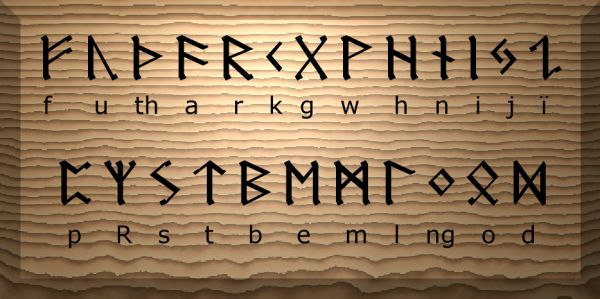
Rune readings are arrangements of the 24 runes (letters) of the old Futhark alphabet. The layout of the runes is known as a spread, and determines what each rune refers to. For example, in the Three Norns spread, the first rune represents the past, the second the present, and the third the future.
Sets: In addition to each rune having a meaning, the material in which the runes are carved can color the reading. Most people consistently use runes made of ceramic, stone, or wood. In order to broaden your experience, we offer readings with Gold Runes (for questions about business, career, and property), Jade Runes (for questions about love, friendship, and relationships), Ice Runes (for questions about struggle, conflict, and achievement), Spirit Runes (for questions about mysticism, spirituality, and religion), and Stone Runes (for questions about the natural world and things beyond human control).
The question will remain the same: "Will this week be a successful one?"
Rune Alphabet

Spread:Cross(in order of reading)
The Cross spread is used to plot the arc of your life and the forces acting on it. It is the most popular spread, giving a very complete view of the situation. Ice Runes are most commonly used for questions about struggle, conflict, and achievement.

Here is the Reading Using the Ice Set.
1.

The left rune represents an important element of the past. Raido means to ride. In this rune, the image is not so much the riding of a horse as in riding in a cart or as cargo. As such Raido may suggest a journey, but is much more indicative of communication. Alternate interpretations based on the use of Raido as a cognate in other words give it the meaning of council, judgment, and moral correctness. Therefore, this rune is the rune of wise advice and good leadership.
2.

The middle rune represents a deciding element of the present. Ken is the rune of light and knowledge, driving away darkness and ignorance and revealing hidden truth. This rune also brings forth images of friendship and comfort. Ken is the light of inspiration, the light of imagination, and a beacon in the darkest hours.
3.

The right rune represents the critical element of the future, at the core of the final outcome. Uruz is the name of the Auroch, an extinct prehistoric ox. This animal was strong and brave, and was the focus of rites of manhood in older days. Reversed, this rune symbolizes either the lack of challenge, or the lack of preparation for a challenge. This rune suggests that you must reach deep within in order to gain the power you will need, whether to get out of your current rut, or to face what appears to be a hopeless situation.
4.

The top rune represents a force that works for you. Perth is the rune of chance and gambling. Throw the dice, read your fate. Gaming is a fine way to pass the night...as long as one is careful. Games of chance have outcomes that are hidden from us, and as such Perth represents secrets unknown. Perth symbolizes enjoyment and wild abandon, but be watchful, for Perth is also the rune of mystery and the outcomes unexpected. You cannot lose if you do not play, but neither can you win...
5.

The bottom Rune represents a force that works against you. Ger is one of the runes that touches on the cycles of the year, in this case the fall harvest. These cycles are eternal, which is represented in the rune by the fact that it is unchanged by reversal. Ger can represent pregnancy or other forms of fruitfulness, and is especially indicative of the cycles of providence and karma - that which has been sown is now being reaped. This rune can also represent the cycles of wealth, for crops were frequently a sign of wealth.
If you are further interested in Rune stones, please check out a script I wrote about three years ago. The story tells of a women's chance encounter with the towns rune reader and physcic. Her reading leads to a terrible discovery about her ex-husband.Click here to read 'Evil Of A Different Kind'
Later,
Kenaz
Rune readings are arrangements of the 24 runes (letters) of the old Futhark alphabet. The layout of the runes is known as a spread, and determines what each rune refers to. For example, in the Three Norns spread, the first rune represents the past, the second the present, and the third the future.
Sets: In addition to each rune having a meaning, the material in which the runes are carved can color the reading. Most people consistently use runes made of ceramic, stone, or wood. In order to broaden your experience, we offer readings with Gold Runes (for questions about business, career, and property), Jade Runes (for questions about love, friendship, and relationships), Ice Runes (for questions about struggle, conflict, and achievement), Spirit Runes (for questions about mysticism, spirituality, and religion), and Stone Runes (for questions about the natural world and things beyond human control).
The question will remain the same: "Will this week be a successful one?"
Rune Alphabet
Spread:Cross(in order of reading)
The Cross spread is used to plot the arc of your life and the forces acting on it. It is the most popular spread, giving a very complete view of the situation. Ice Runes are most commonly used for questions about struggle, conflict, and achievement.

Here is the Reading Using the Ice Set.
1.
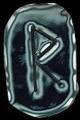
The left rune represents an important element of the past. Raido means to ride. In this rune, the image is not so much the riding of a horse as in riding in a cart or as cargo. As such Raido may suggest a journey, but is much more indicative of communication. Alternate interpretations based on the use of Raido as a cognate in other words give it the meaning of council, judgment, and moral correctness. Therefore, this rune is the rune of wise advice and good leadership.
2.
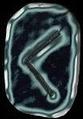
The middle rune represents a deciding element of the present. Ken is the rune of light and knowledge, driving away darkness and ignorance and revealing hidden truth. This rune also brings forth images of friendship and comfort. Ken is the light of inspiration, the light of imagination, and a beacon in the darkest hours.
3.
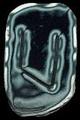
The right rune represents the critical element of the future, at the core of the final outcome. Uruz is the name of the Auroch, an extinct prehistoric ox. This animal was strong and brave, and was the focus of rites of manhood in older days. Reversed, this rune symbolizes either the lack of challenge, or the lack of preparation for a challenge. This rune suggests that you must reach deep within in order to gain the power you will need, whether to get out of your current rut, or to face what appears to be a hopeless situation.
4.
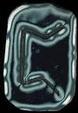
The top rune represents a force that works for you. Perth is the rune of chance and gambling. Throw the dice, read your fate. Gaming is a fine way to pass the night...as long as one is careful. Games of chance have outcomes that are hidden from us, and as such Perth represents secrets unknown. Perth symbolizes enjoyment and wild abandon, but be watchful, for Perth is also the rune of mystery and the outcomes unexpected. You cannot lose if you do not play, but neither can you win...
5.

The bottom Rune represents a force that works against you. Ger is one of the runes that touches on the cycles of the year, in this case the fall harvest. These cycles are eternal, which is represented in the rune by the fact that it is unchanged by reversal. Ger can represent pregnancy or other forms of fruitfulness, and is especially indicative of the cycles of providence and karma - that which has been sown is now being reaped. This rune can also represent the cycles of wealth, for crops were frequently a sign of wealth.
If you are further interested in Rune stones, please check out a script I wrote about three years ago. The story tells of a women's chance encounter with the towns rune reader and physcic. Her reading leads to a terrible discovery about her ex-husband.Click here to read 'Evil Of A Different Kind'
Later,
Kenaz
Hamilton Police Have No Respect For History

The Canadian War Museum is appealing to Hamilton police not to destroy a rare, vintage musket likely used in local battles during the War of 1812. Photos of two guns where then emailed to the Ottawa museum late yesterday afternoon. Thirty seconds later, the museum phoned back.
"You just ruined my day," said special projects director Daniel Glenney. "How do I get that Brown Bess?"
Glenney said the British India Pattern musket was manufactured between 1797 and 1805 and used in Canada by the regular British troops in the War of 1812. It was then used by the Canadian militia in the Upper Canada Rebellion of 1837. Even more interesting is that a soldier's name (WBY Shelburne) is carved into the stock, which should help historians trace the weapon.
Nicknamed Brown Bess for its dark colour, the flintlock was issued to soldiers in Sir Isaac Brock's 49th Regiment of Foot, the King's Regiment and the 41st Regiment of Foot at the turn of the 19th century.
"They would have been carrying those right out of the armouries from England," Glenney said.
The Brown Bess, now locked up with 1,253 other firearms turned in during a month-long police gun amnesty, "could have been used at Queenston Heights, Lundy's Lane and Chippewa," he explained.
"It would have been used by the garrison troops at Burlington Heights all through the war or the Battle of Stoney Creek."
So few remain because the British sold most of the muskets as surplus to the Mexican army, where they were used at the Battle of the Alamo.
Hamilton police have several other weapons that museums would like to have, he said, including a rare Johnson rifle and German MG-34 machine gun from the Second World War, a Remington Rolling Block and a Martini Henry rifle from the 1800s.
And there are suggestions that a weapon owned by a Hamilton man killed with General George Armstrong Custer at the Battle of the Little Big Horn is on the destruction list.
All are due to be melted in a Dofasco blast furnace at the end of April.
"It would be a shame just to melt them down without consideration," Glenney added.
Police subtly softened their stance yesterday, after maintaining all through the amnesty that all weapons would be destroyed regardless of historic value.
The whole point of the gun amnesty is community safety, said Deputy Chief Ken Leendertse. Owners who turned in guns did so knowing they were entering into a contract with police.
"They signed a form that acknowledged they turned it over to the police service for destruction.
"Citizens had an opportunity to turn these weapons over to museums before they turned them over to us."
Nevertheless, police now say they will be flexible if an owner who turned in a gun wants to renegotiate the contract. One owner, who handed over more than 60 firearms, recently asked police to return one with significance to the family.
That will only happen if the owner produces proper papers for it, Leendertse noted. He also left the door open for special entreaties from museums, saying they would be dealt with on a case-by-case basis.
Police have also agreed to check a rumour that a .50- calibre cap-and-ball flintlock belonging to Lieutenant William Winer Cooke was turned in and is slated to be destroyed. If true, the weapon would be of extreme historical importance, given that Cooke, who grew up in Hamilton, died next to Custer in 1876.
He was the author of the famous "last message" to Frederick Benteen that read: "Benteen. Come On. Big village. Be quick. Bring packs. WW Cooke. P.S. Bring Packs."
Police say people must not lose focus on why Hamiltonians want to get rid of guns.
"The people of Hamilton have an intolerance for gun violence," Leendertse said. "If we save one life, that's worth more than any history."
Wouldn't giving the guns to a museum serve both issues of preserving history and getting these guns off the street? Or is the Hamilton Police department hard up for another photo op so they can gloat over doing their jobs.
Later,
Kenaz
"You just ruined my day," said special projects director Daniel Glenney. "How do I get that Brown Bess?"
Glenney said the British India Pattern musket was manufactured between 1797 and 1805 and used in Canada by the regular British troops in the War of 1812. It was then used by the Canadian militia in the Upper Canada Rebellion of 1837. Even more interesting is that a soldier's name (WBY Shelburne) is carved into the stock, which should help historians trace the weapon.
Nicknamed Brown Bess for its dark colour, the flintlock was issued to soldiers in Sir Isaac Brock's 49th Regiment of Foot, the King's Regiment and the 41st Regiment of Foot at the turn of the 19th century.
"They would have been carrying those right out of the armouries from England," Glenney said.
The Brown Bess, now locked up with 1,253 other firearms turned in during a month-long police gun amnesty, "could have been used at Queenston Heights, Lundy's Lane and Chippewa," he explained.
"It would have been used by the garrison troops at Burlington Heights all through the war or the Battle of Stoney Creek."
So few remain because the British sold most of the muskets as surplus to the Mexican army, where they were used at the Battle of the Alamo.
Hamilton police have several other weapons that museums would like to have, he said, including a rare Johnson rifle and German MG-34 machine gun from the Second World War, a Remington Rolling Block and a Martini Henry rifle from the 1800s.
And there are suggestions that a weapon owned by a Hamilton man killed with General George Armstrong Custer at the Battle of the Little Big Horn is on the destruction list.
All are due to be melted in a Dofasco blast furnace at the end of April.
"It would be a shame just to melt them down without consideration," Glenney added.
Police subtly softened their stance yesterday, after maintaining all through the amnesty that all weapons would be destroyed regardless of historic value.
The whole point of the gun amnesty is community safety, said Deputy Chief Ken Leendertse. Owners who turned in guns did so knowing they were entering into a contract with police.
"They signed a form that acknowledged they turned it over to the police service for destruction.
"Citizens had an opportunity to turn these weapons over to museums before they turned them over to us."
Nevertheless, police now say they will be flexible if an owner who turned in a gun wants to renegotiate the contract. One owner, who handed over more than 60 firearms, recently asked police to return one with significance to the family.
That will only happen if the owner produces proper papers for it, Leendertse noted. He also left the door open for special entreaties from museums, saying they would be dealt with on a case-by-case basis.
Police have also agreed to check a rumour that a .50- calibre cap-and-ball flintlock belonging to Lieutenant William Winer Cooke was turned in and is slated to be destroyed. If true, the weapon would be of extreme historical importance, given that Cooke, who grew up in Hamilton, died next to Custer in 1876.
He was the author of the famous "last message" to Frederick Benteen that read: "Benteen. Come On. Big village. Be quick. Bring packs. WW Cooke. P.S. Bring Packs."
Police say people must not lose focus on why Hamiltonians want to get rid of guns.
"The people of Hamilton have an intolerance for gun violence," Leendertse said. "If we save one life, that's worth more than any history."
Wouldn't giving the guns to a museum serve both issues of preserving history and getting these guns off the street? Or is the Hamilton Police department hard up for another photo op so they can gloat over doing their jobs.
Later,
Kenaz
Sunday, April 02, 2006
Tales From The Set::Ultra
It's been a while says I've posted anything about any sets I've been working on, because, honestly, there wasn't much to say. It's same old, same old. Action! Do your cross, mime some fake conversation, cut! Back to one! Repeat a few times.
The exception this week, is the fact that I've worked three days now on the pilot for a new CBS action comedy series entitled "Ultra".
The stunt laden show makes it fun to on set. Personally I find it more fascinating to watch the way a stunt is outlined and set up, than the actual execution. For example, I spent Thursday and Friday night out on University Avenue in Toronto partaking in a scene that initialed a crash involving a semi, four cars and a cab. Then Ultra(Lena Headley) entering and saving the day.
The scene was only 6/8 of a page, but each of the six parts of the scene needed to be shot separately, requiring a wide shot, some coverage and little crowd reaction. Five of the six parts where completed on Thursday night, the most fascinating being a stunt driver, simulating being hit by the truck causing the car to ride up on two wheels and do a controlled flip. Amazing that it only took a couple of dry runs to execute the one shot deal.
That left the fun stuff for Friday night, Ultra pulling a family from a car, seconds before the truck and car go up in flames. This of course being achieved with the use of propane burners and camera trickery. The stuff any pyro would get off on (hmm, fire! Fire!). All I could think of is how nice it would have been if the god awful hot dog substantial had been barbecued for a change.
My contribution had me exiting one of the cars and running away safety positioned to look as if it came to a screeching halt. Unfortunately the camera mans positioning for the first take was over ruled by Barbara Hall and changed. A nice shot that would have caught my face was reduced to my feet. Damn I wouldn't have worn those worn sneakers if I knew that!
any who, it looks like the biz is picking up again in Toronto and especially here in Hamilton, where currently there are three productions in progress with at least four more set to shoot in the next couple of months. I've already worked on a couple of them and looking forward to a great spring.
I've added some new screen caps of some older sets that I've worked on, including The Eleventh Hour and The Man Who Saved Christmas over at kendalloliphant.blogspot.com
Later,
Kenaz
The exception this week, is the fact that I've worked three days now on the pilot for a new CBS action comedy series entitled "Ultra".
The stunt laden show makes it fun to on set. Personally I find it more fascinating to watch the way a stunt is outlined and set up, than the actual execution. For example, I spent Thursday and Friday night out on University Avenue in Toronto partaking in a scene that initialed a crash involving a semi, four cars and a cab. Then Ultra(Lena Headley) entering and saving the day.
The scene was only 6/8 of a page, but each of the six parts of the scene needed to be shot separately, requiring a wide shot, some coverage and little crowd reaction. Five of the six parts where completed on Thursday night, the most fascinating being a stunt driver, simulating being hit by the truck causing the car to ride up on two wheels and do a controlled flip. Amazing that it only took a couple of dry runs to execute the one shot deal.
That left the fun stuff for Friday night, Ultra pulling a family from a car, seconds before the truck and car go up in flames. This of course being achieved with the use of propane burners and camera trickery. The stuff any pyro would get off on (hmm, fire! Fire!). All I could think of is how nice it would have been if the god awful hot dog substantial had been barbecued for a change.
My contribution had me exiting one of the cars and running away safety positioned to look as if it came to a screeching halt. Unfortunately the camera mans positioning for the first take was over ruled by Barbara Hall and changed. A nice shot that would have caught my face was reduced to my feet. Damn I wouldn't have worn those worn sneakers if I knew that!
any who, it looks like the biz is picking up again in Toronto and especially here in Hamilton, where currently there are three productions in progress with at least four more set to shoot in the next couple of months. I've already worked on a couple of them and looking forward to a great spring.
I've added some new screen caps of some older sets that I've worked on, including The Eleventh Hour and The Man Who Saved Christmas over at kendalloliphant.blogspot.com
Later,
Kenaz
Tuesday, March 28, 2006
History of hockey in Hamilton(revised)
 Hamilton Tigers
The return of the Quebec Bulldogs (formerly a Stanley Cup winning NHA team) to the city of Quebec for the 1919-20 season ended in failure. Despite having the league's scoring leader (39 goals) "The Phantom" Joe Malone in the line-up, the Bulldogs only managed a pathetic four wins in 24 games. And so the team was put up for sale.
As it happened, a group from Hamilton, Ontario were interested in bringing a pro team to the city to play in a new artificial-ice arena. They were the owners of the Abso-pure Ice Company, and shortly before the start of the 1920-21 season, they succeeded in making the deal with the Quebec owners, and purchased the franchise for $5,000.
The new professional team was heartily received by hockey fans, who on opening night came to the Barton Street Arena somewhere around 6,500 strong to watch their team (minus Joe Malone) trounce an unconditioned Montreal Canadiens team 5-0.
Although the line-up was bolstered by additions from each of the other three teams, the Tigers quickly began to falter. By the end of the first season, the team managed only six more wins, and finished last place.
The following three seasons saw the Tigers finish dead last each time, although by the 1923-24 season they had worked their way up to nine wins.
The 1924-25 season saw a complete transformation: unlike in other seasons when the team managed a few good early season wins and then fizzled, this year the Tigers could not stop winning and fought their way to the top of the standings. Hamiltonians were ecstatic: after four years of disappointment, suddenly the city had a Stanley Cup contender.
But as the season drew to a close, there was growing discord among the Tigers' players: not at one another, but at management. The players were not being compensated for the extra time they were playing (an earlier training camp, as well as six more games than before, and now at least two play-off games) and they wanted something done about it. Thus they justifiably went on strike, but this quickly failed and led to the team's suspension from post-season play.
Over time, all of the players involved went to the league on their hands and knees begging for forgiveness, and eventually all were re-instated. But none would return to the league as Hamilton Tigers, for in yet another act of injustice the league decided that the city of Hamilton no longer deserved an NHL franchise and the team was sold to some American bootlegger for $75,000.
Renamed the New York Americans, the franchise continued to exist until the 1941-42 season, at the end of which it went defunct leaving the NHL with only six teams.
 Hamilton Red Wings
The Hamilton Tiger Cubs were renamed in 1960 becoming the Hamilton Red Wings, and sponsored by the NHL Detroit Red Wings. The team played for 14 seasons before being renamed the Hamilton Fincups.
The Red Wings of 1962 were coached by Eddie Bush. The team finished second overall in the OHA standings, then lost only 1 game in the post-season run to the Memorial Cup. In the playoffs Hamilton defeated the St. Catharines Teepees, Niagara Falls Flyers, and the Metro Jr. A. champs Toronto St. Michael's Majors 4 games to 1, winning the J. Ross Robertson Cup. The Red Wings then swept the series against the Quebec Citadelles for the Eastern Canadian championship.
The Red Wings would play the Western Canadian champion Edmonton Oil Kings for the Memorial Cup. The first game of the 1962 Memorial Cup was played on home ice at the Barton Street Arena which Hamilton won 5-2. The next three games were played at the Guelph Memorial Gardens. Hamilton won game two 4-2. Edmonton won game three 5-3. Hamilton shutout Edmonton 3-0 in game four. The fifth and deciding game was played in the Kitchener Memorial Auditorium. The Red Wings defeated the Oil Kings 7-4 to win the series and the Memorial Cup, 4 games to 1.
Five years later the Red Wings made it to the OHA finals again in 1967, but were swept 4 games to 0 by the Toronto Marlboros.
The Hamilton Red Wings played home games at the Barton Street Arena, also known as the Hamilton Forum .
 Hamilton Fincups
The Fincups were a short-lived team in the Ontario Hockey Association that was very successful on the ice, but did poorly generating revenue. The club bounced around in three outdated arenas in four years. Unable to turn much of a profit, the Fincups moved out of town, becoming the Brantford Alexanders.
The name "Fincup" is a combination of the team's owners, the Finochio Brothers and Ron Cupido. They renamed the Hamilton Red Wings after the 1974 season, and hired Bert Templeton as the team's new coach. Templeton would was voted winner of the Matt Leyden Trophy as Coach of the Year in his first season. Templeton was let go partway through the Fincups 4th season and replaced by Dave Draper.
In the four short seasons that the Fincups played, the team won the Memorial Cup once, and the J. Ross Robertson Cup once. The Fincups also represented Canada at the World Junior Tournament and came away with a silver medal.
The Fincups won the Emms Division regular season title for two consecutive years in 1975-76 & 1976-77, and the Hamilton Spectator Trophy in 1976-77 as the first overall team in the OHA regular season.
The Fincups made the OHA finals all 3 years they played out of Hamilton, and came within one win of making it four consecutive appearances in the championship series in their only year in St. Catharines.
The Hamilton Fincups played home games at the Barton Street Arena, also known as the Hamilton Forum from 1974-1976. The St. Catharines Fincups played in the Garden City Arena in downtown St. Catharines, Ontario in 1976-1977. After moving back to Hamilton, the Fincups played out of the Mountain Arena from 1977-1978.
Hamilton Steelhawks

The Brantford Alexanders were relocated in 1984 becoming the Hamilton Steelhawks. The franchise which started in Hamilton in 1953, twice left Hamilton for lack of an adequate arena but returned for the opening of Copps Coliseum. However the team was not well-supported, and played for only four seasons in Hamilton before moving to Niagara Falls, Ontario to play as the Thunder.
The Steelhawks name was chosen to reflect the steel industry in Hamilton. The modernized name and logo was designed to catch on with a young fan base as well. The team enjoyed three successful playoff runs, although they never made a trip to the league finals.
Notable alumni are NHL stars Shayne Corson, Keith Primeau and NHL tough guy Bob Probert. Wayne Gretzky's younger brother Keith Gretzky also played for the Steelhawks, and was the co-winner 1986-87 William Hanley Trophy as the OHA's Most Sportsmanlike Player.
The team was owned by Jack Robillard, Bob Willson and Al Martin, who also owned the London Knights.
The Hamilton Steelhawks played home games at Mountain Arena for 1984-85 and then moved to Copps Coliseum from 1985 to 1988. The annual OHL / QMJHL All-Star game was played here in 1988. The Coliseum's upper bowl curtain was closed for home games.
Hamilton Dukes

The Toronto Marlboro were moved to Hamilton, Ontario for the 1989-1990 season becoming the Dukes of Hamilton. The name "Dukes"" orinigated as a nickname for the Toronto team coming from its namesake, the Duke of Marlborough.
The Dukes were chosen to host the Memorial Cup their first season in Hamilton. However when the team finished last over all in the standings, the OHL sent the league champion Oshawa Generals and finalist Kitchener Rangers instead.
The second season for the Dukes was only marginally better even after switching from the Leyden division to the Emms division. The Dukes qualified for the last playoff spot, but lost in four games straight. Following the 1990-1991 season, the team was relocated to Guelph, Ontario where it became the Guelph Storm.
The Dukes played their home games at Copps Coliseum, which hosted the Memorial Cup in 1990.
 Hamilton Bulldogs
When th Edmonton Oilers announced plans to suspend operations of the previous Hamilton Bulldogs franchise, local interests secured ownership of the Quebec Citadelles and relocated them to Hamilton. Fans voted to keep the Bulldogs name which won over the Hamilton Canadiens and Hamilton Habs. The team's primary affiliate has been the Montreal Canadiens, but had a partial agreement with the Edmonton Oilers in 2002-03 and again in 2005-06.
AHL's Hamilton Bulldogs and is also a concert and convention centre.
Dave Andreychuk Arena formerly the Chedoke Twin Pad Arena

Home of the OPJHL Hamilton Red Wings.
Another arena in Hamilton with great history is the Parkdale Arena now called the Pat Quinn Parkdale Arena. The Toronto Maple Leafs coach returned to his hometown last year for a ceremony at the east end hockey rink. Quinn says he began playing the sport as a kid at an outdoor rink where the current arena stands. He credits the city's many hockey volunteers and teammates for helping him achieve his goals.
I played house league hockey in this arena from 1980-1986 and to describe the experience in a soundbite, I would have to say "Old School". 1980 was the first season in the newly renovated arena after playing the 1979 season in any "barn" that the league could rent ice time in.
I recall stories of many who played at that arena in the 50s and 60s before there was a roof over the place. Definition of oldschool...they would have to arrive an hour before game time with shovels to clear the snow.
Fast forward a few decades and little was improved, the wind would wip through the cracks in the corrigated sheet metal that encased the lovable blue barn, mixing with what ever heat the antiquated space heaters that hung over the players benches. The result was a crap shoot of conditions. I can remember playing in a few Parkdale versions of the "Fog Bowl"
Anyway, as you can see Hamilton has had a much storied history of hockey at all levels. The great fans of Hamilton will probably never be treated to having their own NHL franchise, but the Hammer will always be gracious hosts to many NHL, junior, international and alumni tournament tilts. Who can forget the Canada 6-5 win over the Soviet Union at the 1987 Canada Cup Tournament. I was there that September 15 to witness one of the most memorable plays in hockey history. Gretzky, Lemieux and Larry Murphy rush down the ice, with Gretzky skating on left wing, the pass to Lemieux setting up the point blank game-winner in the slot with 1:26 left in the game.
 Lemieux and Gretzky celebrate after Lemieux's game-winner, while Larry Murphy regains his balance. Courtesy of Wikipedia.
Other great source of hockey in Hamilton at all levels is Larry Robertson, a regular contributor of Ontario Hockey Now Magazine
Later,
Kenaz
Monday, March 27, 2006
Rune Reading For The Period Of March 27-April 2, 2006
Introduction to Rune Readings
Rune readings are arrangements of the 24 runes (letters) of the old Futhark alphabet. The layout of the runes is known as a spread, and determines what each rune refers to. For example, in the Three Norns spread, the first rune represents the past, the second the present, and the third the future.
Sets: In addition to each rune having a meaning, the material in which the runes are carved can color the reading. Most people consistently use runes made of ceramic, stone, or wood. In order to broaden your experience, we offer readings with Gold Runes (for questions about business, career, and property), Jade Runes (for questions about love, friendship, and relationships), Ice Runes (for questions about struggle, conflict, and achievement), Spirit Runes (for questions about mysticism, spirituality, and religion), and Stone Runes (for questions about the natural world and things beyond human control).
The question will remain the same: "Will this week be a successful one?"
Rune Alphabet
Spread:Cross(in order of reading)
The Cross spread is used to plot the arc of your life and the forces acting on it. It is the most popular spread, giving a very complete view of the situation. Ice Runes are most commonly used for questions about struggle, conflict, and achievement.
Here is the Reading Using the Ice Set.
1.

The left rune represents an important element of the past. Uruz symbolizes the Auroch, a member of the ox family that became extinct long ago. This rune represents the strength, bravery, and endurance of this animal of old. Uruz portends the ability to meet problems head on and to overcome them. When the world was new, warriors used to test their strength against the Auroch. Hence, this rune has come to represent the masculine principle and the capacity to meet a challenge.
2.

The middle rune represents a deciding element of the present. Laguz is the rune representing water. Laguz is a strongly feminine rune, and like the ocean contains much power of an uncontrollable nature. Here the rune is seen in the reversed, symbolic of the ebbing tide. This may suggest power being drawn away, or may perhaps the start of a journey. Since this is a rune of sexual power, the reversal can also suggest sexual problems or dissatisfaction.
3.

The right rune represents the critical element of the future, at the core of the final outcome. Gebo means gift, and like many gifts, the rune may be understood on many levels. Gifts are generally positive things, for both the giver and the recipient. In many cultures however, gifts and favors carry with them an obligation to respond in kind. It is for this reason that gifts, and hence the rune Gebo, are frequently symbolic of friendships, marriages, alliances, mergers, and other bonds between people or organizations. Gebo is a strong rune and the unions represented are strong as well. Moreover, Gebo is not reversible, as true friendships are not easily undone.
4.

The top rune represents a force that works for you. Raido means to ride. In this rune, the image is not so much the riding of a horse as in riding in a cart or as cargo. As such Raido may suggest a journey, but is much more indicative of communication. Alternate interpretations based on the use of Raido as a cognate in other words give it the meaning of council, judgment, and moral correctness. Therefore, this rune is the rune of wise advice and good leadership.
5.

The bottom Rune represents a force that works against you. Inguz is the rune of completion and fertility. The presence of this rune suggests that tasks which have been initiated will come to fruition. This rune is associated with Ing and Frey, it is this connection that explains its connotations of both fertility and sexuality. The variant of this rune shown here is reminiscent of the twin strands of life, and of the challenge and rewards of bringing together things complimentary.
If you are further interested in Rune stones, please check out a script I wrote about three years ago. The story tells of a women's chance encounter with the towns rune reader and physcic. Her reading leads to a terrible discovery about her ex-husband.Click here to read 'Evil Of A Different Kind'
Later,
Kenaz
Rune readings are arrangements of the 24 runes (letters) of the old Futhark alphabet. The layout of the runes is known as a spread, and determines what each rune refers to. For example, in the Three Norns spread, the first rune represents the past, the second the present, and the third the future.
Sets: In addition to each rune having a meaning, the material in which the runes are carved can color the reading. Most people consistently use runes made of ceramic, stone, or wood. In order to broaden your experience, we offer readings with Gold Runes (for questions about business, career, and property), Jade Runes (for questions about love, friendship, and relationships), Ice Runes (for questions about struggle, conflict, and achievement), Spirit Runes (for questions about mysticism, spirituality, and religion), and Stone Runes (for questions about the natural world and things beyond human control).
The question will remain the same: "Will this week be a successful one?"
Rune Alphabet
Spread:Cross(in order of reading)
The Cross spread is used to plot the arc of your life and the forces acting on it. It is the most popular spread, giving a very complete view of the situation. Ice Runes are most commonly used for questions about struggle, conflict, and achievement.
Here is the Reading Using the Ice Set.
1.
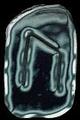
The left rune represents an important element of the past. Uruz symbolizes the Auroch, a member of the ox family that became extinct long ago. This rune represents the strength, bravery, and endurance of this animal of old. Uruz portends the ability to meet problems head on and to overcome them. When the world was new, warriors used to test their strength against the Auroch. Hence, this rune has come to represent the masculine principle and the capacity to meet a challenge.
2.
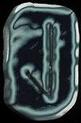
The middle rune represents a deciding element of the present. Laguz is the rune representing water. Laguz is a strongly feminine rune, and like the ocean contains much power of an uncontrollable nature. Here the rune is seen in the reversed, symbolic of the ebbing tide. This may suggest power being drawn away, or may perhaps the start of a journey. Since this is a rune of sexual power, the reversal can also suggest sexual problems or dissatisfaction.
3.
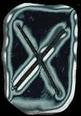
The right rune represents the critical element of the future, at the core of the final outcome. Gebo means gift, and like many gifts, the rune may be understood on many levels. Gifts are generally positive things, for both the giver and the recipient. In many cultures however, gifts and favors carry with them an obligation to respond in kind. It is for this reason that gifts, and hence the rune Gebo, are frequently symbolic of friendships, marriages, alliances, mergers, and other bonds between people or organizations. Gebo is a strong rune and the unions represented are strong as well. Moreover, Gebo is not reversible, as true friendships are not easily undone.
4.

The top rune represents a force that works for you. Raido means to ride. In this rune, the image is not so much the riding of a horse as in riding in a cart or as cargo. As such Raido may suggest a journey, but is much more indicative of communication. Alternate interpretations based on the use of Raido as a cognate in other words give it the meaning of council, judgment, and moral correctness. Therefore, this rune is the rune of wise advice and good leadership.
5.
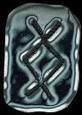
The bottom Rune represents a force that works against you. Inguz is the rune of completion and fertility. The presence of this rune suggests that tasks which have been initiated will come to fruition. This rune is associated with Ing and Frey, it is this connection that explains its connotations of both fertility and sexuality. The variant of this rune shown here is reminiscent of the twin strands of life, and of the challenge and rewards of bringing together things complimentary.
If you are further interested in Rune stones, please check out a script I wrote about three years ago. The story tells of a women's chance encounter with the towns rune reader and physcic. Her reading leads to a terrible discovery about her ex-husband.Click here to read 'Evil Of A Different Kind'
Later,
Kenaz
Thursday, March 23, 2006
Liberal budget a boon to GTA and corridor
Commuters in and around Canada's largest city got the bulk of the cash Thursday in a budget that seeks to buttress Ontario's busiest roads, bridges and transit system - and pave the way for a Liberal election win in 2007.
The province's Liberal government unleashed $1.2 billion in new infrastructure spending, mostly in the vote-rich Toronto area, in a move critics denounced as an effort to woo support for an election that's just over 18 months away.
Last year's projection of a $2.4-billion deficit remained unchanged for 2006-07, though this year it includes a $1-billion contingency fund, leaving Ontario as one of only two provinces in Canada that has failed to balance its books.
Health spending jumped $1.9 billion, including $12 million to buy insulin pumps for 6,500 children with Type 1 diabetes. Education spending climbed by $424 million, and highlighted a doubling of spending on post-secondary student aid.
Tax rates remained unchanged, save for a two-year acceleration of the government's original plan to eliminate the capital tax rate by 2012, long considered a drag on economic investment in the province.
Welfare rates and living allowances for people on social assistance are also set to increase by two per cent, the second time the Liberals have increased benefits. A promise to stop clawing back federal child tax benefits, however, failed to materialize.
And farmers circling the Ontario legislature on their tractors all week to protest a lack of funding saw little new beyond a recent pledge of $125 million for livestock producers and grain and oilseed farmers.
Annual revenues were $2 billion higher than expected, prompting opposition critics to accuse the government of borrowing a tactic from their federal Liberal cousins and low-balling previous projections in order to report better-than-expected results.
About $838 million of the $1.2-billion infrastructure package, dubbed Move Ontario, was earmarked for the Greater Toronto Area, including a $500-million expansion of Toronto's subway system and dedicated bus lanes in the suburbs of Brampton and Mississauga.
There was $400 million in one-time funding for rural and northern municipalities, money that Finance Minister Dwight Duncan estimated would pay to fix 800 local bridges and resurface 3,000 kilometres of municipal roads - the distance from Thunder Bay to Ottawa and back.
The new transportation funds follow previous pledges of $3.4 billion for southern Ontario highways and $1.8 billion for highways in the north.
The budget paid lip service to the need to improve delivery of goods across the Canada-U.S. border, but offered nothing new short of restating commitments of $300 million for the Windsor Gateway and $323 million for the Niagara and Sarnia crossings.
Those cities - in particular Windsor, Duncan's hometown - have for years clamoured for relief from border congestion, which they say slows the flow of millions of dollars worth of goods every day.
Duncan said a bilateral report on the crossing, expected soon, would help direct governments on how to improve traffic flow.
What the budget means for Hamilton
Hamilton has pressed the government every year for help to cope with the downloading of welfare costs to the city by the Conservative government of Mike Harris.
Di Ianni called this budget important to the well being of the city. The budget offered happy news for the city which asked for and received $25 million.
The mayor said the infrastructure money would be welcome in Hamilton. This is an understatement to say the less. The city's first infrastructure report card, in December, said Hamilton earned only about a C+ average for the state of its assets, such as facilities and parks, transit vehicles and storm water management. Roads earned a D rating, because of the massive backlog in upgrades.
Di Ianni also said he is anxious to see if Hamilton has a seat at the table when the long-awaited Greater Toronto Transportation Authority is unveiled in the budget. The new authority is part of a plan to create a seamless transit system for the Golden Horseshoe. It's significant to Hamilton because about 25,000 city residents commute to jobs in the GTA every day.
Di Ianni wants to see Liberal money before he embraces the idea of a region-wide transit system. And he and Burlington Mayor Rob MacIsaac see funding as a key component in any plan to improve transportation and reduce gridlock.
Later,
Kenaz
The province's Liberal government unleashed $1.2 billion in new infrastructure spending, mostly in the vote-rich Toronto area, in a move critics denounced as an effort to woo support for an election that's just over 18 months away.
Last year's projection of a $2.4-billion deficit remained unchanged for 2006-07, though this year it includes a $1-billion contingency fund, leaving Ontario as one of only two provinces in Canada that has failed to balance its books.
Health spending jumped $1.9 billion, including $12 million to buy insulin pumps for 6,500 children with Type 1 diabetes. Education spending climbed by $424 million, and highlighted a doubling of spending on post-secondary student aid.
Tax rates remained unchanged, save for a two-year acceleration of the government's original plan to eliminate the capital tax rate by 2012, long considered a drag on economic investment in the province.
Welfare rates and living allowances for people on social assistance are also set to increase by two per cent, the second time the Liberals have increased benefits. A promise to stop clawing back federal child tax benefits, however, failed to materialize.
And farmers circling the Ontario legislature on their tractors all week to protest a lack of funding saw little new beyond a recent pledge of $125 million for livestock producers and grain and oilseed farmers.
Annual revenues were $2 billion higher than expected, prompting opposition critics to accuse the government of borrowing a tactic from their federal Liberal cousins and low-balling previous projections in order to report better-than-expected results.
About $838 million of the $1.2-billion infrastructure package, dubbed Move Ontario, was earmarked for the Greater Toronto Area, including a $500-million expansion of Toronto's subway system and dedicated bus lanes in the suburbs of Brampton and Mississauga.
There was $400 million in one-time funding for rural and northern municipalities, money that Finance Minister Dwight Duncan estimated would pay to fix 800 local bridges and resurface 3,000 kilometres of municipal roads - the distance from Thunder Bay to Ottawa and back.
The new transportation funds follow previous pledges of $3.4 billion for southern Ontario highways and $1.8 billion for highways in the north.
The budget paid lip service to the need to improve delivery of goods across the Canada-U.S. border, but offered nothing new short of restating commitments of $300 million for the Windsor Gateway and $323 million for the Niagara and Sarnia crossings.
Those cities - in particular Windsor, Duncan's hometown - have for years clamoured for relief from border congestion, which they say slows the flow of millions of dollars worth of goods every day.
Duncan said a bilateral report on the crossing, expected soon, would help direct governments on how to improve traffic flow.
What the budget means for Hamilton
Hamilton has pressed the government every year for help to cope with the downloading of welfare costs to the city by the Conservative government of Mike Harris.
Di Ianni called this budget important to the well being of the city. The budget offered happy news for the city which asked for and received $25 million.
The mayor said the infrastructure money would be welcome in Hamilton. This is an understatement to say the less. The city's first infrastructure report card, in December, said Hamilton earned only about a C+ average for the state of its assets, such as facilities and parks, transit vehicles and storm water management. Roads earned a D rating, because of the massive backlog in upgrades.
Di Ianni also said he is anxious to see if Hamilton has a seat at the table when the long-awaited Greater Toronto Transportation Authority is unveiled in the budget. The new authority is part of a plan to create a seamless transit system for the Golden Horseshoe. It's significant to Hamilton because about 25,000 city residents commute to jobs in the GTA every day.
Di Ianni wants to see Liberal money before he embraces the idea of a region-wide transit system. And he and Burlington Mayor Rob MacIsaac see funding as a key component in any plan to improve transportation and reduce gridlock.
Later,
Kenaz
Hostages Free!
Canadian commandos played a role in the rescue of three Western peace workers held hostage in Iraq, as well as the Canadian Mounties.
After almost four months of captivity, Canadians James Loney, 41, and Harmeet Singh Sooden, 32, were freed along with Briton Norman Kember, 74, during a raid by multinational forces northwest of Baghdad this morning. No shots were fired and no kidnappers were captured in the operation.
Military operation frees 2 Canadian hostages in Iraq
Reports say Canada's top secret commandos, Joint Task Force 2, had been working in Iraq. It's believed they worked in tandem with Britain's elite Special Air Service (SAS).
JTF2
In a midday address to public service workers in Ottawa, Harper said Canadian agencies were involved on the ground, but didn't offer any specifics.
Hostage's rescue the end of a nightmare, says brother
He offered thanks to "a number of Canadian departments and agencies that worked on this delicate operation with their British, American and Iraqi counterparts and played an important role in ensuring the success of this operation."
"You did excellent work and Mr. Loney and Mr. Sooden asked me to thank you for the assistance," said Harper, who spoke to the two former hostages earlier in the day.
God speed, to each of these brave men and peace to their fallen comrad.
Later
Kenaz
After almost four months of captivity, Canadians James Loney, 41, and Harmeet Singh Sooden, 32, were freed along with Briton Norman Kember, 74, during a raid by multinational forces northwest of Baghdad this morning. No shots were fired and no kidnappers were captured in the operation.
Military operation frees 2 Canadian hostages in Iraq
Reports say Canada's top secret commandos, Joint Task Force 2, had been working in Iraq. It's believed they worked in tandem with Britain's elite Special Air Service (SAS).
JTF2
In a midday address to public service workers in Ottawa, Harper said Canadian agencies were involved on the ground, but didn't offer any specifics.
Hostage's rescue the end of a nightmare, says brother
He offered thanks to "a number of Canadian departments and agencies that worked on this delicate operation with their British, American and Iraqi counterparts and played an important role in ensuring the success of this operation."
"You did excellent work and Mr. Loney and Mr. Sooden asked me to thank you for the assistance," said Harper, who spoke to the two former hostages earlier in the day.
God speed, to each of these brave men and peace to their fallen comrad.
Later
Kenaz
Tuesday, March 21, 2006
Bake sales no longer a health threat
Hamilton City Hall is backing away from its crackdown on homemade cookies, squares and other goodies at local events after clarifying the rules with the province. All bake sales by churches, service clubs and fraternal organizations will now be exempt from food safety regulations no matter the location.
Good news for Mary Whitwell, who will be able to continue her nearly 60- year tradition of baking for the Binbrook Fair. The 82-year-old was left shaking her head when the city's public health inspectors objected to her church's table at last year's fair.
Local officials had interpreted provincial regulations to mean that bake sales were only exempt from the rules if held on-site at a church, service club or fraternal organization. Once they moved to an off-site location, like a community fair or mall sale, the food would have to be made in an inspected kitchen. That raised the ire of more than one grandmother who'd been baking in her own kitchen for decades.
The city has since contacted the province for clarification and found the most recent interpretation is to exempt both on- and off-site bake sales. This left many city councilors with milk stashes on their face as they quickly saw the merritt in the new ruling.
That brings a close to this case. Hamiltonians can once again enjoy their favourite sweets at the many area fairs and bake sales without the stress and worry that they could be partaking in a crime! The city needs to worry about the 'junk' on the street and leave our 'junk food' alone.
my original post on this story
Later,
Kenaz
Good news for Mary Whitwell, who will be able to continue her nearly 60- year tradition of baking for the Binbrook Fair. The 82-year-old was left shaking her head when the city's public health inspectors objected to her church's table at last year's fair.
Local officials had interpreted provincial regulations to mean that bake sales were only exempt from the rules if held on-site at a church, service club or fraternal organization. Once they moved to an off-site location, like a community fair or mall sale, the food would have to be made in an inspected kitchen. That raised the ire of more than one grandmother who'd been baking in her own kitchen for decades.
The city has since contacted the province for clarification and found the most recent interpretation is to exempt both on- and off-site bake sales. This left many city councilors with milk stashes on their face as they quickly saw the merritt in the new ruling.
That brings a close to this case. Hamiltonians can once again enjoy their favourite sweets at the many area fairs and bake sales without the stress and worry that they could be partaking in a crime! The city needs to worry about the 'junk' on the street and leave our 'junk food' alone.
my original post on this story
Later,
Kenaz
Monday, March 20, 2006
Hamilton ring saga comes full circle
The story of Der Ring, and its connection to Westdale Secondary School in Hamilton, reads like a fairy tale. Today civic officials in this Schwaben community will host a ceremony for a delegation from Hamilton that will mark the final chapter of an incredible series of events that began 62 years ago when an RCAF Lancaster bomber crashed while returning from a mission over nearby Augsburg.
In a crowded community centre, the mayor of Bad Urach, a town of 12,000, the local burgermeister, who oversees the village of Seeburg, and other dignitaries will recall the sad loss of six Canadian airmen.
But the focus of attention will also be on the ring engraved with the name Westdale. And everyone will see the irony that two communities that fought each other so bitterly in war could now be brought together in peace and hope by a tiny band of silver found on the ground.
The world has come full circle and so will the ring when it is handed back to the Ridgers family that lost a loved one and a symbol of high school achievement so long ago.
Cyril (Cy) Ridgers, then 27, of Hamilton, was the navigator on board the Lancaster that was brought down on Feb. 26, 1944.
Elders in the Bad Urach area still remember the 1 a.m. skies lighting up with gunfire from German night fighters chasing the Canadian bombers.
Fritz Gross was 11 years old at the time and says he got dressed quickly in his coat and boots that were still wet from playing in the snow the day before. He rushed outside to find the fiery Lancaster screaming like a siren as it plunged from the sky. He didn't see the impact on the ground, but the explosion rocked the town and a mushroom cloud of smoke arose over the hillside.
Later he learned there was one survivor. Doug Mullock was captured and spent the rest of the war as a PoW. The bodies of his six crewmates were buried by German soldiers. Mullock died in 1981, ironically in the crash of his own single-engined plane.
In 1958, Gross was working with a construction team doing some excavation work at a Uhenfels castle near the crash site. By then the area had been thoroughly cleaned of debris, the metal from plane wrecks being a valued commodity at the time. But he noticed something flickering in the sunlight. It was a crumpled ring with the words Westdale and Alius Alia Via Ad Astra Ascendit engraved on it.
Gross figured the ring was from the crash, or a crash. But who was the owner? And what did "Westdale" mean?
He went to the Red Cross to see if there might be a way to return the ring to the family. But no one knew where to start.
So he banged it back into shape in his shop, shined it up as best he could and kept the keepsake in the drawer of a bedside table. Occasionally he would show it to friends, but years would sometimes go by without anyone looking at it.
Then one day last August, retired teacher Otmar Gotterbarm, 64, learned about the ring and decided to look into the story behind it. Gotterbarm is the author of a book about three American bombers who also crashed in his community during the war. He is an authority on allied bombing missions that relentlessly bombed Germany through the latter years of the war.
He feels that the history of those raids has not been adequately researched. He wants to better understand the circumstances around various bombers that crashed in his community.
It's part of a more general awakening of interest in wartime history in a country that is still coming to terms with the Nazi years.
But while there is a greater willingness to discuss the past, there are a dwindling numbers of witnesses and participants to interview. The Second World War from 1939 to 1945 is fading from living memory.
More recently Gotterbarm has been studying a series of RCAF crashes for a future project. It was out of that effort that he asked his son Mario to try to track down what "Westdale" meant on the Internet.
A half-hour later he came and said, "I found it." It turned out Westdale was a high school, the Latin was the school's motto -- Everyone Finds Their Own Way To The Stars -- and the coat of arms on the ring was identical to the one on the website.
So Otmar Gotterbarm e-mailed the school and eventually the message ended up with principal Stella Gibson.
Gotterbarm included a list of nearly 30 names from four RCAF bomber crashes in the area. He collected the information from RAF records and asked if there was some way to find out if any of the airmen had attended Westdale.
There was only one person on both lists -- Cyril Ridgers.
So she sent back an e-mail to Gotterbarm and he followed up by asking if Gibson could contact any family members.
There were no Ridgers in the Hamilton phone book, but there were three in Stoney Creek. She called the first one. "Yes, I do indeed know who Cy Ridgers is," Craig Ridgers replied. "He was my father's brother."
Gibson told Ridgers about the ring. It was all very emotional for him. He had just attended his father's funeral a few days before.
He had never met his uncle, but he was well acquainted with stories about his accomplishments during the war, which included winning the Distinguished Flying Cross.
Later Ridgers managed to find a picture of his Uncle Cy apparently wearing the Westdale ring on his baby finger.
Word spread through school about the e-mail from Germany. Then someone realized that a group of 22 Westdale students and a couple of teachers were going to be in Munich in March as part of a school-organized European trip.
Why not divert the group of students to the community for a ceremony? And better still, why not have Craig Ridgers and his wife, Janice, also attend to receive the ring back?
Ridgers arrived in Bad Urach yesterday. And a bus carrying Westdale students and teachers is scheduled to pull into town by 11:30 a.m. today, local time.
Gibson says she finds it amazing that such a turn of events has happened this year as Westdale celebrates its 75th anniversary. Cy Ridgers is believed to have been a Grade 9 student in that very first year, 1931. And now his graduation ring will be coming home.
Later,
Kenaz
In a crowded community centre, the mayor of Bad Urach, a town of 12,000, the local burgermeister, who oversees the village of Seeburg, and other dignitaries will recall the sad loss of six Canadian airmen.
But the focus of attention will also be on the ring engraved with the name Westdale. And everyone will see the irony that two communities that fought each other so bitterly in war could now be brought together in peace and hope by a tiny band of silver found on the ground.
The world has come full circle and so will the ring when it is handed back to the Ridgers family that lost a loved one and a symbol of high school achievement so long ago.
Cyril (Cy) Ridgers, then 27, of Hamilton, was the navigator on board the Lancaster that was brought down on Feb. 26, 1944.
Elders in the Bad Urach area still remember the 1 a.m. skies lighting up with gunfire from German night fighters chasing the Canadian bombers.
Fritz Gross was 11 years old at the time and says he got dressed quickly in his coat and boots that were still wet from playing in the snow the day before. He rushed outside to find the fiery Lancaster screaming like a siren as it plunged from the sky. He didn't see the impact on the ground, but the explosion rocked the town and a mushroom cloud of smoke arose over the hillside.
Later he learned there was one survivor. Doug Mullock was captured and spent the rest of the war as a PoW. The bodies of his six crewmates were buried by German soldiers. Mullock died in 1981, ironically in the crash of his own single-engined plane.
In 1958, Gross was working with a construction team doing some excavation work at a Uhenfels castle near the crash site. By then the area had been thoroughly cleaned of debris, the metal from plane wrecks being a valued commodity at the time. But he noticed something flickering in the sunlight. It was a crumpled ring with the words Westdale and Alius Alia Via Ad Astra Ascendit engraved on it.
Gross figured the ring was from the crash, or a crash. But who was the owner? And what did "Westdale" mean?
He went to the Red Cross to see if there might be a way to return the ring to the family. But no one knew where to start.
So he banged it back into shape in his shop, shined it up as best he could and kept the keepsake in the drawer of a bedside table. Occasionally he would show it to friends, but years would sometimes go by without anyone looking at it.
Then one day last August, retired teacher Otmar Gotterbarm, 64, learned about the ring and decided to look into the story behind it. Gotterbarm is the author of a book about three American bombers who also crashed in his community during the war. He is an authority on allied bombing missions that relentlessly bombed Germany through the latter years of the war.
He feels that the history of those raids has not been adequately researched. He wants to better understand the circumstances around various bombers that crashed in his community.
It's part of a more general awakening of interest in wartime history in a country that is still coming to terms with the Nazi years.
But while there is a greater willingness to discuss the past, there are a dwindling numbers of witnesses and participants to interview. The Second World War from 1939 to 1945 is fading from living memory.
More recently Gotterbarm has been studying a series of RCAF crashes for a future project. It was out of that effort that he asked his son Mario to try to track down what "Westdale" meant on the Internet.
A half-hour later he came and said, "I found it." It turned out Westdale was a high school, the Latin was the school's motto -- Everyone Finds Their Own Way To The Stars -- and the coat of arms on the ring was identical to the one on the website.
So Otmar Gotterbarm e-mailed the school and eventually the message ended up with principal Stella Gibson.
Gotterbarm included a list of nearly 30 names from four RCAF bomber crashes in the area. He collected the information from RAF records and asked if there was some way to find out if any of the airmen had attended Westdale.
There was only one person on both lists -- Cyril Ridgers.
So she sent back an e-mail to Gotterbarm and he followed up by asking if Gibson could contact any family members.
There were no Ridgers in the Hamilton phone book, but there were three in Stoney Creek. She called the first one. "Yes, I do indeed know who Cy Ridgers is," Craig Ridgers replied. "He was my father's brother."
Gibson told Ridgers about the ring. It was all very emotional for him. He had just attended his father's funeral a few days before.
He had never met his uncle, but he was well acquainted with stories about his accomplishments during the war, which included winning the Distinguished Flying Cross.
Later Ridgers managed to find a picture of his Uncle Cy apparently wearing the Westdale ring on his baby finger.
Word spread through school about the e-mail from Germany. Then someone realized that a group of 22 Westdale students and a couple of teachers were going to be in Munich in March as part of a school-organized European trip.
Why not divert the group of students to the community for a ceremony? And better still, why not have Craig Ridgers and his wife, Janice, also attend to receive the ring back?
Ridgers arrived in Bad Urach yesterday. And a bus carrying Westdale students and teachers is scheduled to pull into town by 11:30 a.m. today, local time.
Gibson says she finds it amazing that such a turn of events has happened this year as Westdale celebrates its 75th anniversary. Cy Ridgers is believed to have been a Grade 9 student in that very first year, 1931. And now his graduation ring will be coming home.
Later,
Kenaz
Saturday, March 18, 2006
Canadian troops should leave Afghanistan until the peace can be kept
Expect it to take at least "four to five years" before Canadians can realistically consider whether and how to pull our 2,300 peacekeeping troops out of Afghanistan, the Afghan ambassador to Canada said yesterday.
Canadian and other international troops might have to extend their Afghan mission as much as another 10 years, Omar Samad said in a speech at the McGill University Faculty Club.
About 35,000 U.S., British, Canadian and other peacekeeping troops from a total of 35 nations are stationed in Afghanistan. These forces should leave, until the U.S can ensure the soldiers; who are being used in roles that are above their nations set mandates. A peace keeper by definition is someone who enters a hostile territory after it is deemed under control by a stable entity, with the mission to rebuild.
Until the Americans can ensure Canada that their mission to eradicate Afghanistan's international status as a breeding ground and base of operations for "radical, extremist Islamists" including Osama bin Laden, is complete; we should not be used as the international branch of the U.S Army. We are a sovereign nation with an independent army.
American President Bush started his crusade against this perceived common evil as soon as he took office. Just because he believes in his delusions that the worlds threats all come from one source, which he dubbed 'Al Qaeda' is completely wrong. There are terrorists cells in some fifty countries and most of them have had nothing to do with Osama bin Laden, including Iraq.
Bush has decided on his own that any nation that has anti-American ideology is somehow connected to this organization. He has taken the term 'Al Qaeda' and applied it as a synonym to mean 'terrorist'. This only trivialize's the real threat, and the real needs of the people that this one particular terrorist group has caused.
To get back to the issue, that is Afghanistan. Samad believes that his nation is "at the crossroads" in its development toward becoming a stable nation, this is true, but it will take decades longer to rebuild a country that has been ravaged back to the stone age, than he or the U.S believe.
Years of Soviet occupation eroded the countries beliefs and infrastructure allowing Islamic extremism to flourish. Afghanistan cannot be developed and its economy cannot be rebuilt without an active international peacekeeping force on hand. I agree, but at what cost and by whom. Samad and Bush feel that it will take at least four or five years to rebuild their security institutions. He added that the job is halfway done, having begun in 2001. In that time period they have only managed to secure a few military bases, their is no effective Afghan army ready to take over control of the country, nor will their be even in ten years.
Only then can their be discussions about the presence of foreign peace keepers to help a stable Afghan security force, until then Samad and Bush need to work on a realistic timeline. Until that time comes Canada needs to pull back from the front lines and concentrate on what we do best. Rebuild lives, not go on witch hunts with misguided voodoo doctors(Bush).
On Monday, Canada headed in the right direction when, during his first foreign visit as head of government, Prime Minister Stephen Harper pledged to Canadian troops that Canada would not "cut and run" from the peacekeeping mission, whose current mandate expires in February.
But the next day, Harper told Afghan President Hamid Karzai his minority government's desire to keep our troops in Afghanistan can't be guaranteed if opposition parties in Parliament resist.
So what are the prospects for a more rapid withdrawal of Canada troops? My personal opinion is one of guarded optimism, hopefully Harper will not prove his critics right by becoming another Bush patsy.
In a related story, anti-war protesters took to the streets of downtown Toronto, Ottawa and Montreal on Saturday, joining worldwide demonstrations marking the third anniversary of the U.S.-led invasion of Iraq. The Toronto protest was organized by the Coalition to Stop the War, which is campaigning against the Iraq invasion and ongoing occupation of the country.
Protesters waved placards and chanted as they marched from the U.S. consulate to the downtown core. The also waved signs protesting Canada's 2,200-strong presence in Afghanistan and speakers called on the Canadian government to focus on issues closer to home, such as poverty and homelessness.
According to one group of Canadian anti-war protesters, Canada's involvement in Afghanistan is our equivalent to the American invasion of Iraq. Group spokesman Jo Wood says that Canadian troops stationed in Kandahar are not there as part of a peacekeeping mission, but instead represent a contribution to George W. Bush's 'endless' war against terrorism.
I disagree on one point of this group, they request that Ottawa grant asylum to American army deserters. No, unlike Vietnam, the American soldiers stationed around the world are there because they chose to. They knew of the dangers of war and just because they have second thoughts, Canada should not be a safe haven for deserters. The old adage applies "do the crime, do the time".
This issue will remain a hot topic for a long time, according to a recent poll conducted by Strategic Counsel, 55 percent of Canadians approve of the Afghanistan mission, while 41 percent are opposed.
To all our brave men and women in Afghanistan I say onto you kudos for your devotion. It's time to put on a pot of 'Hortons brew and put out a box of Tim Bits and bring our beacons of Canadiana home safe and sound.
Later,
Kenaz
Canadian and other international troops might have to extend their Afghan mission as much as another 10 years, Omar Samad said in a speech at the McGill University Faculty Club.
About 35,000 U.S., British, Canadian and other peacekeeping troops from a total of 35 nations are stationed in Afghanistan. These forces should leave, until the U.S can ensure the soldiers; who are being used in roles that are above their nations set mandates. A peace keeper by definition is someone who enters a hostile territory after it is deemed under control by a stable entity, with the mission to rebuild.
Until the Americans can ensure Canada that their mission to eradicate Afghanistan's international status as a breeding ground and base of operations for "radical, extremist Islamists" including Osama bin Laden, is complete; we should not be used as the international branch of the U.S Army. We are a sovereign nation with an independent army.
American President Bush started his crusade against this perceived common evil as soon as he took office. Just because he believes in his delusions that the worlds threats all come from one source, which he dubbed 'Al Qaeda' is completely wrong. There are terrorists cells in some fifty countries and most of them have had nothing to do with Osama bin Laden, including Iraq.
Bush has decided on his own that any nation that has anti-American ideology is somehow connected to this organization. He has taken the term 'Al Qaeda' and applied it as a synonym to mean 'terrorist'. This only trivialize's the real threat, and the real needs of the people that this one particular terrorist group has caused.
To get back to the issue, that is Afghanistan. Samad believes that his nation is "at the crossroads" in its development toward becoming a stable nation, this is true, but it will take decades longer to rebuild a country that has been ravaged back to the stone age, than he or the U.S believe.
Years of Soviet occupation eroded the countries beliefs and infrastructure allowing Islamic extremism to flourish. Afghanistan cannot be developed and its economy cannot be rebuilt without an active international peacekeeping force on hand. I agree, but at what cost and by whom. Samad and Bush feel that it will take at least four or five years to rebuild their security institutions. He added that the job is halfway done, having begun in 2001. In that time period they have only managed to secure a few military bases, their is no effective Afghan army ready to take over control of the country, nor will their be even in ten years.
Only then can their be discussions about the presence of foreign peace keepers to help a stable Afghan security force, until then Samad and Bush need to work on a realistic timeline. Until that time comes Canada needs to pull back from the front lines and concentrate on what we do best. Rebuild lives, not go on witch hunts with misguided voodoo doctors(Bush).
On Monday, Canada headed in the right direction when, during his first foreign visit as head of government, Prime Minister Stephen Harper pledged to Canadian troops that Canada would not "cut and run" from the peacekeeping mission, whose current mandate expires in February.
But the next day, Harper told Afghan President Hamid Karzai his minority government's desire to keep our troops in Afghanistan can't be guaranteed if opposition parties in Parliament resist.
So what are the prospects for a more rapid withdrawal of Canada troops? My personal opinion is one of guarded optimism, hopefully Harper will not prove his critics right by becoming another Bush patsy.
In a related story, anti-war protesters took to the streets of downtown Toronto, Ottawa and Montreal on Saturday, joining worldwide demonstrations marking the third anniversary of the U.S.-led invasion of Iraq. The Toronto protest was organized by the Coalition to Stop the War, which is campaigning against the Iraq invasion and ongoing occupation of the country.
Protesters waved placards and chanted as they marched from the U.S. consulate to the downtown core. The also waved signs protesting Canada's 2,200-strong presence in Afghanistan and speakers called on the Canadian government to focus on issues closer to home, such as poverty and homelessness.
According to one group of Canadian anti-war protesters, Canada's involvement in Afghanistan is our equivalent to the American invasion of Iraq. Group spokesman Jo Wood says that Canadian troops stationed in Kandahar are not there as part of a peacekeeping mission, but instead represent a contribution to George W. Bush's 'endless' war against terrorism.
I disagree on one point of this group, they request that Ottawa grant asylum to American army deserters. No, unlike Vietnam, the American soldiers stationed around the world are there because they chose to. They knew of the dangers of war and just because they have second thoughts, Canada should not be a safe haven for deserters. The old adage applies "do the crime, do the time".
This issue will remain a hot topic for a long time, according to a recent poll conducted by Strategic Counsel, 55 percent of Canadians approve of the Afghanistan mission, while 41 percent are opposed.
To all our brave men and women in Afghanistan I say onto you kudos for your devotion. It's time to put on a pot of 'Hortons brew and put out a box of Tim Bits and bring our beacons of Canadiana home safe and sound.
Later,
Kenaz
Friday, March 17, 2006
Saying 'goodbye' to the 'Butcher of Belgrade"
Toxicologists who examined Slobodan Milosevic's blood tests say the former Yugoslav president was not poisoned, says the head of the United Nations war crimes tribunal.
Tribunal president Judge Fausto Pocar also said Friday that the preliminary tests showed no sign that Milosevic had received "toxic concentrations" of any medication with the power to kill him. Preliminary results from a Dutch autopsy had earlier suggested Milosevic died of a heart attack in his cell last weekend.
This lays to rest the accusations from Milosevic's family and supporters who have been accusing UN authorities of killing the 64-year-old former Serb leader by administering poison. They also say he failed to receive proper medical care for his heart condition and high blood pressure while in custody. Shortly after the former Serb leader's death, a toxicologist who had examined earlier blood test results said they showed the presence of an antibiotic drug called rifampicin, which could have diminished the effectiveness of Milosevic's heart medications.
I remember the shock I felt when the first pictures of the effect of Milosevic's war of genocide had on this jewl of the Balkins. I remember the stories of his army using the ski jump platform that was home to many great triumps from the Olympic games a few short years earlier, as a cowards roost. A place to terrorize the citizens of Sarajevo with sniper fire. No, I can not fathom the horror these innocent people trying to go about their daly lives, in the midst of choas. But what I can understand is the real need for the worlds 'Democratic' societies to band together and head off these madmen before we descend any further into the depths of hell.
A group of Milosevic's opponents published what they called a "memorial" in the daily newspaper Politika, placed next to several traditional death notices lauding the former Socialist Party leader.
"Thank you for the deceit and theft, for every drop of blood shed by thousands, for the fear and uncertainty, for the failed lives and generations, the unfulfilled dreams, for the horrors and wars you waged in our name, without asking us, for all the burdens you've placed on our shoulders," the anti-Milosevic notice said.
"We remember tanks on Belgrade streets and blood on the pavements. We remember Vukovar. We remember Dubrovnik. We remember Knin and Krajina. We remember Sarajevo. We remember Srebrenica. We remember the air strikes. We remember Kosovo.
"We'll be remembering that one for a while. And dreaming of it."
To the people scared by this man, I applaud you. You have shown the world how to wade into the darkness and grasp for the beakon of light that evil so shuns. Rise high your head and set forth your arm and allow your torches to set ablaze the evil that plagues us. In time we can clean the world of its evil in a wave of democracy. Here, I offer my drop to get the tide flowing.
Later,
Kenaz
Tribunal president Judge Fausto Pocar also said Friday that the preliminary tests showed no sign that Milosevic had received "toxic concentrations" of any medication with the power to kill him. Preliminary results from a Dutch autopsy had earlier suggested Milosevic died of a heart attack in his cell last weekend.
This lays to rest the accusations from Milosevic's family and supporters who have been accusing UN authorities of killing the 64-year-old former Serb leader by administering poison. They also say he failed to receive proper medical care for his heart condition and high blood pressure while in custody. Shortly after the former Serb leader's death, a toxicologist who had examined earlier blood test results said they showed the presence of an antibiotic drug called rifampicin, which could have diminished the effectiveness of Milosevic's heart medications.
I remember the shock I felt when the first pictures of the effect of Milosevic's war of genocide had on this jewl of the Balkins. I remember the stories of his army using the ski jump platform that was home to many great triumps from the Olympic games a few short years earlier, as a cowards roost. A place to terrorize the citizens of Sarajevo with sniper fire. No, I can not fathom the horror these innocent people trying to go about their daly lives, in the midst of choas. But what I can understand is the real need for the worlds 'Democratic' societies to band together and head off these madmen before we descend any further into the depths of hell.
A group of Milosevic's opponents published what they called a "memorial" in the daily newspaper Politika, placed next to several traditional death notices lauding the former Socialist Party leader.
"Thank you for the deceit and theft, for every drop of blood shed by thousands, for the fear and uncertainty, for the failed lives and generations, the unfulfilled dreams, for the horrors and wars you waged in our name, without asking us, for all the burdens you've placed on our shoulders," the anti-Milosevic notice said.
"We remember tanks on Belgrade streets and blood on the pavements. We remember Vukovar. We remember Dubrovnik. We remember Knin and Krajina. We remember Sarajevo. We remember Srebrenica. We remember the air strikes. We remember Kosovo.
"We'll be remembering that one for a while. And dreaming of it."
To the people scared by this man, I applaud you. You have shown the world how to wade into the darkness and grasp for the beakon of light that evil so shuns. Rise high your head and set forth your arm and allow your torches to set ablaze the evil that plagues us. In time we can clean the world of its evil in a wave of democracy. Here, I offer my drop to get the tide flowing.
Later,
Kenaz
Rune Reading For The Period Of March 17-March 26, 2006
Introduction to Rune Readings
Rune readings are arrangements of the 24 runes (letters) of the old Futhark alphabet. The layout of the runes is known as a spread, and determines what each rune refers to. For example, in the Three Norns spread, the first rune represents the past, the second the present, and the third the future.
Sets: In addition to each rune having a meaning, the material in which the runes are carved can color the reading. Most people consistently use runes made of ceramic, stone, or wood. In order to broaden your experience, we offer readings with Gold Runes (for questions about business, career, and property), Jade Runes (for questions about love, friendship, and relationships), Ice Runes (for questions about struggle, conflict, and achievement), Spirit Runes (for questions about mysticism, spirituality, and religion), and Stone Runes (for questions about the natural world and things beyond human control).
The question will remain the same: "Will this week be a successful one?"
Rune Alphabet
Spread:Cross(in order of reading)
The Cross spread is used to plot the arc of your life and the forces acting on it. It is the most popular spread, giving a very complete view of the situation. Ice Runes are most commonly used for questions about struggle, conflict, and achievement.
Here is the Reading Using the Ice Set.
1.

The left rune represents an important element of the past. Eoh refers to the Yew tree. The Yew does not go dormant and therefore represents endurance. Even the wood of the tree is strong, resilient, and pliable - the Yew bends, but does not break. The evergreen nature of the Yew is present even in the rune itself, as it cannot be changed even by reversal. This rune is historically symbolic of death, but, as in the Tarot and as suggested by the nature of the Yew tree itself, death is seen only as a transmutation of something eternal and unchanging - the spirit.
2.

The middle rune represents a deciding element of the present. Laguz is the most strongly feminine of runes, representing water. Deep sexuality is suggested by this rune. Through Laguz, water is seen as the ocean - vast, uncontrollable, ever-changing, and vital. When interpreted as the returning tide, Laguz can also predict the inevitable return from a long journey.
3.
The right rune represents the critical element of the future, at the core of the final outcome. Tyr was the Norse god of war. It was through his sacrifice that the great force of chaos, the wolf Fenrir was bound. Here however, you have drawn the rune reversed. This could mean that a sacrifice made will not lead to the desired result. It could also mean a loss, or a victory overturned. This rune warns against entering into conflicts or negotiations, especially ones requiring that an offering or concession be made - the wolf might take your hand and yet remain unbound. Note also that Tyr was the god of law, so there is a suggestion of a wrongdoer who will avoid justice.
4.
The top rune represents a force that works for you. Raido means to ride. In this rune, the image is not so much the riding of a horse as in riding in a cart or as cargo. As such Raido may suggest a journey, but is much more indicative of communication. Alternate interpretations based on the use of Raido as a cognate in other words give it the meaning of council, judgment, and moral correctness. Therefore, this rune is the rune of wise advice and good leadership.
5.
The bottom Rune represents a force that works against you. Ger is one of the runes that touches on the cycles of the year, in this case the fall harvest. These cycles are eternal, which is represented in the rune by the fact that it is unchanged by reversal. Ger can represent pregnancy or other forms of fruitfulness, and is especially indicative of the cycles of providence and karma - that which has been sown is now being reaped. This rune can also represent the cycles of wealth, for crops were frequently a sign of wealth.
If you are further interested in Rune stones, please check out a script I wrote about three years ago. The story tells of a women's chance encounter with the towns rune reader and physcic. Her reading leads to a terrible discovery about her ex-husband.Click here to read 'Evil Of A Different Kind'
Later,
Kenaz
Rune readings are arrangements of the 24 runes (letters) of the old Futhark alphabet. The layout of the runes is known as a spread, and determines what each rune refers to. For example, in the Three Norns spread, the first rune represents the past, the second the present, and the third the future.
Sets: In addition to each rune having a meaning, the material in which the runes are carved can color the reading. Most people consistently use runes made of ceramic, stone, or wood. In order to broaden your experience, we offer readings with Gold Runes (for questions about business, career, and property), Jade Runes (for questions about love, friendship, and relationships), Ice Runes (for questions about struggle, conflict, and achievement), Spirit Runes (for questions about mysticism, spirituality, and religion), and Stone Runes (for questions about the natural world and things beyond human control).
The question will remain the same: "Will this week be a successful one?"
Rune Alphabet
Spread:Cross(in order of reading)
The Cross spread is used to plot the arc of your life and the forces acting on it. It is the most popular spread, giving a very complete view of the situation. Ice Runes are most commonly used for questions about struggle, conflict, and achievement.
Here is the Reading Using the Ice Set.
1.
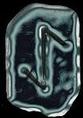
The left rune represents an important element of the past. Eoh refers to the Yew tree. The Yew does not go dormant and therefore represents endurance. Even the wood of the tree is strong, resilient, and pliable - the Yew bends, but does not break. The evergreen nature of the Yew is present even in the rune itself, as it cannot be changed even by reversal. This rune is historically symbolic of death, but, as in the Tarot and as suggested by the nature of the Yew tree itself, death is seen only as a transmutation of something eternal and unchanging - the spirit.
2.
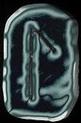
The middle rune represents a deciding element of the present. Laguz is the most strongly feminine of runes, representing water. Deep sexuality is suggested by this rune. Through Laguz, water is seen as the ocean - vast, uncontrollable, ever-changing, and vital. When interpreted as the returning tide, Laguz can also predict the inevitable return from a long journey.
3.
The right rune represents the critical element of the future, at the core of the final outcome. Tyr was the Norse god of war. It was through his sacrifice that the great force of chaos, the wolf Fenrir was bound. Here however, you have drawn the rune reversed. This could mean that a sacrifice made will not lead to the desired result. It could also mean a loss, or a victory overturned. This rune warns against entering into conflicts or negotiations, especially ones requiring that an offering or concession be made - the wolf might take your hand and yet remain unbound. Note also that Tyr was the god of law, so there is a suggestion of a wrongdoer who will avoid justice.
4.
The top rune represents a force that works for you. Raido means to ride. In this rune, the image is not so much the riding of a horse as in riding in a cart or as cargo. As such Raido may suggest a journey, but is much more indicative of communication. Alternate interpretations based on the use of Raido as a cognate in other words give it the meaning of council, judgment, and moral correctness. Therefore, this rune is the rune of wise advice and good leadership.
5.
The bottom Rune represents a force that works against you. Ger is one of the runes that touches on the cycles of the year, in this case the fall harvest. These cycles are eternal, which is represented in the rune by the fact that it is unchanged by reversal. Ger can represent pregnancy or other forms of fruitfulness, and is especially indicative of the cycles of providence and karma - that which has been sown is now being reaped. This rune can also represent the cycles of wealth, for crops were frequently a sign of wealth.
If you are further interested in Rune stones, please check out a script I wrote about three years ago. The story tells of a women's chance encounter with the towns rune reader and physcic. Her reading leads to a terrible discovery about her ex-husband.Click here to read 'Evil Of A Different Kind'
Later,
Kenaz
Thursday, March 16, 2006
Red Storey dies at age 88
Red Storey, a classic larger-than-life character who won two Grey Cups as an athlete and entered the Hockey Hall of Fame in 1967 for his refereeing, died yesterday at age 88.
Born Roy Alvin Storey in Barrie, Ont., pretty much everyone called him Red. As a young man, he played hockey, lacrosse, baseball and football; however, football was his first love. He turned pro with the Toronto Argonauts at the age of 18. Legend has it he used to hitchhike between Barrie and Toronto when he played for the Argos.
Storey made football history in 1938 when he scored three touchdowns coming off the bench in the fourth quarter for the Argos against the Winnipeg Blue Bombers, powering his team to a Grey Cup win -- a record that stands today. Storey won two Grey Cups with the Argos, but a knee injury in 1941 ended his football career.
By 1950, Storey had entered the NHL as a referee. Beliveau described him as fair, frank and a lot of fun. The league trusted Storey to referee in every Stanley Cup final between 1952 and 1958.
In 1955, Storey faced his biggest refereeing challenge: He dropped the puck at the Montreal Forum on the night of the Maurice "Rocket" Richard riot. NHL Commissioner Clarence Campbell had suspended the Canadiens start for the rest of the season and all of the playoffs. He then showed up at the Forum four days later to take in the St. Patrick's Day game against the Detroit Red Wings.
"It was very scary," Storey recalled years later. "I thought if someone lit a match, the whole place might explode."
As it was, the game ended in the first period when someone threw a tear gas bomb on the ice, and people started pelting Campbell with food, then physically assaulting him. People evacuated the forum and then the melee started working its way down Montreal's St. Catharine's Street. More than 60 people were arrested.
"There wouldn't have been any problem if that numbnuts had stayed home," Storey said, adding, "you know who I'm talking about."
Storey had a reason to call Campbell "numbnuts." In 1959, Campbell publicly said Storey had choked while refereeing a game at Chicago Stadium. Storey quit in a huff and never worked for the NHL again.
However, he stayed in hockey, doing broadcast commentary and participating in old-timers' games across North America. This is the era that I remember Red from. He was the equivalent of basketballs "Meadow Lark" Lemon. Complete with gimmicky wigs and bucket of confetti.
The Canadian Sports Hall of Fame inducted him as a member in 1986. In 1991, he was made a member of the Order of Canada. Storey did more than sports. He raised millions over his half-century of charity work -- money aimed at helping kids who were growing up as poor as he did.
"There are thousands of kids in Montreal who have milk every day because of Red Storey's milk fund. This man was absolutely larger than life," Burns said.
Tomorrow is St.Patrick's day and I'm sure more than a few pints will be hoisted in memory of Red and Boom Boom, who died Saturday.
Later,
Kenaz
Born Roy Alvin Storey in Barrie, Ont., pretty much everyone called him Red. As a young man, he played hockey, lacrosse, baseball and football; however, football was his first love. He turned pro with the Toronto Argonauts at the age of 18. Legend has it he used to hitchhike between Barrie and Toronto when he played for the Argos.
Storey made football history in 1938 when he scored three touchdowns coming off the bench in the fourth quarter for the Argos against the Winnipeg Blue Bombers, powering his team to a Grey Cup win -- a record that stands today. Storey won two Grey Cups with the Argos, but a knee injury in 1941 ended his football career.
By 1950, Storey had entered the NHL as a referee. Beliveau described him as fair, frank and a lot of fun. The league trusted Storey to referee in every Stanley Cup final between 1952 and 1958.
In 1955, Storey faced his biggest refereeing challenge: He dropped the puck at the Montreal Forum on the night of the Maurice "Rocket" Richard riot. NHL Commissioner Clarence Campbell had suspended the Canadiens start for the rest of the season and all of the playoffs. He then showed up at the Forum four days later to take in the St. Patrick's Day game against the Detroit Red Wings.
"It was very scary," Storey recalled years later. "I thought if someone lit a match, the whole place might explode."
As it was, the game ended in the first period when someone threw a tear gas bomb on the ice, and people started pelting Campbell with food, then physically assaulting him. People evacuated the forum and then the melee started working its way down Montreal's St. Catharine's Street. More than 60 people were arrested.
"There wouldn't have been any problem if that numbnuts had stayed home," Storey said, adding, "you know who I'm talking about."
Storey had a reason to call Campbell "numbnuts." In 1959, Campbell publicly said Storey had choked while refereeing a game at Chicago Stadium. Storey quit in a huff and never worked for the NHL again.
However, he stayed in hockey, doing broadcast commentary and participating in old-timers' games across North America. This is the era that I remember Red from. He was the equivalent of basketballs "Meadow Lark" Lemon. Complete with gimmicky wigs and bucket of confetti.
The Canadian Sports Hall of Fame inducted him as a member in 1986. In 1991, he was made a member of the Order of Canada. Storey did more than sports. He raised millions over his half-century of charity work -- money aimed at helping kids who were growing up as poor as he did.
"There are thousands of kids in Montreal who have milk every day because of Red Storey's milk fund. This man was absolutely larger than life," Burns said.
Tomorrow is St.Patrick's day and I'm sure more than a few pints will be hoisted in memory of Red and Boom Boom, who died Saturday.
Later,
Kenaz
Unexpected Twist For Kennedy's Assassin
Robert F. Kennedy's assassin, Sirhan Sirhan, comes up for parole again this week in a potential conflict of interest for Gov. Arnold Schwarzenegger, who is married to RFK's niece.
Sirhan shot Kennedy to death at a Los Angeles hotel in 1968, minutes after the New York senator claimed victory in the California presidential primary. Four other people were also struck by bullets. Sirhan was arrested on the scene; Kennedy died early the next day.
Sirhan received a death sentence that was commuted to life in prison in 1972 when the California Supreme Court declared the death penalty unconstitutional.
Sirhan claims he was hypnotized at the time and that a second gunman might have actually killed Kennedy at the Ambassador Hotel in Los Angeles. Sirhan's former attorney said that Sirhan could not have fired the fatal shot because he was out of range when it took place.
Questions about Sirhan's motives and rumors of a conspiracy lingered, and in 1975, the FBI appointed a special investigator to probe the claims that more than one gunman was involved. The investigation concluded that a conspiracy was possible but unlikely.
The assassin's parole hearing at Corcoran State Prison on Wednesday — the 13th since his conviction and the first since Schwarzenegger's election in 2003 — will be heard by two board members, one of whom was appointed by Schwarzenegger.
If the board recommends his release — an unlikely occurrence, experts say — the decision of whether to free Sirhan will fall to Schwarzenegger, setting up an unusual dilemma.
"Judges can recuse themselves, but this is not the kind of decision a governor can delegate," said Jack Pitney, a government professor at Claremont McKenna College.
The governor's press office declined to comment, saying it is highly unlikely the decision would fall to Schwarzenegger.
Sirhan's longtime lawyer died last year, and he has not chosen a new attorney.
Los Angeles Deputy District Attorney David Dahle, who will argue the state's case before the parole board, said there is little chance the decision would fall to the Republican governor. He conceded there is at least the appearance of a conflict.
"Obviously there's an issue. He's married to the Kennedy family," he said. "But he is not a member of the immediate family."
Schwarzenegger's wife is TV journalist Maria Shriver. Her mother, Eunice Kennedy Shriver, was a sister of RFK and President Kennedy.
Schwarzenegger and Shriver are occasional visitors to the Massachusetts home of Sen. Edward Kennedy, RFK's younger brother. As recently as last year, the California governor participated in a benefit for the Robert F. Kennedy Memorial.
(This story is particularily interesting for the fact that I've had the opportunity to work on three film sets that dealt with the Kennady family, Jackie, Ethel, Joan: The Women of Camelot(2001), Beauty and Power(2002), RFK(Little Brother,working title)(2002).)
Later,
Kenaz
Sirhan shot Kennedy to death at a Los Angeles hotel in 1968, minutes after the New York senator claimed victory in the California presidential primary. Four other people were also struck by bullets. Sirhan was arrested on the scene; Kennedy died early the next day.
Sirhan received a death sentence that was commuted to life in prison in 1972 when the California Supreme Court declared the death penalty unconstitutional.
Sirhan claims he was hypnotized at the time and that a second gunman might have actually killed Kennedy at the Ambassador Hotel in Los Angeles. Sirhan's former attorney said that Sirhan could not have fired the fatal shot because he was out of range when it took place.
Questions about Sirhan's motives and rumors of a conspiracy lingered, and in 1975, the FBI appointed a special investigator to probe the claims that more than one gunman was involved. The investigation concluded that a conspiracy was possible but unlikely.
The assassin's parole hearing at Corcoran State Prison on Wednesday — the 13th since his conviction and the first since Schwarzenegger's election in 2003 — will be heard by two board members, one of whom was appointed by Schwarzenegger.
If the board recommends his release — an unlikely occurrence, experts say — the decision of whether to free Sirhan will fall to Schwarzenegger, setting up an unusual dilemma.
"Judges can recuse themselves, but this is not the kind of decision a governor can delegate," said Jack Pitney, a government professor at Claremont McKenna College.
The governor's press office declined to comment, saying it is highly unlikely the decision would fall to Schwarzenegger.
Sirhan's longtime lawyer died last year, and he has not chosen a new attorney.
Los Angeles Deputy District Attorney David Dahle, who will argue the state's case before the parole board, said there is little chance the decision would fall to the Republican governor. He conceded there is at least the appearance of a conflict.
"Obviously there's an issue. He's married to the Kennedy family," he said. "But he is not a member of the immediate family."
Schwarzenegger's wife is TV journalist Maria Shriver. Her mother, Eunice Kennedy Shriver, was a sister of RFK and President Kennedy.
Schwarzenegger and Shriver are occasional visitors to the Massachusetts home of Sen. Edward Kennedy, RFK's younger brother. As recently as last year, the California governor participated in a benefit for the Robert F. Kennedy Memorial.
(This story is particularily interesting for the fact that I've had the opportunity to work on three film sets that dealt with the Kennady family, Jackie, Ethel, Joan: The Women of Camelot(2001), Beauty and Power(2002), RFK(Little Brother,working title)(2002).)
Later,
Kenaz
Tuesday, March 14, 2006
Funny Arnold Schwarzenegger commercial
Conan featured this Japanese commercial starring Governor Arnie on last nights show. Tonight I was poking around the net and came across the spot. This is to damn stupid to be believed, check it out.
Monday, March 13, 2006
Construction on 9/11 Memorial set to begin

Construction is set to begin Monday at the site of the former World Trade Center in New York on a memorial to victims of the Sept. 11 attacks. Reflecting Absence, a design by New York architect Michael Arad, will mark the fallen towers near their footprints with two stone reflecting pools, surrounded by trees. Around each pool are the names of the nearly 3,000 people killed in the 2001 attacks and in the 1993 bombing of the World Trade Centre.
Not everyone is happy, several family members of those who where killed have lauched a law suite against the designers. They object to having the names of their loved ones underground and to the fact that the site of the tragedy is being covered over.

From Michael Arad and Peter Walker
Reflecting Absence
This memorial proposes a space that resonates with the feelings of loss and absence that were generated by the destruction of the World Trade Center and the taking of thousands of lives on September 11, 2001 and February 26, 1993. It is located in a field of trees that is interrupted by two large voids containing recessed pools. The pools and the ramps that surround them encompass the footprints of the twin towers. A cascade of water that describes the perimeter of each square feeds the pools with a continuous stream. They are large voids, open and visible reminders of the absence.
The surface of the memorial plaza is punctuated by the linear rhythms of rows of deciduous trees, forming informal clusters, clearings and groves. This surface consists of a composition of stone pavers, plantings and low ground cover. Through its annual cycle of rebirth, the living park extends and deepens the experience of the memorial.
Bordering each pool is a pair of ramps that lead down to the memorial spaces. Descending into the memorial, visitors are removed from the sights and sounds of the city and immersed in a cool darkness. As they proceed, the sound of water falling grows louder, and more daylight filters in from below. At the bottom of their descent, they find themselves behind a thin curtain of water, staring out at an enormous pool. Surrounding this pool is a continuous ribbon of names. The enormity of this space and the multitude of names that form this endless ribbon underscore the vast scope of the destruction. Standing there at the water's edge, looking at a pool of water that is flowing away into an abyss, a visitor to the site can sense that what is beyond this curtain of water and ribbon of names is inaccessible.
The names of the deceased will be arranged in no particular order around the pools. After carefully considering different arrangements, I have found that any arrangement that tries to impose meaning through physical adjacency will cause grief and anguish to people who might be excluded from that process, furthering the sense of loss that they are already suffering.
The haphazard brutality of the attacks is reflected in the arrangement of names, and no attempt is made to impose order upon this suffering. The selfless sacrifices of rescue workers could be acknowledged with their agency's insignia next to their names. Visitors to the site, including family members and friends of the deceased, would be guided by on-site staff or a printed directory to the specific location of each name. For those whose deceased were never physically identified, the location of the name marks a spot that is their own.
In between the two pools is a short passageway that links them at this lower level. A single alcove is located along this passageway, containing a small dais where visitors can light a candle or leave an artifact in memory of loved ones. Across from it, in a small chamber, visitors might pause and contemplate. This space provides for gatherings, quiet reflection, and memorial services.
Along the western edge of the site, a deep fissure exposes the slurry wall from plaza level to bedrock and provides access via a stairway. Descending alongside its battered surfaces, visitors will witness the massive expanse of the original foundations. The entrance to the underground interpretive center is located at bedrock. Here visitors could view many preserved artifacts from the twin towers: twisted steel beams, a crushed fire truck, and personal effects. The underground interpretive center would contain exhibition areas as well as lecture halls and a research library.
In contrast with the public mandate of the underground interpretive center is the very private nature of the room for unidentified remains. It is situated at bedrock at the north tower footprint. Here a large stone vessel forms a centerpiece for the unidentified remains. A large opening in the ceiling connects this space to the sky above, and the sound of water shelters the space from the city. Family members can gather here for moments of private contemplation. It is a personal space for remembrance.
The memorial plaza is designed to be a mediating space; it belongs both to the city and to the memorial. Located at street level to allow for its integration into the fabric of the city, the plaza encourages the use of this space by New Yorkers on a daily basis. The memorial grounds will not be isolated from the rest of the city; they will be a living part of it.
Later,
Kenaz
Subscribe to:
Posts (Atom)