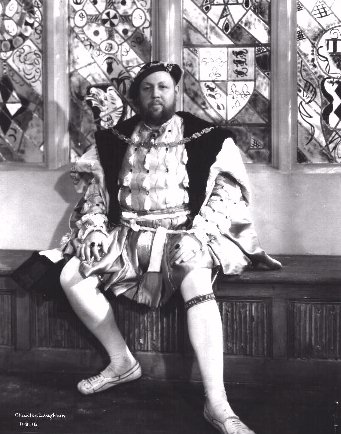
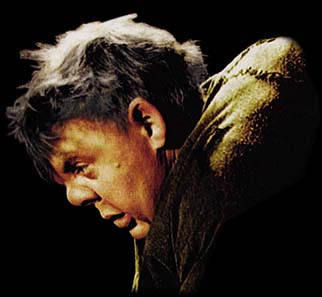
Jeanette McDonald
This musical star may not have been the biggest box-office draw of all time, but she still has an international fan club, and a devoted following, indicative of the impact she made on-screen. She was a Broadway chorus girl in the early 1920s, but was soon picked to play leads in operettas and musical comedies. Given a screen test at Paramount's New York studio in 1929, she was chosen by director Ernst Lubitsch to costar with French singing sensation Maurice Chevalier in The Love Parade the success of which made her one of the most popular female stars of the early talkie era. Pretty and vivacious (but, oddly, without much sex appeal), MacDonald's saucy characterizations in her early films for Lubitsch are quite at odds with the image she later presented as a star at MGM.
She starred in The Vagabond King Lubitsch's Monte Carlo, Let's Go Na- tive, Lottery Bride, Oh for a Man! (all 1930), Don't Bet on Women, Annabelle's Affairs (both 1931), Lubitsch's One Hour With You, Love Me Tonight (both 1932, reteamed with Chevalier in two of her best screen outings), The Cat and the Fiddle and The Merry Widow (both 1934, the latter marking her final film with Chevalier and director Lubitsch) before her first fateful teaming with Nelson Eddy.
The movie operetta had enjoyed some popularity in the early talkie years, but the form was largely moribund in 1935 when MGM paired MacDonald with blondined singing star Eddy in Naughty Marietta a Victor Herbert concoction that scored surprisingly well with audiences then sated by a surfeit of backstage musicals. MacDonald and Eddy suited each other perfectly on-screen, and their chaste romantic relationship won them a big fan following. MGM reteamed them seven times-for Rose Marie (1936), Maytime (1937), The Girl of the Golden West, Sweethearts (both 1938), New Moon, Bitter Sweet (both 1940), and the ill-fitting modern-day musical I Married an Angel (1942)-before the studio decided it had milked the winning format for every last drop. (She had also appeared in San Francisco a hugely successful 1936 drama costarring Clark Gable and Spencer Tracy, in which she warbled the title tune that became the Bay City's unofficial theme song.) After completing Cairo (1942), a strained musicomedy spoof of spy films, she was released by MGM. She took a cameo in Follow the Boys (1944) and played supporting roles in Three Daring Daughters (1948) and The Sun Comes Up (1949) before retiring from the screen altogether. MacDonald sang frequently on stage and in concert for years thereafter, but was eventually sidelined with a heart ailment, which contributed to her passing. She was survived by actor Gene Raymond, whom she'd married in 1937. They costarred in the sentimental drama Smilin' Through (1941).
Maurice Chavalier
The epitome of French charm and sophistication, this legendary performerinstantly recognizable by his dancing eyes, slick hair, and thick lower lip-had the good fortune to be in America at the dawn of the talkie age, and helped revolutionize movie musicals by freeing them from the constraints of corny backstage plots and settings. Chevalier, an acrobat who turned to singing after being sidelined in a severe accident, made several short films in France (beginning with 1908's Trop credule). He served in the French army during World War 1, was wounded, captured, and imprisoned by the Germans. (He learned English from a fellow prisoner.) After the war, he returned to entertaining and became the toast of Parisian music halls. Chevalier came to America in 1928, and after making a short subject Bonjour New York! on the East Coast he went to Hollywood. He worked for Paramount, which designed airy, sophisticated (and often naughty) vehicles that would emphasize his continental charm. The Love Parade (1929) teamed him with debuting Jeanette MacDonald in a suave musical directed by Ernst Lubitsch; Chevalier was Oscar-nominated for his performance. (He also starred in the foreign-language version of this and several subsequent films as well.) He sang a couple of songs in the all-star revue Paramount on Parade (1930), and went to the company's Astoria, Long Island, studio that same year to make The Big Pond which earned him another Oscar nomination.
Chevalier's insouciant manner and blithe delivery of juicy dialogue (often of the double entendre variety) endeared him to sophisticated audiences, although theaters in rural areas eventually rebelled against the Lubitsch-Chevalier type of picture, complaining that they were too continental for their audiences. The Smiling Lieutenant (1931) and One Hour With You (1932) were both delightful, but Chevalier's collaboration with director Rouben Mamoulian, 1932's Love Me Tonight was even more effective. Supported by Jeanette MacDonald and Myrna Loy, blessed with some of the best songs written by Rodgers and Hart, Chevalier delivered one of his finest performances as a tailor mistaken for royalty. It was the high point of his screen career and, in fact, marked a turning point for the singer. His later vehicles, including A Bedtime Story, The Way to Love (both 1933), The Merry Widow (1934), and Folies Bergère (1935) all had their points, but didn't reach, much less surpass, the plateau reached by Love Me Tonight. Then, too, the Production Code had defanged the kind of tart scripts he'd been given, and American musicals had become more sophisticated.
Returning to Europe, Chevalier starred or costarred in several English and French films during the late 1930s, including The Beloved Vagabond (1936), Man of the Hour (1937), and Break the News (1938, with another veteran song-and-dance man, Jack Buchanan). World War 2 interrupted Chevalier's film career, and he was accused-but later vindicated-of being a Nazi collaborator. He went to Hollywood in the mid 1950s just in time for the waning years of the American movie musical's golden age. Now gray-haired and jowly, but still a twinkly-eyed rake, he appeared in Love in the Afternoon (1957, wittily cast by Billy Wilder as a dour private eye), Gigi (1958, which gave him several new signature songs, "I Remember It Well" and "Thank Heaven for Little Girls"), Count Your Blessings (1959), Can-Can (1960), Fanny (1961), In Search of the Castaways (1962), I'd Rather Be Rich (1964), Monkeys, Go Home! (1967), and The Aristocats (1970, singing the title song). He won a special Oscar in 1958.
My two favourite films from this couple are both from 1932, "Love Me Tonight" and "One Hour With You".
Love me Tonight is a madcap musical tour de force of infectious melody, effortless vivacity, and ceaseless invention from first frame to last. Building on a foundation of songs by Rodgers and Hart (Babes in Arms, Pal Joey), director Rouben Mamoulian (Applause) shepherds Maurice Chevalier and Jeanette MacDonald through an exuberant romp that film maven Leslie Halliwell declared, "the most fluently cinematic comedy musical ever made."
Carefree tailor Maurice Chevalier leaves a backlot Paris where music literally radiates from every stoop, sidewalk, and boudoir to collect on a past due bill at a recalcitrant artistocratic client's family chateau. Mistaken for royalty, Maurice runs a gauntlet of lunatic blue-bloods, including love-happy Myrna Loy and screwball icon Charlie Ruggles. But it is Princess Jeanette MacDonald's closely guarded heart that Maurice desires and it will take every ounce of his ingenious pluck to woo her without revealing his well-meaning romantic deception.
Rouben Mamoulian nimbly packs Love Me Tonight with enough high-spirited cinematic invention to fill a dozen films. Using everything from zoom lenses to slow motion (both unheard of in 30s Hollywood), Mamoulian erased the lines that defined the musical genre, breaking rules that were still being established. Bravura musical performances, cheeky pre-code innuendo, and astonishing modern filmic touches are blended into a showstopping movie confection decades ahead of its time.
One Hour With You is based on the play Only a Dream by Lothar Schmidt, George Cukor and Ernst Lubitsch directed this musical comedy about a happily married couple who flirt with affairs.
Run out of a park by Paris police, Dr. André Bertier (Maurice Chevalier) and his wife Colette (Jeanette MacDonald) happily sing, "What a little thing like a wedding ring can do." Colette has invited over her best friend Mitzi (Genevieve Tobin). Her husband professor Olivier (Roland Young) has hired a detective to follow her. She shares a taxi in the rain with André, but he gets out to avoid suspicion. Mitzi chats with Colette, saying when one is not well-mated, marriage can be over-rated. André comes in and discovers he has already met Mitzi.
Pretending to be sick, Mitzi calls for a doctor, and André reluctantly leave his wife to go. He sees Mitzi, mixes a tonic, and drinks it, as they sing "Three Times a Day." Adolph (Charles Ruggles) calls Colette to tell her he is coming to her dinner party as Romeo, but she informs him it is not a costume party. (His butler wanted to see him in tights.) Colette catches André switching the place cards and suspects Mademoiselle Martel. While jealous, she flirts with Adolph. The title song "One Hour with You" is sung by Mitzi to André, by Adolph to Colette, and by Colette and André to each other. André follows the mischievous Mitzi into the garden, and Adolph tells Colette that only his education keeps him from acting like an animal. Colette sees André with Martel and cries. Mitzi tells André she has a taxi waiting; he says goodnight and locks the door. Colette jealously calls André a liar, and so he goes out. Colette finds Adolph downstairs, and he kisses her before she shows him out.
After the detective makes his report, Mitzi moves out. Colette talks in her sleep and says she dreamed about Adolph; but André just laughs. The professor visits André and reads the detailed report of how André was with Mitzi until 4:44 a.m. He asks André to be a witness in his divorce suit. André turns to the audience and sings, "I Ask You, What Would You Do?" André confesses to Colette that he is the one breaking up Mitzi's marriage. She hits him and says she wants a divorce. Then Adolph comes in and confirms that he kissed Colette. Colette tells André they are even. They talk to the audience and then kiss happily.
This story affirms a happy marriage while titillating the audience with affairs as another marriage breaks up. André is almost too charming for his own good, and Colette's jealousy actually pushes her husband into an assignation. Yet in the end the strength of their love for each other triumphs.
One Hour With You inspired me so much I made it an integral part of one of my screenplays. In
'Born Under The Azure Moon' the main characters, Tristian and Diana start out the night intending to just watch the film at an old drive. By the end of the night the two realize the movie has much more significance in their lives. Here is an excerpt,
EXT. DRIVE IN - NIGHT
(TRISTIAN)
Tristian settles the car into a spot near the front of the
sparely populated drive in.The movies beginning credits begin
to roll, "One hour with you"
"Starring"
"Jeanette Macdonald"
"And"
"Maurice Chevalier"
INT. TRISTIAN'S CAR-DRIVE IN - NIGHT
(DIANA, TRISTIAN)
DIANA
I love this movie, I saw the original
French version in a Montreal theatre,
did you know that MacDonald and
Chevalier did their own French dub?
TRISTIAN
No, I didn't know that, Montreal
must be a great city to live in
-----------------------------------------------------------------------------------------------------
32.
DIANA
Sorry, I didn't mean to mention
Montreal again, besides, I'm sure
you've visited many places
TRISTIAN
Sure, my favourite place has to be
Edmonton, mom used to take us up
there to the big mall, I remember
getting sick on the ferris wheel
DIANA
You are lucky my Dad didn't believe
in taking time off, he believed
vacations were for lazy people
TRISTIAN
You said your dad retired, wouldn't
he have been a little young to do
so?
DIANA
He started on the force right out of
high school, after forty years on
the force he decided to give it
another year and then call it quits
TRISTIAN
You say it like he was unhappy with
the force
DIANA
Not at all, he loved it, he retired
after being stabbed in the chest
TRISTIAN
Stabbed?
DIANA
Five years ago, six months before he
was going to retire, he responded to
a fight outside a club, he broke up
two guys fighting when another guy
came up from behind him and stabbed
him in the chest, dad almost died on
the operating table.
TRISTIAN
Sorry
DIANA
Don't be, dad just says it's part of
being a cop, great the movies starting
Diana settles into Tristian's arms as the movie starts
-----------------------------------------------------------------------------------------------------
33.
INT. DRIVE IN - NIGHT
(TRISTIAN, DIANA)
In the movie, the big dance number begins.Jeanette MacDonald's
character dances with the friend of Chevaliers character And
Re. Colette (MacDonald) and Adolph dance around the floor
while Andre dances with Collette's best friend Mitzi
TRISTIAN
I love this next part, Mitzi persuades
Colette that another women has her
eyes on Andre
DIANA
Right, then Andre runs off with Mitzi,
when Colette can't find him she
collapses
TRISTIAN
Adolph consoles her and mistakes her
friendly kiss for something else and
then Mitzi's husband finds out about
her affair and divorces her, oh sorry,
I forgot
DIANA
Hey no problem, it was not like that
at all, my Andre never cheated on
me
TRISTIAN
He would have been sorry if he did
INT. DRIVE IN - NIGHT
(DIANA, TRISTIAN)
Tristian and Diana embrace as they watch the movies end
credits roll and the title song "One Hour With You" begins
to play.The two become oblivious to their surroundings as
the lot quickly empties Diana lifts her head off Tristian's
shoulder to notice that he is deep in thought
DIANA
What are you thinking?
TRISTIAN
I'm beginning to wonder if there is
something to the idea of fate, I
mean maybe it was meant for your car
to break down here in tiny Azure
DIANA
Please fate nothing, this isn't Romeo
and Juliet, give yourself some credit,
your smart, handsome and completely
open minded.Look the car broke down,
we met, we connected, that's all
there is to it
-----------------------------------------------------------------------------------------------------
34.
TRISTIAN
So what happens when your car is
fixed? I can't leave Azure, you
will go back to your job and I'll go
back to the diner, then what?
DIANA
Hey, this isn't a one night stand, I
care about you, when you are ready,
come down to Calgary
TRISTIAN
That could be six months, a year,
maybe never, I don't expect you to
wait
DIANA
Look Tristian, Azure is not on the
far side of the moon, we will see
each other as often as possible, we
will work this out Diana and Tristian
kiss and embrace in the backdrop of
a rare blue moon
FADE OUT:


Later,
Kenaz