
The man in the story is in fact my cousin, my heart goes out the rest of the Bell Family. Here is the death notice placed by his family.
BELL, Glenn - Suddenly, as a result of an industrial accident on Monday, November 7, 2005, Glenn, in his 43rd year, loving father of Justin, friend of Diane. Beloved son of Thelma Guitar (Troll), predeceased by his father Nelson. Glenn will be sadly missed by his brother, two sisters and many other family members and friends. Friends may call at the MARLATT FUNERAL HOME & CREMATION CENTRE, 615 Main St. E. (east of Sanford Ave.) on Wednesday from 2-4 and 7-9 p.m. Funeral Services will be held from the Marlatt Memorial Chapel on Thursday, November 10, 2005 at 11 a.m. and will proceed to Woodland Cemetery for interment. Memorial donations to the Children's Wish Foundation of Canada would be appreciated.
Here is the story from the Hamilton Spectator
Forklift kills driver pinned underneath
By John Burman
The Hamilton Spectator
(Nov 8, 2005)
A 42-year-old Hamilton man has died of injuries he suffered when a forklift he was operating tipped over yesterday, pinning him beneath it.
Glenn Bell, an employee of the Direct Buy building supply warehouse on Barton Street East in Stoney Creek, was using the machine to unload a tractor trailer in a laneway beside the warehouse, when the accident occurred at 9:40 a.m.
Belinda Sutton, spokesperson for the Ontario Ministry of Labour, said two Occupational Health and Safety Act orders have been issued against Direct Buy as a result of the ongoing investigation
The company, which sells building materials to outlet club members at wholesale prices, has been ordered to provide an engineer's examination report on the machine, she said. And Direct Buy has been ordered not to use the machine until the first order is complied with.
A spokesperson for Direct Buy was not immediately available yesterday.
"Mr. Bell was unloading product from a truck when it tipped, pinning him underneath," Hamilton police Acting Staff Sergeant Mike Cunliffe said last night.
Cunliffe said there were no suspicious circumstances about Bell's death, which is considered an industrial accident and is being investigated by the Ministry of Labour.
Later,
Kenaz
Sunday, November 13, 2005


Saturday, November 12, 2005
Tales From The Set
This weeks semi-regular tale from the set takes place for a change in my home city of Hamilton. On Wednesday it was a complete pleasure to spend the day at Liuna Station, the old train station situated near the down town core. You can see a picture of the beautifully restored building either in the "Kenaz Vault" or click the link in the side bar to vistit "The White Oliphant", my photo blog, and scroll down until you get to the pictures of Hamilton.
Anyway, yesterday I played a press photographer covering the book release of Franklin Delano Roosevelt: Champion of Freedom by Conrad Black in a CTV movie of the week entitled "Shades of Black". I had a chance to meet Canadian actor Albert Schultz and watch Hamilton-born filmmaker director Alex Chapple (Prom Queen), DOP René Ohashi (Saint Ralph), production designer Tom Bider (Terry) make movie magic. All of whom I had the pleasure of working for on the aft mentioned projects.
Here is the summerary of the movie from Playback Magazine
Albert Schultz and Lara Flynn Boyle are in town this month for the second half of the Shades of Black shoot. The bio of embattled press tycoon Conrad Black is booked at the Dufferin Gate studios until mid-November, with Schultz (Drive Time Murders) in the lead and Boyle (Twin Peaks, Vegas) as Lord Black's wife, Barbara Amiel Black.
Also in the cast are Jason Schombing (Cool Money) as Black's longtime and recently indicted colleague David Radler, and Amy Price Francis (Our Fathers) as Shirley, Black's first wife. Jason Priestley also appears as a fictional investigator.
The $5-million MOW got underway in the U.K. early this month, filming exteriors, gala balls, the lovebirds' wedding and the strike at Black's Daily Telegraph newspaper. It was to begin filming locally on Oct. 19 and will shoot for one month in Toronto, Hamilton, Galt and Cambridge.
Alex Chapple directs for a bevy of producers including Mary Young Leckie and Heather Haldane, both of local outfit Screen Door (Shattered City, Prom Queen), and Gub Neal and Justin Thomson-Glover for Box TV, Screen Door's partner in the U.K.
Chapple (Torso: The Evelyn Dick Story) is working with DOP René Ohashi (Saint Ralph), production designer Tom Bider (Terry) and composer Christopher Dedrick (Torso, Childstar). The script comes from Andrew Wreggitt (In the Blue Ground), based on the book Shades of Black - Conrad Black: His Rise and Fall by Richard Siklos.
The movie tells Lord Black's life story through a series of flashbacks going back to his boyhood.
"He's a character of very complex, tragic and epic proportions," says Leckie. "I think the script and the film will do very good service to that." She adds that, due to the ongoing legal investigation into Black, the production needed to buy plenty of insurance, even though it felt it was on solid ground with its research.
The project is backed by CTV's Heroes, Champions and Villains stream, BBC Worldwide and Screen Door. Delivery is slated for mid-February 2006, with a local airdate expected soon thereafter. Sean Davidson, with files from Mark Dillon.
That's all for now, later.
Kenaz
Anyway, yesterday I played a press photographer covering the book release of Franklin Delano Roosevelt: Champion of Freedom by Conrad Black in a CTV movie of the week entitled "Shades of Black". I had a chance to meet Canadian actor Albert Schultz and watch Hamilton-born filmmaker director Alex Chapple (Prom Queen), DOP René Ohashi (Saint Ralph), production designer Tom Bider (Terry) make movie magic. All of whom I had the pleasure of working for on the aft mentioned projects.
Here is the summerary of the movie from Playback Magazine
Albert Schultz and Lara Flynn Boyle are in town this month for the second half of the Shades of Black shoot. The bio of embattled press tycoon Conrad Black is booked at the Dufferin Gate studios until mid-November, with Schultz (Drive Time Murders) in the lead and Boyle (Twin Peaks, Vegas) as Lord Black's wife, Barbara Amiel Black.
Also in the cast are Jason Schombing (Cool Money) as Black's longtime and recently indicted colleague David Radler, and Amy Price Francis (Our Fathers) as Shirley, Black's first wife. Jason Priestley also appears as a fictional investigator.
The $5-million MOW got underway in the U.K. early this month, filming exteriors, gala balls, the lovebirds' wedding and the strike at Black's Daily Telegraph newspaper. It was to begin filming locally on Oct. 19 and will shoot for one month in Toronto, Hamilton, Galt and Cambridge.
Alex Chapple directs for a bevy of producers including Mary Young Leckie and Heather Haldane, both of local outfit Screen Door (Shattered City, Prom Queen), and Gub Neal and Justin Thomson-Glover for Box TV, Screen Door's partner in the U.K.
Chapple (Torso: The Evelyn Dick Story) is working with DOP René Ohashi (Saint Ralph), production designer Tom Bider (Terry) and composer Christopher Dedrick (Torso, Childstar). The script comes from Andrew Wreggitt (In the Blue Ground), based on the book Shades of Black - Conrad Black: His Rise and Fall by Richard Siklos.
The movie tells Lord Black's life story through a series of flashbacks going back to his boyhood.
"He's a character of very complex, tragic and epic proportions," says Leckie. "I think the script and the film will do very good service to that." She adds that, due to the ongoing legal investigation into Black, the production needed to buy plenty of insurance, even though it felt it was on solid ground with its research.
The project is backed by CTV's Heroes, Champions and Villains stream, BBC Worldwide and Screen Door. Delivery is slated for mid-February 2006, with a local airdate expected soon thereafter. Sean Davidson, with files from Mark Dillon.
That's all for now, later.
Kenaz
Friday, November 11, 2005
Thursday, November 10, 2005
Lest We Forget Part 6


Part six covers the battle that gave birth to one of the most famous Canadian poems ever written.
In Flanders Fields
The 11th hour of the 11th day of the 11th month of 1998 marked the 80th anniversary of the ARMISTICE that ended the bloodiest war in recent history.
The War Amps has produced a special documentary entitled In Flanders Fields to commemorate the occasion. It tells of the sacrifices of Ypres, the Somme, Vimy Ridge, and Passchendaele.
The producer -- War Amps CEO Cliff Chadderton -- realized, however, it would be necessary to "package" this production by telling some of the more interesting facets of the 1914-1918 war. For instance:
Three grandsons of Queen Victoria were involved -- King George of Britain and Czar Nicholas of Russia on our side, and Kaiser Wilhelm of Germany.
The spark that ignited the confrontation was the assassination of Archduke Ferdinand of Austria. Few may know, however, that the Adriatic seaport of Montenegro was the original "prize."
The domino effect was prominent because of the alliances. The Austro-Hungarian Empire attacked Serbia, Serbia was protected by Russia, Russia had a pact with France. Britain came in to protect the neutrality of Belgium.
The documentary tells the intricate story with easy-to-follow maps and closes with a heart-rending reading of In Flanders Fields, the timeless poem written by Canadian John McCrae.
Later,
Kenaz
Wednesday, November 09, 2005
Lest We Forget Part 5

Part five covers a tape that proves a painting is worth a thousand words, and then some.
No Man's Land
No Man's Land features a powerful collection of war paintings by Canadian artist Mary Riter Hamilton. This remarkable woman spent three years in the battlefields of Europe after the First World War Armistice to paint the scenes of destruction left behind by the war.
Her images, combined with archival footage of war-torn Europe, convey the horror and futility of war; a theme that is very much a part of The War Amps NEVER AGAIN! message to outlaw war forever.
Mary Riter Hamilton refused all offers to buy her battlefield paintings. Instead, she donated 227 canvases to Library and Archives Canada to be used for the benefit of veterans, their families, and future generations.
War Amps CEO Cliff Chadderton explains how these art treasures might have remained unseen if it had not been for the initiative of Dr. Angela Davis of the University of Manitoba. The War Amps agreed with Dr. Davis that Mary Riter Hamilton's works should be promoted, and welcomed the opportunity to produce No Man's Land. It was The War Amps, in fact, that provided some financing for the artist to visit the battlefields.
Mary Riter Hamilton had a consuming passion to pay tribute to the Canadian soldiers who fought and died in the "war to end all wars." Through No Man's Land, and an exhibition of her paintings that has travelled to several Canadian cities, her wish is at last a reality.
Later,
Kenaz
Tuesday, November 08, 2005
Lest We Forget Part 4
In part four I bring you the heroism exibited by all the men who fought on the fields of Vimy Ridge.
A Vimy Veteran Remembers
This production commemorates First World War battle of Vimy Ridge. On April 9, 1917, a corps of Canadian soldiers captured the strategic ridge in France from the Germans.
This marked not only a significant Allied victory, but also the first time Canadians had fought as an independent force, and not as part of the British Army. The Canadian Corps suffered 20,000 casualties -- 5,000 of these would never return home.
A Vimy Veteran Remembers features interviews with 90-year-old War Amps member Perce Lemmon, who fought at Vimy. He joins War Amps CEO Cliff Chadderton to describe what life was like as a young soldier fighting in the trenches. The use of extensive archival war footage makes his story come to life.
The production also features another prominent member of The War Amps, Fred Tilston, a Second World War Victoria Cross winner. Tilston talks about the four Victoria Cross winners at Vimy -- an indication of the gallantry of the Canadian soldiers.
Later,
Kenaz
Monday, November 07, 2005
Lest We Forget

In part three I bring you the heroism exibited by all the men who fought on the fields of Vimy Ridge.
A Vimy Veteran Remembers
This production commemorates First World War battle of Vimy Ridge. On April 9, 1917, a corps of Canadian soldiers captured the strategic ridge in France from the Germans.
This marked not only a significant Allied victory, but also the first time Canadians had fought as an independent force, and not as part of the British Army. The Canadian Corps suffered 20,000 casualties -- 5,000 of these would never return home.
A Vimy Veteran Remembers features interviews with 90-year-old War Amps member Perce Lemmon, who fought at Vimy. He joins War Amps CEO Cliff Chadderton to describe what life was like as a young soldier fighting in the trenches. The use of extensive archival war footage makes his story come to life.
The production also features another prominent member of The War Amps, Fred Tilston, a Second World War Victoria Cross winner. Tilston talks about the four Victoria Cross winners at Vimy -- an indication of the gallantry of the Canadian soldiers.
Later,
Kenaz
Rune Reading For The Week Of November 7-November 13, 2005
This week I am starting something different with my weekly reading. More fitting with the feel of my blog I have decided to offer a rune reading. Runes were first used over 1500 years ago by the East Goths, and later appeared throughout England and Scandinavia. As Christianity took hold, the use of runic alphabets in divination became reviled as a pagan practice. The word "rune" itself comes from an early Anglo-Saxon word meaning "secret" or "mystery", and they remain an enigma to the world at large. Runes were initially most popular among Wiccans and modern pagans, but have enjoyed unprecedented mainstream adoption in the past 30 years.
Introduction to Rune Readings
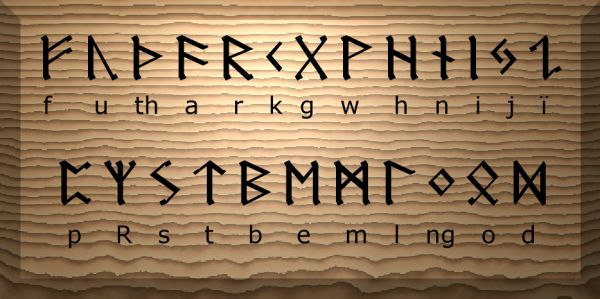
Rune readings are arrangements of the 24 runes (letters) of the old Futhark alphabet. The layout of the runes is known as a spread, and determines what each rune refers to. For example, in the Three Norns spread, the first rune represents the past, the second the present, and the third the future.
Sets: In addition to each rune having a meaning, the material in which the runes are carved can color the reading. Most people consistently use runes made of ceramic, stone, or wood. In order to broaden your experience, we offer readings with Gold Runes (for questions about business, career, and property), Jade Runes (for questions about love, friendship, and relationships), Ice Runes (for questions about struggle, conflict, and achievement), Spirit Runes (for questions about mysticism, spirituality, and religion), and Stone Runes (for questions about the natural world and things beyond human control).
Here we go.
The question will remain the same: "Will this week be a successful one?"
Rune Alphabet

Spread:Cross(in order of reading)
The Cross spread is used to plot the arc of your life and the forces acting on it. It is the most popular spread, giving a very complete view of the situation. Ice Runes are most commonly used for questions about struggle, conflict, and achievement.

Here is the Reading Using the Ice Set.
1.

The left rune represents an important element of the past. Man(Mannaz)-represents Mankind. This rune evokes the image that although we must make much of our way in the world on our own, there is nevertheless an entire populous that shares similar experiences. Thus, this rune represents the relationship of the self with the whole - working together we can produce great results. Additionally, Man speaks to intellect and culture that separate us from the animals.
2.

The middle rune represents a deciding element of the present. Laguz is the rune representing water. Laguz is a strongly feminine rune, and like the ocean contains much power of an uncontrollable nature. Here the rune is seen in the reversed, symbolic of the ebbing tide. This may suggest power being drawn away, or may perhaps the start of a journey. Since this is a rune of sexual power, the reversal can also suggest sexual problems or dissatisfaction.
3.

The right rune represents the critical element of the future, at the core of the final outcome. Ken(or Kenaz)is the rune of light and knowledge, driving away darkness and ignorance and revealing hidden truth. This rune also brings forth images of friendship and comfort. Ken is the light of inspiration, the light of imagination, and a beacon in the darkest hours.
4.

The top rune represents a force that works for you. Algiz plainly shows the antlers of the elk that it represents. The elk is the object of the hunt, and hence Algiz speaks to the pursuit of goals and the thrill of that pursuit. The rune is currently shown reversed, so this could suggest a failed endeavor or a lack of effort. Algiz is also representative of a protective hand (fingers open wide), so the reversed form may indicate a failed defense.
5.

The bottom Rune represents a force that works against you. Sowelu(Sowilo)is a strong symbol, for it represents the sun. Unlike equatorial cultures who may see the sun as a harsh and imperial force capable of causing droughts, in the cold north the sun is a purely feminine force that gives life and allows crops to grow. In dark times, this rune represents clarity of sight and the victory of good over evil. Sowelu is irreversible, as the cycles of the sun and seasons are perpetual.
Later,
Kenaz
Introduction to Rune Readings
Rune readings are arrangements of the 24 runes (letters) of the old Futhark alphabet. The layout of the runes is known as a spread, and determines what each rune refers to. For example, in the Three Norns spread, the first rune represents the past, the second the present, and the third the future.
Sets: In addition to each rune having a meaning, the material in which the runes are carved can color the reading. Most people consistently use runes made of ceramic, stone, or wood. In order to broaden your experience, we offer readings with Gold Runes (for questions about business, career, and property), Jade Runes (for questions about love, friendship, and relationships), Ice Runes (for questions about struggle, conflict, and achievement), Spirit Runes (for questions about mysticism, spirituality, and religion), and Stone Runes (for questions about the natural world and things beyond human control).
Here we go.
The question will remain the same: "Will this week be a successful one?"
Rune Alphabet
Spread:Cross(in order of reading)
The Cross spread is used to plot the arc of your life and the forces acting on it. It is the most popular spread, giving a very complete view of the situation. Ice Runes are most commonly used for questions about struggle, conflict, and achievement.

Here is the Reading Using the Ice Set.
1.
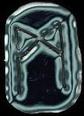
The left rune represents an important element of the past. Man(Mannaz)-represents Mankind. This rune evokes the image that although we must make much of our way in the world on our own, there is nevertheless an entire populous that shares similar experiences. Thus, this rune represents the relationship of the self with the whole - working together we can produce great results. Additionally, Man speaks to intellect and culture that separate us from the animals.
2.
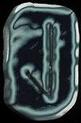
The middle rune represents a deciding element of the present. Laguz is the rune representing water. Laguz is a strongly feminine rune, and like the ocean contains much power of an uncontrollable nature. Here the rune is seen in the reversed, symbolic of the ebbing tide. This may suggest power being drawn away, or may perhaps the start of a journey. Since this is a rune of sexual power, the reversal can also suggest sexual problems or dissatisfaction.
3.
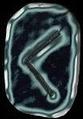
The right rune represents the critical element of the future, at the core of the final outcome. Ken(or Kenaz)is the rune of light and knowledge, driving away darkness and ignorance and revealing hidden truth. This rune also brings forth images of friendship and comfort. Ken is the light of inspiration, the light of imagination, and a beacon in the darkest hours.
4.
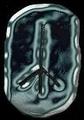
The top rune represents a force that works for you. Algiz plainly shows the antlers of the elk that it represents. The elk is the object of the hunt, and hence Algiz speaks to the pursuit of goals and the thrill of that pursuit. The rune is currently shown reversed, so this could suggest a failed endeavor or a lack of effort. Algiz is also representative of a protective hand (fingers open wide), so the reversed form may indicate a failed defense.
5.
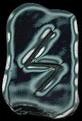
The bottom Rune represents a force that works against you. Sowelu(Sowilo)is a strong symbol, for it represents the sun. Unlike equatorial cultures who may see the sun as a harsh and imperial force capable of causing droughts, in the cold north the sun is a purely feminine force that gives life and allows crops to grow. In dark times, this rune represents clarity of sight and the victory of good over evil. Sowelu is irreversible, as the cycles of the sun and seasons are perpetual.
Later,
Kenaz
Sunday, November 06, 2005
Lest We Forget

"War Amps"
Today is the second day of a week long loog at the contributions of Canadian soldiers during World War I.
If Ye Break Faith
If Ye Break Faith examines the death and destruction during the First World War, from 1914 to 1918.
Narrated by War Amps CEO Cliff Chadderton, If Ye Break Faith features authentic film footage from the devastating battles of Ypres, the Somme, Vimy, and Passchendaele.
Members of The War Amps who survived the First World War talk about their experiences in a war that cost the lives of more than 10 million servicemen, including 60,000 Canadians.
The title of this documentary is an excerpt from the poem In Flanders Fields. It was written by Canadian Medical Officer John McCrae while he served overseas.
If ye break faith with us who die
We shall not sleep, though poppies grow
In Flanders fields.
These words are a reminder that the world must no longer ignore the cries of those who died in the "war to end all wars."
Later,
Kenaz
Today in History
 http://www.3d-animated-gifs.com/full-page-greeting-images/balloons-monkeys-t-g.gif&imgrefurl=http://www.3d-animated-gifs.com/full-page-greeting-cards/chimps-birthday-greeting.htm&h=260&w=260&sz=133&tbnid=zsWKk4qWpJUJ:&tbnh=107&tbnw=107&hl=en&start=31&prev=/images%3Fq%3D%2522animated%2Bbirthday%2522%26start%3D20%26svnum%3D10%26hl%3Den%26lr%3D%26safe%3Doff%26client%3Dopera%26rls%3Den%26sa%3DN
Here's a sobbering thought from this day in 1969. Famous movie ledgend Steve McQueen made a career out of getting under people's collars. He went through friends the way some people go through tissues, successfully alienated all three of his wives, and once threatened a studio exec with a chainsaw. So it's hardly surprising then that some people wanted him dead. On November 6, 1969, it was revealed that McQueen had joined fellow celebrities Richard Burton, Tom Jones and Frank Sinatra on Charles Manson's so-called "death list." The list was an informal compilation of everyone the hippie cult leader had a personal vendetta against. McQueen had incurred Manson's wrath simply because he failed to commission a script that he had sent to his production studio in 1968.
McQueen was understandably upset about becoming one of Manson's targets, and from that point forward he kept a handgun in his car's glove compartment. It was luck, however, and not the gun that eventually saved his life. McQueen had been invited to a party by fellow actor Sharon Tate on August 8, 1969, at her house on Cielo Drive. At the last minute, he chose to go on a date instead, and in doing so narrowly missed being involved in one of the most high-profile homicide cases of the century. That night four members of Manson's "Family" snuck into the house and brutally murdered Jay Sebring, coffee heiress Gibby Folger, Gibby's boyfriend Voytek Frykowski, Steven Parent, and Tate and her unborn baby. Had McQueen been present, he may have suffered the same grim fate.
Later,
Kenaz
Saturday, November 05, 2005
Lest We Forget

Today is the first of seven posts leading up to "Rememberance Day". Each day I will provide a different example of the courage that our Canadian heros performed during the great war. Today I start with a summary of one of many great documentary tapes that the "War Amps" offers covering both World Wars and Korea.
The Blue Puttees
There is a remarkable story that comes out of the history of the First World War -- the story of a regiment from Newfoundland that earned itself the reputation as one of the best fighting Forces of the "war to end all wars." Yet, how little Canadians really know of this amazing group of volunteer soldiers, who travelled to the battlefields of France in 1916 as virtual unknowns, and returned in 1918 with the respect of the world.
This documentary tells the story of the Royal Newfoundland Regiment -- of its beginnings as a band of volunteers, who quite literally started with nothing, to build themselves into a properly equipped battalion; of its initiation into the rigours of trench warfare in Gallipoli; of its near annihilation at the tragic and bungled Battle of Beaumont Hamel in France; of its regrouping to distinguish itself in other significant battles throughout the war; and of what was perhaps the ultimate honour -- the awarding of the prefix "Royal" to the regiment by the British War Office before the war was even over.
Later,
Kenaz
The New Canadian Entrace Exam
I designed this little quiz on Canadiana trivia to help any persons planning to visit or even immigrate to Canada. This will also be a benefit to all existing Canadians who feel their knowledge of things Canadian are a little rusty. Here we go, all questions are multiple choice and best answered wearing a "took" and a pair of "mucklucks".
1.Canada's Capital is Where? and Called What?
(a)Toronto-Nathan Philips Square
(b)Ottawa-The Parliament
(c)Saskatoon-Wanuskewin Heritage Park
(d)Hamilton-Tim Horton's
2.Canada's National Anthem is:
(a)God Save the Queen
(b)The Star Spangled Banner
(c)Oh! Canada!
(d)Ar-r-r-go-s Suck!
(e)Stomping Tom Conner's "Hockey Game"
3.Canada's Head of State is Referred To As:
(a)President
(b)Prime Minister
(c)Supreme ruler
(d)A derogitory word referring to a donkeys rectum
4.Canada's World Famous Landmark is Called:
(a)The Perogie on a Fork
(b)The Rockie Mountains
(c)The C.N Tower
(d)Pam Anderson's Chest
5.Canada's Unit of Currency is Called:
(a)Denero
(b)American Greenback
(c)Yen
(d)Canadian Tire Bucks
6.Canada Has This Many Provinces and Territories:
(a)10
(b)12
(c)13
(d)2-Toronto and the rest of the country
7.Canada's Official Pastime is:
(a)Lacross
(b)Hockey
(c)Basketball
(d)Beer Drinking
8.What Motto is Inscribed on Canada's Coat of Arms:
(a)Et Tu Quebec?(You too Quebec?)
(b)A Mari usque ad Mare(From Sea to Sea)
(c)A Tout Provoir(All Will Be Provided)
(d)Voule-vou Goucher Avec Moi Ottawa? (Loose translation, have you shoved my rights where the ocean flows)
9.Canada is Known For What Food:
(a) Poutine
(b) Perogie
(c) The Beaver Tail(The Doughnut)
(d) Lager and Ale
10.Who is Canada's Current Leader:
(a)Bobby Orr
(b)Don Cherry
(c)Paul Martin
(d)One of the Hanson Brothers would be a better choice.
Bonus Question:For $100 in "Teddy Z Points"
Canada has provided the world with many great actors, musicians and sports stars. Which of these groups are NOT Canadian?
(a)John Candy, Shania Twain, Wayne Gretzky
(b)Eugene Levy, The Tragically Hip, Lorie Kane
(c)Jim Carrey, Avril Livigne, Jacque Plante,
(d)Johnny Wayne,Sandra Schmirler,Sharon,Lois and Bram
This was a trick question, all the above people are part of the Canadian fabric that every person in Canada has helped weave. Rejoice Canada! and all together now! tip your beer hat (carefully, don't spil any of that liquid gold) and scream at the top of your lungs I AM CANADIAN!
Later,
Kenaz
1.Canada's Capital is Where? and Called What?
(a)Toronto-Nathan Philips Square
(b)Ottawa-The Parliament
(c)Saskatoon-Wanuskewin Heritage Park
(d)Hamilton-Tim Horton's
2.Canada's National Anthem is:
(a)God Save the Queen
(b)The Star Spangled Banner
(c)Oh! Canada!
(d)Ar-r-r-go-s Suck!
(e)Stomping Tom Conner's "Hockey Game"
3.Canada's Head of State is Referred To As:
(a)President
(b)Prime Minister
(c)Supreme ruler
(d)A derogitory word referring to a donkeys rectum
4.Canada's World Famous Landmark is Called:
(a)The Perogie on a Fork
(b)The Rockie Mountains
(c)The C.N Tower
(d)Pam Anderson's Chest
5.Canada's Unit of Currency is Called:
(a)Denero
(b)American Greenback
(c)Yen
(d)Canadian Tire Bucks
6.Canada Has This Many Provinces and Territories:
(a)10
(b)12
(c)13
(d)2-Toronto and the rest of the country
7.Canada's Official Pastime is:
(a)Lacross
(b)Hockey
(c)Basketball
(d)Beer Drinking
8.What Motto is Inscribed on Canada's Coat of Arms:
(a)Et Tu Quebec?(You too Quebec?)
(b)A Mari usque ad Mare(From Sea to Sea)
(c)A Tout Provoir(All Will Be Provided)
(d)Voule-vou Goucher Avec Moi Ottawa? (Loose translation, have you shoved my rights where the ocean flows)
9.Canada is Known For What Food:
(a) Poutine
(b) Perogie
(c) The Beaver Tail(The Doughnut)
(d) Lager and Ale
10.Who is Canada's Current Leader:
(a)Bobby Orr
(b)Don Cherry
(c)Paul Martin
(d)One of the Hanson Brothers would be a better choice.
Bonus Question:For $100 in "Teddy Z Points"
Canada has provided the world with many great actors, musicians and sports stars. Which of these groups are NOT Canadian?
(a)John Candy, Shania Twain, Wayne Gretzky
(b)Eugene Levy, The Tragically Hip, Lorie Kane
(c)Jim Carrey, Avril Livigne, Jacque Plante,
(d)Johnny Wayne,Sandra Schmirler,Sharon,Lois and Bram
This was a trick question, all the above people are part of the Canadian fabric that every person in Canada has helped weave. Rejoice Canada! and all together now! tip your beer hat (carefully, don't spil any of that liquid gold) and scream at the top of your lungs I AM CANADIAN!
Later,
Kenaz
Friday, November 04, 2005
My Logo Designs
These are four logo designs that I created with the aid of a online screenprinting company. The first two designs are called "pride". The third is what I use for an avitar to link this site to my live365 online radio site. This logo is homage to my parents and features an elephant with an ivy bush intertwined around its tust. The fourth logo features a celtic cross and my family moto "A Tout Provoir" meaning "All Will Be Provided".


Later,
Kenaz


Later,
Kenaz
Thursday, November 03, 2005
The Te of Piglet
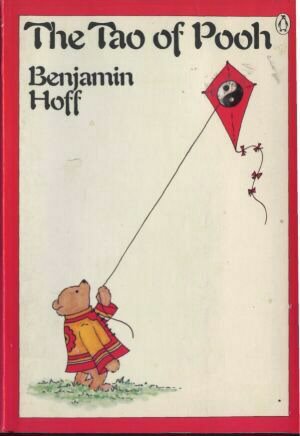

Ten years after his Tao of Pooh, in 1982, Benjamin Hoff was pressed to write a follow up of his Western inquiry into Taoism. He did this by writing his The Te of Piglet, published in 1992. It is still in print, with a paperback edition issued by Penguin USA in 1993.
Hoff explicitly states that this second book is not a sequel to his first book, but rather a companion. The book is based around two topics, the concept of Te, the Chinese word meaning 'power' or 'virtue' and Piglet, of the Winnie the Pooh books.
In his first book, he brought out the essential tenets and perspectives of Taoism, in terms accessible to Westerners. In his second book, he elucidates the Taoist concept of 'Virtue — of the small'; though, he also uses it as an opportunity to elaborate on his introduction to Taoism. It is written with many embedded stories from the A. A. Milne Winnie the Pooh books, both for entertainment and because they serve as very useful tools for explaining Taoism — most Chinese stories are rather inaccessible to Westerners.
In The Te of Piglet, Piglet is shown to possess great power — a common interpretation of the word Te, which more commonly means Virtue-, not only because he is small, but, also, because he has a great heart or, to use a Taoist/Chinese word, Tz'u. The book goes through the other characters — Tigger, Owl, Rabbit, Eeyore, and Pooh — to show the various aspects of our humanity that Taoism says gets in the way of living in harmony with the Tao.
Book reference
Hoff, Benjamin. The Te of Piglet. Paperback edition, Penquin USA, New York, 1993. ISBN 0140230165.
Here are links to other posts related to this topic,
Favourite Quotes From The Tao Of Pooh
ORIGINS OF "CHI" AND IT'S RELATIONSHIP TO THE CONCEPTS OF "YIN AND YANG"
Later,
Kenaz
Wednesday, November 02, 2005
Some More of My Art Work

Title:Pears Series
4 total in the series
Medium:Acrylic on Paper
Size:8.5"11" each
Year:2003
Description of Technique:The four seperate panels of the same still life was painted
using the techniques of 4.Scumbling-which is the opposite of glazing. This time the lighter shade is painted over the darker. 3.Glazing. 1.Grisaille(grih zeye)-The french word meaning grey. This a method in which the entire painting is first painted in a series of light grays, then overpainted in the correct colours. 2.Acrlic Wash Technique in which the paint is thinned with water much like the way you do with water colours.

Title:Horse and Cart
Medium:Oil
Size:16"x20"
Year:2003

Title:Yin and Yang
Medium:Oil
Size:24"x36"
Tear:2004
Description:Included are the chinese symbols for peace,prosperity,hope,happiness,love and luck.

Title:Sadness
Medium:Acylic wall mural
Size:42"x42"
Year:2004
Description:This is based on old Mary Worth type comic serials.

Red Hill Creek, Hamilton, Ontario

Title:Red Hill Creek
Medium:Oil
Size:8.5"x11"
Year:2004

Spencer Creek, Dundas, Ontario
Title:Spencer Creek
Medium:Oil
Size:8.5"x11"
Year:2004
Later,
Kenaz
Tuesday, November 01, 2005
All Hallows Eve
The true origins of Halloween lie with the ancient Celtic tribes who lived in Ireland, Scotland, Wales and Brittany. For the Celts, November 1 marked the beginning of a new year and the coming of winter. The night before the new year, they celebrated the festival of Samhain, Lord of the Dead. During this festival, Celts believed the souls of the dead—including ghosts, goblins and witches—returned to mingle with the living. In order to scare away the evil spirits, people would wear masks and light bonfires.
When the Romans conquered the Celts, they added their own touches to the Samhain festival, such as making centerpieces out of apples and nuts for Pomona, the Roman goddess of the orchards. The Romans also bobbed for apples and drank cider—traditions which may sound familiar to you. But where does the Christian aspect of the holiday come into play? In 835, Pope Gregory IV moved the celebration for all the martyrs (later all saints) from May 13 to November 1. The night before became known as All Hallow’s Even or “holy evening.” Eventually the name was shortened to the current Halloween. On November 2, the Church celebrates All Souls Day.
The purpose of these feasts is to remember those who have died, whether they are officially recognized by the Church as saints or not. It is a celebration of the “communion of saints,” which reminds us that the Church is not bound by space or time.
The Celtic rituals of the Samhain and the Beltane influended me to write a suspensful yarn back in 2002, entitled
'Evil Of A Different Kind'
The story revolves around the character of Kennedy Shepherd, a self made man who could have his pick of professions. A leader in life, all star tier II quarterback at State Colledge, top of his class. Majoring in law, minors in political history and art, it seem his future is paved in gold. Beneath this happy facade, lurks the darkness of some resentful, mistrusting creature.
This dark soul is unleased upon his family, friends and citizens of Melville NY during the annual heritage and Celtic festival. This evil stems from Kennedy's experiences from a brief stint in the military and his minds intertwinning of past and present.
Later,
Kenaz
When the Romans conquered the Celts, they added their own touches to the Samhain festival, such as making centerpieces out of apples and nuts for Pomona, the Roman goddess of the orchards. The Romans also bobbed for apples and drank cider—traditions which may sound familiar to you. But where does the Christian aspect of the holiday come into play? In 835, Pope Gregory IV moved the celebration for all the martyrs (later all saints) from May 13 to November 1. The night before became known as All Hallow’s Even or “holy evening.” Eventually the name was shortened to the current Halloween. On November 2, the Church celebrates All Souls Day.
The purpose of these feasts is to remember those who have died, whether they are officially recognized by the Church as saints or not. It is a celebration of the “communion of saints,” which reminds us that the Church is not bound by space or time.
The Celtic rituals of the Samhain and the Beltane influended me to write a suspensful yarn back in 2002, entitled
'Evil Of A Different Kind'
The story revolves around the character of Kennedy Shepherd, a self made man who could have his pick of professions. A leader in life, all star tier II quarterback at State Colledge, top of his class. Majoring in law, minors in political history and art, it seem his future is paved in gold. Beneath this happy facade, lurks the darkness of some resentful, mistrusting creature.
This dark soul is unleased upon his family, friends and citizens of Melville NY during the annual heritage and Celtic festival. This evil stems from Kennedy's experiences from a brief stint in the military and his minds intertwinning of past and present.
Later,
Kenaz
Monday, October 31, 2005
Classic Movies:Fritz Lang's "M"
BY GARY MORRIS
July 2000 | Issue 29
The roots of noir go back to German Expressionism, and there’s no movie that’s more German, Expressionist, or noir than Fritz Lang’s masterful — and finally restored — M (1931). While this story of the pursuit of a child-killer lacks one of the crucial elements of the genre, the femme fatale, the other components of noir are here in force. There’s the dark cityscape, an unstable environment in which children play in the street singing chants about "black bogeymen" and murderers. There’s the paranoid pathology of the individual in the person of the twisted Hans Beckert (Peter Lorre), who courts and kills his young victims for reasons he can’t express or fathom, and a frenzied mob that brings its own brand of justice against him. Many of the classic noirs of the 1940s and later owe a debt to M’s obsessive attention to the details of the manhunt, with the most minute aspects of police procedure rendered. Most important, though, is the sense of doom that colors the film, a fatalism Lang renders through chiaroscuro lighting effects and enormous high-angle shots that suggest a malevolent spiritual presence hovering above the city and guiding its denizens to their doom.
M is based on the real-life case of child-killer Peter Kurten, the "monster of Dusseldorf," whose crimes of the 1920s were still recent enough to resonate in the viewer’s mind. The film is divided into three distinct sections. In the first, Lang introduces killer, victim, and the desolate urban landscape in which the crimes occur. The style here is oblique and impressionistic — shots of a blind man selling balloons, a little girl taking the hand of a stranger, a ball rolling down a hillside and coming ominously to rest. The director’s discreet rendering of the murder of Elsie Beckmann subtly implicates the viewer in what is not shown — as Lang wrote, "forcing each individual member of the audience to create the gruesome details of the murder according to his personal imagination." Typical of the powerful sensibility at work here is a shot of the balloon Beckert purchased for Elsie, a crudely formed clown; separated from her hand during one of the film’s unseen "gruesome details," it ends up helplessly trapped by telephone wires.
In the second sequence, which makes up most of the film, Lang presents the two groups whose interests are most threatened: the police, who must satisfy an hysterical populace, and the criminal underground, whose economic interests are jeopardized by increased police scrutiny because of the killings. Typical of the director, the film sees the police and the criminals as indistinguishable, intercutting between parallel scenes of each strategizing on how to "kill the monster." Some of the police station footage has a fresh, almost documentary feel, as then-new technologies like fingerprint analysis are methodically examined. Of course, in spite of these innovations, it’s the criminals, who have an extensive network of spies and just as much at stake, who trap Beckert.
Beckert’s capture and mock-trial are the subjects of the film’s final sequence. This is a justly famous scene, with Lorre brilliantly laying out the template for all future cinematic psychopaths. An ideal casting choice with his pudgy frame, bulging, mournful eyes, and panicked grimaces, he dominates M in spite of actually having relatively little screen time. His breakdown speech before the mob demanding his death gives a wrenching look into the mind of a madman. "But can I … can I help it?" he screams. "Haven’t I got this curse inside me? The fire? The voice? The pain? … Who knows what it feels like to be me?"
Much has been made of Lang’s innovative use of sound in M, and this aspect of the film benefits enormously from the restoration of the print. Most powerful is the recurring use of a motif from Grieg’s Peer Gynt, a whistled phrase that becomes increasingly more ominous, functioning as both a lure for Beckert’s victims and the cause of his downfall when the balloon seller recognizes it. (The whistler is Lang himself, because Lorre couldn’t!)
It’s generally agreed that M was critical in hastening Lang’s departure from Germany in 1934. The Nazis weren’t thrilled by the film’s original title, Murderers Among Us; they assumed it was about them and tried to squash the production, even going so far as issuing death threats. Of course, in a sense they were correct. M is about more than the landscape of an unbalanced mind. With its palpable air of dread and its direct indictment of mob mentality, the film draws with frightening precision the dark contours of Nazi groupthink.
Credited Cast:
Peter Lorre .... Hans Beckert
Ellen Widmann .... Frau Beckmann
Inge Landgut .... Elsie Beckmann
Otto Wernicke .... Inspector Karl Lohmann
Theodor Loos .... Inspector Groeber
Gustaf Gründgens .... Schränker
Friedrich Gnaß .... Franz, the burglar
Fritz Odemar .... The cheater
Paul Kemp .... Pickpocket with six watches
Theo Lingen .... Bauernfänger
Rudolf Blümner .... Beckert's defender
Georg John .... Blind panhandler
Franz Stein .... Minister
Ernst Stahl-Nachbaur .... Police chief
Gerhard Bienert .... Criminal secretary
Karl Platen .... Damowitz, night watchman
Rosa Valetti .... Elisabeth Winkler, Beckert's landlady
Hertha von Walther .... Prostitute
Trivia:
The tune that Peter Lorre's character whistles is "In the Hall of the Mountain King," from the "Peer Gynt" suite, by Edvard Grieg.
Peter Lorre was Jewish and fled Germany in fear of Nazi persecution shortly after the movie's release.
The film's title was originally "The Murderers are Among Us," a thinly veiled reference to the Nazi Party's group of street thugs, the SA. The change to "M" was prompted by director Fritz Lang's fear that they would realize it was a reference to them.
Fritz Lang asserts that he cast real criminals for the court scene in the end.
Fritz Lang's cruelty to his actors was legendary here. Peter Lorre was thrown down the stairs into the cellar over a dozen times.
Based on an article Fritz Lang read about the serial killer Peter Kuerten from Duesseldorf. Details have been changed but some things resemble reality.
M was the inspiration for my screenplay entitled 'Pocket Full Of Posies'

Later,
Kenaz
July 2000 | Issue 29
The roots of noir go back to German Expressionism, and there’s no movie that’s more German, Expressionist, or noir than Fritz Lang’s masterful — and finally restored — M (1931). While this story of the pursuit of a child-killer lacks one of the crucial elements of the genre, the femme fatale, the other components of noir are here in force. There’s the dark cityscape, an unstable environment in which children play in the street singing chants about "black bogeymen" and murderers. There’s the paranoid pathology of the individual in the person of the twisted Hans Beckert (Peter Lorre), who courts and kills his young victims for reasons he can’t express or fathom, and a frenzied mob that brings its own brand of justice against him. Many of the classic noirs of the 1940s and later owe a debt to M’s obsessive attention to the details of the manhunt, with the most minute aspects of police procedure rendered. Most important, though, is the sense of doom that colors the film, a fatalism Lang renders through chiaroscuro lighting effects and enormous high-angle shots that suggest a malevolent spiritual presence hovering above the city and guiding its denizens to their doom.
M is based on the real-life case of child-killer Peter Kurten, the "monster of Dusseldorf," whose crimes of the 1920s were still recent enough to resonate in the viewer’s mind. The film is divided into three distinct sections. In the first, Lang introduces killer, victim, and the desolate urban landscape in which the crimes occur. The style here is oblique and impressionistic — shots of a blind man selling balloons, a little girl taking the hand of a stranger, a ball rolling down a hillside and coming ominously to rest. The director’s discreet rendering of the murder of Elsie Beckmann subtly implicates the viewer in what is not shown — as Lang wrote, "forcing each individual member of the audience to create the gruesome details of the murder according to his personal imagination." Typical of the powerful sensibility at work here is a shot of the balloon Beckert purchased for Elsie, a crudely formed clown; separated from her hand during one of the film’s unseen "gruesome details," it ends up helplessly trapped by telephone wires.
In the second sequence, which makes up most of the film, Lang presents the two groups whose interests are most threatened: the police, who must satisfy an hysterical populace, and the criminal underground, whose economic interests are jeopardized by increased police scrutiny because of the killings. Typical of the director, the film sees the police and the criminals as indistinguishable, intercutting between parallel scenes of each strategizing on how to "kill the monster." Some of the police station footage has a fresh, almost documentary feel, as then-new technologies like fingerprint analysis are methodically examined. Of course, in spite of these innovations, it’s the criminals, who have an extensive network of spies and just as much at stake, who trap Beckert.
Beckert’s capture and mock-trial are the subjects of the film’s final sequence. This is a justly famous scene, with Lorre brilliantly laying out the template for all future cinematic psychopaths. An ideal casting choice with his pudgy frame, bulging, mournful eyes, and panicked grimaces, he dominates M in spite of actually having relatively little screen time. His breakdown speech before the mob demanding his death gives a wrenching look into the mind of a madman. "But can I … can I help it?" he screams. "Haven’t I got this curse inside me? The fire? The voice? The pain? … Who knows what it feels like to be me?"
Much has been made of Lang’s innovative use of sound in M, and this aspect of the film benefits enormously from the restoration of the print. Most powerful is the recurring use of a motif from Grieg’s Peer Gynt, a whistled phrase that becomes increasingly more ominous, functioning as both a lure for Beckert’s victims and the cause of his downfall when the balloon seller recognizes it. (The whistler is Lang himself, because Lorre couldn’t!)
It’s generally agreed that M was critical in hastening Lang’s departure from Germany in 1934. The Nazis weren’t thrilled by the film’s original title, Murderers Among Us; they assumed it was about them and tried to squash the production, even going so far as issuing death threats. Of course, in a sense they were correct. M is about more than the landscape of an unbalanced mind. With its palpable air of dread and its direct indictment of mob mentality, the film draws with frightening precision the dark contours of Nazi groupthink.
Credited Cast:
Peter Lorre .... Hans Beckert
Ellen Widmann .... Frau Beckmann
Inge Landgut .... Elsie Beckmann
Otto Wernicke .... Inspector Karl Lohmann
Theodor Loos .... Inspector Groeber
Gustaf Gründgens .... Schränker
Friedrich Gnaß .... Franz, the burglar
Fritz Odemar .... The cheater
Paul Kemp .... Pickpocket with six watches
Theo Lingen .... Bauernfänger
Rudolf Blümner .... Beckert's defender
Georg John .... Blind panhandler
Franz Stein .... Minister
Ernst Stahl-Nachbaur .... Police chief
Gerhard Bienert .... Criminal secretary
Karl Platen .... Damowitz, night watchman
Rosa Valetti .... Elisabeth Winkler, Beckert's landlady
Hertha von Walther .... Prostitute
Trivia:
The tune that Peter Lorre's character whistles is "In the Hall of the Mountain King," from the "Peer Gynt" suite, by Edvard Grieg.
Peter Lorre was Jewish and fled Germany in fear of Nazi persecution shortly after the movie's release.
The film's title was originally "The Murderers are Among Us," a thinly veiled reference to the Nazi Party's group of street thugs, the SA. The change to "M" was prompted by director Fritz Lang's fear that they would realize it was a reference to them.
Fritz Lang asserts that he cast real criminals for the court scene in the end.
Fritz Lang's cruelty to his actors was legendary here. Peter Lorre was thrown down the stairs into the cellar over a dozen times.
Based on an article Fritz Lang read about the serial killer Peter Kuerten from Duesseldorf. Details have been changed but some things resemble reality.
M was the inspiration for my screenplay entitled 'Pocket Full Of Posies'

Later,
Kenaz
Tarot Card Reading For The Week Of October 31-November 6, 2005
The Question:"Will this week be a successful one?"
Review of the ten card Celtic Spread.
The the deck is first spread out face down in the middle of the table and mixed up thoroughly. The cards are then gathered and played out one card at a time, face up as follows.
The Celtic Cross spread is one of the most common tarot spreads. There is a cross in the center, with a row of 4 cards along the side. This spread will provide a fairly in-depth look at a situation including past, present and external influences. Beginners may want to start with a spread with fewer cards.
This is a more advanced spread utilising ten cards (see diagram). It is unusual as card number two is placed sideways across card number one. This card should be read as dignified when interpreting the meaning. The cards should be turned over one at a time and addressed individually before being brought together to present a unified reading.
1. The Question: This card relates to the question that is being asked and also the motives behind it. It also indicates the emotions or issues on the seeker's mind.
2. Possible Obstacles: This card has an important influence on the seeker or the question that is being asked.
3. The Past: The background to the need for the requested question to be answered. The history that produced the question itself
4. The Present: The here and now. Present emotional states and feelings
5. The Near Future: That which lies just around the corner.
6. The Far Future: That which can be anticipated but not yet seen.
7. Personal attitudes: The Seeker's attitudes towards the question that has been asked. Also an indicator of how they see themselves.
8. An Outside Perspective: How those around the Seeker see or interpret the issue at hand.
9. Hopes and Fears: The positive and negative connotations of the question.
10. The outcome: The final result or answer.

Here is the reading.
Cover: General atmosphere

Four of Wands
YOU WILL HAVE REASON TO CELEBRATE, HAPPINESS AND PEACE ARE NOW WITHIN YOUR GRASP, THERE IS A POSSIBILITY OF A MARRIAGE OR COMMITMENT IN THE NEAR FUTURE FOR YOU.
Crossing: Opposing forces

Nine of Wands
YOU ARE EXPERIENCING A PAUSE IN A SITUATION JUST BEFORE THINGS START MOVING AGAIN.
Foundation: Past basis

Three of Swords
YOU MAY FEEL BETRAYED, AND MAY DECIDE TO LEAVE A SITUATION OR RELATIONSHIP THAT NO LONGER IS IN YOUR BEST INTEREST.
Behind You: Passing influences

King of Wands
YOU ARE FEELING RESTRICTED IN YOUR AFFAIRS, AND YOU WILL BE MORE DEDICATED TO WORK OR CAREER THAN A RELATIONSHIP OR LOVE INTEREST.
Crowining: Possible future

Five of Wands
OTHER PEOPLE IN YOUR LIFE WILL BE THE SOURCE OF ANXIETY OR PROBLEMS IN YOUR LIFE AT THIS TIME, YOU WILL FIND THAT PEOPLE AROUND YOU ARE DIFFICULT TO DEAL WITH, AND YOU AND THEM MAY NOT AGREE ON THINGS. YOU WILL ONLY BE ABLE TO RESOLVE THE MINOR DISPUTES, BUT THE BIG THINGS YOU WILL NOT. THERE IS ALSO GOSSIP AROUND YOU, BEWARE WHOM YOU TALK TO.
Before You: Soon to come

Eight of Cups
YOU ARE WALKING AWAY FROM A SITUATION IN YOUR LIFE, IN SEARCH OF SOMETHING BETTER.
Hopes: Goals or aspirations

Queen of Cups
YOU WILL MEET A NEW LOVE, THIS LOVE WILL BE NEAR YOU, OR YOUR HOME AND WILL SOON ENTER YOUR LIFE.
Opinions: What others think

Strength
YOU ARE FACED WITH A DIFFICULT SITUATION THAT COMES FROM YOUR PAST, YOU WANT POSITIVE RESULTS AND TO OVERCOME YOUR OBSTACLES, BUT WILL NEED TO CONTROL YOUR OWN FEELINGS AND ACTIONS. YOU MAY ALSO BE FORCED TO COMPROMISE OR APPEASE OTHERS AT THIS TIME.
Feelings: Fears

Ten of Wands
A SITUATION OR PROBLEM HAS LASTED A LONG TIME, AND YOU HAVE YET TO SOLVE IT, BUT SOON THIS WILL COME TO AN END.
Outcome: Resolution

Ten Of Pentacles
YOU ARE SUCCESSFUL OR WILL SOON BE ACHIEVING THE SUCCESS YOU ALWAYS WANTED,YOUR FAMILY AND THEIR SECURITY WILL BE YOUR MAIN CONCERN NOW, THERE IS A POSSIBILITY OF A HOME PURCHASE OR MOVE IN FUTURE.
Quintessence:
Temperance
SEEK TO FIND THE RIGHT MIXTURE, DESPITE TENSIONS ATTEMPT TO UNITE OPPOSITES WITH EACH OTHER, THEN YOU WILL UNDERSTAND EVERYTHING.
Later,
Kenaz
Review of the ten card Celtic Spread.
The the deck is first spread out face down in the middle of the table and mixed up thoroughly. The cards are then gathered and played out one card at a time, face up as follows.
The Celtic Cross spread is one of the most common tarot spreads. There is a cross in the center, with a row of 4 cards along the side. This spread will provide a fairly in-depth look at a situation including past, present and external influences. Beginners may want to start with a spread with fewer cards.
This is a more advanced spread utilising ten cards (see diagram). It is unusual as card number two is placed sideways across card number one. This card should be read as dignified when interpreting the meaning. The cards should be turned over one at a time and addressed individually before being brought together to present a unified reading.
1. The Question: This card relates to the question that is being asked and also the motives behind it. It also indicates the emotions or issues on the seeker's mind.
2. Possible Obstacles: This card has an important influence on the seeker or the question that is being asked.
3. The Past: The background to the need for the requested question to be answered. The history that produced the question itself
4. The Present: The here and now. Present emotional states and feelings
5. The Near Future: That which lies just around the corner.
6. The Far Future: That which can be anticipated but not yet seen.
7. Personal attitudes: The Seeker's attitudes towards the question that has been asked. Also an indicator of how they see themselves.
8. An Outside Perspective: How those around the Seeker see or interpret the issue at hand.
9. Hopes and Fears: The positive and negative connotations of the question.
10. The outcome: The final result or answer.

Here is the reading.
Cover: General atmosphere

Four of Wands
YOU WILL HAVE REASON TO CELEBRATE, HAPPINESS AND PEACE ARE NOW WITHIN YOUR GRASP, THERE IS A POSSIBILITY OF A MARRIAGE OR COMMITMENT IN THE NEAR FUTURE FOR YOU.
Crossing: Opposing forces

Nine of Wands
YOU ARE EXPERIENCING A PAUSE IN A SITUATION JUST BEFORE THINGS START MOVING AGAIN.
Foundation: Past basis

Three of Swords
YOU MAY FEEL BETRAYED, AND MAY DECIDE TO LEAVE A SITUATION OR RELATIONSHIP THAT NO LONGER IS IN YOUR BEST INTEREST.
Behind You: Passing influences

King of Wands
YOU ARE FEELING RESTRICTED IN YOUR AFFAIRS, AND YOU WILL BE MORE DEDICATED TO WORK OR CAREER THAN A RELATIONSHIP OR LOVE INTEREST.
Crowining: Possible future

Five of Wands
OTHER PEOPLE IN YOUR LIFE WILL BE THE SOURCE OF ANXIETY OR PROBLEMS IN YOUR LIFE AT THIS TIME, YOU WILL FIND THAT PEOPLE AROUND YOU ARE DIFFICULT TO DEAL WITH, AND YOU AND THEM MAY NOT AGREE ON THINGS. YOU WILL ONLY BE ABLE TO RESOLVE THE MINOR DISPUTES, BUT THE BIG THINGS YOU WILL NOT. THERE IS ALSO GOSSIP AROUND YOU, BEWARE WHOM YOU TALK TO.
Before You: Soon to come

Eight of Cups
YOU ARE WALKING AWAY FROM A SITUATION IN YOUR LIFE, IN SEARCH OF SOMETHING BETTER.
Hopes: Goals or aspirations

Queen of Cups
YOU WILL MEET A NEW LOVE, THIS LOVE WILL BE NEAR YOU, OR YOUR HOME AND WILL SOON ENTER YOUR LIFE.
Opinions: What others think

Strength
YOU ARE FACED WITH A DIFFICULT SITUATION THAT COMES FROM YOUR PAST, YOU WANT POSITIVE RESULTS AND TO OVERCOME YOUR OBSTACLES, BUT WILL NEED TO CONTROL YOUR OWN FEELINGS AND ACTIONS. YOU MAY ALSO BE FORCED TO COMPROMISE OR APPEASE OTHERS AT THIS TIME.
Feelings: Fears

Ten of Wands
A SITUATION OR PROBLEM HAS LASTED A LONG TIME, AND YOU HAVE YET TO SOLVE IT, BUT SOON THIS WILL COME TO AN END.
Outcome: Resolution

Ten Of Pentacles
YOU ARE SUCCESSFUL OR WILL SOON BE ACHIEVING THE SUCCESS YOU ALWAYS WANTED,YOUR FAMILY AND THEIR SECURITY WILL BE YOUR MAIN CONCERN NOW, THERE IS A POSSIBILITY OF A HOME PURCHASE OR MOVE IN FUTURE.
Quintessence:
Temperance
SEEK TO FIND THE RIGHT MIXTURE, DESPITE TENSIONS ATTEMPT TO UNITE OPPOSITES WITH EACH OTHER, THEN YOU WILL UNDERSTAND EVERYTHING.
Later,
Kenaz
Subscribe to:
Posts (Atom)