An opening of one's knowledge,capabilities, vision and guidance. The Kenaz is about creating a relationship,learning and allowing room for interpretation. When you are in the darkness,an opening with light is the best and most gracious thing to have bestowed upon you. This is a great time for putting energies into new opportunities. Come share my world as I see it.

Wednesday, November 02, 2005

Some More of My Art Work


Title:Pears Series
4 total in the series
Medium:Acrylic on Paper
Size:8.5"11" each
Year:2003
Description of Technique:The four seperate panels of the same still life was painted
using the techniques of 4.Scumbling-which is the opposite of glazing. This time the lighter shade is painted over the darker. 3.Glazing. 1.Grisaille(grih zeye)-The french word meaning grey. This a method in which the entire painting is first painted in a series of light grays, then overpainted in the correct colours. 2.Acrlic Wash Technique in which the paint is thinned with water much like the way you do with water colours.

Title:Horse and Cart
Medium:Oil
Size:16"x20"
Year:2003

Title:Yin and Yang
Medium:Oil
Size:24"x36"
Tear:2004
Description:Included are the chinese symbols for peace,prosperity,hope,happiness,love and luck.

Title:Sadness
Medium:Acylic wall mural
Size:42"x42"
Year:2004
Description:This is based on old Mary Worth type comic serials.

Red Hill Creek, Hamilton, Ontario Posted by Picasa
Title:Red Hill Creek
Medium:Oil
Size:8.5"x11"
Year:2004

Spencer Creek, Dundas, Ontario Posted by Picasa
Title:Spencer Creek
Medium:Oil
Size:8.5"x11"
Year:2004

Later,
Kenaz

Tuesday, November 01, 2005

All Hallows Eve

The true origins of Halloween lie with the ancient Celtic tribes who lived in Ireland, Scotland, Wales and Brittany. For the Celts, November 1 marked the beginning of a new year and the coming of winter. The night before the new year, they celebrated the festival of Samhain, Lord of the Dead. During this festival, Celts believed the souls of the dead—including ghosts, goblins and witches—returned to mingle with the living. In order to scare away the evil spirits, people would wear masks and light bonfires.

When the Romans conquered the Celts, they added their own touches to the Samhain festival, such as making centerpieces out of apples and nuts for Pomona, the Roman goddess of the orchards. The Romans also bobbed for apples and drank cider—traditions which may sound familiar to you. But where does the Christian aspect of the holiday come into play? In 835, Pope Gregory IV moved the celebration for all the martyrs (later all saints) from May 13 to November 1. The night before became known as All Hallow’s Even or “holy evening.” Eventually the name was shortened to the current Halloween. On November 2, the Church celebrates All Souls Day.

The purpose of these feasts is to remember those who have died, whether they are officially recognized by the Church as saints or not. It is a celebration of the “communion of saints,” which reminds us that the Church is not bound by space or time.

The Celtic rituals of the Samhain and the Beltane influended me to write a suspensful yarn back in 2002, entitled
'Evil Of A Different Kind'

The story revolves around the character of Kennedy Shepherd, a self made man who could have his pick of professions. A leader in life, all star tier II quarterback at State Colledge, top of his class. Majoring in law, minors in political history and art, it seem his future is paved in gold. Beneath this happy facade, lurks the darkness of some resentful, mistrusting creature.

This dark soul is unleased upon his family, friends and citizens of Melville NY during the annual heritage and Celtic festival. This evil stems from Kennedy's experiences from a brief stint in the military and his minds intertwinning of past and present.

Later,
Kenaz

Monday, October 31, 2005

Classic Movies:Fritz Lang's "M"

BY GARY MORRIS
July 2000 | Issue 29

The roots of noir go back to German Expressionism, and there’s no movie that’s more German, Expressionist, or noir than Fritz Lang’s masterful — and finally restored — M (1931). While this story of the pursuit of a child-killer lacks one of the crucial elements of the genre, the femme fatale, the other components of noir are here in force. There’s the dark cityscape, an unstable environment in which children play in the street singing chants about "black bogeymen" and murderers. There’s the paranoid pathology of the individual in the person of the twisted Hans Beckert (Peter Lorre), who courts and kills his young victims for reasons he can’t express or fathom, and a frenzied mob that brings its own brand of justice against him. Many of the classic noirs of the 1940s and later owe a debt to M’s obsessive attention to the details of the manhunt, with the most minute aspects of police procedure rendered. Most important, though, is the sense of doom that colors the film, a fatalism Lang renders through chiaroscuro lighting effects and enormous high-angle shots that suggest a malevolent spiritual presence hovering above the city and guiding its denizens to their doom.

M is based on the real-life case of child-killer Peter Kurten, the "monster of Dusseldorf," whose crimes of the 1920s were still recent enough to resonate in the viewer’s mind. The film is divided into three distinct sections. In the first, Lang introduces killer, victim, and the desolate urban landscape in which the crimes occur. The style here is oblique and impressionistic — shots of a blind man selling balloons, a little girl taking the hand of a stranger, a ball rolling down a hillside and coming ominously to rest. The director’s discreet rendering of the murder of Elsie Beckmann subtly implicates the viewer in what is not shown — as Lang wrote, "forcing each individual member of the audience to create the gruesome details of the murder according to his personal imagination." Typical of the powerful sensibility at work here is a shot of the balloon Beckert purchased for Elsie, a crudely formed clown; separated from her hand during one of the film’s unseen "gruesome details," it ends up helplessly trapped by telephone wires.

In the second sequence, which makes up most of the film, Lang presents the two groups whose interests are most threatened: the police, who must satisfy an hysterical populace, and the criminal underground, whose economic interests are jeopardized by increased police scrutiny because of the killings. Typical of the director, the film sees the police and the criminals as indistinguishable, intercutting between parallel scenes of each strategizing on how to "kill the monster." Some of the police station footage has a fresh, almost documentary feel, as then-new technologies like fingerprint analysis are methodically examined. Of course, in spite of these innovations, it’s the criminals, who have an extensive network of spies and just as much at stake, who trap Beckert.

Beckert’s capture and mock-trial are the subjects of the film’s final sequence. This is a justly famous scene, with Lorre brilliantly laying out the template for all future cinematic psychopaths. An ideal casting choice with his pudgy frame, bulging, mournful eyes, and panicked grimaces, he dominates M in spite of actually having relatively little screen time. His breakdown speech before the mob demanding his death gives a wrenching look into the mind of a madman. "But can I … can I help it?" he screams. "Haven’t I got this curse inside me? The fire? The voice? The pain? … Who knows what it feels like to be me?"

Much has been made of Lang’s innovative use of sound in M, and this aspect of the film benefits enormously from the restoration of the print. Most powerful is the recurring use of a motif from Grieg’s Peer Gynt, a whistled phrase that becomes increasingly more ominous, functioning as both a lure for Beckert’s victims and the cause of his downfall when the balloon seller recognizes it. (The whistler is Lang himself, because Lorre couldn’t!)

It’s generally agreed that M was critical in hastening Lang’s departure from Germany in 1934. The Nazis weren’t thrilled by the film’s original title, Murderers Among Us; they assumed it was about them and tried to squash the production, even going so far as issuing death threats. Of course, in a sense they were correct. M is about more than the landscape of an unbalanced mind. With its palpable air of dread and its direct indictment of mob mentality, the film draws with frightening precision the dark contours of Nazi groupthink.

Credited Cast:
Peter Lorre .... Hans Beckert
Ellen Widmann .... Frau Beckmann
Inge Landgut .... Elsie Beckmann
Otto Wernicke .... Inspector Karl Lohmann
Theodor Loos .... Inspector Groeber
Gustaf Gründgens .... Schränker
Friedrich Gnaß .... Franz, the burglar
Fritz Odemar .... The cheater
Paul Kemp .... Pickpocket with six watches
Theo Lingen .... Bauernfänger
Rudolf Blümner .... Beckert's defender
Georg John .... Blind panhandler
Franz Stein .... Minister
Ernst Stahl-Nachbaur .... Police chief
Gerhard Bienert .... Criminal secretary
Karl Platen .... Damowitz, night watchman
Rosa Valetti .... Elisabeth Winkler, Beckert's landlady
Hertha von Walther .... Prostitute

Trivia:
The tune that Peter Lorre's character whistles is "In the Hall of the Mountain King," from the "Peer Gynt" suite, by Edvard Grieg.

Peter Lorre was Jewish and fled Germany in fear of Nazi persecution shortly after the movie's release.

The film's title was originally "The Murderers are Among Us," a thinly veiled reference to the Nazi Party's group of street thugs, the SA. The change to "M" was prompted by director Fritz Lang's fear that they would realize it was a reference to them.

Fritz Lang asserts that he cast real criminals for the court scene in the end.

Fritz Lang's cruelty to his actors was legendary here. Peter Lorre was thrown down the stairs into the cellar over a dozen times.

Based on an article Fritz Lang read about the serial killer Peter Kuerten from Duesseldorf. Details have been changed but some things resemble reality.

M was the inspiration for my screenplay entitled 'Pocket Full Of Posies'


Later,
Kenaz

Tarot Card Reading For The Week Of October 31-November 6, 2005

The Question:"Will this week be a successful one?"

Review of the ten card Celtic Spread.

The the deck is first spread out face down in the middle of the table and mixed up thoroughly. The cards are then gathered and played out one card at a time, face up as follows.

The Celtic Cross spread is one of the most common tarot spreads. There is a cross in the center, with a row of 4 cards along the side. This spread will provide a fairly in-depth look at a situation including past, present and external influences. Beginners may want to start with a spread with fewer cards.

This is a more advanced spread utilising ten cards (see diagram). It is unusual as card number two is placed sideways across card number one. This card should be read as dignified when interpreting the meaning. The cards should be turned over one at a time and addressed individually before being brought together to present a unified reading.

1. The Question: This card relates to the question that is being asked and also the motives behind it. It also indicates the emotions or issues on the seeker's mind.

2. Possible Obstacles: This card has an important influence on the seeker or the question that is being asked.

3. The Past: The background to the need for the requested question to be answered. The history that produced the question itself

4. The Present: The here and now. Present emotional states and feelings

5. The Near Future: That which lies just around the corner.

6. The Far Future: That which can be anticipated but not yet seen.

7. Personal attitudes: The Seeker's attitudes towards the question that has been asked. Also an indicator of how they see themselves.

8. An Outside Perspective: How those around the Seeker see or interpret the issue at hand.

9. Hopes and Fears: The positive and negative connotations of the question.

10. The outcome: The final result or answer.


Here is the reading.

Cover: General atmosphere


Four of Wands
YOU WILL HAVE REASON TO CELEBRATE, HAPPINESS AND PEACE ARE NOW WITHIN YOUR GRASP, THERE IS A POSSIBILITY OF A MARRIAGE OR COMMITMENT IN THE NEAR FUTURE FOR YOU.

Crossing: Opposing forces


Nine of Wands
YOU ARE EXPERIENCING A PAUSE IN A SITUATION JUST BEFORE THINGS START MOVING AGAIN.

Foundation: Past basis


Three of Swords
YOU MAY FEEL BETRAYED, AND MAY DECIDE TO LEAVE A SITUATION OR RELATIONSHIP THAT NO LONGER IS IN YOUR BEST INTEREST.

Behind You: Passing influences


King of Wands
YOU ARE FEELING RESTRICTED IN YOUR AFFAIRS, AND YOU WILL BE MORE DEDICATED TO WORK OR CAREER THAN A RELATIONSHIP OR LOVE INTEREST.

Crowining: Possible future


Five of Wands
OTHER PEOPLE IN YOUR LIFE WILL BE THE SOURCE OF ANXIETY OR PROBLEMS IN YOUR LIFE AT THIS TIME, YOU WILL FIND THAT PEOPLE AROUND YOU ARE DIFFICULT TO DEAL WITH, AND YOU AND THEM MAY NOT AGREE ON THINGS. YOU WILL ONLY BE ABLE TO RESOLVE THE MINOR DISPUTES, BUT THE BIG THINGS YOU WILL NOT. THERE IS ALSO GOSSIP AROUND YOU, BEWARE WHOM YOU TALK TO.

Before You: Soon to come


Eight of Cups
YOU ARE WALKING AWAY FROM A SITUATION IN YOUR LIFE, IN SEARCH OF SOMETHING BETTER.

Hopes: Goals or aspirations


Queen of Cups
YOU WILL MEET A NEW LOVE, THIS LOVE WILL BE NEAR YOU, OR YOUR HOME AND WILL SOON ENTER YOUR LIFE.

Opinions: What others think


Strength
YOU ARE FACED WITH A DIFFICULT SITUATION THAT COMES FROM YOUR PAST, YOU WANT POSITIVE RESULTS AND TO OVERCOME YOUR OBSTACLES, BUT WILL NEED TO CONTROL YOUR OWN FEELINGS AND ACTIONS. YOU MAY ALSO BE FORCED TO COMPROMISE OR APPEASE OTHERS AT THIS TIME.

Feelings: Fears


Ten of Wands
A SITUATION OR PROBLEM HAS LASTED A LONG TIME, AND YOU HAVE YET TO SOLVE IT, BUT SOON THIS WILL COME TO AN END.

Outcome: Resolution


Ten Of Pentacles
YOU ARE SUCCESSFUL OR WILL SOON BE ACHIEVING THE SUCCESS YOU ALWAYS WANTED,YOUR FAMILY AND THEIR SECURITY WILL BE YOUR MAIN CONCERN NOW, THERE IS A POSSIBILITY OF A HOME PURCHASE OR MOVE IN FUTURE.

Quintessence:


Temperance
SEEK TO FIND THE RIGHT MIXTURE, DESPITE TENSIONS ATTEMPT TO UNITE OPPOSITES WITH EACH OTHER, THEN YOU WILL UNDERSTAND EVERYTHING.

Later,
Kenaz

Sunday, October 30, 2005

Fruit Series

Title:Fruit Series
9 total in the series
Medium:Acrylic on Paper
Size:8.5"x11"
Year:2003
Description of Technique:An underpainting technique called glazing in which a dark shade of a colour is painted over a lighter shade of the same colour.

fruit Posted by Picasa

fruit 2 Posted by Picasa

fruit 3 Posted by Picasa

fruit 4 Posted by Picasa

fruit 5 Posted by Picasa

fruit 6 Posted by Picasa

fruit 7 Posted by Picasa

fruit 8 Posted by Picasa

fruit 9 Posted by Picasa

Later,
Kenaz

Some Old Pictures From Various Sets in 2003


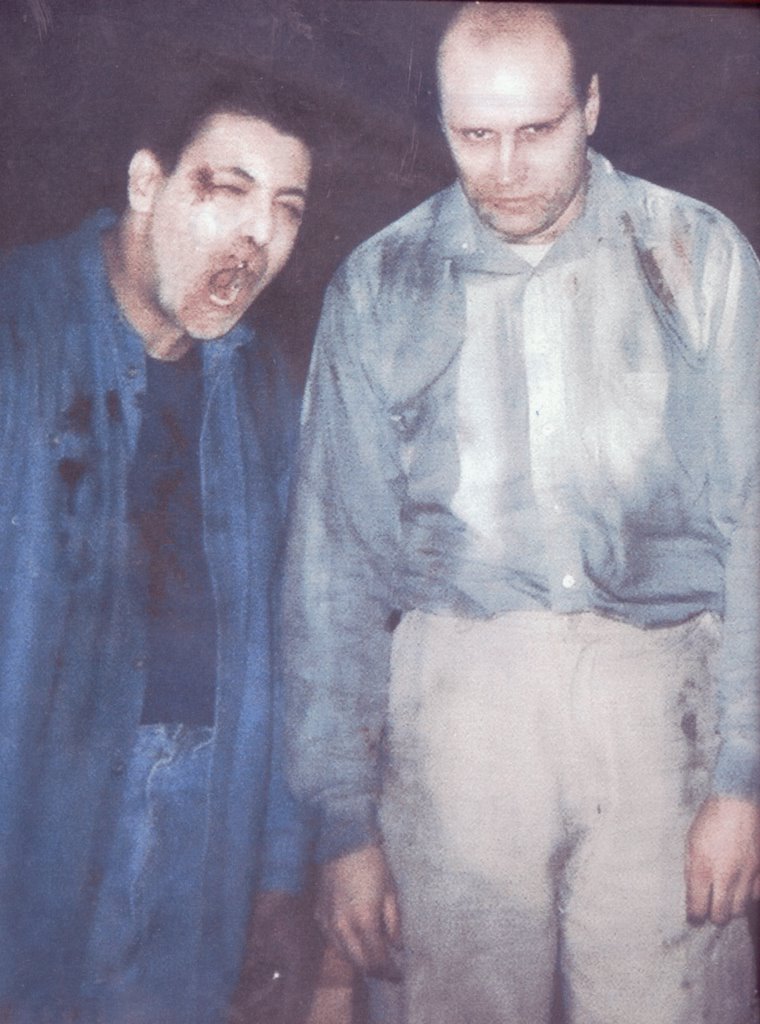
Resident Evil II From October 2003. Shot in Hamilton and Toronto. How would you like to meet these dudes out Trick or Treating.

Resident Evil II From October 2003. Shot in Hamilton and Toronto. Sorry about the quality, I took a print out of the origional photo and then applied a water colour wash over it to give it a technicolour look. This doesn't come out well in the scan.

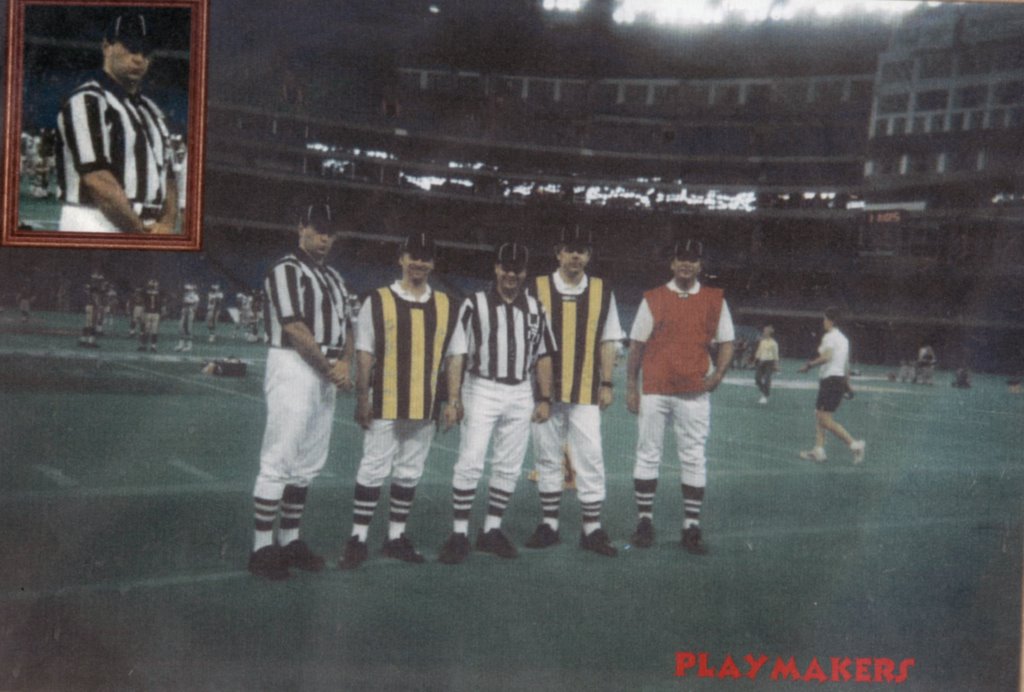
From the set of Playmakers Episode 3 "The Choice part 1". This picture was from July 2003, shot in Toronto's then Skydome now the Rodgers Centre.

From the set of the Canadian production "St.Ralph" shot in September 2003 at Hamilton's steel mill "Stelco". I loved this set the cars where fantastic.


Later,
Kenaz

Classic Suspense Movies:Psycho (1960)

Alfred Hitchcock's powerful, complex psychological thriller, Psycho (1960) is the "mother" of all modern horror suspense films - it single-handedly ushered in an era of inferior screen 'slashers' with blood-letting and graphic, shocking killings (e.g., Homicidal (1961), The Texas Chainsaw Massacre (1974), Halloween (1978), Motel Hell (1980), and DePalma's Dressed to Kill (1980) - with another transvestite killer and shower scene). While this was Hitchcock's first real horror film, he was mistakenly labeled as a horror film director ever since.

The nightmarish, disturbing film's themes of corruptibility, confused identities, voyeurism, human vulnerabilities and victimization, the deadly effects of money, Oedipal murder, and dark past histories are realistically revealed. The low-budget ($800,000), brilliantly-edited, stark black and white film came after Hitchcock's earlier glossy Technicolor hits Vertigo (1958) and North by Northwest (1959), and would have been more suited for as an extended episode for his own b/w TV series Alfred Hitchcock Presents. In fact, the film crew was from the TV show, including cinematographer John L. Russell.

The master of suspense skillfully manipulates and guides the audience into identifying with the main character, luckless victim Marion (a Phoenix real-estate secretary), and then with that character's murderer - a crazy and timid taxidermist named Norman (a brilliant typecasting performance by Anthony Perkins). Hitchcock's techniques voyeuristically implicate the audience with the universal, dark evil forces and secrets present in the film.

Psycho also broke all film conventions by displaying its leading female protagonist having a lunchtime affair in her sexy white undergarments in the first scene; also by photographing a toilet bowl - and flush - in a bathroom, and killing off its major 'star' Janet Leigh a third of the way into the film (in a shocking, brilliantly-edited shower murder scene accompanied by screeching violins).

[A satirical parody of scenes from various Hitchcock films, including some from Psycho, were included in Mel Brooks' comedy High Anxiety (1978). The shower scene itself has been referenced, spoofed and parodied in numerous films, including Brian De Palma's The Phantom of the Paradise (1974) and Dressed to Kill (1980), Squirm (1976), Victor Zimmerman's low-budget Fade to Black (1980), Tobe Hooper's The Funhouse (1981), John De Bello's Killer Tomatoes Strike Back! (1990), Martin Walz' The Killer Condom (1997, Ger.), Wes Craven's Scream 2 (1997), Scott Spiegel's From Dusk Till Dawn 2: Texas Blood Money (1999), and the animated Looney Tunes: Back in Action (2003), in which Bugs acts out with the film's black-and-white footage and a can of Hershey's chocolate syrup poured down the drain.]

In this film, Hitchcock's gimmicky device, termed a MacGuffin (the thing or device that motivates the characters, or propels the plot and action), is the stolen $40,000 from the realtor's office. Marion Crane becomes a secondary MacGuffin after her murder.

The film's screenplay by Joseph Stefano was adapted from a novel of the same name by author Robert Bloch. Remarkably, Bloch's 1959 novel was based on legendary real-life, Wisconsin psychotic serial killer Edward Gein, whose murderous character also inspired the mother-obsessed farmer in Deranged (1974), the Leatherface character in The Texas Chainsaw Massacre (1974), and serial killer Jame Gumb ("Buffalo Bill") in The Silence of the Lambs (1991).

[Bloch became a major horror screenwriter during the 60s decade and beyond, responsible for such suspenseful horror films and chillers as The Cabinet of Caligari (1962) - an update of the 1919 classic, Strait Jacket (1964), The Night Walker (1964), The Skull (1965), The Psychopath (1966), The Deadly Bees (1967), The Torture Garden (1967), The House That Dripped Blood (1971), Asylum (1972), the short feature Mannikin (1977), and The Amazing Captain Nemo (1977).]

Like many of Hitchcock's films, Psycho is so very layered and complex that multiple viewings are necessary to capture all of its subtlety. Symbolic imagery involving stuffed birds and reflecting mirrors are ever-present. Although it's one of the most frightening films ever made, it has all the elements of very dark, black comedy. This film wasn't clearly understood by its critics when released. This taut masterpiece was followed by three feature film sequels (none directed by Hitchcock) and other imitations or TV films.

The film's four Academy Award nominations failed to win Oscars: Best Supporting Actress (Janet Leigh with her sole career nomination), Best Director (Alfred Hitchcock with the last of his five losing nominations), Best B/W Cinematography, and Best B/W Art Direction/Set Decoration. Bernard Herrmann's famous and memorable score with shrieking, harpie-like piercing violins was un-nominated.

When the film was originally aired in theaters in mid-1960, Hitchcock insisted in a publicity gimmick (a la P.T. Barnum) that no one would be seated after the film had started - the decree was enforced by uniformed Pinkerton guards. Audiences assumed that something horrible would happen in the first few minutes. Violence is present for about two minutes total in only two shocking, grisly murder scenes, the first about a third of the way through, and the second when a Phoenix detective named Arbogast is stabbed at the top of a flight of stairs and topples backwards down the staircase. The remainder of the horror and suspense is created in the mind of the audience, although the tale does include such taboo topics as transvestism, implied incest, and hints of necrophilia.

The bleak, monochrome film is made more effective by Bernard Herrmann's sparse, but driving, recognizable score, first played under the frantic credits (by industry pioneer Saul Bass) - shown with abstract, gray horizontal and vertical lines that streak back and forth, violently splitting apart the screens and causing them to disappear. The frenetic lines appear as prison bars or vertical city buildings. [These criss-crossing patterns, like mirror-images, are correlated to the split, schizophrenic personality of a major protagonist.

Cast (in credits order) verified as complete
Anthony Perkins .... Norman Bates
Janet Leigh .... Marion Crane
Vera Miles .... Lila Crane
John Gavin .... Sam Loomis
Martin Balsam .... Detective Milton Arbogast
John McIntire .... Sheriff Al Chambers
Simon Oakland .... Dr. Fred Richmond
Vaughn Taylor .... George Lowery
Frank Albertson .... Tom Cassidy
Lurene Tuttle .... Eliza Chambers
Patricia Hitchcock .... Caroline (as Pat Hitchcock)
John Anderson .... Charlie
Mort Mills .... Highway Patrol Officer
rest of cast listed alphabetically:
Francis De Sales .... Officer (uncredited)
George Eldredge .... Chief James Mitchell (uncredited)
Sam Flint .... Officer (uncredited)
Virginia Gregg .... Norma Bates (voice) (uncredited)
Alfred Hitchcock .... Man in Cowboy Hat (uncredited)
Paul Jasmin .... Norma Bates (voice) (uncredited)
Frank Killmond .... Bob Summerfield (uncredited)
Ted Knight .... Guard (uncredited)
Jeanette Nolan .... Norma Bates (voice) (uncredited)
Helen Wallace .... Hardware Store Customer (uncredited)

Memorable Quotes:

Norman Bates: You-you eat like a bird.
Marion Crane: [Looking around at the stuffed birds while eating] And you'd know, of course.
Norman Bates: No, not really. Anyway, I hear the expression 'eats like a bird' - it-it's really a
[stammers]
Norman Bates: fals-fals-fals-falsity. Because birds really eat a tremendous lot. But -I-I don't really know anything about birds. My hobby is stuffing things. You know - taxidermy.

The shower scene depicted here is considered a classic moment in film.


Check out the film and compare Janet Leigh's scream to the origional scream queen,
Fay Wray and later, Leigh's daughter, Jamie Lee Curtis.

In previous posts I featured two other great horror ledgends:

Lon Chaney
Vincent Price

Later,
Kenaz

Saturday, October 29, 2005

Classic Horror Ledgends:Alfred Hitchcock

Perhaps only one other filmmaker-Walt Disney-lived to see his name become synonymous with a certain type of screen entertainment: In Hitchcock's case, it was stylish, sophisticated suspense, laced with humor and romance. Moreover, his bald pate, pearshaped body, and lugubrious drawl made him as recognizable as any star he ever directed. Educated by Jesuits, the young Hitchcock developed a flair for things mechanical, and first went to work for a telegraph company. He later took up art, applying his talents to print advertisements. Hitchcock broke into the British film industry in 1920 as a title-card illustrator, working his way up to art director, assistant director, editor, writer, and finally director. His first hit was the thriller The Lodger (1926), by which time many of his now-familiar cinematic trademarks were already apparent, including his ritual cameo appearance. He mastered the new medium of talking pictures with seeming effortlessness in Blackmail (1929) and proved that the presence of sound was no reason not to continue to tell stories with visual panache. (Speaking of things visual, 1930's all-star talkie revue Elstree Calling gave Hitchcock his only opportunity to direct a pie-throwing scene-with Anna May Wong, of all people.) He reached the top of his game with such outstanding films as The Man Who Knew Too Much (1934), The 39 Steps (1935), Sabotage (1936), and The Lady Vanishes (1938), all of which placed ordinary people- with whom audiences could readily identify-in life-or-death situations, often being chased by the authorities as well as the villains.

Hitchcock succumbed to the lure of Hollywood in 1939; his first film there, the romantic thriller Rebecca (1940), won the Best Picture Oscar and cemented his standing. He continued to masterly manipulate audiences' emotions in such classics as Foreign Correspondent (1940), Suspicion (1941), Shadow of a Doubt (1943, reportedly his personal favorite among his films), Lifeboat (1944), Spellbound (1945), and Notorious (1946). During this period, as he immersed himself in the slickness of Hollywood filmmaking, he continued to draw from a seemingly inexhaustible cinematic bag of tricks, using his mechanical and electrical knowledge to create memorable little effects and images (such as the illuminated glass of milk carried upstairs by Cary Grant inSuspicion His first color movie, Rope (1948), was an experiment-not altogether successful-in shooting an entire film in one seemingly continuous shot.

In the 1950s Hitchcock set himself new challenges and created a gallery of unique and memorable films, including the psychological cat-and-mouse thriller Strangers on a Train (1951), the 3-D opus Dial M for Murder (1954), the visually challenging Rear Window (1954), the elegant and witty To Catch a Thief (1955), the incomparably droll black comedy The Trouble With Harry (1955), the remake of his own The Man Who Knew Too Much (1956, with its bravura climax in London's Albert Hall), and the low-key, documentarystyle The Wrong Man (1957). In 1955 he agreed to host (and occasionally direct) a weekly TV anthology series, "Alfred Hitchcock Presents," a diversion that lasted a full ten years. His droll commentary (written by James Allardice) and distinctive greeting ("Good eeeevening") made him more famous than ever. The TV years also saw him directing four of his greatest films in a row: the incredibly complex and adult thriller Vertigo (1958), the witty and exciting North by Northwest (1959, with its audacious set-pieces in a desolate cornfield and atop Mount Rushmore), the starkly frightening, very black Psycho (1960, which he made quickly and inexpensively with his TV crew), and that masterpiece of manipulation and control, The Birds (1963). Hitchcock brought out the best in his stars (including James Stewart, Cary Grant, and the ultimate "Hitchcock blonde," Grace Kelly) and inspired composer Bernard Herrmann to do some of his finest work on his films.

Hitchcock's work past this point became uneven. Marnie (1964) was ahead of its time. Torn Curtain (1966) had star power but little else. Topaz (1969) told an intriguing tale, but the lack of recognizable stars made audiences feel aloof. Frenzy (1972) saw the director back in form-in peak form, to be precise, pulling some new visual tricks out of his bottomless bag, and playing violence against humor as only he could. (Hitchcock always hosted his own coming attractions trailers; for the British-made film, his first in more than 30 years, he appeared on-screen floating in the Thames River!) Family Plot (1976) tipped the scales too far toward comedy, and was only a middling success. Hitchcock continued to develop properties for future production, but failing health curtailed those plans. In 1979 he received the American Film Institute Life Achievement Award; he died the following year.

Astoundingly, the man considered by many the finest director who ever lived never won an Oscar, though he did receive the Irving Thalberg Award in 1967, and a long-running mystery magazine bears his name. His influence on a younger generation of filmmakers is impossible to overstate; virtually every thriller that comes along is described as "Hitchcockian," though few manage to live up to that description. As if that weren't enough, the director almost literally returned from the grave in 1985, when NBC revived "Alfred Hitchcock Presents": the episodes were new, but Hitch (now colorized) was still introducing them!

Personal Quotes:
"There is a dreadful story that I hate actors. Imagine anyone hating Jimmy Stewart... or Jack Warner. I can't imagine how such a rumor began. Of course it may possibly be because I was once quoted as saying that actors are cattle. My actor friends know I would never be capable of such a thoughtless, rude and unfeeling remark, that I would never call them cattle... What I probably said was that actors should be treated like cattle."

On his cameos: "One of the earliest of these was in _The Lodger_, the story of Jack the Ripper. My appearance called for me to walk up the stairs of the rooming house. Since my walk-ons in subsequent pictures would be equally strenuous - boarding buses, playing chess, etc. - I asked for a stunt man. Casting, with an unusual lack of perception, hired this fat man!"

"Television has brought murder back into the home - where it belongs"

"The length of a film should be directly related to the endurance of the human bladder"

"There is no terror in the bang, only in the anticipation of it."

"To me Psycho was a big comedy. Had to be."

"Even my failures make money and become classics a year after I make them."

"Always make the audience suffer as much as possible"

"When an actor comes to me and wants to discuss his character, I say, 'It's in the script.' If he says, 'But what's my motivation?, ' I say, 'Your salary.'"

"Drama is life with the dull bits left out."

[His entire acceptance speech for the Irving Thalberg Memorial Award] "Thank you."

[When accepting the American Film Institute Life Achievement award] "I beg permission to mention by name only four people who have given me the most affection, appreciation, and encouragement, and constant collaboration. The first of the four is a film editor, the second is a scriptwriter, the third is the mother of my daughter Pat, and the fourth is as fine a cook as ever performed miracles in a domestic kitchen. And their names are Alma Reville."

"[Hitchcock] said, 'I don't want you going back to sink-to-sink movies. You do movies where you wash the dishes looking drab in an apron. The audience wants to see their leading ladies dressed up.' He saw me as others didn't." - Eva Marie Saint

About Dario Argento and his film Profondo rosso (1975): "This young Italian guy is starting to worry me."

"Some films are slices of life, mine are slices of cake."

"I enjoy playing the audience like a piano."

Ingrid Bergman, trying to make Hitchcock help her understand the motivation for the feelings of her character told him that: "I don't feel like that, I don't think I can give you that kind of emotion." Hitchcock replied: "Ingrid - fake it!"

"I was an uncommonly unattractive young man."

"It's only a movie, and, after all, we're all grossly overpaid."

"There is nothing quite so good as a burial at sea. It is simple, tidy, and not very incriminating."

"Man does not live by murder alone. He needs affection, approval, encouragement and, occasionally, a hearty meal."

"Cartoonists have the best casting system. If they don't like an actor, they just tear him up."

About his actress Claude Jade, who starred in Topaz (1969): "Claude Jade is a brave nice young lady. But I don't give any guarantee, what she will do on a taxi's back-seat."

On directing Charles Laughton: "You can't direct a Laughton picture. The best you can hope for is to referee."

"The paperback is very interesting but I find it will never replace the hardcover book -- it makes a very poor doorstop."

"Film your murders like love scenes, and film your love scenes like murders."

"I am a typed director. If I made "Cinderella," the audience would immediately be looking for a body in the coach."

"If it's a good movie, the sound could go off and the audience would still have a perfectly clear idea of what was going on."

"A good film is when the price of the dinner, the theatre admission and the babysitter were worth it."

"In feature films the director is God; in documentary films God is the director."

[regarding "The Birds" (1963)] You know I've often wondered what the Audubon Society's attitude might be to this picture.

"Cary Grant is the only actor I ever loved in my whole life."

"Disney has the best casting. If he doesn't like an actor he just tears him up."

Salary

Psycho (1960) 60% of the net profits (salary deferred)
North by Northwest (1959) 250,000 + 10% of the net profits.

Trivia:

According to Alfred himself, he was required to stand at the foot of his mothers bed, and tell her what happened to him each day. This explains Anthony Perkins in Psycho (1960) standing at the foot of his mother's bed.

Was a close friend of Albert R. Broccoli, well known as the producer of the James Bond - 007 franchise. Hitchcock's North by Northwest (1959) was the influence for the helicopter scene in From Russia with Love (1963).

On April 29, 1974, the Film Society of Lincoln Center in New York sponsored a gala homage to Alfred Hitchcock and his contributions to the cinema. Three hours of film excerpts were shown that night. François Truffaut who had published a book of interviews with Hitchcock a few years earlier, was there that night to present "two brilliant sequences: the clash of the symbols in the second version of _The Man Who Knew Too Much , and the plane attack on Cary Grant in North by Northwest (1959)." After the gala, Truffaut reflected again on what made Hitchcock unique and concluded: "It was impossible not to see that the love scenes were filmed like murder scenes, and the murder scenes like love scenes...It occurred to me that in Hitchcock's cinema...to make love and to die are one and the same."

Hitchcock never won a best director Oscar in competition, although he was awarded the Irving Thalberg Memorial Award at the 1967 Oscars.

Alma Reville and Hitch had one daughter, Patricia Hitchcock, who appeared in several of his movies: Stage Fright (1950), Strangers on a Train (1951) and Psycho (1960)

He made a cameo appearance in all of his movies from The Lodger (1927) onwards.

Hitchcock's bridling under the heavy hand of producer David O. Selznick was exemplified by the final scene of Rebecca (1940). Selznick wanted his director to show smoke coming out of the burning house's chimney forming the letter 'R." Hitch thought the touch lacked any subtlety; instead, he showed flames licking at a pillow embroidered with the letter 'R.'

Hitchcock first visited Hollywood in 1940, but was turned down by virtually all major motion picture studios because they thought he could not make a "Hollywood" picture. He was finally offered a seven-year directing contract by producer David O. Selznick. His first project was supposed to be a film about the Titanic, but Selznick scrapped the project because he "couldn't find a boat to sink." Selznick assigned Hitch to direct Rebecca (1940) instead.

When he won his Lifetime Achievement award in 1979, he joked with friends that he must be about to die soon. He died a year later.

After having never received an Oscar throughout his career, the frequently snubbed Hitchcock only said "Thank you" when he received a Lifetime Achievement award in 1979.

Was voted the Greatest Director of all time by Entertainment Weekly. The same magazine's list of the 100 Greatest Films of all time includes more films directed by Hitchcock than by any other director, with four. On the list were his masterworks Psycho (1960) (#11), Vertigo (1958) (#19), North by Northwest (1959) (#44) and Notorious (1946) (#66).

He had a hard time devising one of his signature walk-ons for Lifeboat (1944), a film about a small group of people trying to survive on a small boat. What he eventually came up with was to have his picture in a newspaper advertisement for weight loss that floated among some debris around the boat. He had happened to have lost a considerable amount of weight from dieting around that time, so he was seen in both the "Before" and the "After" pictures.

He was infamous with cast and crews for his "practical jokes." While some inspired laughs, such as suddenly showing up in a dress, most were said to have been more cruel than funny. Usually he found out about somebody's phobias, such as mice or spiders, and in turn sent them a box full of them.

Directed the pilot episode of the radio series "Suspense" which aired from 1942-1962, and made a brief appearance at the end. It was an adaptation of his 1927 film "The Lodger" and starred Herbert Marshall and Edmund Gwynn, who reprised his brother Arthur Chesney's role as Mr. Bunting.

Directed 8 different actors in Oscar-nominated performances: Laurence Olivier, Joan Fontaine, Judith Anderson, Albert Bassermann, Michael Chekhov, Claude Rains, Ethel Barrymore and Janet Leigh. Fontaine won an Oscar for Suspicion (1941).


Later,
Kenaz

News From Bizzaro World


Here are a few stories from around the area to prove that politicians and officials truly have their heads up their rear ends.

Insurance cancelled
Friday, October 28, 2005 -- The city of Hamilton is facing outrage from two of its taxpayers tonight. And it's being threatened with a lawsuit that could cost a bundle. The problem involves a road that collapsed during heavy rain last August and wipe out the basement of a house. The people who lived in that house say the city won't take responsibility and has virtually abandoned them.(The city says they aren't responsible for acts of god!)

Halloween memo hogwash
October 28, 2005--A Toronto District School Board memo has been circulating among principals and teachers for several years, warning that Halloween activities in multicultural classrooms may be alienating and even traumatic for some children.

"Many recently arrived students in our schools share absolutely none of the background cultural knowledge that is necessary to view 'trick or treating,' the commercialization of death, the Christian sexist demonization of pagan religious beliefs, as 'fun,'"

the unsigned, three-page memo says. Some schools have gone as far as to institute the recommendations of the memo and cancell Halloween celebrations. What the hell, oops, heck is next the banning of Scarios pasta , Boo Berry breakfast cereal and Pack-Man because they promote pagan beliefs of spirits!

Later,
Keaz

Friday, October 28, 2005

Classic Horror Ledgends:Peter Lorre

Few screen actors have ever had as powerful a first film as Peter Lorre's M (1931), made in Germany by Fritz Lang. He is positively mesmerizing as the pathetic child murderer, delivering an unforgettable performance that made him an internationally recognized personality if not a major star. He was a peculiar little man, almost gnomelike, with moon face, bulging eyes, and gapped teeth, and as good a character actor as ever worked in Hollywood. He fled Germany in the early 1930s, appearing in both British and American films, including two directed by Alfred Hitchcock: The Man Who Knew Too Much (1934) and Secret Agent (1936).

With his florid portrayal of a mad doctor in the Grand Guignol-like Mad Love (1935), Lorre took Hollywood-then in the midst of its first talkie horror cycle-by storm. That same year he played Raskolnikov in von Sternberg's uneven Crime and Punishment-and he was off and running. At 20th Century-Fox, Lorre was cast as Japanese sleuth Mr. Moto in eight B films made from 1937 to 1939, of which Thank You, Mr. Moto (1937) was the best. He also had memorable roles in bottom-of-the-bill pictures, some of which were little gems: 1940's The Stranger on the Third Floor for example, was an excellent short thriller with more than a touch of German Expressionism in its visual style. But Lorre's real breakthrough with American audiences came with his oily performance as sinister but fastidious Joel Cairo in John Huston's adaptation of The Maltese Falcon (1941). (He shared other memorable moments with Falcon star Humphrey Bogart in 1942's Casablanca

Lorre and Falcon menace Sydney Greenstreet were seen as a great screen team, and they subsequently appeared together in several films such as 1944's The Mask of Dimitrios and 1946's The Verdict and Three Strangers (He became, during this period, arguably the most mimicked and caricatured actor in movies.) As his career in character roles progressed, he began to show his comic talents more, sending up his sinister persona in the likes of Arsenic and Old Lace (1944) and My Favorite Brunette (1947). And he was a droll delight in Huston's parodic Beat the Devil (1954). In 1951 he returned to Germany to write, direct, and act in the rarely seen but highly regarded Die Verlorene (The Lost One a drama of betrayal set in World War 2. Lorre aged poorly during the 1950s; he grew puffy and tiredlooking, and he seemed increasingly to be walking through films such as Congo Crossing (1956) and The Big Circus (1959). A frequent television guest star (whose credits ranged from a live dramatic production of Ian Fleming's "Casino Royale" in 1954 to a famous "Alfred Hitchcock Presents" episode opposite Steve McQueen), he rounded out his film career teamed with Boris Karloff and Vincent Price in both The Raven (1963) and The Comedy of Terrors (1964), in which he was very funny indeed. In fact, his performance as the half-man, halfraven endeared Lorre to a whole new generation of fans.

OTHER FILMS INCLUDE: 1937: Lancer Spy 1941: The Face Behind the Mask 1942: The Boogie Man Will Get You 1943: Background to Danger 1944: Passage to Marseille 1945: Confidential Agent 1946: Black Angel, The Beast With Five Fingers 1948: Casbah 1954: 20,000 Leagues Under the Sea 1956: Around the World in Eighty Days 1957: Silk Stockings 1961: Voyage to the Bottom of the Sea 1964: The Patsy (his last).

Personal Quotes:

On his first meeting with Alfred Hitchcock: "I had heard that he loved to tell stories and so I watched him like a hawk and when I was of the opinion he had just told the punchline of a story, I broke out in such laughter that I almost fell off my chair."

Trivia:

When he arrived in Great Britain, his first meeting with a British director was with Alfred Hitchcock. By smiling and laughing as Hitchcock talked, the director was unaware that Lorre had a limited command of the English language. Hitchcock cast him in The Man Who Knew Too Much (1934). Lorre learned much of his part phonetically.

It was reportedly 'Joseph Goebbels' himself who warned Peter Lorre to escape from Germany.

His distinctive voice gave Lorre a successful career in radio. He guest-starred on all of the comedy/variety series from the mid-1930s into the 1950s, as well as thrillers such as "Inner Sanctum Mysteries" and "Suspense", and had three radio series of his own: "Mystery in the Air", "Nightmare", and for the Armed Forces Radio Services, "Mystery Playhouse".

His image from M (1931) was unwittingly used on the German poster for the anti-semitic propaganda film, The Eternal Jew (1933), as an example of a typical Jew.

From the movie 'M'


Later,
Kenaz

Thursday, October 27, 2005

Ontario Homeowners Get The Shaft From McGuinty Government

Ontario homeowners are expected to get rebates by year's end for overpaying on hydro bills last year but consumers won't be getting back all they deserve. Ontario Energy Minister Donna Cansfield said consumers will get an average rebate on their hydro bill of about $60, with some homeowners receiving as much as $95 and an average small business getting $150. The rebates are owed because electricity prices last year were lower than the price estimated in advance by the province. There is a large descrepincy between the Electricity Consumer Price Protection Fund of $495 million that Ontario homeowners are set to share and the reported figure of $528 million that the government listed on their books. When asked by reporters, Ontario Energy Minister Donna Cansfield had difficulty explaining this or where any accumulated interest on the price protection fund had gone instead she passed the buck to Ronald Kwan of the Finance Ministry.

From:Canadian Press' Steve Erwin

Ronald Kwan of the Finance Ministry said the $528 million was an "estimate" of what Ontario Electricity Financial Corp. expected to receive. When actual cash receipts reached the government, Kwan said the surplus reached $565 million -- $70 million more than the amount being returned to consumers. But Kwan said that $70 million did not come from electricity users under the government's interim pricing plan, but instead came from consumers who bought electricity on the spot market -- typically large industrial users. That $70 million was used to pay off Ontario's hydro debt, which was built up over the years mostly due to expensive cost overruns at nuclear facilities. Reducing that so-called stranded debt should reduce the amount of time customers have to pay a debt-retirement charge on their bills, said Richard Jennings of the Ministry of Energy.

Where is this money? Burried in a very large government backyard? or maybe they collected all this money and stuck it in one of their low interest Canada Savings Bonds. Thank you Uncle Scrooge McGuinty for the early Christmas gift I'll enjoy the new energy saving can opener I'll buy with my $60.

Later,
Kenaz

Emilly Carr


Emily Carr was born in Victoria, British Columbia on December 13, 1871 and past away on March 2, 1945. Her rebellious nature dominated her attitude from a young age, and likely helped shape her independence.

She lived most of her life on Vancouver Island but did live in San Francisco for three years, five years in England and one year in France. Each of these experiences had a profound effect on her development.

She moved to San Francisco because of the lack of art schools, art collections and professional artists in the Victoria area that she could learn from. Eventually a lack of finances forced her to return. After the California School of Design in San Francisco, she returned to Victoria to teach art classes to children. In 1899, Carr took up studies at the Westminster School of Art in London. And also attended sketching classes in Cornwall. In 1910, she enrolled in the Academie Colarossi in Paris. It was here that she would break away from her more traditional teachings. Unfortunately, her work was not received well when she returned to Vancouver. British Columbians were unwilling to deviate from the English landscape tradition.

In 1913, Carr needed to supplement her income by raising livestock, growing vegetables and making pottery. But by 1927, she was invited to Ottawa for an exhibition and met Lawren Harris, who had a profound effect on her and her work. The confidence and encouragement shown by the Group of Seven rekindled her spirit and motivated her to return to painting.

The two driving themes of her work were the unique and vanishing Native culture and a powerful coastal nature. Her first trip to Native villages was in 1898. Between her fifty-sixth and seventy-first years, her paintings of dark forests, Native carvings, trees, wild storms and infinite skies reflected her Pacific Coast experience. Earlier in her life, she went through a number of other phases. During one phase in her career, she painted in a French postimpressionist and Fauve School manner and in another showed links to Cubism. Her work suggested connections to van Gogh and German Expressionism.


Emily Carr, Totem Forest, (c. 1930), oil, 128.6 x 92 cm, Vancouver Art Gallery, Vancouver, BC.

The sketching of totem poles, which were often found in remote locations subject to harsh weather conditions, is seen in many of her paintings. However, by 1931 she left the Native theme. Her change of focus was likely due to Lawren Harris and Mark Tobey, who both advised her to create art from within herself. For Carr, she had intuitively grasped the Native's relationship to the natural and spiritual world and his environment. By gaining this understanding, she decided to move on to new challenges.


Emily Carr, Scorned as Timber, Beloved of the Sky (1935), oil, 112 x 68.9 cm, Vancouver Art Gallery, Vancouver, BC.

A chronological history of paintings is difficult, since she stopped dating her paintings after 1930. Historians are left to evaluate the style or geographic location and attempt to correlate it with a year.

The 1930's saw a rebirth of both her writing and painting. But by 1937, her confinement to bed limited her painting activities.

From a prim and proper orthodox religious household, she asserted her rebellious nature early in life. She often escaped the rules and rigidity of her childhood household to explore nature.

Encouragement from the Group of Seven, in the late 1920's, was important in her return to painting after several unproductive years. While there are similarities in style with the Group of Seven, Emily Carr was very individualistic and departed from the techniques of the Group of Seven by never using the oil field sketch. Instead she devised a unique process of oil paint used with gasoline. Her innovative ideas in 1932 were out of necessity, according to. Conventional artist's materials were expensive. Instead she used ordinary white house paint and cheap manila paper, which she bought in bulk and was easy to carry.


Emily Carr Totem Poles, Kitseukla, 1912 oil on canvas

She had ill health through much of her life. While in France in 1910, she had several intervals of poor health. In 1902, she became seriously ill and was in the East Anglia sanatorium in Suffolk between 1903-4. In 1937, she had her first heart attack, which was followed by another in 1939, a stroke in 1940, and another heart attack in 1942. In 1945, she had her final and fatal heart attack.

In her latter years, Emily Carr stated: "Spring was young, I over seventy. With Spring all about me I sat sketching in the clearing … Seventy years had maimed me, loggers had maimed the clearing … but I got immense delight in just being there, in the quiet wood, the longing was too terrific to subdue, and I felt better."

Carr as a very complex person, who was both brave and spiritual, and yet overweight, irritable and socially insecure. Simply, we need to recognize that Carr was imperfect and struggled and except it.

In conclusion, Emily Carr grew out of a very strict upbringing with a defiant and rebellious nature that would shape her work throughout her life. Her fascination with the Pacific Coast and the spirituality of Native peoples was a profound influence on her work during certain phases of her career. She traveled abroad in order to hone her painting skills but still returned to British Columbia.

The Group of Seven were certainly a profound influence on her work and life, although she still remained individualistic. While her styles changed over time, she managed to create work that will be remembered and cherished by people for many years to come.


Emily Carr The Red Cedar, c1931-33 oil on canvas

Later,
Kenaz

Classic Horror Ledgends:Boris Karloff

Hollywood's most successful boogeyman, a gaunt, bow legged actor whose menacing mien scared the bejesus out of several generations of film fans, was in fact one of the movie colony's most popular citizens, and by all accounts a gentle, sensitive, highly cultured man. The scion of a family of British diplomats, he eschewed foreign-service work in favor of acting, emigrating to Canada and eventually touring with small companies all over North America. He made his screen debut as an extra in The Dumb Girl of Portici (1916), but didn't approach film work in earnest until 1919, when he appeared in the Douglas Fairbanks starrer His Majesty, the American

By now billed as Boris Karloff, he played supporting roles-mostly heavies- in dozens of minor features and serials throughout the 1920s, including The Hope Diamond Mystery (1921), Nan of the North (1922), Dynamite Dan (1924),Lady Robin Hood (1925),Eagle of the Sea (1926), Tarzan and the Golden Lion (1927), King of the Kongo (1929), and The Fatal Warning (1929). He appeared in a few A movies, too, including 1926's Old Ironsides and 1927's Two Arabian Knights Although Karloff spoke in soft, cultured tones, he affected a harsh, guttural voice in his early sound films, which included The Unholy Night (1929), The Sea Bat (1930), Public Defender, Smart Money, Business and Pleasure and The Mad Genius (all 1931).

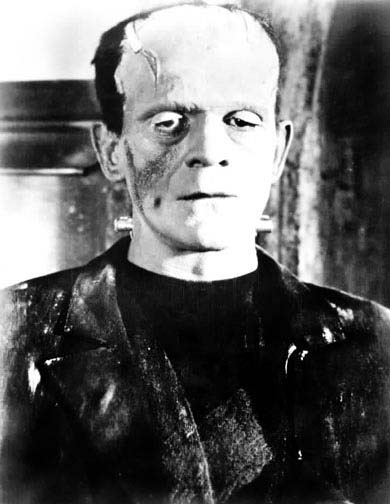
Karloff, who had resigned himself to working as a character actor, was more than happy to assume a role originally offered to Dracula star Bela Lugosi, who refused it on the ground that he would be unrecognizable under heavy makeup in a part with no dialogue. So Karloff played the lumbering monster in Frankenstein (1931), a physically demanding assignment that made him a star. Makeup artist Jack Pierce and director James Whale helped him flesh out the characterization, which enabled him to steal the picture from top-billed Colin Clive.

Karloff spent the next several years alternating horror films with more prestigious major-studio productions. He scared moviegoers witless with his starring turns in The Old Dark House, The Mummy, The Mask of Fu Manchu (all 1932), The Ghoul (1933), Bride of Frankenstein, The Black Room (both 1935), and The Walking Dead (1936), in addition to three films that teamed him with his partner-in-menace Lugosi:The Black Cat (1934), The Raven (1935), and The Invisible Ray (1936). He also took colorful supporting roles, playing a sleazy reporter in Five Star Final (1931), a gangster in Scarface (1932), an anti-Semitic nobleman in House of Rothschild a religious fanatic in The Lost Patrol (both 1934), a kindly inventor in Night Key and a suspicious opera singer in Charlie Chan at the Opera (both 1937).

As the horror cycle waned in the late 1930s, Karloff found himself mired in undistinguished B films, including West of Shanghai (1937), The Invisible Menace (1938), and British Intelligence (1940). He starred as a low-rent Charlie Chan in several "Mr. Wong" mysteries for Monogram, the best of which was The Mystery of Mr. Wong (1939). Back at Universal, he played the Frankenstein monster for a third and final time in Son of Frankenstein and then supported Basil Rathbone in an elaborate costume drama with horrific overtones, Tower of London (both 1939).

By now typecast as a movie menace, Karloff worked during the 1940s almost exclusively in B horror films and thrillers, including The Man With Nine Lives (1939), Before I Hang, You'll Find Out (a horror spoof that teamed him with Lugosi and Peter Lorre), The Ape (all 1940), The Devil Commands (1941), The Boogie Man Will Get You (1942), The Climax (a cut above his usual 1940s' vehicles), House of Frankenstein (both 1944, this time as mad scientist rather than monster), and Dick Tracy Meets Gruesome (1947). The "murder man" (as he was sometimes billed) spoofed his screen persona in the 1941 stage production of "Arsenic and Old Lace," enjoying a lengthy Broadway run as that play's menacing madman (but, unfortunately, missing out on repeating the role in the movie). He was well served by RKO producer Val Lewton, whose stylish, low-budget chillers ranked head and shoulders above the usual run of horror films; his assignments in Lewton's The Body Snatcher (1945, which again teamed him with Lugosi), Isle of the Dead (also 1945), and Bedlam (1946) were among his most memorable of the decade.

Karloff got a few nice supporting roles in A films of the immediate post WW2 era, including The Secret Life of Walter Mitty (1947), Unconquered (1948, as an Indian), and Tap Roots (1949), but by the 1950s he was working almost exclusively in dreary, low-budget horrors (in both senses of that word) that traded on the success of his earlier films.Abbott and Costello Meet the Killer, Boris Karloff (1949), The Strange Door (1951), The Black Castle (1952), Abbott and Costello Meet Dr. Jekyll and Mr. Hyde (1953), Voodoo Island (1957), The Haunted Strangler andFrankenstein-1970 (both 1958) saw an aging Karloff going through the motions with obvious professionalism but little enthusiasm.

He fared better on Broadway during the 1950s, playing Captain Hook opposite Jean Arthur as Peter Pan, costarring with Julie Harris in "The Lark," and participating in a number of live TV plays as well. He starred in the filmed TV series "Colonel March of Scotland Yard" (1957-58), and hosted "Thriller" (1960-62) in addition to guesting in dozens of dramatic series, anthologies, sitcoms, and variety shows throughout the 1950s and 1960s.

Producer Roger Corman used Karloff in several of his colorful, all-star horror films and spoofs of the 1960s, including The Raven, The Terror (both 1963, built entirely around an unfulfilled three-day commitment Karloff owed Corman), and The Comedy of Terrors (1964). Bravely, the aging master subjected himself to the indignities of Bikini Beach (1964) and The Ghost in the Invisible Bikini (1966), in addition to a quartet of Mexican-made horror cheapies, all of which were released posthumously. Karloff's swan song was Targets (1968), a modestly budgeted thriller directed by Peter Bogdanovich, which had the star playing an elderly horror-film actor. It was an offbeat role that Karloff obviously relished, and he delivered his best performance in years. Since the early 1960s he'd been afflicted with respiratory problems, and frequently retired to a wheelchair and an oxygen mask between scenes. He died in 1969, still a much beloved screen star.

Personal Quotes:

On whether or not he resented being typed as a "horror star": "One always hears of actors complaining of being typed - if he's young, he's typed as a juvenile; if he's handsome, he's typed as a leading man. I was lucky. Whereas bootmakers have to spend millions to establish a trademark, I was handed a trademark free of charge. When an actor gets in a position to select his own roles, he's in big trouble, for he never knows what he can do best. I'm sure I'd be damn good as little Lord Fauntleroy, but who would pay ten cents to see it?"

Trivia:

Was one of the founding Members of the Screen Actor's Guild. His daughter recounts that, due to the Hollywood Studio System's distrust of unions, one of her earliest memories of her father was that he always had carried a roll of dimes in his pocket. This was because he always had to use payphones when dealing with union business, since he knew his home phone had been tapped.

Refused to reprise his role as the Frankenstein Monster in Bud Abbott Lou Costello Meet Frankenstein (1948), because he felt spoofs wouldn't sell to the audience.

Appeared in 80 films before his breakthrough role in Frankenstein (1931).

He would mark his lines in the script. Jack Nicholson saw this and adopted the procedure himself.

In contrast to the image he presented in most of his films, the private Karloff was, by every account, a quiet, bookish man off- screen. A true gentleman, he had many friends, both in and out of show business, and he was particularly fond of children. For the latter, among other things, he recorded many successful albums of children's stories.


Later,
Kenaz

Wednesday, October 26, 2005

Searching the Web for the Wacky

At Canada.com they offer a selection of blogs to peruse that range from the cerebral Dark Matter which offers the latest on science, space, the environment and medical matters written by Tom Spears of the Ottawa Citizen, to the aptly named Strange Blog. Jack Branswell, a senior editor with canada.com offers stories almost too strange for print, like a woman, who was trying to raise money to pay for her husband's bail. Ends up landing herself in jail for allegedly stealing credit cards from her parents to post the bond money. The husband is free and she is in jail. Then there is the down right wrong,Web Junkie offers web pages that completey goes against the laws of morality. The web site hallucinaut preaches the benefits of wearing hats made from aluminum foil in case of Alien invader attacks (the exterrestrial kind). Not only do they keep the aliens from controlling your minds, they look great, too.


Today I offer a selection from rinkworks.com of incredible but true excerpts from courtroom transcripts in which people either misspoke under the pressure or where truly out of it.

*Lawyer: "Was that the same nose you broke as a child?"
*Witness: "I only have one, you know."

* Lawyer: "Now, Mrs. Johnson, how was your first marriage terminated?"
* Witness: "By death."
* Lawyer: "And by whose death was it terminated?"

* Accused, Defending His Own Case: "Did you get a good look at my face when I took your purse?"

The defendant was found guilty and sentenced to ten years in jail.

* Lawyer: "What is your date of birth?"
* Witness: "July 15th."
* Lawyer: "What year?"
* Witness: "Every year."

* Lawyer: "Can you tell us what was stolen from your house?"
* Witness: "There was a rifle that belonged to my father that was stolen from the hall closet."
* Lawyer: "Can you identify the rifle?"
* Witness: "Yes. There was something written on the side of it."
* Lawyer: "And what did the writing say?"
* Witness: "'Winchester'!"

* Lawyer: "Can you describe what the person who attacked you looked like?"
* Witness: "No. He was wearing a mask."
* Lawyer: "What was he wearing under the mask?"
* Witness: "Er...his face."

* Lawyer: "What was the first thing your husband said to you when he woke that morning?"
* Witness: "He said, 'Where am I, Cathy?'"
* Lawyer: "And why did that upset you?"
* Witness: "My name is Susan."

* Lawyer: "Sir, what is your IQ?"
* Witness: "Well, I can see pretty well, I think."

And this is my favourite, some lawyers deserve the bad rap they get(*kidding)
# Lawyer: "Doctor, before you performed the autopsy, did you check for a pulse?"
# Witness: "No."
# Lawyer: "Did you check for blood pressure?"
# Witness: "No."
# Lawyer: "Did you check for breathing?"
# Witness: "No."
# Lawyer: "So, then it is possible that the patient was alive when you began the autopsy?"
# Witness: "No."
# Lawyer: "How can you be so sure, Doctor?"
# Witness: "Because his brain was sitting on my desk in a jar."
# Lawyer: "But could the patient have still been alive nevertheless?"
# Witness: "Yes, it is possible that he could have been alive and practicing law somewhere."

Later,
Kenaz

Classic Horror Ledgends:Lon Chaney Jr.

Proving that the apple doesn't fall far from the tree, Chaney, Jr., thrilled and chilled moviegoers with his portrayals of famous movie monsters, but never achieved his father's status in the film industry. He always harbored a desire to emulate his dad, and finally entered films in 1932, starring in a lackluster serial titled The Last Frontier and also playing bits and second leads, billed as Creighton Chaney. He became "Lon Jr." in 1936, hoping the name change would boost his career. Fairly trim and handsome in his youth, Chaney gained weight rap idly in the late 1930s; his bulky physique and fleshy face disqualified him from consideration for romantic leads. As a 20th Century-Fox contractee, he had walk-ons and small roles in Charlie Chan on Broadway (1937), Alexander's Ragtime Band (1938), and Jesse James (1939), to name a few. On the strength of his powerful performance as the half-witted Lenny in Of Mice and Men (1939, an unusual A-movie assignment for the actor), however, Universal signed Chaney with the intention of making him a horror-movie star. He achieved special billing as tortured lycanthrope Larry Talbot in The Wolf Man (1941), reprising the role in several subsequent films (including 1948's Abbott and Costello Meet Frankenstein). Chaney also starred in The Ghost of Frankenstein, The Mummy's Tomb (both 1942), Son of Dracula (1943), The Mummy's Ghost (1944), and The Mummy's Curse (1945), and in Universal's "Inner Sanctum" series of the mid 1940s. When the studio's horror-film cycle died out, so did his starring career; by decade's end he was playing character roles. His last worthwhile part was as the retired sheriff in High Noon (1952). From the late 1950s on, beset with personal problems and in failing health, he accepted parts in a succession of cheap, shoddy films, ending his career in Dracula vs. Frankenstein (1971).

Trivia:
Lon Chaney, Jr., is the only person to have played all four of the classic movie monsters: The Wolf Man (1941) (Larry Talbot/Wolf Man) The Ghost of Frankenstein (1942) (The Frankenstein Monster) The Mummy's Tomb (1942) (Kharis, the mummy) Son of Dracula (1943) (Count Anthony Alucard, Dracula's son)


Later,
Kenaz